Zone 9 Bloggers To Speak on Censorship, Repression and Surveillance at the Forum on Internet Freedom in Africa 2018 (FIFAfrica18)

Announcement |
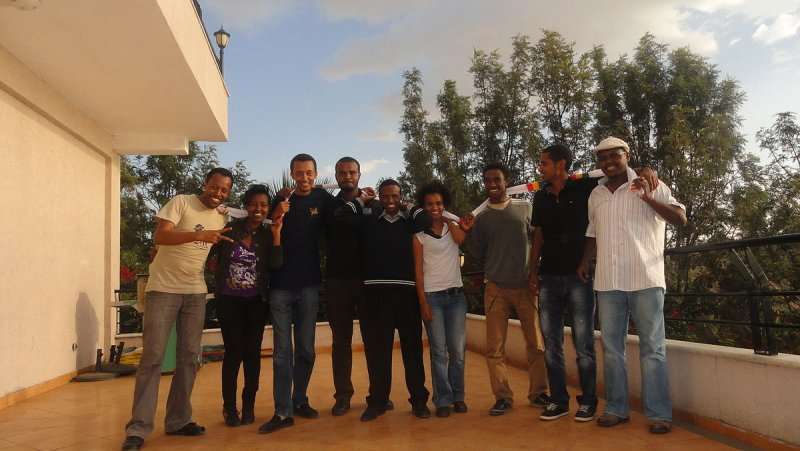
In order to contribute to the democratic discourse in Ethiopia, in May 2012, nine individuals formed the Zone 9 blogging collective – a loose network of activists regularly blogging and campaigning on human and democratic rights. However, two weeks after the launch of the initiative, the Ethiopian government blocked access to the collective’s online platform. In April 2014, six members of the collective were jailed on allegations of working with foreign organisations and rights activists by “using social media to destabilise the country.” The other three members fled into exile.
At the upcoming Forum on Internet Freedom in Africa 2018 (FIFAfrica18) members from the collective will share a stage and speak on their experiences of censorship, repression and surveillance. In an hour and half long session, members of the collective will share their stories including the tactics employed by the state to surveil and censor them, their trial, imprisonment for 15-18 months, and post-incarceration trauma. Their participation will serve as a means of raising awareness on the realities of being an activist in a repressive state and life after release from incarceration.
See draft Forum agenda
The collective gets its name from the eight zones of the notorious Kaliti prison in Addis Ababa where political prisoners are housed. The ninth zone is a metaphorical extension of the zones to apply to the rest of the country due to the harsh controls on freedom of speech and association across Ethiopia at the time.
In February 2018, after six years of facing charges that included terrorism and inciting violence, prosecutors in Ethiopia dropped all charges against the last members of the collective that still faced prosecution.  The announcement came as part of ongoing economic and political reforms in the country since the resignation of former Prime Minister Hailemariam Dessalegn in February 2018, and appointment of a new premier, Abiye Ahmed, two months later.
Since then, the government has freed thousands of prisoners; announced measures to liberalise the telecom  sector; and dropped charges against many opposition leaders, bloggers, and activists. Further, the new administration has lifted the state of emergency that had been reinstated in February 2018, reconnected mobile and broadband internet services that were cut off since 2016, and unblocked 246 websites, blogs, and news sites that had been inaccessible for over a decade.
See more about Ethiopia’s reforms.


Who are the Zone 9 Bloggers?

Zelalem Kibret is an Ethiopian scholar and blogger. He was previously a Scholar-at-Risk fellow at the Hutchins Center for African and African American Research, and the Center for Human Rights and Global Justice, at New York University School of Law. By training, Zelalem is a lawyer specialised in Public International Law. Until April 2014, he was a Professor of law at Ambo University in Ethiopia.
Among his interests is research which focuses on transitional politics and justice, traditional justice, individuals in international law, counter-terrorism, new social movements, and liberation technology.
Zelalem is the co-recipient of the 2015 Committee to Protect Journalists’ (CPJ) International Press Freedom award and the 2015 Reporter Sans Frontieres’ (RSF) Citizen-Journalist award. He earned his LL.M degree from Addis Ababa University in Public International Law.


Nathenael Feleqe Aberra is a co-founding member of Zone 9 Activists and Blogging collective. He is an active member of the Ethiopian Economics Association and a full time employee in a financial intuition in Ethiopia  with close to eight years’ experience in Human Resource Management. His interest areas include Economic Development, Democracy and Human Rights.


Jomanex Kasaye | Born and raised in “the jewel of rift valley” – Adama also known as Nazareth located 90 km from the capital Addis Ababa, Jomanex is an Information Technology enthusiast, who has previously worked as a tutor and system administrator in addition to running his own businesses. He is a co-founding member of the Zone 9 Activists and Blogging collective and now lives in exile.


Befekadu Hailu Techane describes himself as a Management Information Systems (MIS) expert by profession who turned a writer by inclination. His novella titled “Children of Their Parents” won the Bill Burt Award for African Literature (Ethiopia) in 2012. He has worked as an editor for Enqu Magazine, editor-in-chief for Weyeyet Magazine and volunteering editor for Global Voices [all in Amharic]. His blogging and activism work has seen him jailed four times – including an 18 month detention period. Befekadu is among the co-founders of the Zone 9 Activists and Blogging collective.
He currently works as a columnist for Duestche Welle Amharic Service, as a freelancing journalist for ethiotube.net, an internet TV channel, and part-time program coordinator for Ethiopian Human Rights Project.


Atnafu Brhane is a blogger and human rights activist in addition to being one of the co-founders of the Zone 9 Activists and Blogging collective. He began his career as an IT expert for a local administration office in Ethiopia before joining the collective. He also worked with Article 19 East Africa to give digital security trainings for human rights activists and journalists.
His work with the collective saw him get arrested and charged with terrorism in 2014 following which he spent 18 months in prison. He currently works as Digital Media Coordinator and Campaigner for  the Ethiopia Human Rights Project.


Abel Wabella describes himself as a passionate storyteller, who is fascinated by the commencement of the digital era. As a social media marketer, Abel has developed a sound knowledge of new media tools and techniques. Since he started blogging in 2011, he has engaged in social media activism, humanitarian advocacy, social justice projects, localisation and business projects.
As such, Abel shifted his career interests from mechanical engineering into the media arena. His work saw him detained, which served to further fuel his activism. Abel has a vast virtual office experience and is a member of the Global Voices volunteer community of more than 1,400 writers, analysts, online media experts, and translators, which localises its content into 40 languages including Amharic. He is also a co-founder of the Zone 9 Activists and Blogging collective.
Abel is currently working on newly established media called Gobena Street.
 

The Reforms Ethiopia Needs to Advance Internet Freedom

Policy Brief |
Since April 2018, the new Ethiopian government has been undertaking unprecedented political and economic reforms. This follows countrywide protests that forced the former Prime Minister Hailemariam Dessalegn to resign in February 2018, leading to the appointment of a young and charismatic new premier, Abiye Ahmed two months later. Since then, the government has freed thousands of prisoners; announced measures to liberalise the telecom, aviation, and transportation sectors; and dropped charges against many opposition leaders, bloggers, and activists. Further, the new administration has lifted the state of emergency that had been reinstated in February 2018, reconnected mobile and broadband internet services that were cut off since 2016, and unblocked 246 websites, blogs, and news sites that have been inaccessible for over a decade.
These changes in Ethiopia did not come at a whim. The protests that started in November 2015 in the Oromia region spread to other parts of the country. In response to these protests, the previous government continuously blocked social media sites and implemented national and regional internet blackouts, often claiming it aimed to safeguard national security or to stem cheating during national exams. Consequently, the Oromia region lost internet connectivity for two weeks in March 2018, three weeks before the new prime minister was sworn in. Moreover, as access to the internet deteriorated in the country, the government criminalised freedom of expression online and offline. The arbitrary arrests, detention, and torture of members of the Zone Nine bloggers collective showed how far the government was willing to go to suppress dissenting voices.
The new Prime Minister and his cabinet have promised to open the democratic space in the country and expand freedom of expression online and offline. However, these reforms should go beyond the unblocking of a few hundred websites; they should bring in real changes that will make it impossible to regress to old habits. Therefore, reforms to be implemented must expand internet penetration from the current 15%, to the larger offline majority. Laws that prosecute freedom of expression online and offline like the Anti-Terrorism Proclamation and Computer Crime Proclamation must undergo substantial revisions to meet international standards. Further, the changes within the law enforcement and intelligence agencies should go beyond replacing old officials with new ones, but must tame the undue power given to these bodies to conduct unwarranted surveillance and censorship of netizens. Lastly, the new government should desist from internet shutdowns and censorship.
See this brief titled The Reforms Ethiopia Needs to Advance Internet Freedom which gives a detailed description of prevailing challenges to internet freedom in Ethiopia and proposed reforms the Ethiopian government needs to undertake to improve internet freedom in the country.

MFWA to Co-Host Africa’s Biggest Internet Freedom Event

Announcement |

From September 26 to 28, 2018, the Media Foundation for West Africa (MFWA) will co-host Africa’s biggest Internet freedom forum in Accra, Ghana.  The annual convening, which is dubbed Forum on Internet Freedom in Africa (FIFAfrica) brings together key stakeholders in the Internet governance and online/digital rights environment from the continent and beyond.

The MFWA will be hosting the forum jointly with the Uganda-based organization, Collaboration for International ICT Policy in East and Southern Africa (CIPESA). The forum is convened annually by CIPESA to deliberate on developments, challenges, opportunities and ways of improving the Internet ecosystem in Africa.  Participants also adopt strategies aimed at enhancing citizens’ digital or internet rights on the continent.

This is the first time the FIFAfrica event is being held in West Africa. Last year’s event was held in South Africa while the maiden event in 2014 and subsequent editions were held in Uganda.

The internet has become a vital tool for enhancing freedom of expression, access to information and citizens’ participation in national discourse and governance. At the same time, it is the target of hostile policies and practices by some governments. It is thus important for all stakeholders to dialogue on how to preserve the internet for development.

“The MFWA is delighted to co-host this important continental forum on Internet freedom. There couldn’t have been a better time to host this event in West Africa as the region is currently witnessing significant developments and challenges in the internet environment,” said Sulemana Braimah, Executive Director of the MFWA.

Online freedom of expression has come under attack in recent years in Africa. Over the past one year, countries such as Kenya, Uganda and Tanzania have passed laws to restrict internet freedom.  There have also been network disruptions and shutdowns in about seven African countries over the same period. Besides, there have been increasing incidents of arrest and detentions of citizens, bloggers and journalists for their social media activities.

The FIFAfrica event will also coincide with the International Day for Universal Access to Information (IDUAI), which is observed on September 28 each year. The day has been set aside by the UNESCO to mark the importance of universal public access to information and protection of fundamental freedoms.

The FIFAfrica event is scheduled to take place at the La-Palm Royal Beach Hotel in Accra, and is expected to host about 300 participants from dozens of countries in Africa and around the world.

You can learn more about the event by visiting the event website at:  https://cipesa.org/fifafrica/ or follow the #FIFAfrica18.

For further information or inquiries, kindly contact Felicia Anthonio on [email protected] or +233 206 972 867.

This statement was originally published on mfwa.org on July 4, 2018 and Africafex.org.

Oral Statement Delivered At The United Nations Human Rights Council

Joint Statement |
Thank you, Mr. President.

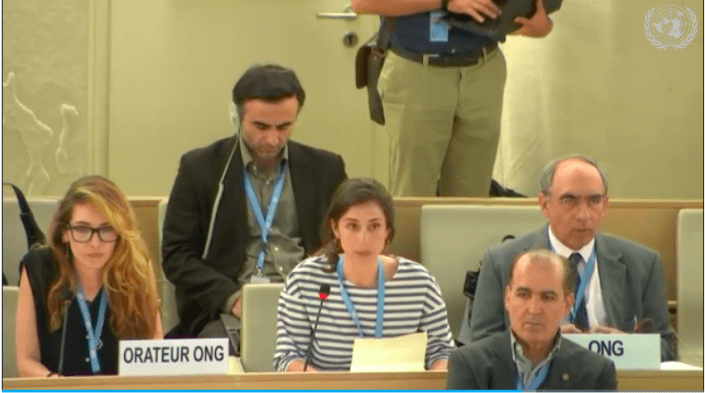
This statement is delivered on behalf of the Association for Progressive Communications (APC), the Collaboration on International ICT Policy for East and Southern Africa (CIPESA), Derechos Digitales, and the Women of Uganda Network (WOUGNET).

As organisations committed to maintaining the use of the internet for human rights, social justice and sustainable development, we are concerned about the increase in threats to freedom of expression online. Attacks on freedom of expression online are taking many forms, including internet shutdowns, regressive cybercrime laws, and privatisation of censorship, among others.

We wish to highlight for the attention of the Council the following situations of concern:

In Uganda, the government adopted a “social media tax” in May, which will require users of over-the-top (OTT) services, including messaging and voice calls via WhatsApp, Facebook, Skype and Viber. to pay a mandatory fee of USD 0.05 per day of use. In a context in which social media has served as many users’ initial entry point to the internet, this tax could negatively impact the affordability and broader use of the internet, particularly by low-income Ugandans, as well as stifle freedom of expression, association and assembly online. Similarly, the recent introduction of stringent online content regulations in Tanzania, Uganda and the Democratic of Republic of Congo threaten citizens’ rights to privacy and freedom of expression and promote self-censorship.

In Latin America, we observe a trend by governments in the region to regulate online expression that is critical of dominant political forces or that amplifies dissident voices of traditionally discriminated groups, under the guise of “online hate speech” or “cybersecurity”. Examples can be found in Brazil, Ecuador, Guatemala, Honduras, Paraguay and Venezuela, among others. In some cases, legislative reforms have been introduced just before the start of electoral processes or the rise of social movements; in others, restrictive measures are administratively established, bypassing democratic legislative processes entirely. We also observe efforts in the region to criminalise expression and to require private companies to moderate online content, an issue addressed in detail by the recent report of the UN Special Rapporteur on freedom of opinion and expression. This implies an undermining of due process, as required by international human rights standards, by delegating the function of the judiciary to the private sector. At the same time, it incentivises companies to err on the side of caution and take down content to avoid facing high fines or, in the case of Venezuela, the threat of revocation of authorisation to operate.

We urge the Council with its bi-annual resolution on the promotion, protection and enjoyment of human rights on the internet to condemn and call for the end to such restrictions on online expression, and to adopt human rights-based approaches to internet access and regulation.

Thank you, Mr. President.

Source: Information.

Uganda Moves to Register Online Content Providers  

 
By Daniel Mwesigwa |
Uganda has become the latest East African country to threaten access to information and free speech online by putting in place measures that require the registration of online content providers. In a notice issued earlier this month, the Uganda Communications Commission (UCC) called for online publishers, news platforms, radio and television operators to “apply and obtain authorization” for provision of services.
Without specifying the requirements necessary for application, the UCC indicates that within a month of issuance of the notice, measures will be enforced against non-compliant service providers and this “may entail directing Internet Service Providers (ISP) to block access to such websites and/or streams.”
The UCC is mandated under Section 5 of the Uganda Communications Act 2013 (UCC Act) to monitor, inspect, license, supervise, control and regulate all communications services. This mandate extends to audio, visual or data content production or dissemination through traditional broadcast media as well as internet based platforms.
According to the notice, registration of the various operators which the UCC classifies as “online data communication and broadcast content providers”, is within the regulator’s mandate to set standards and enforce compliance relating to content.
Over the years, UCC’s regulatory role has come under criticism over its lack of independence. Its establishing Act gives powers to the minister in charge of ICT to appoint the commission’s executive director and board members and to approve its budgets.  In April 2017, the parliament of Uganda passed the Uganda Communications (Amendment) Bill (2016) which further gave the minister the power to single handedly make regulations for the sector without parliamentary oversight.
More recently, UCC instructed telecommunications service providers to enforce two social media shutdowns during the presidential elections in 2016, and in September 2017 barred live broadcasts of parliamentary proceedings on the Presidential age limit amendment bill. National security and public safety have been cited as the grounds for the various directives.
There are an estimated 24 million mobile subscriptions and 18.1 million  internet users in Uganda, reflecting an internet penetration rate of 48%. The country has licensed over 40 TV and 300 FM radio stations, many of which maintain online presences through live streaming on platforms such as YouTube, Facebook and Twitter.
Meanwhile, licensed print operators maintain online portals whilst there is a growing number of independent online news publishers and bloggers. Growing media convergence has seen traditional media maintain a dominance online as was witnessed during the Uganda Presidential debate in 2016, where the television stations NTV and NBS TV influenced narrative according to a Twitter sentiment analysis.
However, without regulations in place to guide the proposed registration, it remains to be seen what obligations will be put forth for online content providers and the resultant impact that the registration will have on the country’s growing media landscape as well as the rights of users. Nonetheless, the move is a regressive development for digital rights in the country. It reflects a growing trend in neighbouring countries that are seeking to regulate online content through requirements for registration of users and service providers as well as accreditation to practice journalism.
In 2017, Tanzania published draft regulations on Electronic and Postal Communications (Online Content). The proposed regulations confer powers upon the Tanzania Communications Regulatory Authority (TCRA) to regulate online content, including through registration of users and platforms, and taking action against non-compliance with the obligations, such as ordering the removal of “prohibited content.”
A more targeted avenue has been used in Burundi, through the Press Law of 2015 which calls for all media practitioners to be accredited, including those operational purely in the online domain. A similar stance exists in Rwanda where even social media posts are theoretically regulated by the country’s National Communication Council (CNC).
The move by Uganda, proposed measures in Tanzania and existing practices in Burundi and Rwanda restrict the number of content providers online and thus inhibit the diversity and wider availability of information online. Furthermore, there is the potential for such practices to engender censorship to legitimate content which might be critical of public officials and bodies.