Applications are Open for a New Round of Africa Digital Rights Funding!

Announcement |

The Collaboration on International ICT Policy for East and Southern Africa (CIPESA) is calling for proposals to support digital rights work across Africa.

This call for proposals is the 10th under the CIPESA-run Africa Digital Rights Fund (ADRF) initiative that provides rapid response and flexible grants to organisations and networks to implement activities that promote digital rights and digital democracy, including advocacy, litigation, research, policy analysis, skills development, and movement building.

 The current call is particularly interested in proposals for work related to:

  • Data governance including aspects of data localisation, cross-border data flows, biometric databases, and digital ID.
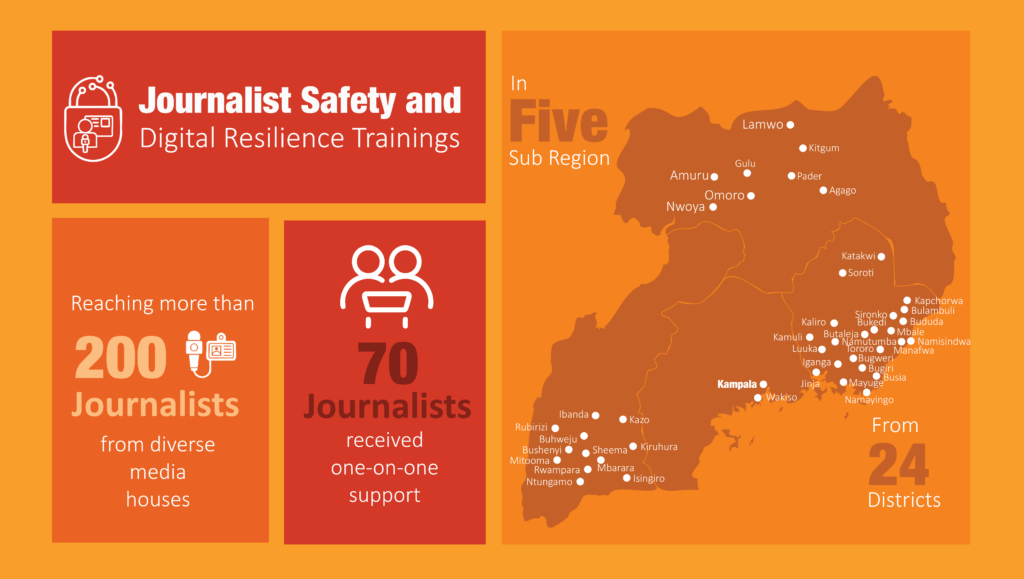
  • Digital resilience for human rights defenders, other activists and journalists.
  • Censorship and network disruptions.
  • Digital economy.
  • Digital inclusion, including aspects of accessibility for persons with disabilities.
  • Disinformation and related digital harms.
  • Technology-Facilitated Gender-Based Violence (TFGBV).
  • Platform accountability and content moderation.
  • Implications of Artificial Intelligence (AI).
  • Digital Public Infrastructure (DPI).

Grant amounts available range between USD 5,000 and USD 25,000 per applicant, depending on the need and scope of the proposed intervention. Cost-sharing is strongly encouraged, and the grant period should not exceed eight months. Applications will be accepted until November 17, 2025. 

Since its launch in April 2019, the ADRF has provided initiatives across Africa with more than one million US Dollars and contributed to building capacity and traction for digital rights advocacy on the continent.  

Application Guidelines

Geographical Coverage

The ADRF is open to organisations/networks based or operational in Africa and with interventions covering any country on the continent.

Size of Grants

Grant size shall range from USD 5,000 to USD 25,000. Cost sharing is strongly encouraged.

Eligible Activities

The activities that are eligible for funding are those that protect and advance digital rights and digital democracy. These may include but are not limited to research, advocacy, engagement in policy processes, litigation, digital literacy and digital security skills building. 

Duration

The grant funding shall be for a period not exceeding eight months.

Eligibility Requirements

  • The Fund is open to organisations and coalitions working to advance digital rights and digital democracy in Africa. This includes but is not limited to human rights defenders, media, activists, think tanks, legal aid groups, and tech hubs. Entities working on women’s rights, or with youth, refugees, persons with disabilities, and other marginalised groups are strongly encouraged to apply.
  • The initiatives to be funded will preferably have formal registration in an African country, but in some circumstances, organisations and coalitions that do not have formal registration may be considered. Such organisations need to show evidence that they are operational in a particular African country or countries.
  • The activities to be funded must be in/on an African country or countries.

Ineligible Activities

  • The Fund shall not fund any activity that does not directly advance digital rights or digital democracy.
  • The Fund will not support travel to attend conferences or workshops, except in exceptional circumstances where such travel is directly linked to an activity that is eligible.
  • Costs that have already been incurred are ineligible.
  • The Fund shall not provide scholarships.
  • The Fund shall not support equipment or asset acquisition.

Administration

The Fund is administered by CIPESA. An internal and external panel of experts will make decisions on beneficiaries based on the following criteria:

  • If the proposed intervention fits within the Fund’s digital rights priorities.
  • The relevance to the given context/country.
  • Commitment and experience of the applicant in advancing digital rights and digital democracy.
  • Potential impact of the intervention on digital rights and digital democracy policies or practices.

The deadline for submissions is Monday, November 17, 2025. The application form can be accessed here.

Digital Access As A Tool To Defend Democracy

By Juliet Nanfuka | 

The link between digital access and democracy has come to inform civic engagement, access to information and freedom of expression in Africa. With most of the continent navigating flawed or fragile democracies, digital access has become a tool of both empowerment for citizens, and a tool of control by states. This makes the International Day of Democracy a vital commemoration of what is at risk if democracy is not defended. 

This year, in various African countries, through affronts to the media, clampdown on critical voices and opposition actors as well as network disruptions, states have used their position to undermine human rights and breed  distrust in electoral integrity.

Since July 2024, a block to internet access remains enforced in the Equatorial Guinean island of Annobón following public protest against environmental degradation by Somagec, a Moroccan construction company. Despite the public outcries, the company’s operations on the island continue. Equatorial Guinea, is headed by Teodoro Obiang Nguema Mbasogo, Africa’s longest-serving president. His son serves as the Vice President and is accused of spending state funds on a lavish lifestyle.

In Kenya, in the wake of a May 2025 landmark ruling against network disruptions, a Telegram block was initiated. The disruption occurred close to the anniversary of the June 2024 protests against the rising cost of living in the country that resulted in the #RejectThefinanceBill outcry. The May ruling noted that disruptions to digital access are unconstitutional and amount to the violation of fundamental rights.

On September 6, 2025, the online license of the popular online discussion group, JamiiForums was suspended by the Tanzania Communications Regulatory Authority (TCRA)  for three months for reportedly publishing content that violates the Electronic and Postal Communications Regulations regarding online content. In a public post, Jamii Forums noted that TCRA’s decision arose from the platform’s publication of details of share ownership in Tanzania’s largest coal mine (Ngaka), as well as reports about meetings between the President of Tanzania and controversial Zimbabwean businessman Wicknell Chivayo  “without verifying the facts.” In a statement, Community to Protect Journalists (CPJ) Regional Director Angela Quintal noted that, “JamiiForums’ suspension is the latest sign of the Tanzanian government’s deepening suppression of public discourse and raises concerns about access to information ahead of the October 29 elections.”

Meanwhile, Uganda remains in the shadow of a Facebook block initiated nearly five years ago ahead of the 2021 elections. On January 11, 2021 Facebook suspended the accounts of a number of government officials and members of the ruling National Resistance Movement (NRM) party  for what it described as Coordinated Inauthentic Behaviour (CIB) aimed at manipulating public debate. Twitter (now X) also suspended similar accounts. The state consequently blocked social media access and thereafter access to the entire internet and mobile money services. Although access to the internet and mobile money services was restored a few days after the January 14, 2021 election, access to Facebook remains blocked. Uganda heads to the polls in early 2026 and will see incumbent Yoweri Museveni run for re-election in a bid to extend his 40-year rule.

In the 2024 edition of the State of Internet Freedom in Africa report, the Collaboration on International ICT Policy for East and Southern Africa (CIPESA) highlighted the interplay between technology and elections and the practice of the majority of authoritarian governments to selectively limit access as a tool to exert power.

The report indicated various concerns including the intensification of digital authoritarianism amidst shrinking civic space. It noted that digital surveillance has become a defining tool of state power, moving beyond traditional intelligence agencies into everyday governance through digital ID  projects, biometric databases, Closed Circuit Television (CCTV) networks, and covert spyware. All this in contexts where there are weak safeguards for personal data and insufficient regulatory oversight, leaving citizens vulnerable.

Meanwhile, misinformation and disinformation, significantly enhanced by Artificial Intelligence (AI) generated content, adds yet another threat electoral processes. It is increasingly distorting public perception and undermines informed decision-making, particularly in contexts with low digital literacy. This is in addition to the use of bots and paid  influencers to amplify propaganda and “demote” opposing views, making inauthentic content appear genuine. Social media platforms are often criticised for deploying insufficient resources for content moderation in Africa, leading to slow responses and poor enforcement of policies against harmful content, including online gender-based violence.

Ultimately, more actors in the digital ecosystem including civil society organisations, the tech community, media and academia should leverage their watchdog role to document digital rights abuses; educate and raise awareness on the importance of access to information, free expression, data privacy; and promote equitable AI governance, in order to advance transparency and accountability of platforms and governments.
At the upcoming September 24-26, 2025, Forum on Internet Freedom in Africa (FIFafrica25), a series of sessions will critically examine digital democracy on the continent. The goal is to chart practical pathways for strengthening civic participation and ensuring that Africa’s digital future is inclusive, accountable, and rights-respecting.

Africa’s Digital Dilemma: Platform Regulation Vs Internet Freedom

By Brian Byaruhanga |

Imagine waking up to find Facebook and Instagram inaccessible on your phone – not due to a network disruption, but because the platforms pulled their services out of your country. This scenario now looms over Nigeria, as Meta, the parent company of Facebook and Instagram, may shut down its services in Nigeria over nearly USD 290 million in regulatory fines. The fines stem from allegations of anti-competitive practices, data privacy violations, and unregulated advertising content contrary to the national laws. Nigerian authorities insist the company must comply with national laws, especially those governing user data and competition. 

While this standoff centres on Nigeria, it signals a deeper struggle across Africa as governments assert digital sovereignty over global tech platforms. At the same time, millions of citizens rely on these platforms for communication, activism, access to health and education, economic livelihood, and self-expression. Striking a balance between regulation and rights in Africa’s evolving digital landscape has never been more urgent.

Meta versus Nigeria: Not Just One Country’s Battle

The tension between Meta and Nigeria is not new, nor is it unique. Similar dynamics have played out elsewhere on the continent:

  • Uganda (2021–Present): The Ugandan government blocked Facebook after the platform removed accounts linked to state actors during the 2021 elections. The block remains in place, effectively cutting off millions from a critical social media service unless they use Virtual Private Networks (VPNs) to circumvent the blockage.
  • Senegal (2023): TikTok was suspended amid political unrest, with authorities citing the app’s use for spreading misinformation and hate speech.
  • Ethiopia (2022): Facebook and Twitter were accused of amplifying hate speech during internal conflicts, prompting pressure for tighter oversight.
  • South Africa (2025): In a February 2025 report, the Competition Commission found that freedom of expression, plurality and diversity of media in South Africa had been severely infringed upon by platforms including Google and Facebook. 

The Double-Edged Sword of Regulation

Governments have legitimate reasons to demand transparency, data protection, and content moderation. Today, over two-thirds of African countries have legislation to protect personal data, and regulators are becoming more assertive. Nigeria’s Data Protection Commission (NDPC), created by a 2023 law, wasted little time in taking on a behemoth like Meta. Kenya also has an active Office of the Data Protection Commissioner, which has investigated and fined companies for data breaches. 

South Africa’s Information Regulator has been especially bold, issuing an enforcement notice to WhatsApp to comply with privacy standards after finding that the messaging service’s privacy policy in South Africa was different to that in the European Union. These actions send a clear message that privacy is a universal right, and Africans should not have weaker safeguards.

These regulatory institutions aim to ensure that citizens’ data is not exploited and that tech companies operate responsibly. Yet, in practice, digital regulation in Africa often walks a thin line between protecting rights and suppressing them.

While governments deserve scrutiny, platforms like Meta, TikTok, and X are not blameless. They often delay to respond to harmful content that fuels violence or division. Their algorithms can amplify hate, misinformation, and sensationalism, while opaque data harvesting practices continue to exploit users. For instance, Branch, a San Francisco-based microlending app operating in Kenya and Nigeria, collects extensive personal data such as handset details, SMS logs, GPS data, call records, and contact lists in exchange for small loans, sometimes for as little as USD 2. This exploitative business model capitalises on vulnerable socio-economic conditions, effectively forcing users to trade sensitive personal data for minimal financial relief.

Many African regulators are pushing back by demanding localisation of data, adherence to national laws, and greater responsiveness, but platform threats to exit rather than comply raise concerns of digital neo-colonialism where African countries are expected to accept second-tier treatment or risk exclusion.

Beyond privacy, African regulators are increasingly addressing monopolistic behaviour and unfair practices by Big Tech as part of a broader push for digital sovereignty. Nigeria’s USD 290 million fine against Meta is not just about data protection and privacy, but also fair competition, consumer rights, and the country’s authority to govern its digital space. Countries like Nigeria, South Africa and Kenya are asserting their right to regulate digital platforms within their borders, challenging the long-standing dominance of global tech firms. The actions taken against Meta highlight the growing complexity of balancing national interests with the transnational influence of tech giants. 

While Meta’s threat to exit may signal its discomfort with what it views as restrictive regulation, it also exposes the real struggle governments face in asserting control over digital infrastructure that often operates beyond state jurisdiction. Similarly, in other parts of Africa, there are inquiries and new policies targeting the market power of tech giants. For instance, South Africa’s competition authorities have looked at requiring Google and Facebook to compensate news publishers  (similar to the News Media and Digital Platforms Mandatory Bargaining Code in Australia). These moves reflect a broader global concern that a few platforms have too much control over markets and need checks to ensure fairness.

The Cost of Disruption: Economic and Social Impacts

When platforms go dark, the consequences are swift:

  • Businesses and entrepreneurs lose access to vital marketing and sales tools.
  • Creators and influencers face income loss and audience disconnection.
  • Activists and journalists find their voices limited, especially during politically charged periods.
  • Citizens are excluded from conversations and accessing information that could help them make critical decisions that affect their livelihoods.
  • Students and educators experience setbacks in remote learning, particularly in under-resourced communities that rely on social media or messaging apps to coordinate learning.
  • Access to public services is disrupted, from health services to government updates and emergency communications.

A 2023 GSMA report showed that more than 50% of small businesses in Sub-Saharan Africa use social media for customer engagement. In countries such as Nigeria, Uganda, Kenya or South Africa, Facebook and Instagram are lifelines. Losing access even temporarily sets back innovation, erodes trust, and impacts livelihoods.

A Call for Continental Solutions

Africa’s digital future must not hinge on the whims of a single government or a foreign tech giant. Both states and companies should be accountable for protecting rights in digital contexts, ensuring that development and digitisation do not trample on dignity and equity. This requires:

  • Harmonised continental policies on data protection, content regulation, and digital trade.
  • Regional norm-setting mechanisms (like the African Union) to enforce accountability for both governments and corporations.
  • Investments in African tech platforms to offer resilient alternatives.
  • Public education on digital rights to empower users against abuse from both state and corporate actors.
  • Pan-African contextualised business and human rights frameworks to ensure that digital governance aligns with both local realities and global human rights standards. This includes the operationalisation of the UN Guiding Principles on Business and Human Rights, following the examples of countries like Kenya, South Africa and Uganda, which have developed national action plans to embed human rights in corporate practice.

The stakes are high in the confrontation between Nigeria and Meta. If mismanaged, this tension could lead to fragmentation, exclusion, and setbacks for internet freedom, with ordinary users across the continent paying the price. To avoid this, the way forward must be grounded in the multistakeholder model of internet governance which aims for governments to regulate wisely and transparently, and for tech companies to respect local laws and communities, and for civil society to be actively engaged and vigilant. This will contribute to a future where the internet is open, secure, and inclusive and where innovation and justice thrive. 

How Weaponization of Network Disruptions During Elections Threatens Democracy

By Evelyn Lirri |

In August 2021, Zambia became the latest country to restrict citizens’ access to social media platforms including Facebook, Twitter and WhatsApp as the country went to the polls. Citing the need to stop the spread of election misinformation, the Zambian government disrupted the internet in an election that saw an opposition politician defeat the incumbent president.

The disruption of digital communications is a recurring theme in numerous countries in as states pursue their ambitions of controlling information and communication flow during elections and other times of public protest.

Between January and May 2021, digital advocacy group Access Now documented at least 50 internet shutdowns in 21 countries, including in several African countries like Uganda, Ethiopia, Nigeria, Niger and Congo Brazzaville. However, there has also been pushback against these shutdowns by various civil society and digital rights actors, alongside users turning to Virtual Private Networks (VPNs) to circumvent blockages.

At the eighth edition of the Forum on Internet Freedom in Africa (FIFAfrica) that was hosted by the Collaboration on International ICT for East and Southern Africa (CIPESA) from September 28-30, 2021, members of the KeepItOn coalition, a global movement to end internet shutdowns, shared experiences from various countries on How Weaponization of Network Disruptions During Elections Threatens Democracy and some of the actions taken to prepare and advocate against election-related shutdowns.

Susan Mwape, an Election Analyst and Executive Director of Common Cause-Zambia, noted that in the lead up to the August 2021 elections in Zambia, the government imposed restrictions on public gatherings in the name of enforcing Covid-19 prevention measures. Consequently, citizens resorted to digital platforms to engage in election-related issues.

Threatened by the increased online engagement and mobilisation, the government hurriedly adopted the Cyber Security and Cyber Crimes Act, 2021. The Act was passed amidst criticism that it was primarily aimed at policing cyberspace, gagging freedom of expression and speech, and stifling internet use by opposition groups and supporters ahead of the general elections.

See this CIPESA analysis: Implications of Zambia’s  Cyber Security and Cyber Crimes Act 2021 on Digital Rights

Anticipating a shutdown ahead of the elections, Mwape said capacity building and advocacy activities were conducted  in collaboration with the KeepItOn coalition.

“We trained over 70 people – civil society, journalists, citizens and frontline defenders on secure tools they could use to stay online. But we also wrote an open letter to the President on why it was important to keep the internet on,” Susan Mwape.

Capacity building in circumvention techniques in anticipation of shutdowns has become a common strategy across the world. In Iraq, Hayder Hamzoz, the Founder and Chief Executive Officer of INSM Network, said efforts in this regard not only cover use of specific tools but prior installation of applications to overcome “governments’ first course of action” which is often to disable application stores where circumvention tools can be accessed.

Indeed, this was the case in Uganda, which has experienced various forms of election-related network disruptions – the most recent being a total shutdown during the January 2021 general elections and an ongoing block on Facebook access.

Allan Ssempala Kigozi, the Head of Legal Affairs at Unwanted Witness, explained that while a shutdown was anticipated in the country, civil society actors held a number of engagements with telecommunications companies and regulators on the need to keep the internet on.

“We wanted the government to understand that as the country was heading to the polls, an internet shutdown should not be the way to go because it has a wide-ranging impact on the economy beyond the misinformation that the government says it was trying to avert,” said Kigozi. He further noted that despite the shutdown, there was still an opportunity for misinformation to flow through text messages and added that upon the reinstatement of access, recorded videos and photos were shared thus maintaining the misinformation.

Despite having a long history of disruptions, Chad last April held an election without disrupting the internet. Abdeldjalil Bachar Bong, the Founder and Chief Executive Officer of House of Africa in Chad, attributed this to advocacy campaigns including by the #KeepItOn movement, which wrote an open letter to the President and telecommunications providers on the importance of keeping the internet on.

“We told them that shutting down the internet is not a solution. The solution is to educate the public on the benefits of using the internet,” he said. This was complemented by skills and knowledge building efforts targeting human rights defenders and civil society on how to use circumvention tools in the event of a shutdown.

For their part, circumvention tools developers such as TunnelBear have worked with digital rights groups and activists to ensure access to their platform in the event of a shutdown including through providing free bandwidth to use TunnelBear. Shames Abdelwahab, the Advocacy and Community Manager at TunnelBear, noted that in countries where they have done this, there has been a huge spike in the usage of the service. TunnelBear also provides free VPN accounts to activists on the ground. “The aim is to ensure digital activists keep online as they advocate against internet shutdowns,” said Abdelwahab.

Manson Gwanyanya, a researcher with the Business and Human Rights Resource Centre, noted that with increasing cases of internet shutdowns happening across the globe, more efforts including increased company transparency are being made to ensure that telecommunication companies and internet service providers are held accountable for their actions.

Blocking the internet ahead of the elections undermines electoral transparency, severely hinders the work of journalists, and denies citizens’ access to badly needed information. Governments should thus ensure the internet remains open to provide an opportunity for opposition actors to reach the electorate with information and for a pluralistic media to flourish.