How Telecom Companies in Africa Can Respond Better to Internet Disruptions

By Victor Kapiyo |
In recent years, disruptions to the internet and social media applications have emerged as a common and growing trend of digital repression especially in authoritarian countries in Africa. Since 2019, countries such as Algeria, Benin, Burundi, Cameroon, Chad, Côte d’ivoire, Democratic Republic of Congo (DR Congo), Ethiopia, Gabon, Guinea, Mali, Nigeria, Sierra Leone, Sudan, Tanzania, Togo, Uganda and Zimbabwe have either restricted or blocked access to the entire internet.
Internet disruptions are often ordered by governments requiring intermediaries such as telecommunications and internet service providers to slow internet speeds, block commonly-used social media sites, or block all internet access. As internet disruptions become widespread across the continent, it is important to examine the role of internet intermediaries in facilitating or impeding them.
A February 2021 brief by CIPESA shines the spotlight on intermediaries’ responses to government orders and indicates that while the intermediaries facilitate transactions, access to online information and services, and provide platforms for interaction, expression and citizen participation, they are usually caught up in the overarching control of their activities by the autocratic governance of host governments who usually place political control and dominance over the enjoyment of digital rights.
Consequently, intermediaries’ responses to internet disruption orders on the continent have almost always been of quiet obedience. Most have failed to take any steps to push back against government excesses. Airtel (Chad and Uganda), Africell (Uganda), Gabon Telecom, MTN (Cameroon and Uganda), Tigo Chad, and Zimbabwe’s Econet Wireless are among those that unquestioningly acquiesced to censorship orders by governments in compliance with their license conditions but also to safeguard their business interests. They appeared to remain silent even in the face of pressing demands to restore the internet, and in some instances denied having blocked the internet on their networks.
However, other intermediaries such as MTN Benin, Orange Guinea, and Lesotho’s Econet and Vodacom pushed back. These intermediaries shared publicly the government letters ordering disruptions, identified the government officials ordering the shutdowns, and disclosed the basis for the shutdowns. In some instances they engaged with authorities to make the case for maintaining uninterrupted access, resisted or declined to implement unlawful orders, apologized to the public for disruptions, or even compensated their customers for the downtime arising from the disruptions.
While some of these steps are laudable, more needs to be done by local intermediaries to resist future shutdowns, uphold consumer protection, and promote respect for human rights online. Many of these intermediaries seem to lack the backbone to resist or challenge in court the legality of internet shutdown directives. It remains problematic that they seem to put their business interests first, while paying limited attention to the human rights, social and economic implications of internet disruptions.
The CIPESA brief recommends that intermediaries improve transparency reporting; always insist on written instructions and orders from authorities, and promptly make these orders public; expand their partnerships and engagements with civil society and join key platforms that aim to collaboratively advance a free and open internet.
The brief also recommends that intermediaries give users sufficient notice of impending disruptions; engage regulators and push back against licensing conditions (and laws governing the telecoms sector) that are vague, or that could potentially lead to the violation of human rights; and speak out publicly about the harms which network disruptions cause to their subscribers and to the intermediaries themselves.
Further, intermediaries should develop and make public policies that specifically state their position on shutdowns and how they address any shutdown orders from governments; and strive to comply with the UN Business and Human Rights Principles (UNBHR).
The brief also calls upon individuals and the business community to challenge the actions of intermediaries before national, regional and international mechanisms for accountability and compensation of losses incurred as a result of their actions.
See the brief here.

Good News, Bad News: A Story of Internet Shutdowns in Togo And Ethiopia

By Juliet Nanfuka |

The pushback against internet shutdowns in Africa received a boost last month when the Economic Community of West African States (ECOWAS) Community Court of Justice ruled that the 2017 internet shutdown in Togo was illegal. This followed another win just over a year ago when, in January 2019, the Zimbabwe High Court ruled that the state-initiated internet shutdown that same month was illegal.

However, barely a week after the ECOWAS ruling, Ethiopia  initiated a nationwide shutdown, thus serving a reminder of the persistent threat of internet shutdowns on the continent. Ethiopia has a history of repeated network disruptions, including during national high school exams, but mostly as a means to stifle public protests. Prior to the latest disruption, last year a 10-day nationwide disruption was initiated following the assassination of six top government officials.

The latest disruption comes on the heels of protests triggered by the murder of Hachalu Hundessa, a popular musician and democracy activist. Between January and March 2020, millions of Ethiopians in the western Oromia region were similarly disconnected from the internet and were in the midst of a government-imposed shutdown of internet and phone services and thus could not readily access information, including Covid-19 news.

Ethiopia’s shutdown also bears some traits with the Togolese shutdown of 2017, which was initiated following the announcement of planned anti-government protests by members of the opposition and resulted in internet access being disrupted during September 5–11, 2017. In 2019, the digital rights advocacy group Access Now led a coalition of eight organisations, including CIPESA, in filing an amici curiae (friends of the court)  brief in a lawsuit filed by Amnesty International Togo and other applicants.

The ruling by the ECOWAS court acknowledges that the internet shutdown, in addition to being illegal, was also an affront on the right of freedom to expression, echoing a 2016 resolution by the United Nations on the promotion, protection and enjoyment of human rights on the internet. Further, Access Now reports that the court ordered the government of Togo to pay two million CAF (USD 3,459) to the plaintiffs as compensation, and to take all the necessary measures to guarantee the implementation of safeguards with respect to the right to freedom of expression of the Togolese people.

In both Ethiopia and Togo, old habits die hard. Last February, when Togolese citizens went to vote, authorities disrupted access to messaging services (WhatsApp, Facebook Messenger, and Telegram) on election day after the polls had closed. The disruption was imposed despite the call by local and international rights groups urging the government to ensure an open, secure, and accessible internet throughout the election period.

A statement issued by the #KeepItOn coalition in the wake of latest disruption noted that the Ethiopian government has a responsibility to protect freedom of expression and access to information rights of all persons in the country, as enshrined in its national constitution, as well as regional and international frameworks including the Universal Declaration of Human Rights, International Convention on Civil and Political Rights (ICCPR) and African Charter on Human and Peoples Rights, to which Ethiopia is a signatory. It added: “The government should be working to make sure Ethiopians connect to the internet, not the contrary.”

Almost two weeks after the disruption was initiated, reports started emerging that internet was partly restored. Digital rights advocates have noted that disruptions undermine the economic benefits of the internet, disrupt access to essential services such as health care, and often fail to meet the established test for restrictions on freedom of expression and the right of peaceful assembly under the ICCPR.

The network disruption does not help Ethiopia’s reputation which is battling to shake off its autocratic history.  The Horn of Africa country, which was due to hold parliamentary elections this August, has since postponed these plans but continues wading through political and economic reforms, some of which impact on internet access and digital rights.

A study of network disruptions in Sub-Saharan Africa showed that the less democratic a government is, the more likely it is to order an internet disruption. Both Ethiopia and Togo are characterised as authoritarian on the Economist Democracy Index.

The decision by the ECOWAS court marks a notch in the push back against internet shutdowns in Sub-Saharan Africa. Other cases against shutdowns have been lodged in various courts, including in Uganda and Cameroon, and serve as reference points for the necessity of strategic litigation in fighting network disruptions. However, judging from the experience of countries like Ethiopia, which have repeatedly disrupted networks, the strategic litigation needs to be complimented by several other efforts in fighting the scourge of shutdowns in the region and to become a thing of the past.

Image by Tumisu from Pixabay 

Togo: #KeepItOn During The Elections

Joint Call |

The Collaboration on International ICT Policy for East and Southern Africa (CIPESA) has joined a call on the Government of Togo to keep digital communications accessible during its upcoming elections.

The country goes to the polls on February 22, 2020, marking the first presidential election since the amendment to the Constitution on term limits. The amendment capped the presidential mandate to two five-year terms. However, it would not apply retrospectively meaning that President Faure Gnassingbe, who succeeded his late father in 2005, can stand for the upcoming election, and again in 2025.  In 2017, internet access was disrupted during protests against the family’s 50-year rule of the country.

Access Now, the #KeepItOn campaign lead states that Togo should follow the footsteps of its neighbors GhanaNigeria, and Senegal who have shown that an open, secure, and accessible internet can foster civic participation during the electioneering processes and beyond, safeguard election results, and promote democracy.

See the full joint call here: English and French.

World Press Freedom Day: Exploring the Relationship Between Media, Network Disruptions and Disinformation

By Juliet Nanfuka |
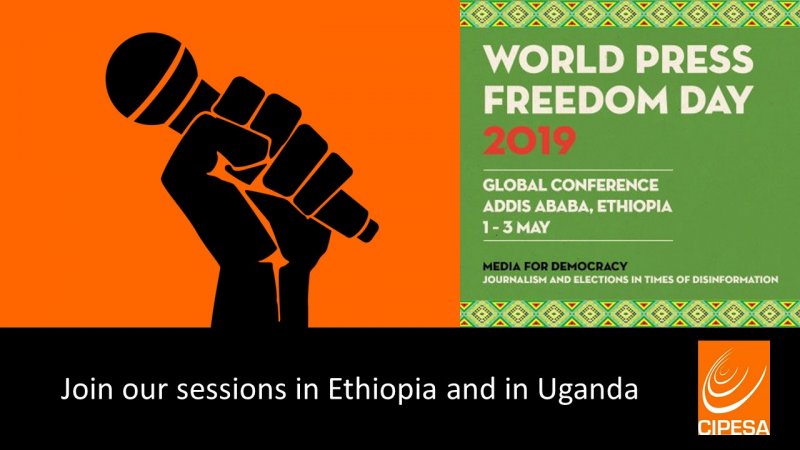
This year marks the 26th celebration of WPFD and is themed, “Media for Democracy: Journalism and Elections in Times of Disinformation”. The day will be celebrated in more than 100 countries in addition to the main event that will take place in Addis Ababa, Ethiopia at the African Union Headquarters; and will serve as a platform to discuss current challenges faced by media during elections, as well as the media’s potential in supporting peace and reconciliation processes.
In his annual WPFD message, United Nations Secretary-General António Guterres has recently stated: “No democracy is complete without access to transparent and reliable information. It is the cornerstone for building fair and impartial institutions, holding leaders accountable and speaking truth to power.”
Unfortunately, the media and ordinary citizens in several countries are increasingly facing limitations to their freedom of expression, access to information, and the right to associate. This has been witnessed in the  Sub-Saharan context where up to 22 African governments have ordered network disruptions in the last four years – while since January 2019, seven African countries – Algeria, Benin, the Democratic Republic of Congo (DR Congo), Chad, Gabon, Sudan and Zimbabwe – have experienced various forms of network disruptions.

See Despots and Disruptions: Five Dimensions of Internet Shutdowns in Africa

Many of these states have often cited the need to preserve public order and national security as the basis for their disruption of digital communications. The necessity to control fake news, misinformation, and hate speech are also cited in justifying the blockage of access to the internet. However, these actions are also a direct affront to media freedom, often undermining the ability of journalists to gather and impart information, to file reports, contact sources, or verify stories.
This goes against the premise of democracy, particularly at a time when journalists need to robustly play their role as society’s watchdog and when citizens need access to a diverse pool of information to inform their decision-making. In an age of increasing disinformation including by state actors, it is fundamental that the channels of communication, and information sourcing, remain accessible by all to establish the credibility of information and to counter false information with facts.
To mark this year’s World Press Freedom Day (WPFD),  the Collaboration on International ICT Policy in East and Southern Africa (CIPESA) will participate at the global celebration in Ethiopia and at a national event in Uganda to speak about the relationship between network disruptions (such as internet shutdowns and social media blockages), freedom of expression and the role of the media.
Among the sessions CIPESA is participating on at the main WPFD event is one titled “Understanding Electoral Information Flows: Mapping the Impact of Digital Technology from Network Disruptions to Disinformation” which is hosted by The Global Network Initiative (GNI). It  will map the different ways that digital technology impacts election-relevant information flows, as well as the inter-relationships between these impacts with the goal of developing a systems and data flowchart that can help policy makers, companies, elections administrators, elections observers, media, and other stakeholders identify and mitigate risks, improve planning and coordination, and enhance transparency around their efforts to support elections.
This will be followed by a CIPESA-organised  session titled “Keeping It On at Election Times: Navigating the Dilemma, Mapping Good Practices,” which will discuss trends and implications of network disruptions on journalists, activists, and civil society organisations. They will assess current efforts to address the policy gaps that exist and opportunities for expanding the network of advocates against internet shutdowns. Further, the session will explore and best practices of how countries can keep communications on at contentious times such as during elections.
The various sessions will include representatives from the World Web Foundation, Media Foundation for West Africa, Global Network Initiative (GNI), Addis Ababa University, Gobena Street / Addis Zebye, Committee for the Protection of Journalists (CPJ), International Media Support (IMS) and Facebook.
In Uganda, CIPESA will speak at a session titled “The impact of internet shutdowns on freedom of expression and the right to information during elections”. The Ugandan event is organised by the African Centre for Media Excellence (ACME) and various partners who include CIPESA, the Uganda Human Rights Commission, the American Embassy in Uganda, the Human Rights Network of Journalists, and Freedom House.
CIPESA World Press Freedom Day Sessions
Ethiopia:

  • May 3 (Parallel Session 11): Understanding Electoral Information Flows: Mapping the Impact of Digital Technology from Network Disruptions to Disinformation
    • Time: 14h00 – 15h30
    • Location: Medium Conference room
  • May 3 (Parallel Session 16): Keeping It On at Election Times: Navigating the Dilemma, Mapping Good Practices
    • Time: 16h00 – 17h30
    • Location: Small Conference Room 3

Uganda
 

  • May 3: The impact of internet shutdowns on freedom of expression and the right to information during elections
    • Time: 14.15 – 15.00
    • Venue: Golf Course Hotel, Kampala

Déclaration conjointe pour le maintien d’un internet ouvert et sécurisé durant l’élection présidentielle du 24 Février 2019 au Sénégal

#KeepItOn |

Nous, la coalition pour un Internet libre et ouvert:

Réaffirmons que l’internet ouvert, accessible et sécurisé, en particulier durant les élections, facilite la libre circulation et l’accès à l’information, en plus de favoriser la liberté d’expression en ligne et hors ligne.  

Nos organisations sont préoccupées par la récente tendance d’interférences illégitimes dans les communications en ligne, la déclaration menaçante d’agents publics et des services de sécurité, ainsi que la ratification d’un projet de loi imparfait sur les communications électroniques datant de 2018, peuvent être considérées comme une tentative majeure de faire taire les voix critiques en ligne et de limiter ainsi la liberté d’expression. Le contrôle excessif des médias publics, l’influence et la pression indirecte exercée par le gouvernement en place et ses alliés sur de nombreux médias traditionnels, ainsi que les récents actes de violence à l’encontre de journalistes sont problématiques et affaiblissent le processus démocratique au Sénégal

Nous  demandons d’urgence à toutes les parties prenantes d’assurer la stabilité et l’accessibilité d’internet avant, pendant et après la prochaine élection présidentielle du 24 Février 2019 au Sénégal. Au nom des plus de 170 organisations provenant de plus de 60 pays qui forment la coalition #KeepitOn, nous vous implorons de garder l’internet ouvert.

Les coupures d’internet heurtent les droits humains et l’économie

Les recherches montrent que les coupures de courant sur le web et la violence vont de pair. [1], [2] Les coupures perturbent la libre circulation de l’information et créent un masque obscur qui protège les violations des droits de l’homme de tout contrôle public. En particulier durant les élections, les journalistes et les professionnels des médias ne peuvent pas contacter des sources, rassembler des informations ou archiver des articles sans outils de communication numériques [3]. Les citoyens n’ont pas accès aux informations critiques, notamment concernant les bureaux de vote et les résultats des élections. Justifiées par diverses raisons, les interruptions du web coupent l’accès à des informations vitales, au commerce électronique et aux services d’urgence, plongeant des communautés entières dans la peur. Les perturbations déstabilisent également la capacité d’internet à soutenir les petites entreprises et à stimuler le développement économique. Une étude réalisée en 2016 par la Brookings Institution, un groupe de recherche de premier plan, a révélé que les coupures d’internet avaient drainé 2,4 milliards de dollars de l’économie mondiale entre 2015 et 2016 [4].

Un internet ouvert favorise la créativité, l’innovation, l’accès à l’information et à des opportunités sociales, économiques, culturelles et politiques à travers le monde, comme aucun outil ne l’a fait auparavant. Les moyens techniques utilisés pour bloquer l’accès à l’information en ligne compromettent souvent de manière dangereuse la stabilité et la résilience d’internet. Les coupures d’internet ne doivent jamais devenir une normalité.

Au Sénégal, l’extension de l’accès à l’internet global demeure un facteur clé pour la réduction des fractures numériques et pour la concrétisation des engagements du Gouvernement envers sa stratégie Sénégal numérique 2016-2025 et les Objectifs De Développement durable (SDG). Nous estimons que les coupures d’internet coûteront au Sénégal près de   3 400 000 $ US environ en CFA 1 870 000 000 par jour en coûts économiques directs, en plus de ralentir la réalisation des droits économiques, sociaux et culturels dans son ensemble. [5]

Les coupures d’internet violent la loi internationale

Un nombre croissant de constatations et de conclusions indiquent que des perturbations intentionnelles de l’internet constituent une violation du droit international. Le Conseil des droits de l’homme des Nations Unies et l’Assemblée générale des Nations Unies ont adopté par consensus de nombreuses résolutions condamnant sans ambiguïté les coupures d’internet et les restrictions similaires à la liberté d’expression en ligne. Par exemple, le Conseil des droits de l’homme des Nations Unies dans sa résolution A/HRC/RES/32/13:

Condamne sans équivoque les mesures visant à empêcher ou à perturber intentionnellement l’accès ou la diffusion d’information en ligne, en violation des Droits humains protégés internationalement, et appelle tous les États à s’abstenir et cesser d’utiliser de telles pratiques.

Des experts des Nations Unies, de l’Organisation pour la sécurité et la coopération en Europe (OSCE), de l’Organisation des États américains (OEA) et de la Commission Africaine des Droits de l’Homme et des Peuples (CADHP) ont déclaré qu’une coupure d’internet ne peut jamais être justifiée sous le droit international relatif aux droits de l’homme, même en période de conflit. [6]

En novembre 2016, la Commission Africaine Des droits de l’ Hommes et des Peuples (CADHP) a adopté une résolution sur le droit à la liberté d’information et d’expression pour l’internet en Afrique, exprimant sa préoccupation face à «une pratique émergente des États d’interrompre ou de limiter l’accès aux services de télécommunication tels qu’internet, les médias sociaux et les services de messagerie, pratique de plus en plus courante durant les élections.» CADHP/Rés.362 (LIX).

Le Comité des droits de l’homme des Nations Unies, interprète officiel du Pacte international relatif aux droits civils et politiques, souligne dans l’Observation générale no. 34 que les restrictions sur le discours en ligne doivent être strictement nécessaires et proportionnées pour atteindre un objectif légitime. [7] Les coupures, en revanche, ont un impact disproportionné sur tous les utilisateurs et limitent inutilement l’accès à l’information et aux communications des services d’urgence lors de moments cruciaux. Les arrêts d’internet ne sont ni nécessaires ni efficaces pour atteindre un objectif légitime, car ils bloquent la diffusion d’informations, contribuent à la confusion et au désordre, en plus d’entraver la sécurité publique.

Nous vous demandons respectueusement d’utiliser votre position d’influence afin de:

  • Veiller à ce que l’internet, y compris les médias sociaux, demeure actif et accessible ;
  • Déclarer publiquement votre engagement à conserver l’internet ouvert et à informer le public de toute perturbation ;
  • Encourager les fournisseurs de services de télécommunication et d’internet à respecter les droits humains par la divulgation publique de politiques et de pratiques affectant les utilisateurs ;
  • Veiller au respect des directives de la déclaration Africaine des Droits et Libertés de l’Internet ;

Veiller au respect des directives sur l’Accès à l’Information et les Élections en Afrique.

                                                                                                Fait à Dakar, 19 février 2019

Access Now

African Development Solution Lab-Experts ( ADSL-E)

African Freedom of Expression Exchange (AFEX)

AFRICTIVISTES

Alioune NDIAYE – Presidentrzd

Alliance for Affordable Internet – A4AI

APPEL

ARTICLE 19 Afrique de l’Est

ARTICLE 19 Sénégal Afrique de l’Ouest

Assane DIENG Etudiant – Chercheur

Association for Progressive Communications (APC)

ASUTIC

Bacary Domingo MANE – Journaliste

Balkissa Idé Siddo  

Collaboration on International ICT Policy for East and Southern Africa (CIPESA)

Collectif Sassoufit

Committee to Protect Journalists (CPJ)

CONGAD

Directeur de Pub www. Sene24.com

Emmanuelle M. FAYE – Journaliste Enquête

FORUM CIVIL

Forum for African Women Educationalists FORUM CIVIL

Human Rights Centre Somaliland

Ibra Seck CASSIS – Senegal Vote

Ibrahima NDOYE – Directeur de Pub www. Sene24.com

Internet Sans Frontières

Jeune Chambre Internationale

LSDH APPEL

Magueye SOW – Atlas Network

Media Foundation for West Africa

Modibo DIOP – Euratrade SA

Moussa Fara DIOP – Jeune Chambre Internationale

Moussa TALL – AIESEC

NetBlocks

OpenNet Africa

Oumy Régina SAMBOU – Journaliste

Paradigm Initiative

PEN America

RADDHO

Right 2 Know Campaign, South Africa

The PACT ( Projet pour une alternance crédible au Tchad )

Unwanted Witness, Uganda

World Wide Web Foundation