Mozambique’s Internet Shutdown Case: African Courts Draw a Line on Executive Power

By CIPESA Writer |

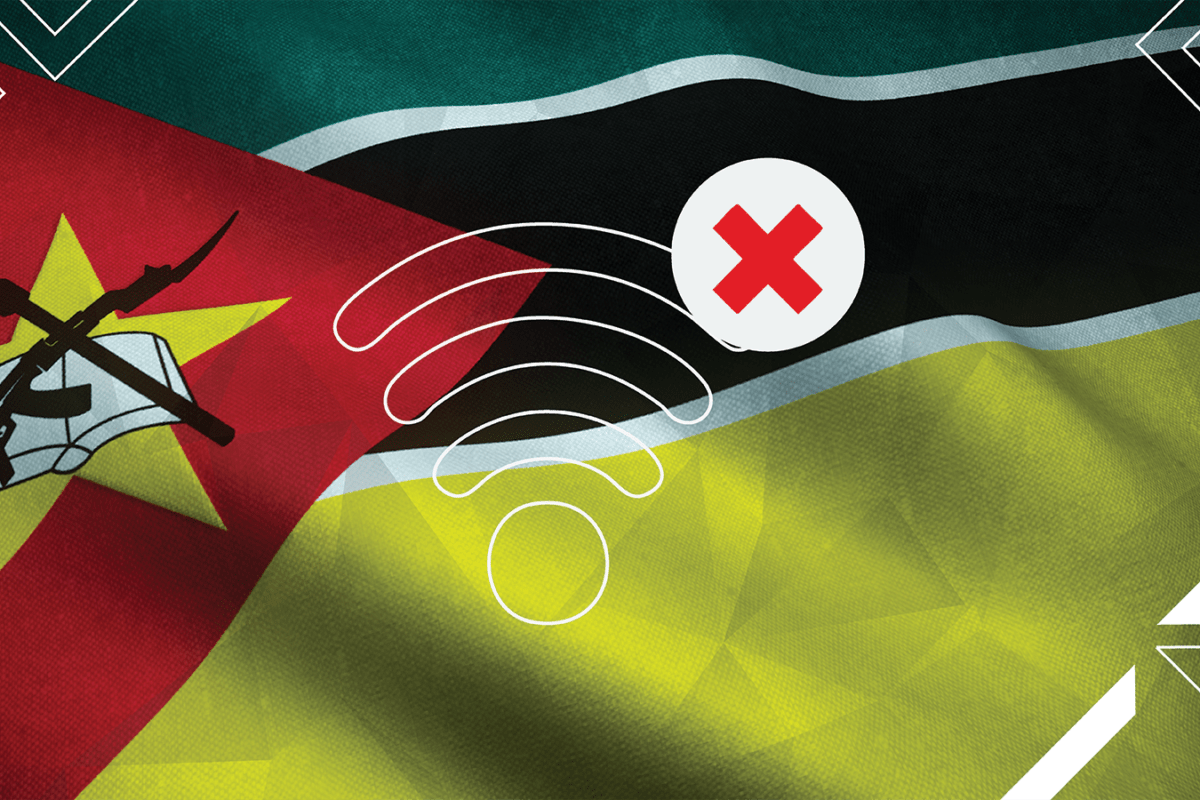
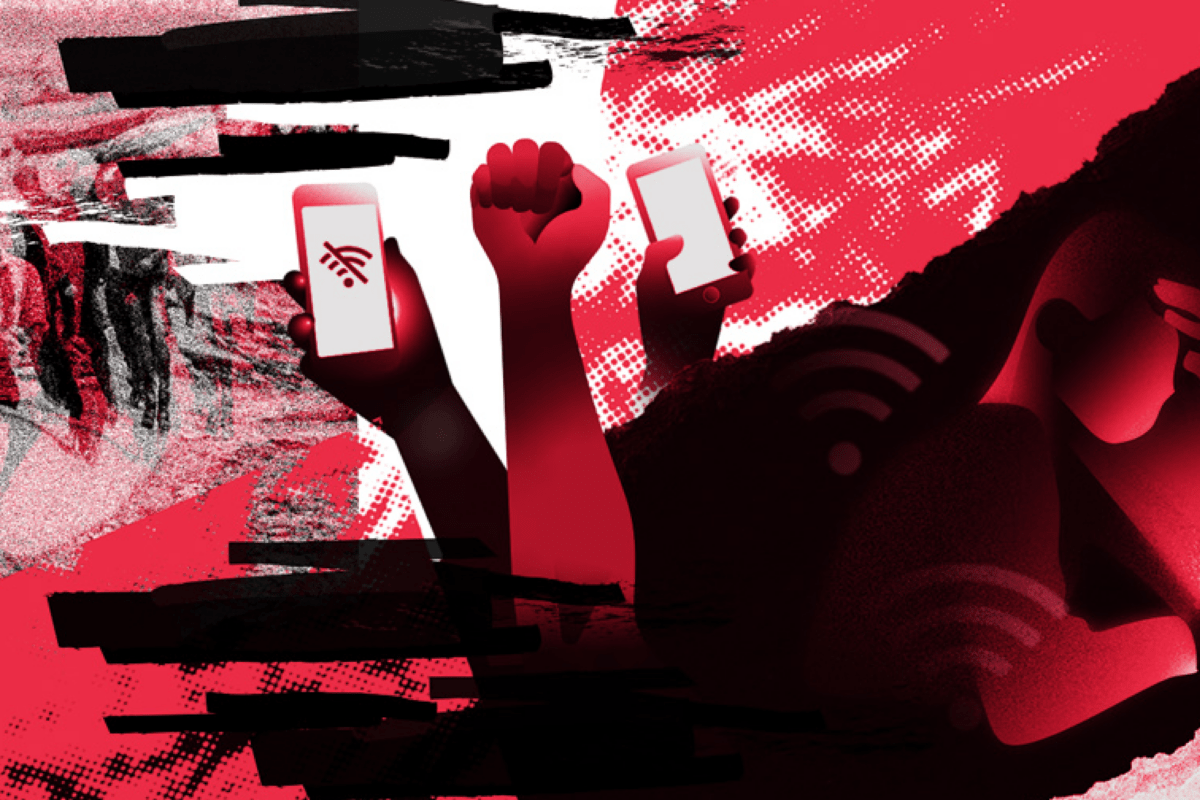
In July 2026, Mozambique’s Constitutional Council ruled that before a government can justify an internet shutdown, it must first have lawful authority to order one. The ruling signifies that before governments restrict connectivity, they must be able to show not only that the power to do so was lawfully created, but that it was exercised by a legally authorised authority.

The ruling comes against a wider pattern across the continent, where governments have used internet shutdowns to silence dissent and restrict fundamental rights.

The Constitutional Council declared 18 provisions of the Telecommunications Traffic Control Regulation (Decree No. 48/2025) unconstitutional, following a petition from the Center for Democracy and Human Rights. These provisions granted the telecommunications regulator, the National Communications Institute of Mozambique (INCM), broad powers to control telecommunications traffic, collect user data, intervene in operators’ networks using its own technology without their consent, and monitor communications on stated grounds including protecting state security and mitigating fraud.

The Council’s ruling was not about a recently imposed internet shutdown. Instead, it examined provisions of the regulation that gave the authorities powers to monitor communications, collect data, suspend telecommunications services and intervene in networks. The question was whether those powers could be created through regulation without a sufficient basis in legislation enacted by Parliament. The Council found that they could not, holding that the executive had effectively assumed the role of Parliament in defining the essential content of fundamental rights.

The Council described this as “organic unconstitutionality” and held that powers capable of restricting fundamental rights could not be created through executive regulation alone, but required parliamentary legislation that complies with constitutional and human rights protections.

In the Constitutional Council’s words, the provisions “substituted the Government for the Assembly of the Republic’s legislature in defining the essential content of fundamental rights”, contrary to Article 178 of the Constitution.

The Mozambique ruling also helps clarify three contentious questions emerging in shutdown litigation across the continent. What law permits the restriction, and who is authorised to order it? Which rights does it affect, including freedom of expression and access to information? And even where a legal power exists, is the restriction genuinely necessary and proportionate to the stated aim?

A Regional Pattern of Unlawful Interference
Mozambique’s ruling mirrors a broader African legal front against arbitrary internet shutdowns. Across the continent, governments have used shutdowns to restrict political opposition, communication, mobilisation, assembly, association and protest, in some cases without a sufficient legal basis.

In January 2019, the High Court of Zimbabwe ruled that the state security minister had no legal authority under the Interception of Communications Act to order an internet shutdown or issue an intercept directive to mobile network operators. The shutdown was ordered amid nationwide protests against rising fuel prices, but was later restored.

In Togo, the ECOWAS Community Court of Justice found that Togo’s three-day internet shutdown during the 2017 protests violated freedom of expression under Article 9 of the African Charter because it lacked authorisation under national law. The Court also ordered compensation to the applicants for the violation of their right to freedom of expression. The judgment affirmed that access to the internet enables people to exercise rights that are already protected, particularly freedom of expression and access to information.

In Nigeria, the court reached a similar conclusion, finding that the government’s seven-month suspension of Twitter violated freedom of expression, access to information, and media freedom. It described access to the platform as “a derivative right that is complementary to the enjoyment of the right to freedom of expression.”

The case of Association des Blogueurs de Guinée (ABLOGUI) and three others against Guinea shows that a legal basis alone is not enough. In that case, the ECOWAS Court found that restrictions on internet and social media access between October and December 2020 violated the applicants’ rights to information and freedom of expression. The case reinforces the rule that a government must show not only that a restriction is authorised by law, but also that it serves a legitimate aim and is necessary and proportionate.

In Senegal, the shutdowns imposed during the 2023 unrest violated freedom of expression and access to information for both applicants. The court also upheld Ndiaga Gueye’s individual claim that the shutdown violated his right to work as an IT consultant. The case illustrates that shutdowns can disrupt far more than speech. They can cut people off from work and other essential digital services, while disrupting journalism, education, payments and access to health information.

Strengthening Preventive Safeguards
Courts are not the only institutions shaping this debate. For years, the African Commission on Human and Peoples’ Rights (ACHPR) has set continental standards on open internet access. The Commission’s resolutions and declarations do not carry the same legal force as court judgments. Still, they provide important guidance on how African states should protect freedom of expression, access to information, and access to the internet.

Its 2019 Declaration of Principles on Freedom of Expression and Access to Information in Africa, Principle 38(2), provides that states “shall not engage in or condone any disruption of access to the internet and other digital technologies for segments of the public or an entire population.”

In March 2024, the Commission went further in Resolution 580, calling on states to ensure open and secure internet access before, during, and after elections, and to refrain from ordering shutdowns or disrupting digital communication platforms during the electoral process.

Conclusion
Despite judicial victories, the threat remains pervasive, and litigation alone is insufficient when judgments arrive years after the harm. In 2025, the #KeepItOn coalition recorded 30 shutdowns across 15 African countries.

There must be independent oversight, public transparency, and effective ways for people affected by an unlawful restriction to challenge it and seek redress. Telecommunications operators should also be protected from being forced to carry out unlawful orders. Only then can we ensure that the digital rights of millions are protected from the arbitrary exercise of power.

Mozambique’s ruling affirms that digital rights are not subject to executive whim. Governments must respect the rule of law, ensuring that restrictions on connectivity that limit fundamental rights are grounded in parliamentary legislation and subject to rigorous constitutional safeguards.
#KeepItOn: Authorities Must Reverse Social Media Shutdown Order and Restore Access in Gabon

#KeepItOn |

We, the undersigned organizations, and members of the #KeepItOn coalition — a global network of over 345 human rights organizations from 105 countries working to end internet shutdowns — urgently demand the government of Gabon to immediately reverse orders to shut down social media indefinitely in the country. The order is in gross violation of national and international human rights frameworks and must not be allowed to continue.

In a televised announcement on February 17, 2026, Jean-Claude Mendome — spokesperson for the High Authority for Communication (HAC) — announced the immediate suspension of social networks to prevent the “spread of false information.” The spokesperson claimed the measures were necessary to protect national unity and prevent social conflict. According to the Open Observatory of Network Interference (OONI), as of February 18, 2026, access to major social media platforms including Facebook, WhatsApp, TikTok, Instagram and YouTube is being blocked in the country.

The directive comes amidst ongoing anti-government protests and a labour strike in Gabon. Restricting access to critical digital platforms in times of uncertainty stifles the freedom of expression and the right to access information. These platforms do not only facilitate social communications, they also serve as platforms for economic empowerment. Additionally, evidence shows that blocking access to vital communication platforms amplifies the spread of misinformation.

The #KeepItOn coalition has documented multiple incidents of shutdowns in Gabon in the past, most recently during the August 2023 elections. As polls closed on August 26, 2023, authorities shut down the internet even as they declared Ali Bongo the winner. Internet access was only restored on August, 30, 2023, following a military coup that annulled the election results and deposed the Bongo administration.

Prior to this, in 2021, Access Now and the #KeepItOn coalition documented instances of internet access throttling aimed at suppressing protests against government COVID-related measures. In 2019, Gabonese authorities shut down internet and broadcasting services following an attempted coup. In 2016, the government activated the kill switch in response to protests, clashes, looting, and arrests in the capital, Libreville, following the re-election of former President Ali Bongo. We urge President Nguema’s government not to fall into the same dangerous pattern, uphold human rights and ensure unfettered access for all.

Internet shutdowns contravene national and international legal frameworks. Article 1(2) of the Constitution of Gabon guarantees the right to freedom of expression. International instruments to which Gabon is a signatory, including the African Charter on Human and Peoples’ Rights and the International Covenant on Civil and Political Rights similarly make express provision for these rights. While these rights are not absolute, their limitations must be necessary and proportionate, as asserted by the United Nations (UN) Human Rights Committee in General Comment No.34.

Clement N. Voule, the UN Special Rapporteur on the rights to freedom of peaceful assembly and association, highlighted in his report the crucial role of digital technologies in expanding opportunities for the enjoyment and exercise of peaceful assembly and association rights and also raised concerns about the use of these technologies by state and non-state actors “to silence, surveil and harass dissidents, political opposition, human rights defenders, activists, and protesters.”

The 2016 African Commission on Human and Peoples’ Rights (ACHPR) Resolution also recognizes the “importance of the internet in advancing human and people’s rights in Africa,” expressing concern over the “emerging practice of State Parties interrupting or limiting access to telecommunication services such as the internet, social media, and messaging services.” The Declaration of Principles on Freedom of Expression and Access to Information in Africa 2019 calls upon States not to “engage in or condone any disruption of access to the internet and other digital technologies for segments of the public or an entire population.”

Telecommunication companies have a duty to uphold human rights and undertake proactive steps to mitigate rights-violating practices such as internet shutdowns. The UN Guiding Principles on Business and Human Rights provide guidelines on how companies can promote human rights due to their unique position between authorities and the end user. The principles make specific recommendations including performing due diligence when entering new markets and implementing transparency measures around government directives.  We call on telecommunications companies and internet service providers (ISPs) operating in Gabon — including Moov Gabon, Gabon Telecom, and Airtel Gabon — to refrain from enforcing the shutdown orders received from the authorities and undertake urgent measures to provide the people of Gabon with open, and secure access to the internet and digital communication tools at all times

Access Now and members of the #KeepItOn coalition call on the government of Gabon, ISPs as well as relevant actors, and urge the following:

  • The Gabonese government must immediately revoke the shutdown directive, restore access, and refrain from imposing network disruptions in the future; and
  • We urge Moov Gabon, Gabon Telecom, and Airtel Gabon to stop enforcing shutdown orders, push back against illegal government directives, and uphold their duty to respect people’s rights in Gabon.

Signatories

  • Access Now
  • Activate Rights
  • Afia-Amani Grands-Lacs
  • Afghanistan Democracy and Development Organization (ADDO)
  • African Freedom of Expression Exchange (AFEX)
  • Africa Freedom of Information Center (AFIC)
  • Africa Open Data and Internet Research Foundation (AODIRF)
  • AfricTivistes
  • Bloggers Association of Kenya (BAKE)
  • Bloggers of Zambia- BloggersZM 
  • Center for Media Studies and Peacebuilding (CEMESP)
  • Collaboration on International ICT Policy for East and Southern Africa (CIPESA)
  • Committee to Protect Journalists (CPJ)
  • Conexión Segura y Libre (CSL)
  • Digital Access
  • Digicivic Initiative
  • Digital Resilience Development (Tajikistan)
  • Digital Rights Watch (DRW) 
  • EG Justice 
  • Foundation for Internet Rights and Innovation (FIRI)
  • Freedom Forum, Nepal
  • Gambia Press Union (GPU)
  • Human Rights Journalists Network Nigeria
  • Initiative for Embracing Humanity in Africa (IEHA)
  • Internet Governance Tanzania Working Group (IGTWG)
  • Internet Without Borders
  • International Press Centre (IPC)
  • International Press Institute (IPI)
  • JCA-NET(Japan)
  • Jonction, Senegal
  • KICTANet
  • Kijiji Yeetu
  • Life campaign to abolish the death sentence in Kurdistan Network
  • LIM NGUEN FOUNDATION [LNF]-SOUTH SUDAN
  • Media Foundation for West Africa (MFWA)
  • Media Rights Agenda (MRA)
  • Office of Civil Freedoms
  • Open Observatory of Network Interference (OONI)
  • Organization of the Justice Campaign
  • Pakistan Press Foundation 
  • Paradigm Initiative (PIN)
  • Robert & Ethel Kennedy Human Rights Center
  • Rudi International
  • SMEX
  • Tech & Media Convergency (TMC)
  • Ubunteam
  • West African Digital Rights Defenders Coalition
  • Women of Uganda Network (WOUGNET)
  • YODET
  • Zaina Foundation

CIPESA Condemns Ongoing Internet Disruption in Uganda

Statement |

The Collaboration on International ICT Policy for East and Southern Africa (CIPESA) condemns the ongoing internet disruptions in Uganda and urges the government to immediately restore full access to social media platforms, blocked websites, and mobile money services. We further call upon the Government of Uganda to cease and desist from ordering internet throttling and blockages, which unjustifiably deny citizens the right to express themselves and to access, share and disseminate information. Internet disruptions further limit the public’s ability to conduct business, access public services, participate in community and civic affairs, socialise, and maintain contact with friends, family, and associates.

CIPESA joins numerous independent observers who have strongly condemned the disruptions to digital communications, including the Uganda Law Society, which has described the disruptions as unlawful. While the Uganda Communications Act (2013) grants powers to the national communications regulator, according to the Uganda Law Society, the Uganda Communications Commission (UCC) may order a blockage of communications following a formal declaration of a state of emergency. No such state of emergency was declared at the time the regulator ordered a nationwide shutdown two days before the January 15, 2026, polls. Government officials said the disruption was aimed at curbing the spread of online misinformation, electoral fraud, and incitement to violence in the lead-up to the elections.

As affirmed by the African Commission’s Special Rapporteur on Freedom of Expression and Access to Information, as well as global civil society organisations, governments must refrain from imposing network disruptions and instead address security or public order concerns through lawful, necessary, and proportionate measures. Indeed, internet shutdowns and restrictions are a disproportionate measure that violate Uganda’s constitutional guarantees and its regional and international human rights obligations, including those under the African Charter on Human and Peoples’ Rights.

Furthermore, CIPESA is concerned by the broader pattern of repression, including relentless attacks on civil society organisations. In the days preceding the elections, several organisations working on media rights, democratic governance, and human rights protection were suspended, in what appears to be a deliberate attempt to silence independent voices. This broader crackdown on civic space also included the arrest of human rights defender Sarah Bireete, Executive Director of the Centre for Constitutional Governance, further illustrating the shrinking environment for civil society and human rights work in the country.

A free, independent, and vibrant civil society is indispensable to any democratic society and should not be treated as government adversaries. The Government of Uganda should therefore recognise civil society organisations as legitimate and valuable partners in improving livelihoods, strengthening rights protection, and advancing democratic governance and socio-economic transformation.

Similarly, CIPESA urges the government to immediately cease attacks against journalists and media workers, particularly those from independent media houses and journalists who are critical of government actions. These violations, which have been widely documented by national and international actors, including the United Nations, undermine media freedom and the public’s right to access information, especially during electoral periods.

Uganda’s Election and the Lingering Legacy of Internet Blockage

By Juliet Nanfuka |

In two days, as Uganda heads to its presidential and parliamentary elections slated for January 15, 2026, citizens, civil society actors, journalists, and digital rights defenders were stumped with the question, “will they shut down the internet again?” Or, this time, will we see a commitment to adherence to one of the basic fundamentals of digital democracy and have an election in which access to digital communications remains open?  

In recent weeks, anxiety about an impending internet blackout has surged despite Dr. Aminah Zawedde, Permanent Secretary of the Ministry of ICT and National Guidance, and Hon. Nyombi Thembo, Executive Director of the Uganda Communications Commission (UCC), dismissing rumours of plans to shut down the internet, calling them “false and misleading”.

However, for many, these pronouncements have done little to quell suspicions, especially due to the actions witnessed during the 2016 and 2021 elections. During those previous two elections, access to digital communications was restricted, resulting in a block to online communication, commerce, and key avenues for civic engagement.

Various actions in the lead up to the polls have also served to compound the suspicions. In a report issued in January 2026, the United Nations Office of the High Commissioner for Human Rights (OHCHR) describes the arrests of state critics as “arbitrary and discriminatory” and outside of the country’s constitutional guarantees.

Despite the strong constitutional protection of rights, the human rights situation in Uganda during the period under review has been characterized by increasingly restrictive legislation and their arbitrary and discriminatory application. The Government of Uganda has continued to rely on legislation such as the Public Order Management Act (POMA), the Anti-Terrorism Act, the NGO Act, the Computer Misuse (Amendment) Act and the Penal Code Act to shrink civic and democratic space and further weaken political participation, particularly of political opponents and their supporters, as well as the work of civil society, including journalists and human rights defenders.” OHCHR Report on Uganda

Meanwhile, independent media has come under increasing pressure, experiencing various forms of clampdowns in the lead up to the elections, including the denial of advertising spend. In October 2025, independent outlets – NTV Uganda and The Daily Monitor – were denied accreditation to cover parliamentary and presidential proceedings. Reports of harassment, equipment confiscation as well as attacks on journalists during election campaign coverage, and raids on media offices, have been commonplace – underscoring a deteriorating environment for media freedom.

Meanwhile the satellite internet provider Starlink, which has services that can operate independently of terrestrial networks, was halted in Uganda after a regulatory directive in early January 2026, rendering all Starlink terminals inactive ahead of polling day. The satellite internet service provider was providing  services without a valid local license. Critics still argue that the directive serves to limit alternatives for connectivity in the event of broader restrictions on internet access, feeding anxieties about reduced access to independent channels of information.

The UCC has also come under fire following its warning to broadcasters and digital content creators against live coverage of riots, protests, or incidents that could disrupt public order. The regulator stated that only the Electoral Commission may declare election results, and sharing unverified results is illegal. Dr. Zawedde stated, “Media platforms must not be abused to incite violence, spread misinformation, or undermine the credibility of the electoral process.”

By the afternoon of January 13, 2026, a directive circulating online had been issued by UCC to mobile network operators to block public access to the internet, effective at 18:00.

In a public statement, Access Now and the global #KeepItOn coalition had urged President Yoweri Museveni and relevant national authorities to ensure unrestricted internet access throughout the electoral period and to refrain from any disruptive measures that impede the free flow of information. The statement stresses the fundamental role that connectivity plays in inclusive participation, freedom of expression, and the credibility of the electoral process.

Likewise, the African Commission on Human and Peoples’ Rights (ACHPR) also reaffirmed that internet access is a core human right and a necessary condition for free and fair elections, warning against restrictions that would stifle civic space. The Commission called on the Government of Uganda to ratify the African Charter on Democracy, Elections and Governance, signed on January 27, 2013, which emphasises the importance of a culture of peaceful change of power based on regular, free, fair and transparent elections conducted by competent, independent and impartial electoral bodies.

For democracy to flourish in Uganda, authorities must demonstrate their commitment to open digital spaces. This means not only publicly guaranteeing uninterrupted internet access before, during, and after the elections but also building trust through transparency and accountability.  Citizens deserve to communicate freely, monitor the electoral process, and hold all actors accountable without fear of arbitrary disruption.

Ultimately, Uganda’s electoral credibility will not be judged by what happens at polling stations, but by whether the state resists the temptation to control information by disrupting digital access. In an era where civic participation, journalism, election transparency, and even livelihoods heavily rely on digital access, a disruption would signal a fear of accountability.

If the government chooses restraint in the coming hours, it would mark a major departure from a troubling past and offer Ugandans a rare assurance in the election process. If it does not, history will record yet another election where the digital access was shut down to presumably manage dissent rather than protect democracy.

CIPESA Joins Six Civil Society Organisations in Landmark Case Challenging Internet Shutdowns in Kenya

Press Release |

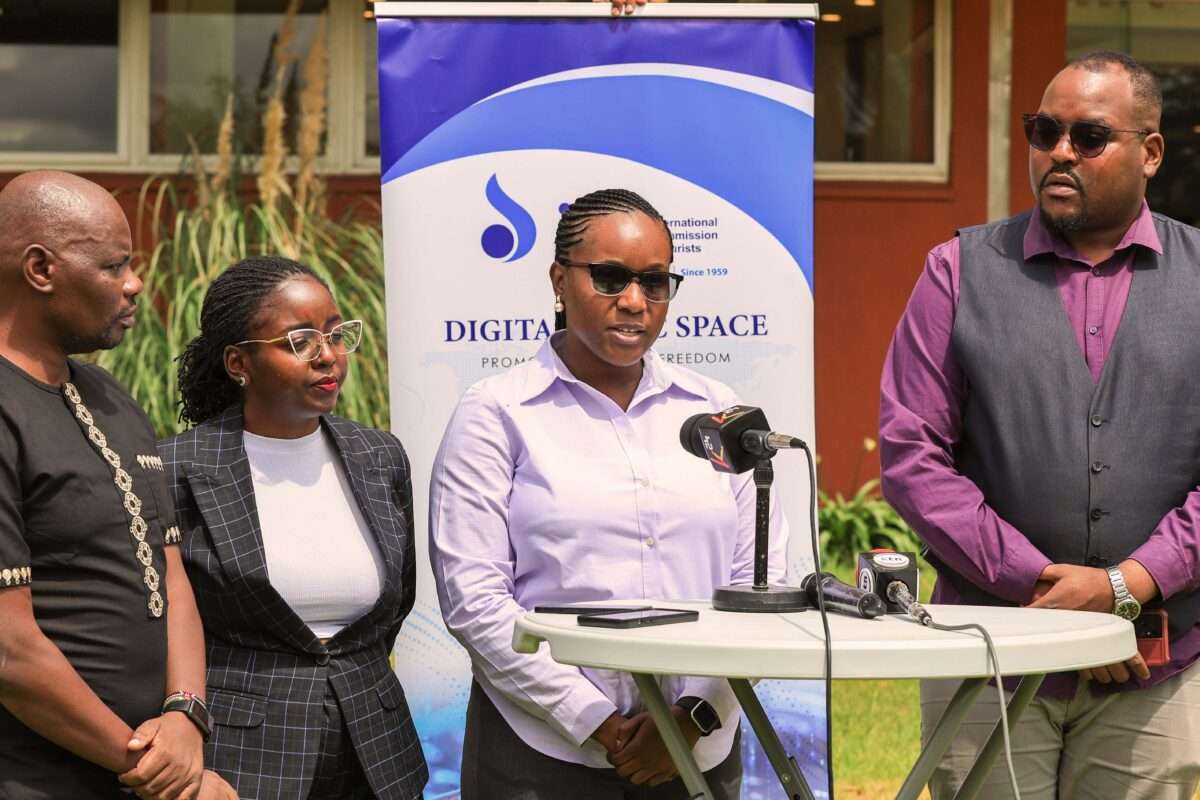
Nairobi, Kenya – In a significant step toward safeguarding digital rights and constitutional freedoms, the Collaboration on International ICT Policy for East and Southern Africa (CIPESA) and six other organisations have filed a landmark public interest case before the High Court of Kenya to challenge the arbitrary and unlawful disruptions of internet access in the country.

The petitioners – Bloggers Association of Kenya (BAKE), Katiba Institute, Kenya Union of Journalists (KUJ), Law Society of Kenya (LSK), Paradigm Initiative (PIN), the International Commission of Jurists – Kenya Section (ICJ Kenya), and CIPESA, seek judicial redress following recurring internet disruptions during critical national moments, including the 2024 #RejectFinanceBill protests and the 2024 Kenya Certificate of Secondary Education (KCSE) examinations.

Following the filing of the case, High Court Justice Bahati Mwamuye issued interim orders prohibiting any interference with internet access until the case is heard and determined. The legal challenge targets the Communications Authority of Kenya (CA), the Attorney General, the Cabinet Secretary for Information, Communications and the Digital Economy, and service providers Safaricom and Airtel Kenya.

The petition relies on technical evidence from Cloudflare, the Open Observatory of Network Interference (OONI), and the Internet Outage Detection and Analysis (IODA), which confirms instances of intentional internet throttling and platform blocking, such as the disruption of Telegram.

“These unlawful internet shutdowns directly violate rights enshrined in the Kenyan Constitution, including freedom of expression (Article 33), media freedom (Article 34), access to information (Article 35), and economic and social rights (Article 43),” said Eric Mukoya, Executive Director of ICJ Kenya.

Speaking on behalf of CIPESA, Patricia Ainembabazi, Policy and Advocacy Officer, stated:

“This is a trend-setting moment for Kenya as a country to uphold the rule of law and adhere to the African Commission on Human and Peoples’ Rights Resolution 580, which speaks directly to freedoms of expression and deters internet shutdowns. With the recent positive ECOWAS Court judgments in Guinea, Togo and Nigeria, we hope that East Africa will do better.”

The case marks a pivotal moment in the defence of the digital civic space in Kenya. The petitioners argue that any restriction to internet access must be subject to strict legal scrutiny under Article 24 of the Constitution, which requires any limitation to be lawful, necessary, and proportionate.

“The outcome of this case will have far-reaching implications for millions of Kenyans who rely on unimpeded connectivity for livelihoods, education, and civic engagement,” said Kennedy Kachwanya, Chairperson of BAKE. “We call upon civil society, media partners, and the international community to amplify this crucial fight for digital rights as a cornerstone of Kenya’s democratic future.”

This collective legal action is part of a growing continental movement to resist digital repression and promote rights-respecting governance in Africa’s digital age.

Signed,

1. Bloggers Association of Kenya (BAKE)

2. Collaboration on International ICT Policy for East and Southern Africa (CIPESA)

3. Katiba Institute

4. Kenya Union of Journalists (KUJ)

5. Law Society of Kenya (LSK)

6. Paradigm Initiative (PIN)

7. The International Commission of Jurists, Kenya Section (ICJ Kenya)

Resources:

Petition by ICJ Kenya, BAKE & others against CA, AG & others on Internet Shutdowns in Kenya is here.

Internet Shutdown Case Court Orders, Download PDF here.

1 2 3 7