African Commission Resolution to Bolster Data Governance

By Edrine Wanyama |

The Resolution adopted by the African Commission on Human and Peoples’ Rights (ACHPR) during its 81st Ordinary Session held from October 17 to November 6, 2024 in Banjul, The Gambia potentially bolsters data protection and governance on the African continent.

The Resolution calls upon states parties to take all relevant measures to ensure transparent and accountable collection, processing, storage and access to data. It also underscores the importance of ethical principles in data usage, equitable access to data, and addressing biases to prevent structural inequalities while safeguarding privacy and combating discrimination.​

The resolution acknowledges the rapid advancement of technology and the increased dependence on data in governance and socio-economic development, and is in line with the African Union Convention on Cyber Security and Personal Data Protection, African Union’s Data Policy Framework, and the Digital Transformation Strategy for Africa (2020–2030).

Similarly, this timely resolution aligns closely with the vision of the Global Digital Compact (GDC), which calls for inclusive, rights-based governance of digital technologies and artificial intelligence (AI), and the ACHPR’s Resolution 473 on the need to undertake a study on human and peoples’ rights and AI, robotics and other new and emerging technologies. These frameworks emphasise the potential of data and digital technologies while cautioning against risks such as bias, inequities, unwarranted surveillance, and privacy violations.

By embedding human rights principles in digital governance, both the ACHPR’s Resolution 473 and the GDC advocate for responsibly leveraging digital tools to reduce inequalities and protect vulnerable populations. The ACHPR’s focus on equitable data access and capacity-building within African states resonates with the GDC’s call for global collaboration to address disparities in digital infrastructure and skills. Together, these initiatives present a unified agenda to ensure that digital technologies and AI are harnessed for equity, justice, and sustainable development that foster a shared vision for a more inclusive digital age.

The ACHPR Resolution further urges state parties to ensure open access to data which is in possession of public and private in public interest, in accordance with the prescribed regional and international human rights standards.

The Resolution reinforces the African Union’s Data Policy Framework which, among others, seeks to maximise the benefits of the data-driven economy for African countries. With common anticipated benefits, data governance systems will be harmonised to enable secure and free data flow on the continent which potentially contributes to a people-centred approach which is not inward-looking for individuals, institutions and businesses and, enhances data utility for accelerated attainment of Agenda 2063 and the Sustainable Development Goals (SDGs).

There is increasing recognition of the need for data governance frameworks that create a safe and trustworthy digital environment, foster intra-Africa digital trade, enable states’ cooperation on data governance, enable domestication of continental policies, and ensure free and secure data flows across the continent. As such, the  Resolution also calls for the establishment of collaborative mechanisms, coordinating data issues, enabling and facilitating competitiveness in the global economy, promoting sustainable data use and benefits to society, as well as facilitating innovative ways to promote and maximise benefits of data for the African peoples.

Besides, the Resolution will potentially grow the impetus of Regional Economic Communities (RECs) to adopt harmonised data governance systems, which will quicken continental initiatives such as the African Continental Free Trade Area (AfCFTA) Agreement whose growth and benefits depend on secure and free cross-border data flows. For instance, the East African Community (EAC) and the Southern African Development Community (SADC) are set to develop regional data governance policy frameworks with the aim of harmonising data governance in the region for economic growth and regional integration.

The Resolution echoes sentiments shared in various panels at the September Forum on Internet Freedom in Africa 2024 (#FIFAfrica), which highlighted contemporary issues in data governance in Africa, including in collection, management, and processing of data. The Forum emphasised the role of national and regional actors in policy harmonisation, enabling greater cross-border data flows, maximising the benefits of data for all countries and all citizens, and the need for greater privacy protections over personal data. Among others, speakers at FIFAfrica singled out  national parliaments, RECs, civil society organisations, the African Union, and the private sector as having pivotal roles to play in promoting effective data governance.
Explorer le paysage complexe des droits numériques au Sahel : Parole aux défenseurs

Par Simone Toussi |

Les pays de la région sahélienne, tels que le Burkina Faso, le Mali et le Niger, présentent un environnement périlleux pour les défenseurs des droits humains, au moment où des régimes militaires s’enlisent au pouvoir. L’espace numérique, autrefois perçu comme un symbole de liberté d’expression et d’accès à une information plurielle, est progressivement assiégé, les droits à la vie privée, à la liberté d’expression et à l’accès et au partage d’informations y étant de plus en plus restreints.

Si ces pays font face à des problématiques numériques communes à d’autres pays francophones d’Afrique – interruptions d’Internet, surveillance étatique, censure en ligne et instrumentalisation des lois sur la cybersécurité et la désinformation –, le renversement des gouvernements civils par l’armée y a aggravé le niveau d’autoritarisme.

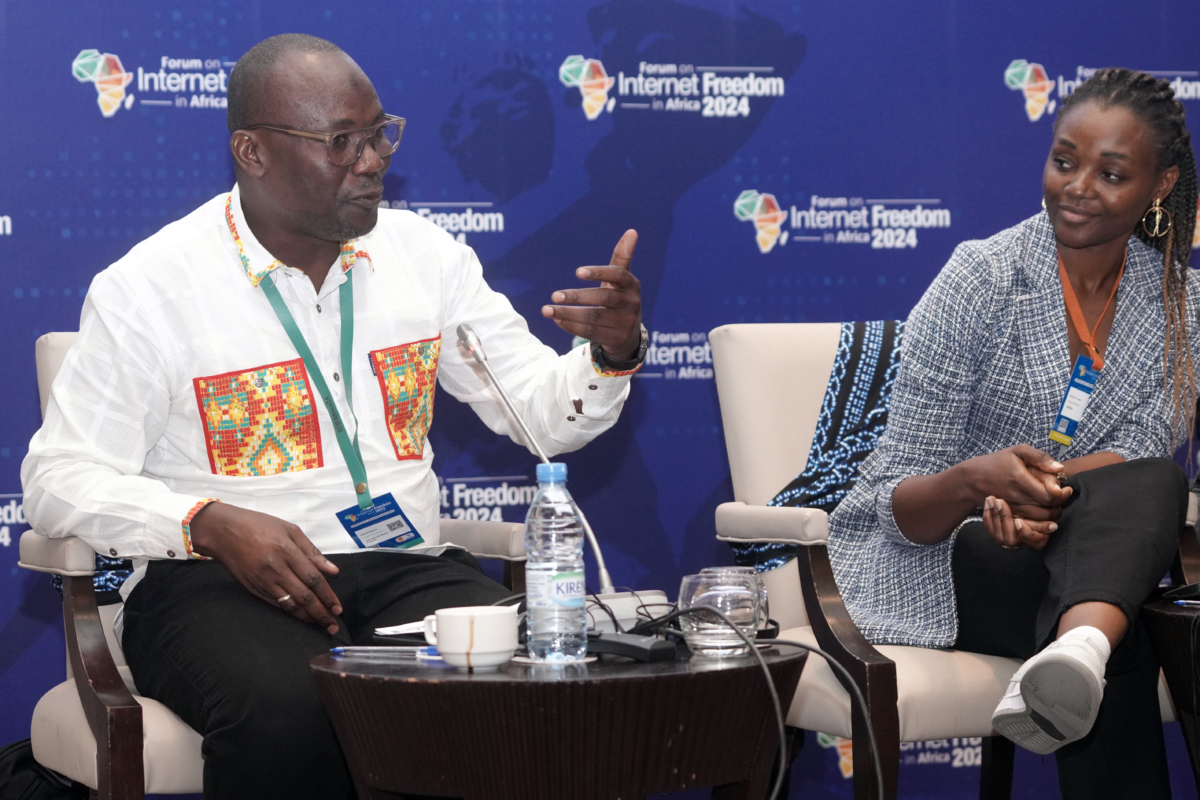
Lors du Forum sur la liberté de l’Internet en Afrique – organisé par la Collaboration sur les Politiques Internationales des TIC pour l’Afrique de l’Est et Australe (CIPESA) et AfricTivistes en septembre 2024 à Dakar, Sénégal – des experts se sont réunis pour discuter des défis croissants et des opportunités en matière de droits numériques dans la région. Le panel a élucidé la position précaire des défenseurs des droits humains et le rôle ambivalent des technologies numériques, qui exacerbent autant qu’elles offrent des solutions à ces défis.

Dans le cadre des efforts de CIPESA pour lutter contre les troubles de l’information en Afrique subsaharienne et équiper les acteurs au plaidoyer pour de lois numériques plus justes, le panel a abordé des questions critiques relatives aux droits numériques ainsi que des problématiques sociales pressantes comme l’inégalité de genre, les conflits armés et la détérioration de la liberté de la presse, tout en examinant le cadre réglementaire émergent y afférent.

Les défenseurs des droits humains au Sahel, notamment les activistes pour les droits des femmes et les journalistes, rencontrent d’immenses difficultés en raison de l’instabilité politique, de la violence armée et des régimes autoritaires, qui imposent de sévères restrictions à la liberté de la presse, à la circulation de l’information et aux activités de la société civile.

Djibril Saidou, de International Media Support (IMS), a souligné que les défis des droits numériques au Sahel vont au-delà de la protection de la liberté d’expression. « Il s’agit de garantir l’accès à l’information sur des questions urgentes comme les droits des femmes et les conflits armés », a-t-il déclaré. Dans ces contextes difficiles, il a affirmé que les efforts d’intervention devraient se concentrer sur la résistance à la censure et le renforcement de la résilience des défenseurs des droits numériques et de la démocratie.

Chantal Nare, blogueuse féministe de Bloggueuses226 et activiste burkinabè, a partagé son expérience de militante pour les droits des femmes dans un environnement aussi fragile. Elle a évoqué la peur constante de représailles et de surveillance, qui entrave l’expression libre, même sur les plateformes numériques. Chantal a soulevé une question cruciale : « Comment les plateformes numériques comme WhatsApp ou les blogs peuvent-elles être utilisées pour protéger et autonomiser les femmes sans les exposer à davantage de risques face aux acteurs étatiques ou extrémistes ? »

Urbain Yameogo, du Centre d’Information et de Formation sur les Droits Humains en Afrique (CIFDHA), a cité l’abus des lois sur la cybercriminalité et le terrorisme pour restreindre la liberté d’expression. « La loi antiterroriste de 2015 au Burkina Faso permettait aux journalistes un certain accès à des informations sensibles liées au terrorisme. Cependant, les révisions du Code pénal en 2019 ont supprimé ces exemptions, exposant les journalistes à des poursuites pour des actes qu’ils exerçaient dans le cadre de leur travail, comme l’accès aux sites liés au terrorisme. Cette modification a créé une zone grise juridique qui rend les journalistes et les défenseurs des droits humains vulnérables à des persécutions. »

Les panélistes ont souligné que les journalistes de la région, rapportant sur des sujets sensibles comme le terrorisme et les violations des droits humains, sont de plus en plus poursuivis sous des lois sur la cybercriminalité, plutôt que sous les lois traditionnelles sur la presse, qui offraient historiquement plus de protection. Ce changement compromet les droits des journalistes à rapporter librement, car les lois sur la cybercriminalité, souvent mal définies, peuvent être interprétées de manière extensive pour réprimer un travail journalistique légitime.

Face au défi de défendre les droits numériques dans un climat de peur des représailles des régimes militaires, certains participants ont souligné la nécessité d’exercer une prudence extrême et d’adopter une approche conciliatrice dans leur travail. Cheikh Fall, de l’organisation régionale des droits humains AfricTivistes, a affirmé : « Parfois, il faut choisir entre la vie et la liberté. Dans les pays du Sahel sous régime militaire, les droits numériques sont éclipsés par le besoin immédiat de survie. Cette réalité souligne que la lutte pour les droits humains fondamentaux est indissociable du combat pour la liberté. »

Des propositions ont été faites pour créer des lois unifiées traitant à la fois des enjeux numériques et médiatiques. Cependant, étant donné les craintes que ces lois puissent renforcer la répression plutôt que protéger les libertés, un dialogue inclusif et des processus politiques participatifs ont été jugés cruciaux. Cela permettrait de garantir une meilleure protection non seulement pour les journalistes et les défenseurs, mais aussi pour les femmes et d’autres groupes vulnérables. À cet égard, Chantal Nare a appelé à une législation englobant les formes de répression physique et numérique.

Outre les réformes juridiques, les panélistes ont également insisté sur la nécessité d’une formation renforcée à la sécurité numérique et d’une collaboration accrue entre les acteurs locaux et internationaux.

East and Southern African National Human Rights Commissions Trained in Digital Rights Protection

By CIPESA Writer |

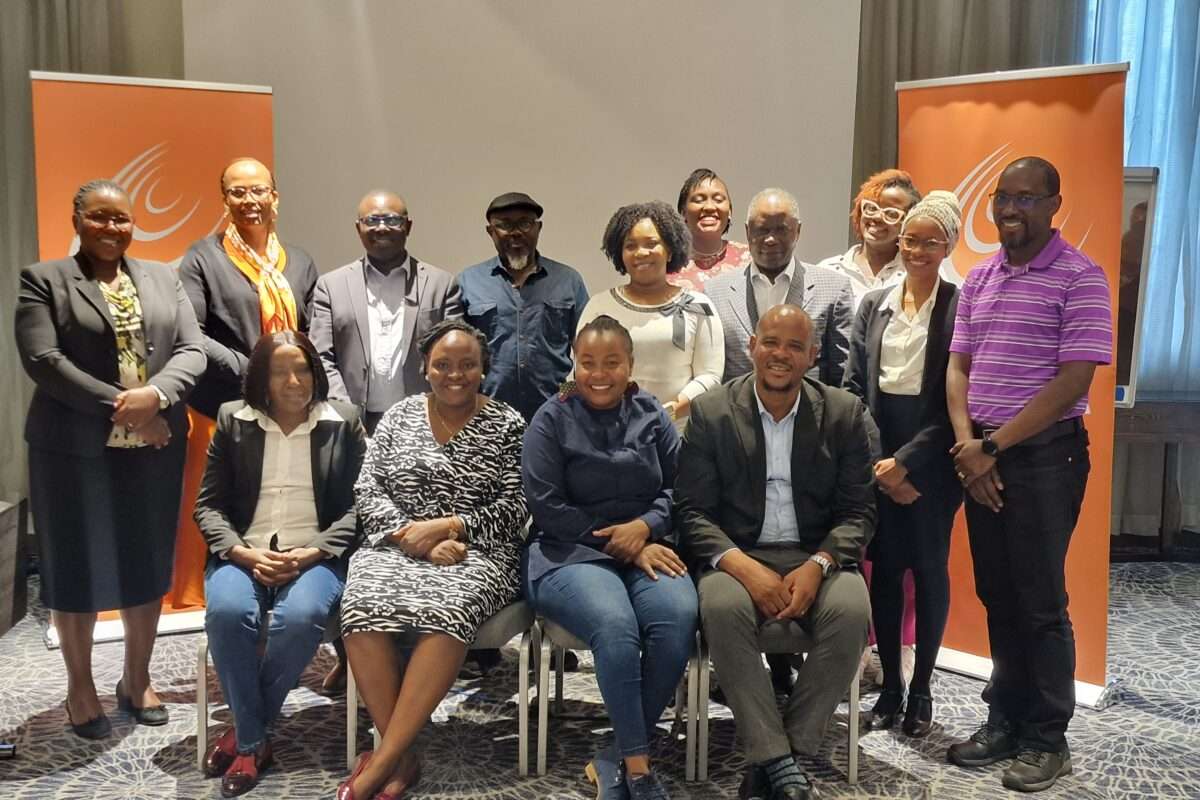
As part of its ongoing efforts to enhance the ability of African National Human Rights Institutions (NHRIs) to monitor, protect, and promote digital freedoms, the Collaboration on International ICT Policy for East and Southern Africa (CIPESA) last month conducted a two-day capacity-building training that attracted NHRI representatives from Lesotho, Mozambique, Tanzania, Uganda, Zimbabwe, and Zambia.

The two-day training that was held in Nairobi, Kenya, on June 25 and 26, 2024, sought to empower staff of NHRIs in the region to engage with the opportunities and challenges that digital technology poses for human rights protection and monitoring of digital rights. In his opening remarks, CIPESA Executive Director Dr. Wairagala Wakabi noted that NHRIs play a critical role in the protection and promotion of human rights, and given the deteriorating state of digital rights in the region, it was important that they are equipped to deal with the intersection between the digital and the traditional human rights. According to the Paris Principles, NHRIs are required to have a broad mandate that allows them to effectively execute their mandate of promoting and protecting human rights, both offline and online.

The Nairobi training followed a similar training that CIPESA conducted in Ethiopia for staff of the Ethiopian Human Rights Commission (EHRC), who identified key actions the commission could integrate in its annual work plans, such as digital rights monitoring, advocacy for enabling laws to be enacted, and developing tools for follow up on implementation of recommendations on digital rights by treaty bodies and the United Nations Human Rights Council.

Digital Rights as Human Rights

Digital rights have been recognised at both international and regional levels. For example, in 2018, during its 38th session, the United Nations Human Rights Council adopted resolution A/HRC/RES/38/7 that reaffirmed that “the same rights that people have offline must also be protected online.” In 2016, the United Nations General Assembly passed a non-binding resolution on “the promotion, protection, and enjoyment of human rights on the Internet,” condemning any measures taken by state parties to prevent or disrupt internet access and calling upon them to refrain from and cease any such measures.

In March 2024, the African Commission on Human and Peoples’ Rights passed resolution ACHPR.Res.580 (LXXVIII)2024 on Internet Shutdowns and Elections in Africa “reaffirming the importance of access to the internet in the digital age and its implication for the realisation of human rights”. The resolution called upon member states to “refrain from ordering the interruption of telecommunications services, shutting down the internet, and/or disrupting access to any other digital communication platforms before, during or after the elections.”

Challenges Facing NHRIs

In many cases, African NHRIs have found themselves operating in an increasingly hostile environment with limited funding and hostility from state agencies, who sometimes view their role as countering and incriminating the government in human rights violations. In addition, because of the limited funding, many NHRIs are not in a position to recruit or improve the level of expertise among their staff members, especially when it comes to new and emerging technologies and how they affect the enjoyment of human rights. Participants acknowledged that, in many cases, they are always playing catch-up when it comes to legislation, yet they are supposed to be the primary advisors and reviewers of draft laws related to human rights.

In his remarks, Victor Kapiyo, one of the trainers, noted that the adoption of digital technologies has brought up new human rights issues, particularly as governments have reacted by enacting laws that have, for the most part, served to stifle human rights as opposed to facilitating their enjoyment. On the other hand, digital technologies have also facilitated the spread of hate speech, disinformation, and technology-facilitated gender-based violence. It is important that NHRIs keep enhancing their capacity to monitor, investigate, and protect against violations of digital rights by both governments and private actors, including big tech companies.

Practical Strategies for NHRIs

During the training, participants discussed an array of strategies that they can adopt to monitor, document, and protect digital rights, including the use of practical legal and policy guidance set out in the Rabat Plan of Action, as well as Guiding Principles on Business and Human Rights when engaging with governments and business entities especially technological companies in regards to their obligations to respect, protect and promote human rights.

Participants also noted the need to engage with security agencies, the justice department, and policymakers on issues of digital rights. It was noted that because the concept of digital rights in Africa is new and evolving with limited understanding and jurisprudence, NHRIs need to constantly retool themselves on the emerging issues if they are to execute their mandates effectively. Other strategies included building coalitions and collaborations with civil society actors, the media and academia to help unpack and create awareness about digital rights.

The training was facilitated by trainers from CIPESA, Internews, the International Centre for Non-Profit Law, and the Kenya National Cohesion and Integration Commission (NCIC).

Job Opportunity: Project Assistant

Call for Applications |

The Collaboration on International ICT Policy for East and Southern Africa (CIPESA) is seeking a Project Assistant to support implementation of activities under the USAID/Uganda Civil Society Strengthening Activity (CSSA).

Job Title: Project Assistant

Location: Kampala, Uganda

Duration: Two (2) years Full time with a possibility of renewal

Reports to: Project Officer

Job Summary:

The Project Assistant will support in the planning, execution, monitoring and reporting of the Civil Society Strengthening Activity at CIPESA. Duties include assisting in research, capacity building/training, outreach and advocacy. The position is based at CIPESA’s offices in Kampala, Uganda, with frequent travel within the country.

About CIPESA

Established in 2004, the Collaboration on International ICT Policy in East and Southern Africa (CIPESA) is a leading centre for research and analysis of information aimed to enable policy makers in the region to understand ICT policy issues, and for various multi-stakeholders to effectively use ICT to improve governance and livelihoods. CIPESA works to defend and expand the digital civic space to enable the protection and promotion of human rights and to enhance innovation and sustainable development. We  focus on disparate actors including government, the private sector, civil society, media, policy makers and multinational institutions.

The Project

The Uganda Civil Society Strengthening Activity (CSSA) is a five-year  USAID-funded Activity (now in the Fourth year of implementation) that is implemented by East-West Management Institute (EWMI) in partnership with the International Center for Not-for-Profit Law (ICNL). Under the project, CIPESA works to contribute to Component 3, whose goal is to promote a more supporting enabling environment that sustains a vibrant civil society in Uganda; increased in-country resources and capacity of CSOs to navigate government requirements and restrictions; and Ugandan-led initiatives to improve the CSO enabling environment. Activities include providing legal technical assistance, assisting CSOs to navigate and adapt to the restrictive environment and enhancing multi-sectoral CSO collaboration to promote and defend the enabling environment.

Duties and Responsibilities:

  • Assist in organising trainings in media and information literacy, digital safety, digital rights.
  • Organise stakeholder engagements at national and regional levels.
  • Produce information, education and communication materials for awareness raising and advocacy on the project including through blogs, briefs, commentaries and impact stories.
  • Support research undertakings including data collection and analysis.
  • Conduct field visits and follow up meetings with project beneficiaries.
  • Liaise with CSSA partners on activity progress, deliverables and opportunities for collaboration.
  • Assist with strategic planning, reporting as well as monitoring and evaluation.
  • Perform any additional admin and project related activities as assigned that will enhance CIPESA’s work.

Qualifications and Skills:

  • A bachelor’s degree in law, project planning and management, social sciences, communication, social work and social administration, or related disciplines.
  • Two or more years of experience in programming with a reputable institution, preferably in civil society.
  • Understanding of the digital civic space in Uganda.
  • Excellent verbal, written, and presentation skills.
  • Knowledge of project management principles, practices, techniques and procedures including planning and project implementation.
  • High level of motivation, integrity, and commitment to teamwork.
  • Strong work ethic with an unwavering commitment to quality and professionalism.
  • Proficiency in the use of Microsoft Office Suite and all applications including Excel and PowerPoint.
  • Great team player with capacity to establish and maintain effective working relationships with staff, partners and the public.

How to Apply:

Applications including a cover letter outlining how you fit the job requirements and your areas of expertise; a CV; two writing samples (or alternative samples of your work); salary expectations, names and contacts of two referees should be submitted to [email protected].

The deadline for submissions is June 14, 2024, at 18.00 East African Time.

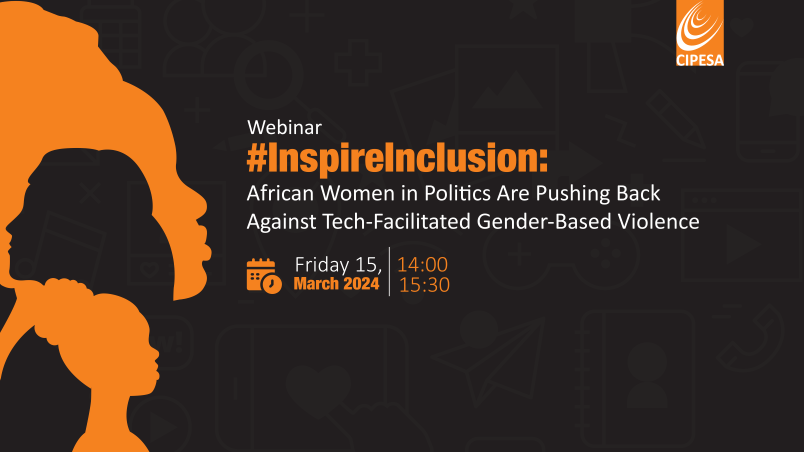
Webinar: How African Women in Politics Are Pushing Back Against Tech-Facilitated Gender-Based Violence

Event |

Gender diversity in political leadership is critical for promoting equity, inclusion, and economic benefits. However, gender disparities in political participation still exist globally, particularly in Africa. Digital technologies can assist in solving this disparity given their ability to give voice and civic agency to different political actors, especially women, and space for political engagement. As enshrined in Sustainable Development Goal 5 on Gender Equality, digital technologies have the potential to increase women’s inclusion, participation, and engagement in politics, providing them with a platform to have their voices heard. Indeed, women in politics are increasingly leveraging the power of various digital tools, and in particular social media platforms, to connect with their constituencies. 

Despite this reliance on online social platforms, women in politics have also become the targets of online threats and abuse. These attacks are heightened during election periods and when women voice dissenting opinions. This technology-facilitated gender-based violence (TFGBV) not only impedes women’s equitable and meaningful participation in public offices but also their long-term willingness to engage in public life. Further, it negatively influences the broader spectrum of women consuming or engaging with their content and consequently undermines the realization of the Sustainable Development Goals. 

Addressing these challenges is essential to ensure that digital technologies become true enablers for the enhancement of women’s participation in democracy and good governance, including in politics, rather than exacerbating existing disparities in Africa. 

This month, we join the global community in celebrating women under the themes of #InspireInclusion, which encourages the realisation of a gender-equal world free of bias, stereotypes and discrimination. However, amidst the global celebration, it is crucial to spotlight the  persistent TFGBV faced by African women in politics and the need to increase investment into addressing these concerns as highlighted by the United Nations campaign themed #InvestInWomen.

In an upcoming webinar, the Collaboration in International ICT Policy for East and Southern Africa (CIPESA) will focus on the importance of increased political inclusion of women in politics. The role of active online engagement will be highlighted as a key driver in enabling the needs of women in politics in various African countries and as a tool to meaningfully participate in the information society.  More importantly, the webinar will cast a spotlight on how women in active politics in various African countries are pushing back against the violence and negative narratives online and the role that legal frameworks and platforms have to play in addressing TFGBV associated with political spaces and discourse.  

Webinar details

Date:  March 15, 2024

Time: 14:00-15:00 (Nairobi Time).

Register to participate in the webinar here