Skilling Justice Actors in Digital Rights Advocacy in Africa

CIPESA Staff |

In June, 2022, the Collaboration on International ICT Policy for East and Southern Africa (CIPESA) conducted a regional capacity building workshop aimed at equipping participants with thematic understanding of key digital rights trends in the region, including disinformation, alongside practical skills development in impactful digital rights advocacy and communication.

Hosted in Lusaka, Zambia, the two-days workshop (June 28 and 29), attracted 20 participants from 10 African countries – Eswatini, Ethiopia, Kenya, Malawi, Mozambique, Rwanda, South Africa, Uganda, Zambia, and Zimbabwe.

According to Ashnah Kalemera, CIPESA’s Programme Manager, the training was part of various interventions through which, CIPESA is developing the capacity of different social justice organisations with the requisite skills to effectively engage in digital rights advocacy  including research methodology and communications, designing evidence-based advocacy strategies, as well as digital resilience.

“There is limited understanding of digital rights among traditional human rights defenders,  with many yet to make the direct link between technology, social justice and human rights as part of their advocacy efforts. Meanwhile, many are working in hostile environments, with shrinking civic space both online and offline,” said Kalemera. 

Although there has been a growing number of civil society and justice actors responding to and challenging government excesses over the years, there are still knowledge and skills gaps among actors that hinder their  engagement in meaningful policy advocacy. Findings from a 2017 joint research study conducted by CIPESA, Small Media, DefendDefenders, and the Centre for Intellectual Property and Information Technology Law (CIPIT) showed that in all of the countries surveyed (Burundi, Rwanda, Tanzania, and Uganda), civil society organisations (CSOs) failed to demonstrate a baseline of digital security knowledge, and/or failed to implement practices effectively.

The report notes that although the internet and related technologies have empowered CSOs to engage with the public, share information, and advocate for citizens’ rights in sometimes challenging and closed political environments, it has also offered means and tools that are used by state and non-state actors to interfere with their work, surveil them, and censor their voices.

In addition, digital security and safety skills are lacking among some of the most at-risk groups, yet trainers and support networks are in short supply. Without adequate digital security capacity, activists and human rights defenders are not able to meaningfully undertake advocacy and engagements around human rights, transparent and accountable governance.

CIPESA’s capacity building interventions are therefore designed and structured to provide both skills and knowledge modules and serve as a platform for developing collaborative advocacy strategies for advancing digital rights in the region. The training in Lusaka covered topics such as the interplay between technology, democracy and human rights; trends in digital rights violations such as arrests and intimidation of online users, internet blockages, surveillance and interception of communications. 

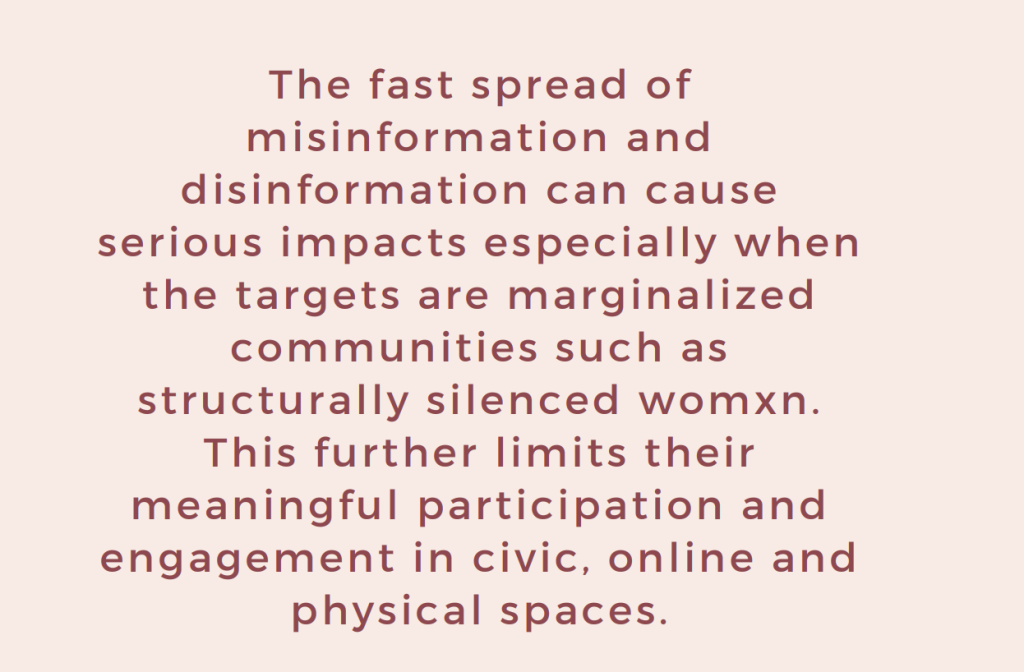
Other topics covered during the workshop were disinformation and human rights, which explored the implications of false and misleading information on online mobilisation and participation. Elsewhere, the workshop explored digital inclusion, with Zambia-based activist, Matha Chilongoshi of Revolt Media emphasising the need for increased engagement on the digital divide, online violence against women and girls and digital accessibility for persons with disabilities. In this regard, Kamufisa Manchishi, a Lecturer at the Mulungushi University – Zambia noted that the existing  digital disparities are a result of access and affordability barriers including failure by governments to design and implement universal service fund policies that prioritise equity. This calls for proactive efforts in policy influence for an inclusive digital society.

Indeed, as highlighted by Apolo Kakaire, the Advocacy and Communication Manager at the African Centre for Media Excellence (ACME), “in order for civil society’s work in Africa to impact government policy, help change attitudes and behaviour in society, and ultimately result in greater protections for internet freedom, there is a need to develop and implement robust advocacy and impactful communication strategies.

Post-evaluation of the training workshop indicated increased understanding of the key terms and concepts covered including the link between disinformation and freedom of expression, disinformation and internet shutdowns, and commitment by participants to apply the acquired knowledge and skills, including acting as infomediaries within their communities and organisations through awareness raising among colleagues, and conducting information verification prior to sharing.

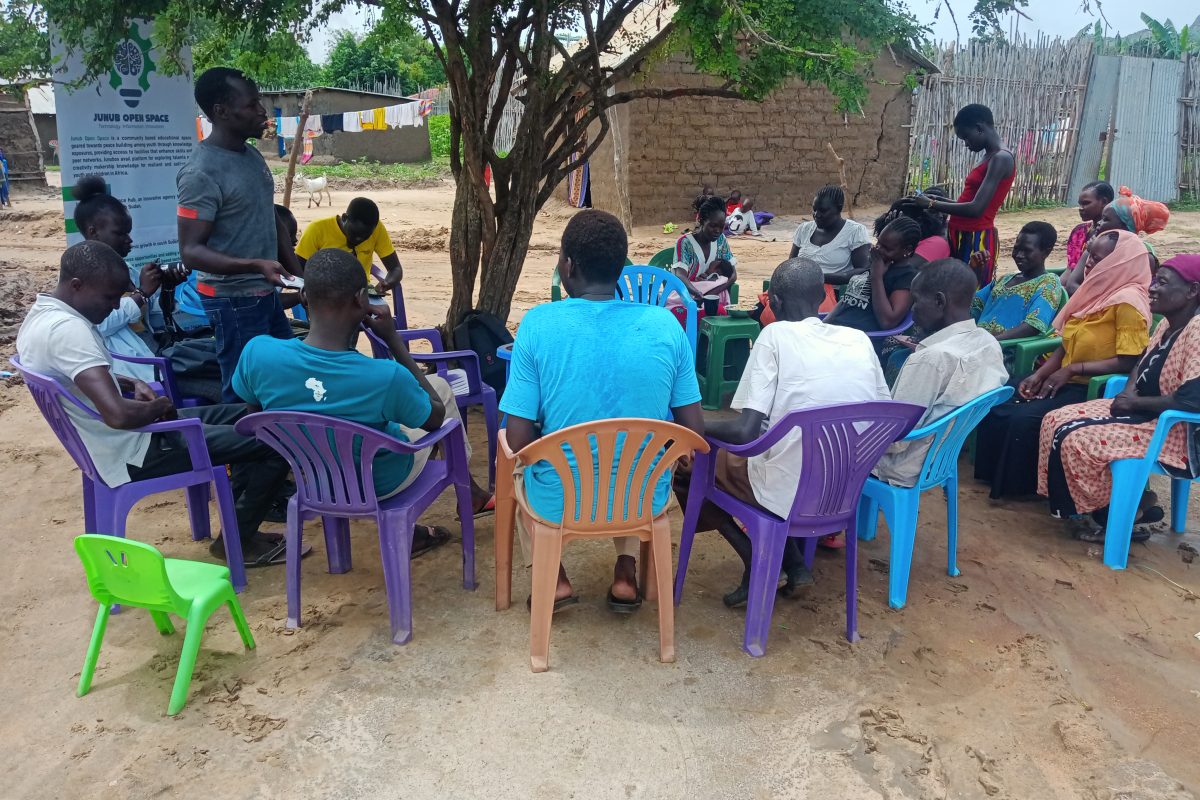
“As a communication officer, I will cross-check and make sure that all the information I am sharing is not deceitful while encouraging others to do the same,” noted one participant. Another participant indicated that they would work to get more involved in advocacy regarding disinformation laws that are detrimental to human rights. “We are planning to have a workshop with the grassroots women human rights defenders on disinformation and human rights and develop a digital rights advocacy and communication strategy.” The planned workshop will take place in Kenya’s largest urban informal settlement, Kibera, led by Tunapanda.

Call for Proposals: Round Six of the Africa Digital Rights Fund (ADRF)

Call for Proposals |

The Collaboration on International ICT Policy for East and Southern Africa (CIPESA) is pleased to issue the sixth call for proposals to the Africa Digital Rights Fund (ADRF), which supports digital rights work across the continent through flexible and rapid response grants.

Grant amounts for this round will range between USD 1,000 and USD 10,000, depending on the need and scope of the proposed intervention. The ADRF strongly encourages cost-sharing. The grant period will not exceed six months.

Launched in April 2019, the ADRF supports organisations and networks to implement activities that promote digital rights, including advocacy, litigation, research, policy analysis, skills development and movement building. As at August 2021, the ADRF had supported 45 initiatives with a total sum of USD 564,000. 

Grantees have advanced learning on the intersection of technology, society and the economy across the continent. Notable efforts include studying the role of technology in human trafficking, promoting data protection in digital financial services, digital rights coalition building, confronting online abuse against women, capacity development in digital literacy and security for refugees and pushing back against barriers to digital accessibility for persons with disabilities

Furthermore, the Fund has provided technical and institutional support in impact communications and data-driven advocacy to further enhance grantees’ capacity and ensure sustainability of their work.

Application Guidelines

Geographical Coverage

The ADRF is open to organisations/networks based and/or operational in Africa and with interventions covering any country on the continent.

Size of Grants

Grant size shall range from US$1,000 to US$10,000. Cost sharing is strongly encouraged.

Eligible Activities

The activities that are eligible for funding are those that protect and advance digital rights. These may include but are not limited to research, advocacy, engagement in policy processes, litigation, digital literacy and digital security skills building. The current call is particularly interested in proposals for work related to:

  • Data governance including aspects of data localisation, biometric databases and digital ID
  • Digital resilience
  • Digital economy
  • Digital inclusion
  • Misinformation/disinformation

Duration

The grant funding shall be for a period not exceeding six months.

Eligibility Requirements

  • The Fund is open to organisations and coalitions working to advance digital rights in Africa. This includes but is not limited to human rights defenders, media, activists, think tanks, legal aid groups, and tech hubs. Entities working on women’s rights, or with youth, sexual minorities, refugees, and persons with disabilities are strongly encouraged to apply.
  • The initiatives to be funded will preferably have formal registration in an African country, but in some circumstances organisations and coalitions that do not have formal registration may be considered. Such organisations need to show evidence that they are operational in a particular African country or countries.
  • The activities to be funded must be in/on an African country or countries.

Ineligible Activities

  • The Fund shall not fund any activity that does not directly advance digital rights.
  • The Fund will not support travel to attend conferences or workshops, except in exceptional circumstances where such travel is directly linked to an activity that is eligible.
  • Costs that have already been incurred are ineligible.
  • The Fund shall not provide scholarships.

Administration

The Fund is administered by CIPESA. An internal and external panel of experts will make decisions on beneficiaries based on the following criteria:

  • If the proposed intervention fits within the Fund’s digital rights priorities.
  • The relevance to the given context/country.
  • Commitment and experience of the applicant in advancing digital rights.
  • Potential impact of the intervention on digital rights policies or practices.

The deadline for submissions is Friday April 15, 2022. The application form can be accessed here.

African Countries Engage in Regional Dialogue Over Internet Universality Indicators Study

By UNESCO |

On 16 March 2022, UNESCO, jointly with the Collaboration on International ICT Policy for East and Southern Africa (CIPESA) convened a regional dialogue on implementing Internet Universality ROAM-X Indicators (IUI) in Africa.

The event, supported by the  International Program for Development of Communication (IPDC) of UNESCO,  gathered a number of leading  national actors and experts who shared best practice and lessons learned from implementing national assessments of ROAM-X indicators in Benin, Ethiopia, Ghana, Kenya, Niger and Senegal.

Juliet Nanfuka representing CIPESA opened the session by recalling that the event builds on CIPESA’s joint efforts and long-term partnership  with UNESCO to raise awareness on the intersection of access to information and application of the ROAM-X indicators  initiated at World Press Freedom Day celebrations in 2018 and the same year’s Forum on Internet Freedom in Africa as part of the International Day for Universal Access to Information (IDUAI).

Xianhong Hu, UNESCO’s focal point of the ROAM-X project, presented the global progress of assessing ROAM-X indicators in 45 countries and highlighted Africa as the leading continent with 17 countries having undertaken the assessment. Ms Hu stressed the urgent need to scale up the ROAM-X indicators’ assessments in more African countries to promote meaningful connectivity and humanistic digital transformation for advancing human rights and sustainable development.

“Africa needs to adjust its digital policy to be more inclusive and the ROAM-X indicators assessment would make a huge difference to support African countries’ inclusive digital transformation and build evidence-based policies.” Dorothy GordonChair of UNESCO’s Information For All Programme (IFAP)

Giving perspectives from West Africa, Professor Alain Kiyindou, Lead researcher of the assessment in Benin and Niger, pointed out the gender inequalities in access to Internet and in the workplace and called for more inclusion of African actors and vulnerable groups in the digital space as well as in the composition of national Multi-stakeholder Advisory Boards and research teams.

Also giving a West African perspective, Dr. Gideon Anapey, researcher for the assessment in Ghana, stressed that, “For African Member States to engage with UNESCO and initiate the ROAM-X project in the region, there is a strong need for capacity building that consists in deepening awareness on ROAM-X, fostering various stakeholders’ engagement, covering ICT integration and inclusion”.

Aderaw Tassew, Mr Asrat Mulatu (Ph.D), both representing Ethiopia and Ms Grace Githaiga from the Kenya ICT Action Network (KICTANet) presented on how they approached the assessment in their respective countries alongside highlighting the potential opportunities held by the indicators. Despite vast dissimilarities between the two countries in Internet access, they noted shared challenges unveiled by the assessment including on data collection, funding, political instability, weak legal frameworks and political will, digital literacy gaps, and various levels of the abuse of digital rights.

UNESCO and CIPESA jointly call for more African countries to take up the national assessment of ROAM-X indicators to promote Internet reforms for advancing media freedom and digital rights in Africa.  Following the webinar, in-country training sessions on the indicators will be conducted by CIPESA in Cameroon, Malawi, Namibia, Somalia and Uganda. Member States that are interested in  getting involved are invited to reach out to CIPESA: [email protected].

In 2015, the 38th General Conference of UNESCO endorsed a new definition on the Universality of the Internet based upon four principles – Rights, Openness, Accessibility to all and Multi-stakeholder participation- the ROAM principles. The four pillars outline a comprehensive framework for the assessment of national digital landscapes towards focusing on multiple dimensions of human rights, open Internet, quality of access and inclusive multi-stakeholder governance, promoting the growth and evolution of the Internet, and the achievement of the Sustainable Development Goals.

This article was first published by UNESCO on March 22, 2022

Call for Applications: Researching and Communicating Digital Rights in Africa

Call for Applications |

The Collaboration on International ICT Policy for East and Southern Africa (CIPESA) is calling for applications from individuals interested in learning, researching and communicating digital rights for a two-day virtual training.

The training seeks to equip participants with requisite skills as well as serve as a space to build a community of interdisciplinary digital rights researchers and advocates of digital rights in Africa.

The training, scheduled for 24-25 March, 2022 targets human rights defenders, academics, media, activists, technologists, and private sector actors from Lesotho, Mozambique, Tanzania, Uganda, Zambia, and Zimbabwe.

Topics to be covered will include:

  • Key issues shaping the digital rights landscape in Africa
  • Legal and policy frameworks governing digital rights in Africa.
  • Legal research for Internet policy and digital rights analysis
  • Survey methods in digital rights research
  • Monitoring surveillance, internet shutdowns and targeted malware
  • Strategic Communication, Visuals, and Using Research for Advocacy
  • Complete this  application form
  • Deadline for application is Friday, March 17, 2022
  • Successful applicants will be notified on Monday, March 21, 2022

CIPESA will cover participants’ internet connectivity costs.

FIFAfrica21: Stronger International Cooperation Key to Advancing Digital Rights in Africa

By Apolo Kakaire |

Constructive international cooperation will be key to shaping digital rights in Africa and creating a path towards an inclusive, safe and secure internet on the continent. This observation was at the heart of the eighth  edition of the Forum for Internet Freedom in Africa (FIFAfrica21) as it kicked off on September 28, 2021. 

In a keynote panel discussion, Ambassador Tadej Rupel, Ministry of Foreign Affairs of Slovenia, Presidency of the Council of European Union (EU) 2021, reiterated the need for a comprehensive partnership between the European Commission and the African Union (AU) to address the challenges that come with the wider advances in the  digital sphere.

He noted that many political actors view digitalisation through the lenses of the digital economy and yet there are more critical aspects to it. Accordingly, the Slovenian EU Presidency would work to raise political awareness and attention about the significance of digital rights. He called for policy dialogue as a precursor to addressing and reinforcing a human-centric agenda through sharing experiences, such as in regulatory expertise and frameworks, and underscored the need for cooperation in building cyber security, promoting cyber resilience, and increasing responsible state behaviour.

Ambassador Rupel said: “We are trying to solve similar challenges and we can all benefit from dialoguing on these issues. We cannot allow ourselves to pursue some things in isolation. We cannot talk about increased connectivity without talking about responsibility and safety. The partnership between AU and EU can play a big role in balancing sustainable, safe and a human-centric agenda for digital services.” 

Among the growing challenges that are key for EU-AU cooperation is safe and secure use of Artificial Intelligence (AI), which calls for streamlining the regulatory landscape and public sector policies in regulating AI governance, autonomous intelligence systems, and privacy/safety issues. “It is urgent that the Global Partnership on Artificial Intelligence prioritises bridging the gap between the theory and practice of AI,” said Ambassador Rupel. He said the Slovenia-based International Research Centre on Artificial Intelligence (IRCAI) could be developed into a centre of excellence on AI to drive multi-disciplinary research in the field. 

The keynote panel also noted that states were variously stifling citizens’ digital rights including the right to free expression and access to information. Samira Sawlani, a journalist, called for the establishment of mechanisms to ensure enforcement of guidelines and laws on access to information because, while many countries have legal and constitutional guarantees, the practice leans more towards impeding information disclosure. “One way to stop journalists from doing their work is to deny them information, and when a journalist is blocked then others also do not get this information and it is something we have seen before and even during the pandemic,” she said. 

Donald Deya, the Chief Executive Officer of the Pan African Lawyers Union (PALU), underscored the importance of stronger commitment from states to establish civil rights and digital rights standards at national, regional and continent level. So far, the commitment has been lacklustre. He cited the African Union Convention on Cybersecurity and Personal Data Protection, which requires only 15 countries to ratify it for it to come into force, yet currently only eight states have ratified.

Moreover, he noted, there is selective application of laws that has seen action taken against critics on such allegations as money laundering and terrosim. “The laws have issues but the culture of rule of law is a bigger problem – with laws being applied wrongly. We should cultivate the culture of doing what is right for the majority,” said Deya.

Meanwhile, there is growing concern that states are increasingly responding to criticism with draconian measures, such as internet shutdowns. According to Michèle Ndoki, a Cameroonian lawyer and activist, “there is a shift in muzzling dissenting views, which has the net effect of cutting off masses and also has widespread economic ramifications for individuals and the economy, and activists must respond to this growing threat”.

Digital taxation is another threat to the realisation of digital rights across the continent, which speakers indicated should be addressed under the proposed cooperation. As observed by one participant, “digital taxation has become a low hanging fruit for governments [in Africa] to tighten control of the digital space.” Deya said it was essential  to establish a fair global digital taxation formula, which could be pursued through the involvement of the United Nations (UN) Tax Committee.

Initiatives that could inform international cooperation include the Digital Transformation Strategy for Africa (2020-2030) which was launched in 2019, as well as human rights mechanisms such as the UN Human Rights Council, African Commission on Human and Peoples’ Rights (ACHPR) and the Special Rapporteur on Freedom of Expression and Access to Information.