Inform Africa Expands OSINT Training and DISARM-Based Research With CIPESA

ADRF |

Information integrity work is only as strong as the methods behind it. In Ethiopia’s fast-changing information environment, fact-checkers and researchers are expected to move quickly while maintaining accuracy, transparency, and ethical care. Inform Africa has expanded two practical capabilities to address this reality: advanced OSINT-based fact-checking training and structured disinformation research using the DISARM framework, in collaboration with the Collaboration on International ICT Policy for East and Southern Africa (CIPESA).

This work was advanced with support from the Africa Digital Rights Fund (ADRF), administered by CIPESA. At a time when many civic actors face uncertainty, the fund’s adaptable support helped Inform Africa sustain day-to-day operations and protect continuity, while still investing in verification and research methods designed to endure beyond a single project cycle.

The collaboration with CIPESA was not only administrative. It was anchored in shared priorities around digital rights, information integrity, and capacity building. Through structured coordination and learning exchange, CIPESA provided a partnership channel that strengthened the work’s clarity and relevance, and helped position the outputs as reusable methods that can be applied beyond a single team. The collaboration also reinforced a regional ecosystem approach: improving practice in one context while keeping the methods legible for peer learning, adaptation, and future joint work.

The implementation followed a phased timetable across the project activity period from April through November 2025. Early work focused on scoping and method design, aligning the training and research approaches with practical realities in newsrooms and civil society. Mid-phase work concentrated on developing the OSINT module and applying DISARM as a structured research lens, with iterative refinement as materials matured. The final phase focused on consolidation, documentation discipline, and packaging the outputs to support repeatable use, including onboarding, internal training, and incident review workflows.

A central focus has been an advanced OSINT training module built to move beyond tool familiarity into a complete verification workflow. Verification is treated as a chain of decisions that must be consistent and auditable: how to intake a claim, determine whether it is fact-checkable, plan the evidence, trace sources, verify images and videos, confirm the place and time, and document each step clearly enough for an editor or peer to reproduce the work. The aim is not only to reach accurate conclusions but also to show the route taken, including which evidence was prioritized and how uncertainty was handled.

This documentation discipline is not bureaucracy. It is a trust technology. In high-risk information environments, preserved sources, verification logs, and clear decision trails protect credibility, strengthen editorial oversight, and reduce avoidable errors. The module prioritizes hands-on, production-style assignments that mirror real newsroom constraints and trains participants to avoid overclaiming, communicate uncertainty responsibly, and present evidence in ways that non-expert audiences can follow.

In parallel, Inform Africa has applied the DISARM framework to disinformation research. DISARM provides a shared language for describing influence activity through observable behaviors and techniques, without drifting into assumptions. The priority has been to remain evidence-bound: collecting and preserving artifacts responsibly, maintaining a structured evidence log, reducing harm by avoiding unnecessary reproduction of inflammatory content, and avoiding claims of attribution beyond what the evidence supports. This DISARM-informed approach has improved internal briefs, strengthened consistency, and made incidents easier to compare over time and across partners.

Three lessons stand out from this work with CIPESA and ADRF. First, quality scales through workflow, not only through talent. Second, evidence discipline is a strategic choice that protects credibility and reduces harm in both fact-checking and research. Third, shared frameworks reduce friction by improving clarity and consistency across teams. Looking ahead, Inform Africa will integrate the OSINT module into routine training and onboarding and continue to apply DISARM-informed analysis in future incident reviews and deeper studies, reinforcing information integrity as a public good.

This article was first published by Informa Africa on December 15, 2025

CIPESA @Africa BitCoin Conference

Update |

Every year, the event brings together activists, innovators, and decision-makers to explore how Bitcoin safeguards fundamental freedoms, strengthens economic autonomy, and paves the way for lasting sovereignty. The event is taking place between December 3-5, 2025, at Caudan Arts Centre, Port Louis, Mauritius.

Click here for information on the event.

Uganda Data Governance Capacity Building Workshop

Event |

The AU-NEPAD and GIZ in collaboration with CIPESA are pleased to convene this three-day capacity-building and stakeholder engagement workshop to support the Government of Uganda in its data governance journey.

The three-day workshop will focus on providing insights into data governance and the transformative potential of data to drive equitable socio-economic development, empower citizens, safeguard collective interests, and protect digital rights in Uganda. This will include aspects on foundational infrastructure, data value creation and markets, legitimate and trustworthy data systems, data standards and categorisation, and data governance mechanisms.

Participants will critically evaluate regulatory approaches, institutional frameworks, and capacity-building strategies necessary to harnessing the power of data for socio-economic transformation and regional integration, in line with the African Union Data Policy Framework.

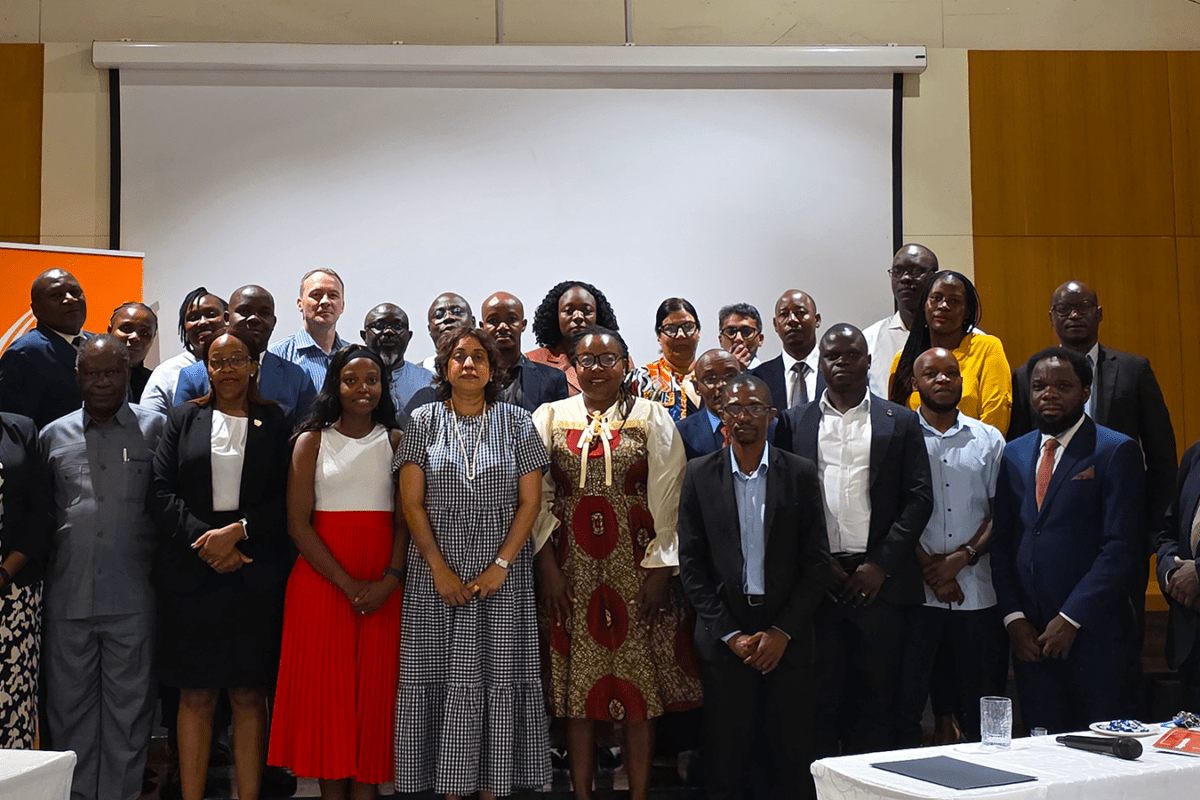
The workshop will take place from November 19th to 21st, 2025.

Safeguarding African Democracies Against AI-Driven Disinformation

ADRF Impact Series |

As Africa’s digital ecosystems expand, so too do the threats to its democratic spaces. From deepfakes to synthetic media and AI-generated misinformation, electoral processes are increasingly vulnerable to technologically sophisticated manipulation. Against this backdrop, THRAETS, a civic-tech pro-democracy organisation, implemented the Africa Digital Rights Fund (ADRF)-supported project, “Safeguarding African Elections – Mitigating the Risk of AI-Generated Mis/Disinformation to Preserve Democracy.”

The initiative aimed to build digital resilience by equipping citizens, media practitioners, and civic actors with the knowledge and tools to detect and counter disinformation with a focus on that driven by artificial intelligence (AI) during elections across Africa.

At the heart of the project was a multi-pronged strategy to create sustainable solutions, built around three core pillars: public awareness, civic-tech innovation, and community engagement.

The project resulted in innovative civic-tech tools, each of which has the potential to address a unique facets of AI misinformation. These tools include the  Spot the Fakes which is a gamified, interactive quiz that trains users to differentiate between authentic and manipulated content. Designed for accessibility, it became a key entry point for public digital literacy, particularly among youth. Additionally, the foundation for an open-source AI tracking hub was also developed. The “Expose the AI” portal will offer free educational resources to help citizens evaluate digital content and understand the mechanics of generative AI.

A third tool, called “Community Fakes” which is a dynamic crowdsourcing platform for cataloguing and analysing AI-altered media, combined human intelligence and machine learning. Its goal is to support journalists, researchers, and fact-checkers in documenting regional AI disinformation. The inclusion of an API enables external organisations to access verified datasets which is a unique contribution to the study of AI and misinformation in the Global South. However, THRAETS notes that the effectiveness of public-facing tools such as Spot the Fakes and Community Fakes is limited by the wider digital literacy gaps in Africa.

Meanwhile, to demonstrate how disinformation intersects with politics and public discourse, THRAETS documented case studies that contextualised digital manipulation in real time. A standout example is the “Ruto Lies: A Digital Chronicle of Public Discontent”, which analysed over 5,000 tweets related to Kenya’s #RejectTheFinanceBill protests of 2024. The project revealed patterns in coordinated online narratives and disinformation tactics, achieving more than 100,000 impressions. This initiative provided a data-driven foundation for understanding digital mobilisation, narrative distortion, and civic resistance in the age of algorithmic influence.

THRAETS went beyond these tools and embarked upon a capacity building drive through which journalists, technologists, and civic leaders were trained in open-source intelligence (OSINT), fact-checking, and digital security.

In October 2024, Thraets partnered with eLab Research to conduct an intensive online training program for 10 Tunisian journalists ahead of their national elections. The sessions focused on equipping the participants with tools to identify and counter-tactics used to sway public opinion, such as detecting cheap fakes and deepfakes. Journalists were provided with hands-on experience through an engaging fake content identification quiz/game. The training provided journalists with the tools to identify and combat these threats, and this helped them prepare for election coverage, but also equipped them to protect democratic processes and maintain public trust in the long run.

This training served as a framework for a training that would take place in August 2025 as part of the Democracy Fellowship, a program funded by USAID and implemented by the African Institute for Investigative Journalism (AIIJ). This training aimed to enhance media capacity to leverage OSINT tools in their reporting.

The THRAETS project enhanced regional collaboration and strengthened local investigative capacity to expose and counter AI-driven manipulation. This project demonstrates the vital role of civic-tech innovation that integrates participation and informed design. As numerous African countries navigate elections, initiatives like THRAETS provide a roadmap for how digital tools can safeguard truth, participation, and democracy.

Find the full project insights report here.

The G20 Should Challenge the Power Dynamics in Digital Public Infrastructure

Juliet Nanfuka |

Data plays a crucial role in T20 discussions at the G20, influencing online interaction and civic engagement. The G20 should use its influence to create a multi-stakeholder agenda for Digital Public Infrastructure design.

Data is at the heart of T20 discussions around the G20, as it informs the architecture of online interaction, civic participation (and exclusion) and the governance of digital society. As such, it is also central to digital public infrastructure (DPI), serving as a foundational requirement and an enabler of new data generation and data mobility. Data drives the three key pillars of DPI – digital identification, digital payments and data exchange – in addition to other emerging features such as geospatial data and data aggregation. However, the expanding role of DPI raises questions about its alignment with constitutional guarantees, data protection frameworks and the lived realities of end users across Africa.

In 2023, India’s G20 presidency laid the foundation for discourse on DPI with great precision. A year later, the 2024 G20 Rio de Janeiro Leaders’ Declaration acknowledged ‘the contribution of digital public infrastructure to an equitable digital transformation’. It went on to note ‘the transformative power of digital technologies to bridge existing divides and empower societies and individuals including all women and girls and people in vulnerable situations. 

Consequently, DPI has been positioned as a necessary tool for international trade facilitation and industrialisation in developing countries. In Africa, this momentum has been supported by strategies such as the AU’s Digital Transformation Strategy for Africa (2020–2030), the African Continental Free Trade Area (AfCFTA) and the 2024 adoption of the Continental AI Strategy. Various countries across the continent have integrated DPI into their national strategies.

The pace of DPI integration is mirrored by growing financial investment in DPI. Examples include the $200 million Ghana Digital Acceleration Project by the World Bank in 2022 to expand broadband access and strengthen digital innovation ecosystems. In June 2025, the AfCFTA Adjustment Fund Credit Facility funded $10 million to support private sector adaptation to AfCFTA frameworks, with initial commitments to Telecel Global Services to enhance connectivity and regional integration. The company provides wholesale voice and SMS services and enterprise connectivity solutions to more than 250 telecom operators across Africa and globally.

While the expansion of DPI is often framed as a progressive step, it also carries significant governance trade-offs. The expansion of DPI in countries with weak democratic safeguards heightens the risk of state overreach, mass surveillance and reduced civic freedoms, making it essential to set clear limits on state access to citizens’ data to safeguard participation and accountability. Further, concerns over data sovereignty also loom.

Other T20 commentaries have stressed the urgent need for multi-stakeholder engagement to align DPI with the realities of developing countries. Without this alignment, DPI could increase existing regulatory gaps that compromise civic rights and consumer protection, fraud prevention and privacy. Meanwhile, the current wave of DPI design could exclude smaller economies that lack the capacity to engage in complex cross-border arrangements, such as those established between India’s Unified Payments Interface and Singapore’s PayNow. However, efforts such as the East African Community’s Cross-Border Payment System Masterplan aimed at inclusive, secure, efficient and interoperable cross-border payments in the region are underway.

If DPI is deployed without further interrogation, especially within the contexts of lower-income and developing countries that are often still navigating authoritarian systems, there is a risk of introducing yet another form or layer of digital exclusion from the global ecosystem. This could amplify existing national exclusions emerging from lack of access to the basics promised by DPI, such as national identity documents as keys to financial inclusion or access to basic services and civic rights.

When governments replace human interaction with automated systems, they risk ignoring the real-life experiences and needs of people who use – or could use – DPI. Thus, while DPI is being positioned as a solution to the challenges many developing countries are facing, it is important to keep in mind that infrastructure is not neutral. Its built-in biases, risks and design choices will ultimately impact citizens. Thus, for the real impact of DPI to be realised, it is necessary for the G20 to address concerns on:

  • The power affordances embedded in DPI design. The architecture of DPI prioritises the interests of those who design and fund it. The G20 should require that DPI initiatives undergo power mapping to identify who holds decision-making authority, how data flows are controlled and which actors stand to benefit or be marginalised by the design and deployment of DPI.
  • The institutionalisation of regulatory sandboxing. Regulatory sandboxes offer a controlled, transparent environment where DPI tools and policies can be tested for fairness, legality, inclusivity and public interest alignment before full-scale implementation. The G20 should promote the use of regulatory sandboxes as a mechanism to scrutinise DPI systems and their governance frameworks.
  • Strengthen multi-stakeholder inclusion. DPI needs to be built with the participation of more stakeholders – including civil society, private sector actors, academia and marginalised communities – in decision-making. The G20 should use its convening power to set the multi-stakeholder agenda in the design of DPI interventions. 
  • Safeguard data sovereignty. African countries developing data governance frameworks need to balance sovereignty with interoperability, and prevent a dependency on foreign-controlled systems.
  • Enhance public awareness interventions. Despite significant DPI developments, many citizens remain unaware of their implications. The media plays a critical role in bridging this gap. There should be more integration with media partners in furthering public awareness of DPI, its functions and consequences. The G20 should not negate the role of the media in driving public awareness on DPI interventions.

This commentary was first published on the T20 website on October 06, 2025.