By Paul Kimumwe |
Internet freedom in Africa has been on the decline over the past years with several countries continually adopting repressive measures that curtail civil liberties. Many governments have embraced digital authoritarianism, which has resulted in criminalisation of speech online, internet disruptions, arrests and prosecution of social media users, and abuse of citizens’ data rights, thus undermining free expression and civic participation.
Several governments have continually enhanced their technical capacity to intercept and monitor electronic communications, including through the installation of equipment and software or spyware that enable remote controlled hacking and eavesdropping, and deployment of video surveillance systems, some of which have facial recognition capabilities. These enhancements have been partly aided by introduction of regressive laws ostensibly to fight terrorism and to protect national order.
Some control measures – such as trolling and cyberbullying – target critical democracy actors, including women human rights defenders (WHRDs) and journalists, and have far-reaching impacts on rights protection, including free expression, access to information and civic participation. Other measures, such as digital taxation, registration and licensing of online users, greatly undermine internet access and affordability and weaken the potential of digital technologies to catalyse free expression and civic participation.
These measures are worrying not only because they directly undermine citizens’ digital rights and their appetite for public participation but also because they endanger the safety of some critical democratic actors. Without adequate digital security capacity, activists and human rights defenders (HRDs) are not able to meaningfully undertake advocacy and engagements around human rights, transparent and accountable governance. Concerningly, digital security and safety skills are lacking among some of the most at-risk groups, yet trainers and support networks are in short supply. In this brief we review some key intervention measures necessary to grow the capacity of civil society actors to navigate the rising digital authoritarianism and highlight CIPESA’s work in this regard.
Shrinking Civic Space
Recent years have seen an increase in the number of reported incidents of governments in the region cracking down on civil society organisations, especially those addressing human rights and social justice issues. Various illegal means, including physical assaults, arbitrary detention, torture, killings, intimidation and surveillance by security agencies, have been adopted to limit the rights to freedom of assembly, association, expression, and access to information.
The situation was exacerbated by measures adopted by national governments to curb the spread and mitigate the effects of the Covid-19 pandemic. The different measures including the clamp down on media platforms, intimidation, arrests, detention and prosecution, affected the work and operations of HRDss and civil society organisations (CSOs) in many countries. The ability of citizens to participate in civic matters and the conduct of public affairs were also eroded. Meanwhile, HRDs, journalists, activists, the political opposition, and ordinary citizens have been forced to self-censor, disengage from participating in public affairs, and refrain from exercising their rights to participate.
Limited Capacity of Civil Society Actors
Although there has been a growing number of civil society and justice actors responding to, and challenging government excesses, some of them have been hampered by lack of requisite knowledge, skills, and tools to engage in meaningful policy advocacy. There is also limited understanding of the linkages between Information and Communication Technologies (ICT), human rights and democracy and how government control measures undermine democratic participation.
According to Ashnah Kalemera, Programme Manager at CIPESA, advancing digital rights is a new phenomenon for most of the traditional human rights organisations in Africa, “with many still trying to understand the relationship between ICT and human rights, on top of dealing with an already hostile environment.”
Through various interventions, CIPESA is building the capacity of different social justice organisations and equipping them with the requisite skills, including research, communicating digital rights, designing evidence-based advocacy campaigns, as well as digital resilience, especially how to cope with the increasing cyber attacks.
Findings from a 2017 joint research study conducted by Small Media, DefendDefenders, the Centre For Intellectual Property And Information Technology Law (CIPIT), and CIPESA showed that in Burundi, Rwanda, Tanzania, and Uganda, most CSOs failed to demonstrate a baseline of digital security knowledge and practices.
The study noted that although the internet and other ICT had empowered CSOs to engage with the public, share information, and advocate for citizens’ rights in sometimes challenging and closed political environments, it had also offered means and tools that regional state and non-state actors utilised to interfere with their work, surveil them, and censor their voices.
Similarly, an assessment CIPESA conducted in five countries during 2020 indicated a need to bolster capacity, organisational practices, and implementation of security and safety measures for social justice organisations and staff. It also found that skills and protections (software and hardware) were low and inadequate among many HRD organisations and individuals.
Building Digital Resilience Among CSOs
In many countries in the region, skills in digital security and safety are lacking among some of the most at-risk groups, yet trainers and support networks are in short supply. Without adequate digital security capacity, activists and HRDs are not able to meaningfully continue advocacy and engagements around human rights, transparent and accountable governance.
For several years CIPESA has provided digital security resilience including conducted training for civil society groups, HRDs and other democracy actors. Through the Level-Up programme, CIPESA has provided security support to 16 HRD organisations in Kenya, Ethiopia, Tanzania, South Sudan, and Uganda.
The initiative helped to strengthen the participating entities’ organisational and information systems security capacity, entailed a Training of Trainers (ToT) component – which benefitted 19 individuals – to grow the network of individuals and organisations that offer digital security training and support to journalists, activists, and HRDs, and organisational security assessments. The training and support were delivered through innovative approaches to geographically distributed individuals that could not meet physically due to Covid-19 social distancing and travel restrictions.
The individuals trained in turn conducted safety and security training sessions which benefitted 120 staff of HRD organisations. The Level Up programme also conducted an assessment of organisational digital security needs and practices which informed the provision of hardware, software and security equipment to nine beneficiary organisations in four countries, and the development of organisational digital security policies.
“Several justice actors, both individuals and organisations, have fallen victims to cyber attacks, hacking, and online harassment, with some reporting loss of their brand assets. It is therefore important to bolster their capacity, enhance their organisational practices, especially the implementation of security and safety measures related to digital and social media platforms usage by the organisations and their staff,” says Brian Byaruhanga, Technology Officer at CIPESA.
Supporting Impactful Digital Rights Advocacy and Communication
Digital rights advocacy and communication has become crucial in promoting human rights in Africa. Accordingly, CIPESA has over the years supported capacity development for CSOs, HRDs particularly WHRDs, and key duty bearers, to cultivate cross-country and cross-sectoral partnerships, and promoted joint advocacy and communications campaigns.
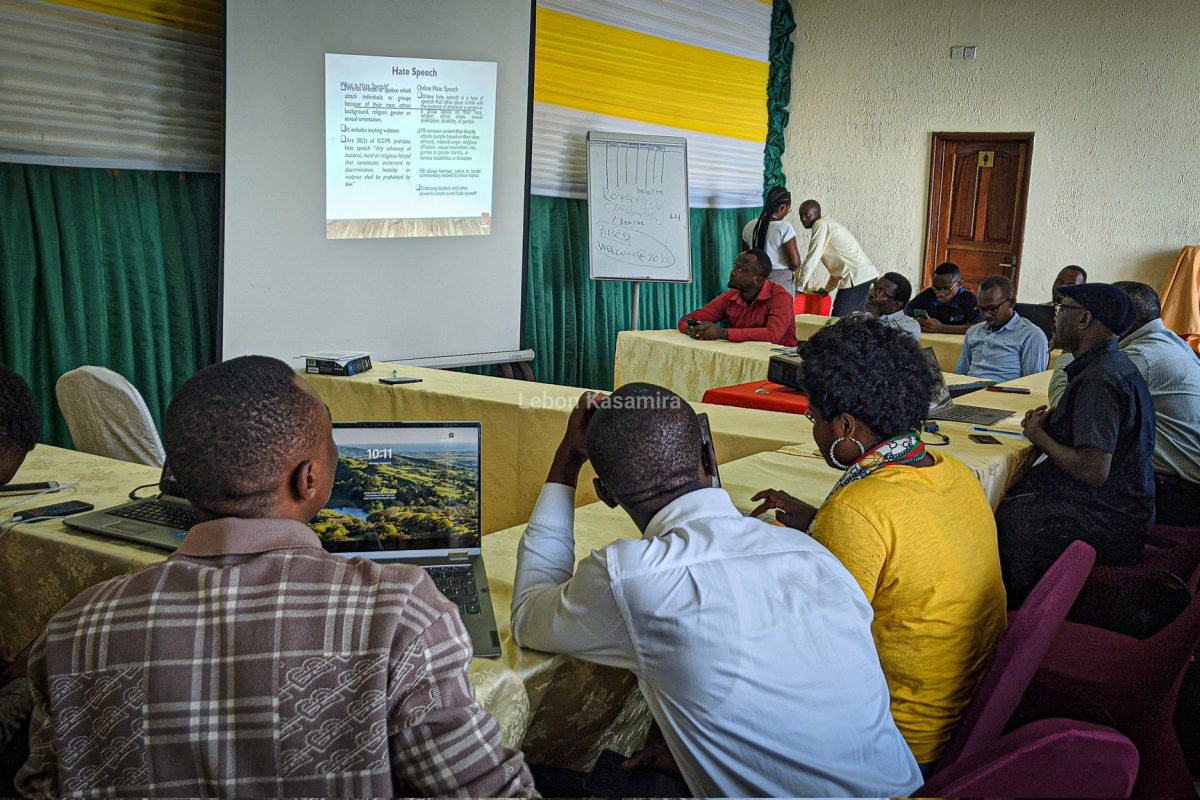
In June 2022, CIPESA convened a regional advocacy and engagement training workshop in Lusaka, Zambia that brought together media, civil society and technology policy actors from 10 African countries – Ethiopia, Kenya, Malawi, Mozambique, Rwanda, South Africa, Uganda, Zambia, and Zimbabwe. The regional engagement equipped participants with a keen understanding of key digital rights trends in the region, alongside practical skills in impactful digital rights advocacy and communication.
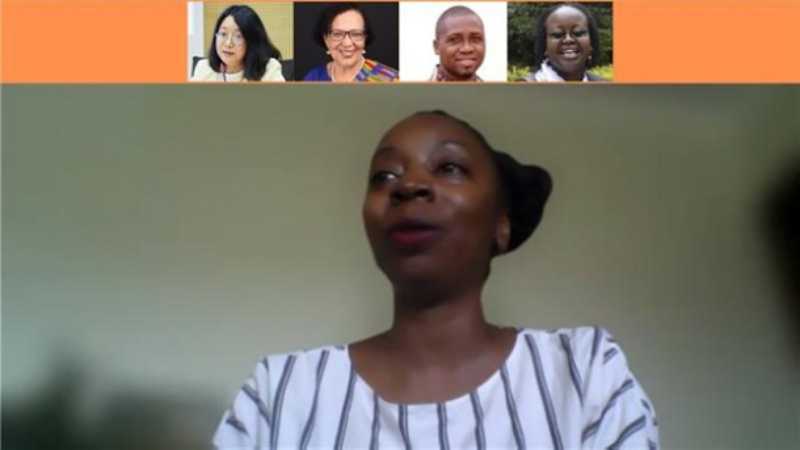
Also in June 2022, CIPESA convened a digital rights policy advocacy webinar where participants shared their experiences, challenges and lessons learned in advocating for digital rights in Africa. Panelists were mainly drawn from the Africa Digital Rights Fund (ADRF) beneficiaries, a grant facility managed by CIPESA whose main purpose is to offer flexible and rapid response grants to select initiatives in Africa to implement activities that advance digital rights, including advocacy, litigation, research, policy analysis, digital literacy and digital security skills building
In July 2021, CIPESA in partnership with the African Centre for Media Excellence (ACME), conducted an intensive training course on Digital Rights and Impact Communication for grantees of the ADRF. The training was preceded by a capacity and training needs assessment. The ADRF was launched in April 2019 to offer funding and capacity development to expand the pool of actors that advance digital rights in Africa, amidst rising digital rights violations.
These capacity building efforts serve to equip civil society actors with skills, knowledge, and tools to effectively engage in evidence-based advocacy as well as communicating digital rights issues. They inspire these actors to approach advocacy and communication systematically in order to increase the visibility of digital rights issues in different media and to promote public discussion of digital rights issues.
Building Capacity and Collaborations for Digital Rights Research
Evidence-based digital rights advocacy has become particularly crucial in Africa as a growing number of governments and powerful private actors continue to undermine citizens’ online rights through legal and extra-legal means. However, as the need for internet policy advocacy that is informed by research grows, it is essential to increase the amount and depth of research originating from, and relevant to, Africa.
Over the last few years, CIPESA has responded by building capacity and enhancing collaborations for digital rights research among academia and CSOs. During the 2019 Forum on Internet Freedom in Africa (FIFAfrica19) in Addis Ababa, Ethiopia, CIPESA organised a Digital Rights Research Methods Workshop as one of the pre-events. The workshop was attended by 58 participants who included university lecturers, staff of international human rights organisations, digital rights researchers, activists, technologists, and lawyers.
The Ethiopian training built on the foundations of a five-day intensive training on internet policy research methods co-organised with the Annenberg School for Communications Internet Policy Observatory in 2018, which aimed to train, connect, and build collaboration between researchers, activists, academics and internet freedom advocates, and brought together 40 participants from 17 countries.
CIPESA has continued to build this capacity through additional training, and providing research and grant opportunities through the CIPESA Academic and Media Fellowships, which seek to nurture university students’ and early career academics’ understanding of ICT for governance, human rights and development, as well as enhance the media’s understanding of and coverage of ICT, democracy and human rights issues, respectively.
Digital rights continue to evolve alongside technological changes and advancement. CIPESA will continue to tap into the opportunity of skilling civil society personnel to facilitate knowledge building and enhance their capacity to continually engage in digital rights proactively and securely.