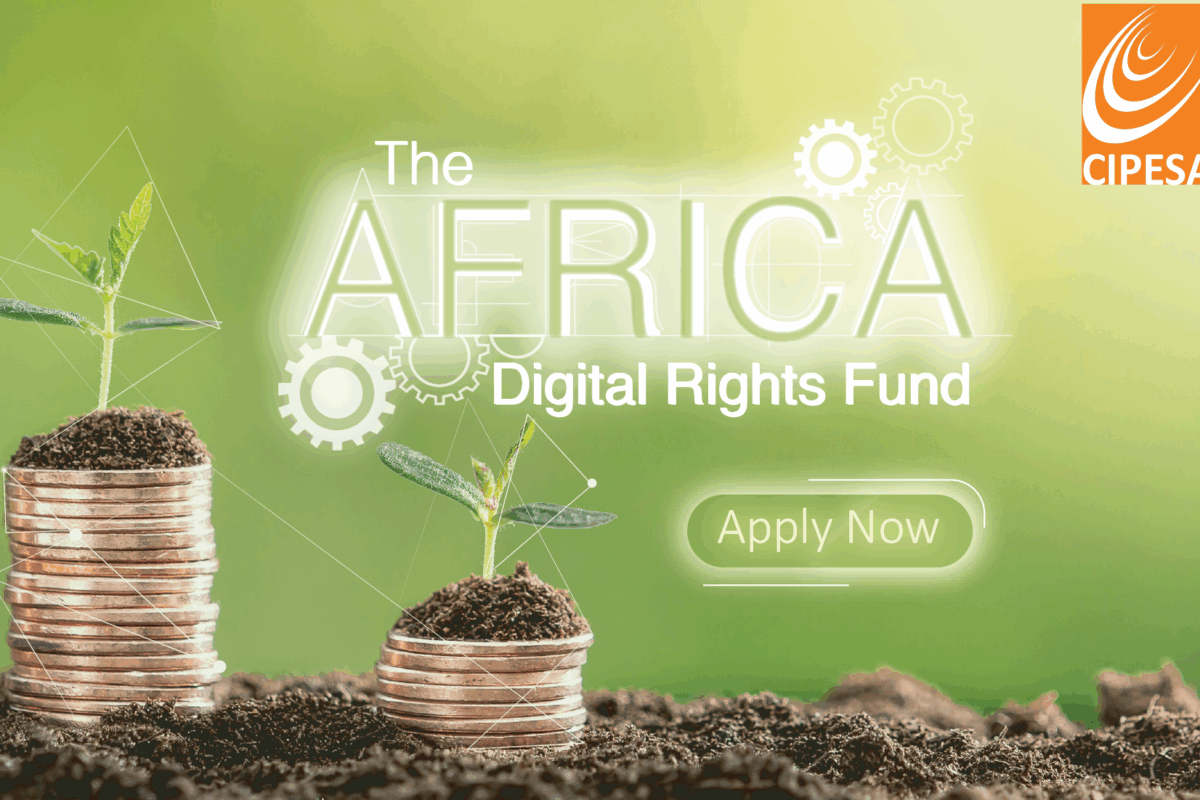
Applications are Open for a New Round of Africa Digital Rights Funding!

Announcement |

The Collaboration on International ICT Policy for East and Southern Africa (CIPESA) is calling for proposals to support digital rights work across Africa.

This call for proposals is the 10th under the CIPESA-run Africa Digital Rights Fund (ADRF) initiative that provides rapid response and flexible grants to organisations and networks to implement activities that promote digital rights and digital democracy, including advocacy, litigation, research, policy analysis, skills development, and movement building.

 The current call is particularly interested in proposals for work related to:

  • Data governance including aspects of data localisation, cross-border data flows, biometric databases, and digital ID.
  • Digital resilience for human rights defenders, other activists and journalists.
  • Censorship and network disruptions.
  • Digital economy.
  • Digital inclusion, including aspects of accessibility for persons with disabilities.
  • Disinformation and related digital harms.
  • Technology-Facilitated Gender-Based Violence (TFGBV).
  • Platform accountability and content moderation.
  • Implications of Artificial Intelligence (AI).
  • Digital Public Infrastructure (DPI).

Grant amounts available range between USD 5,000 and USD 25,000 per applicant, depending on the need and scope of the proposed intervention. Cost-sharing is strongly encouraged, and the grant period should not exceed eight months. Applications will be accepted until November 17, 2025. 

Since its launch in April 2019, the ADRF has provided initiatives across Africa with more than one million US Dollars and contributed to building capacity and traction for digital rights advocacy on the continent.  

Application Guidelines

Geographical Coverage

The ADRF is open to organisations/networks based or operational in Africa and with interventions covering any country on the continent.

Size of Grants

Grant size shall range from USD 5,000 to USD 25,000. Cost sharing is strongly encouraged.

Eligible Activities

The activities that are eligible for funding are those that protect and advance digital rights and digital democracy. These may include but are not limited to research, advocacy, engagement in policy processes, litigation, digital literacy and digital security skills building. 

Duration

The grant funding shall be for a period not exceeding eight months.

Eligibility Requirements

  • The Fund is open to organisations and coalitions working to advance digital rights and digital democracy in Africa. This includes but is not limited to human rights defenders, media, activists, think tanks, legal aid groups, and tech hubs. Entities working on women’s rights, or with youth, refugees, persons with disabilities, and other marginalised groups are strongly encouraged to apply.
  • The initiatives to be funded will preferably have formal registration in an African country, but in some circumstances, organisations and coalitions that do not have formal registration may be considered. Such organisations need to show evidence that they are operational in a particular African country or countries.
  • The activities to be funded must be in/on an African country or countries.

Ineligible Activities

  • The Fund shall not fund any activity that does not directly advance digital rights or digital democracy.
  • The Fund will not support travel to attend conferences or workshops, except in exceptional circumstances where such travel is directly linked to an activity that is eligible.
  • Costs that have already been incurred are ineligible.
  • The Fund shall not provide scholarships.
  • The Fund shall not support equipment or asset acquisition.

Administration

The Fund is administered by CIPESA. An internal and external panel of experts will make decisions on beneficiaries based on the following criteria:

  • If the proposed intervention fits within the Fund’s digital rights priorities.
  • The relevance to the given context/country.
  • Commitment and experience of the applicant in advancing digital rights and digital democracy.
  • Potential impact of the intervention on digital rights and digital democracy policies or practices.

The deadline for submissions is Monday, November 17, 2025. The application form can be accessed here.

Digital Access As A Tool To Defend Democracy

By Juliet Nanfuka | 

The link between digital access and democracy has come to inform civic engagement, access to information and freedom of expression in Africa. With most of the continent navigating flawed or fragile democracies, digital access has become a tool of both empowerment for citizens, and a tool of control by states. This makes the International Day of Democracy a vital commemoration of what is at risk if democracy is not defended. 

This year, in various African countries, through affronts to the media, clampdown on critical voices and opposition actors as well as network disruptions, states have used their position to undermine human rights and breed  distrust in electoral integrity.

Since July 2024, a block to internet access remains enforced in the Equatorial Guinean island of Annobón following public protest against environmental degradation by Somagec, a Moroccan construction company. Despite the public outcries, the company’s operations on the island continue. Equatorial Guinea, is headed by Teodoro Obiang Nguema Mbasogo, Africa’s longest-serving president. His son serves as the Vice President and is accused of spending state funds on a lavish lifestyle.

In Kenya, in the wake of a May 2025 landmark ruling against network disruptions, a Telegram block was initiated. The disruption occurred close to the anniversary of the June 2024 protests against the rising cost of living in the country that resulted in the #RejectThefinanceBill outcry. The May ruling noted that disruptions to digital access are unconstitutional and amount to the violation of fundamental rights.

On September 6, 2025, the online license of the popular online discussion group, JamiiForums was suspended by the Tanzania Communications Regulatory Authority (TCRA)  for three months for reportedly publishing content that violates the Electronic and Postal Communications Regulations regarding online content. In a public post, Jamii Forums noted that TCRA’s decision arose from the platform’s publication of details of share ownership in Tanzania’s largest coal mine (Ngaka), as well as reports about meetings between the President of Tanzania and controversial Zimbabwean businessman Wicknell Chivayo  “without verifying the facts.” In a statement, Community to Protect Journalists (CPJ) Regional Director Angela Quintal noted that, “JamiiForums’ suspension is the latest sign of the Tanzanian government’s deepening suppression of public discourse and raises concerns about access to information ahead of the October 29 elections.”

Meanwhile, Uganda remains in the shadow of a Facebook block initiated nearly five years ago ahead of the 2021 elections. On January 11, 2021 Facebook suspended the accounts of a number of government officials and members of the ruling National Resistance Movement (NRM) party  for what it described as Coordinated Inauthentic Behaviour (CIB) aimed at manipulating public debate. Twitter (now X) also suspended similar accounts. The state consequently blocked social media access and thereafter access to the entire internet and mobile money services. Although access to the internet and mobile money services was restored a few days after the January 14, 2021 election, access to Facebook remains blocked. Uganda heads to the polls in early 2026 and will see incumbent Yoweri Museveni run for re-election in a bid to extend his 40-year rule.

In the 2024 edition of the State of Internet Freedom in Africa report, the Collaboration on International ICT Policy for East and Southern Africa (CIPESA) highlighted the interplay between technology and elections and the practice of the majority of authoritarian governments to selectively limit access as a tool to exert power.

The report indicated various concerns including the intensification of digital authoritarianism amidst shrinking civic space. It noted that digital surveillance has become a defining tool of state power, moving beyond traditional intelligence agencies into everyday governance through digital ID  projects, biometric databases, Closed Circuit Television (CCTV) networks, and covert spyware. All this in contexts where there are weak safeguards for personal data and insufficient regulatory oversight, leaving citizens vulnerable.

Meanwhile, misinformation and disinformation, significantly enhanced by Artificial Intelligence (AI) generated content, adds yet another threat electoral processes. It is increasingly distorting public perception and undermines informed decision-making, particularly in contexts with low digital literacy. This is in addition to the use of bots and paid  influencers to amplify propaganda and “demote” opposing views, making inauthentic content appear genuine. Social media platforms are often criticised for deploying insufficient resources for content moderation in Africa, leading to slow responses and poor enforcement of policies against harmful content, including online gender-based violence.

Ultimately, more actors in the digital ecosystem including civil society organisations, the tech community, media and academia should leverage their watchdog role to document digital rights abuses; educate and raise awareness on the importance of access to information, free expression, data privacy; and promote equitable AI governance, in order to advance transparency and accountability of platforms and governments.
At the upcoming September 24-26, 2025, Forum on Internet Freedom in Africa (FIFafrica25), a series of sessions will critically examine digital democracy on the continent. The goal is to chart practical pathways for strengthening civic participation and ensuring that Africa’s digital future is inclusive, accountable, and rights-respecting.

Uganda to Namibia: Biking for Digital Security and Internet Freedom in Africa

By FIFAfrica |

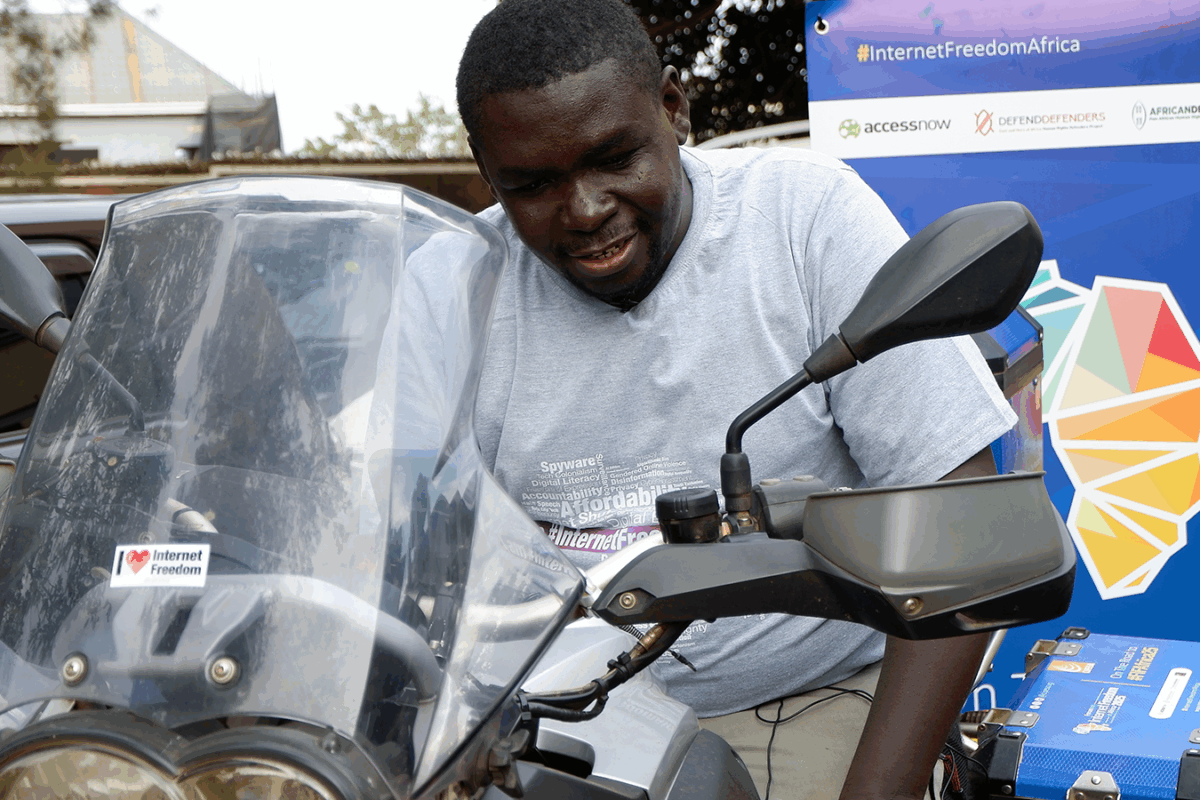
On Friday September 12, 2025, digital security expert and biker, Andrew Gole will set off on a solo motorbike journey spreading awareness about safety and security online. This will be the third time that Gole will travel across various countries on the continent ahead of the annual Forum on Internet in Africa (FIFAfrica). The effort is supported by the Collaboration on International ICT Policy for East and Southern Africa (CIPESA), Defend Defenders and Access Now.

Gole will commence his trip in Kampala, Uganda and over a round trip distance of 13,000 kilometers (km) traverse through Kenya, Tanzania, Malawi, Mozambique, Zimbabwe, and Botswana,  culminating in  Windhoek, Namibia, where the 2025 edition of FIFAfrica will convene this September 24-26, 2025. On his return journey to Uganda, Gole will also ride through Zambia and Rwanda, making it a total of 10 countries travelled through over the course of the journey. 

“I am truly excited to be hitting the road once again as part of the upcoming Forum on Internet Freedom in Africa. On my previous trips, I had the privilege of witnessing firsthand how diverse communities warmly embrace digital security as a key practice that empowers and protects their daily lives online and offline. These communities are often those left on the margins of mainstream efforts to enhance digital security, yet their eagerness to adopt these measures have been inspiring. I look forward to engaging with new communities on this trip and to  continuing this important work and deepening these connections as we move forward together.” – Andrew Gole, Digital Security Expert

Gole notes that traveling on his motorbike allowed him the mobility to connect directly with grassroots organisations. His “Digital Security on Wheels” initiative started in 2020 during the Covid-19 pandemic to address urgent digital security concerns beyond urban centers in Uganda and grew into a regional effort across East and Southern Africa through FIFAfrica.

In September 2022, ahead of the Forum which was held in Lusaka, Zambia and also served as the return to in-person meetings following a two year hiatus due to Covid-19, Gole pioneered the the #RoadToFiFAfrica Digital Security campaign. Gole embarked on the ambitious solo motorbike journey traversing approximately 3,300 kilometers.

The following year in 2023, ahead of the Tanzania edition of FIFAfrica, Gole led a major expedition that involved a team doing a round trip covering almost 10,000 km from Uganda through Kenya to Tanzania (and into the Indian Ocean island of Zanzibar via ferry). Gole was once again on his motorbike, supported by a team of digital rights experts from the Defenders Protection Initiative (DPI) in a passenger van.

We applaud Gole’s effort and celebrate the spirit he carries every mile to Windhoek. Andrew’s ride is a testament to the ongoing effort of building Africa’s internet freedom community. It embodies the practical, peer-led approach to digital safety that empowers often-overlooked communities. His journey to Windhoek mirrors CIPESA’s core mission of promoting the inclusive and effective use of ICT for improved governance and livelihoods in Africa. Gole’s remarkable endurance underscores that protecting our digital spaces demands mobility, resilience, and solidarity. We applaud his effort as he carries this message all the way from Kampala to Windhoek.”
– Brian Byaruhanga, Technology Officer, CIPESA

In all instances, Gole’s efforts culminated in the Digital Security Hub that has become a staple at FIFAfrica and serves as a one-stop-shop for attendees online and offline to secure their devices while also attaining practical skills and information on how to navigate online spaces safely. 

The Digital Security Hub convened by CIPESA has featured experts from across the world and this year will include experts from Africa Interactive Media, Base Iota, Co-creation HUB, Defenders Protection Initiative (DPI), Digital Society Africa, Greenhost/Frontline Defenders and Defend Defenders alongside SocialTic, and Foundacion Accesso bringing learnings and expertise from South America.

About the Forum on Internet Freedom in Africa: Now in its 12th year, the annual Forum on Internet Freedom in Africa (#FIFAfrica25) is the continent’s leading platform for shaping digital rights, inclusion, and governance conversations. This year, the Forum will be held in Windhoek, Namibia, a beacon of press freedom, gender equity, and progressive jurisprudence, and is set to take place on September 24–26, 2025. 

FIFAfrica offers a unique, multi-stakeholder platform where key stakeholders, including policymakers, journalists, global platform operators, telecommunications companies, regulators, human rights defenders, academia, and law enforcement representatives convene to deliberate and craft rights-based responses for a resilient and inclusive digital society for Africans. 

FIFAfrica25 will be the third edition to be hosted in Southern Africa. Previous editions have been hosted in Uganda, South Africa, Ghana, Ethiopia, Zambia, Tanzania and Senegal. Namibia, with its strong democratic credentials and progressive stance on digital transformation, provides a fitting host for FIFAfrica25.

About the Digital Security Hub: At the heart of FIFAfrica has been a Digital Security Hub designed to equip participants with practical knowledge and tools for staying safe in an increasingly digital environment. The Hub offers practical demonstrations and expert guidance on how to strengthen digital safety and resilience practices.

The Hub serves as a meeting for digital security trainers, technologists, and frontline users from across Africa and this year, Latin America as well. Digital security practices shared by the teams include advice on encryption and secure communications, through to countering online harassment and building safer digital infrastructures. 

The Digital Security hub is a vital feature of FIFAfrica25 and continues to serve as a space where communities can tangibly build their capacity to navigate the  constantly evolving digital ecosystem.

About the Collaboration on International ICT Policy for East and Southern Africa (CIPESA): CIPESA works to promote inclusive and effective use of Information and Communication Technology. (ICT) in Africa for improved governance and livelihoods. CIPESA was established in 2004 in response to the findings of the Louder Voices Report for the UK’s then Department for International Development (DFID), which cited the lack of easy, affordable and timely access to information about ICT-related issues and processes as a key barrier to effective and inclusive ICT policy making in Africa. CIPESA’s work continues to respond to a shortage of information, resources and actors consistently working at the nexus of technology, human rights and society.

Initially set up with a focus on research in East and Southern African countries, CIPESA has since expanded its work to include advocacy, capacity development and movement building across the African continent.

Today CIPESA is a leading ICT policy and governance think tank in Africa. CIPESA has strongly exhibited its passion about raising the capacity of African stakeholders in effective ICT policy making and in engendering ICT in development and poverty reduction, as per its mandate. 

For Queries about CIPESA and the Digital Resilience Hub

[email protected]
[email protected]

Elevating Children’s Voices and Rights in AI Design and Online Spaces in Africa

By Patricia Ainembabazi

As Artificial Intelligence (AI) reshapes digital ecosystems across the globe, one group remains consistently overlooked in discussions around AI design and governance: Children. This gap was keenly highlighted at the Internet Governance Forum (IGF) held in June 2025 in Oslo, Norway, where experts, policymakers, and child-focused organisations called for more inclusive AI systems that protect and empower young users.

Children today are not just passive users of digital technologies; they are among the most active and most vulnerable user groups. In Africa, internet use among youths aged 15 to 24 was partly fuelled by the Covid-19 pandemic, hence their growing reliance on digital platforms for learning, play, and social interaction. New research by the Digital Rights Alliance Africa (DRAA), a consortium hosted by the Collaboration on International ICT Policy for East and Southern Africa (CIPESA), shows that this rapid connectivity has amplified exposure to risks such as harmful content, data misuse, and algorithmic manipulation that are especially pronounced for children.

The research notes that AI systems have become deeply embedded in the platforms that children engage with daily, including educational software, entertainment platforms, health tools, and social media. Nonetheless, Africa’s emerging AI strategies remain overwhelmingly adult-centric, often ignoring the distinct risks these technologies pose to minors. At the 2025 IGF, the urgency of integrating children’s voices into AI policy frameworks was made clear through a session supported by the LEGO Group, the Walt Disney Company, the Alan Turing Institute, and the Family Online Safety Institute. Their message was simple but powerful: “If AI is to support children’s creativity, learning, and safety, then children must be included in the conversation from the very beginning”.

The forum drew insights from recent global engagements such as the Children’s AI Summit of February 2025 held in the UK and the Paris AI Action Summit 2025. These events demonstrated that while children are excited about AI’s potential to enhance learning and play, they are equally concerned about losing creative autonomy, being manipulated online, and having their privacy compromised. A key outcome of these discussions was the need to develop AI systems that children can trust; systems that are safe by design, transparent, and governed with accountability.

This global momentum offers important lessons for Africa as countries across the continent begin to draft national AI strategies. While many such strategies aim to spur innovation and digital transformation, they often lack specific protections for children. According to DRAA’s 2025 study on child privacy in online spaces, only a handful of African countries have enacted child-specific privacy laws in the digital realm. Although instruments like the African Charter on the Rights and Welfare of the Child recognise the right to privacy, regional frameworks such as the Malabo Convention, and even national data protection laws, rarely offer enforceable safeguards against AI systems that profile or influence children.

Failure to address these gaps will leave African children vulnerable to a host of AI-driven harms ranging from exploitative data collection and algorithmic profiling to exposure to biased or inappropriate content. These harms can deprive children of autonomy and increase their risk of online abuse, particularly when AI-powered systems are deployed in schools, healthcare, or entertainment without adequate oversight.

To counter these risks and ensure AI becomes a tool of empowerment rather than exploitation, African governments, policymakers, and developers must adopt child-centric approaches to AI governance. This could start with mainstreaming children’s rights such as privacy, protection, education, and participation, into AI policies. International instruments like the UN Convention on the Rights of the Child and General Comment No. 25 provide a solid foundation upon which African governments can build desirable policies.

Furthermore, African countries should draw inspiration from emerging practices such as the “Age-Appropriate AI” frameworks discussed at IGF 2025. These practices propose clear standards for limiting AI profiling, nudging, and data collection among minors. Given that only 36 out 55 African countries currently have data protection laws, with few of them containing child-specific provisions, policymakers must take efforts to strengthen these frameworks. Such reforms should require AI tools targeting children to adhere to strict data minimisation, transparency, and parental consent requirements.

Importantly, digital literacy initiatives must evolve beyond basic internet safety to include AI awareness. Equipping children and caregivers with the knowledge to critically engage with AI systems will help them navigate and question the technology they encounter. At the same time, platforms similar to the Children’s AI Summit 2025 should be replicated at national and regional levels to ensure that African children’s lived experiences, hopes, and concerns shape the design and deployment of AI technologies.

Transparency and accountability must remain central to this vision. AI tools that affect children, whether through recommendation systems, automated decision-making, or learning algorithms, should be independently audited and publicly scrutinised. Upholding the values of openness, fairness, and inclusivity within AI systems is essential not only for protecting children’s rights but for cultivating a healthy, rights-respecting digital environment.

As the African continent’s digital infrastructure expands and AI becomes more pervasive, the choices made today will define the digital futures of generations to come. The IGF 2025 stressed that children must be central to these choices, not as an afterthought, but as active contributors to a safer and more equitable AI ecosystem. By elevating children’s voices in AI design and governance, African countries can lay the groundwork for an inclusive digital future that truly serves the best interests of all.

Advancing Respect for Human Rights by Businesses in Uganda

CIPESA |

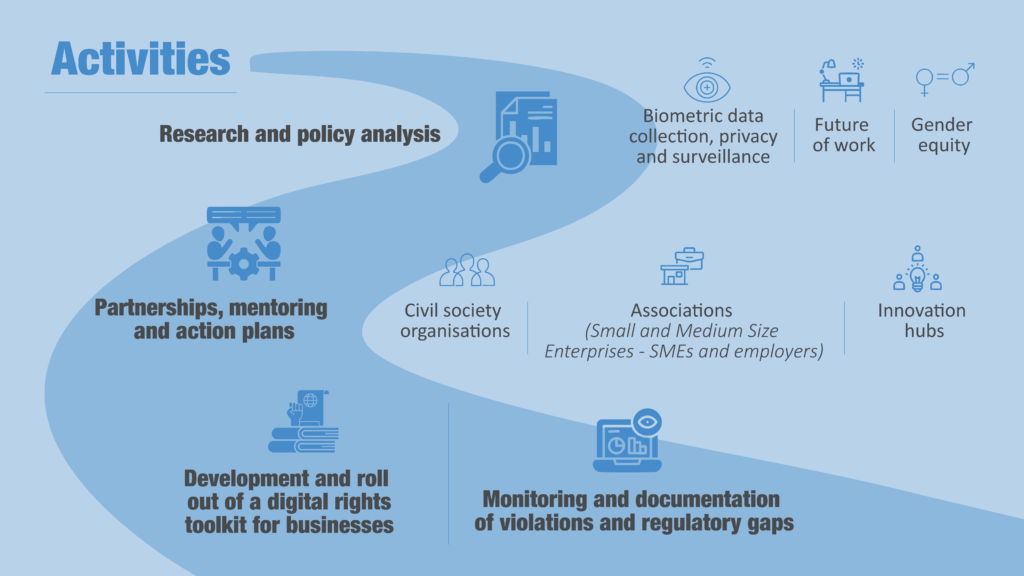
In partnership with Enabel, the European Union, and the Uganda Ministry of Gender, Labour, and Social Development, the Collaboration on International ICT Policy for East and Southern Africa (CIPESA) is implementing “The Advancing Respect for Human Rights by Businesses in Uganda (ARBHR) project”. Launched in November 2024, the project seeks to among others reduce human rights abuses connected to business activities in Uganda, particularly those impacting women and children.

With a focus on Uganda, the project is being implemented in the regions of Busoga (Iganga, Mayuge, Bugiri, and Bugweri), Albertine (Hoima, Kikuube, Masindi, Buliisa, and Kiryandongo) and Kampala Metropolitan (Kampala, Mukono, and Wakiso). While working in these regions, CIPESA is enhancing awareness on business and human rights concerns through evidence based advocacy, sensitisation campaigns, reporting and redress mechanisms, as well as through  public and private sector policy dialogues.

More details about the project can be found here.

Connecting Business to Digital Rights

Many Ugandan businesses, particularly small and medium enterprises (SMEs), lack a comprehensive understanding of digital rights principles and their obligations in upholding them. A significant portion of Uganda’s population lacks access to the internet and modern digital technologies, limiting the reach and impact of digital rights initiatives. 

According to the telecommunications regulator, as of June 2023, Uganda had a total of 34.9 million telephone subscriptions which translates to a 77% penetration rate. At 27.7 million internet subscriptions, internet penetration is at 61%. According to a 2018 nation-wide survey by the National Information Technology Authority of Uganda (NITA-U), 76.6% of respondents named high cost as the main limitation to their use of the internet. The same reason was reported in the 2022 survey, which also cited the rural-urban divide (84.9% vs 92.1% vs) and a gender gap (84.6% female and 89.6% male) in mobile phone ownership. 

Businesses often prioritise short-term economic gains over long-term investments in responsible digital practices such as data privacy and user security. The existence of insufficient digital infrastructure, especially in rural areas, hampers the effective implementation and enforcement of digital rights protections. Businesses face increasing cybersecurity threats that compromise data privacy and other digital rights, necessitating robust security measures.

Related reading: See this commentary on the Future of work in Uganda: Challenges and Prospects in the Context of the Digital Economy

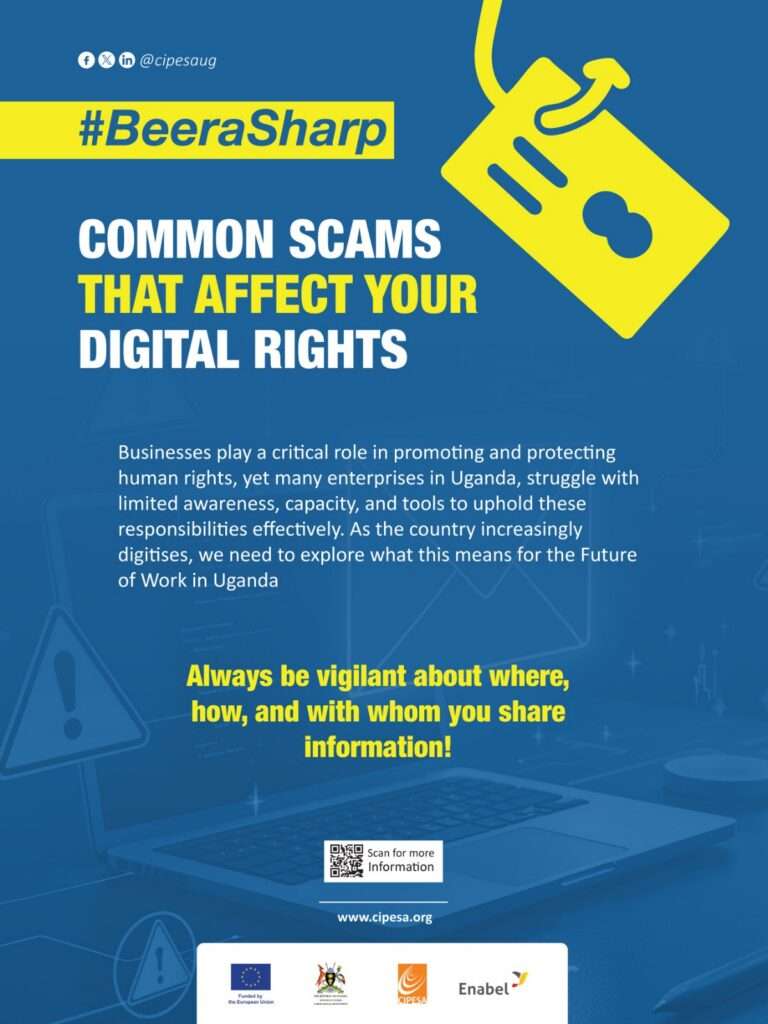
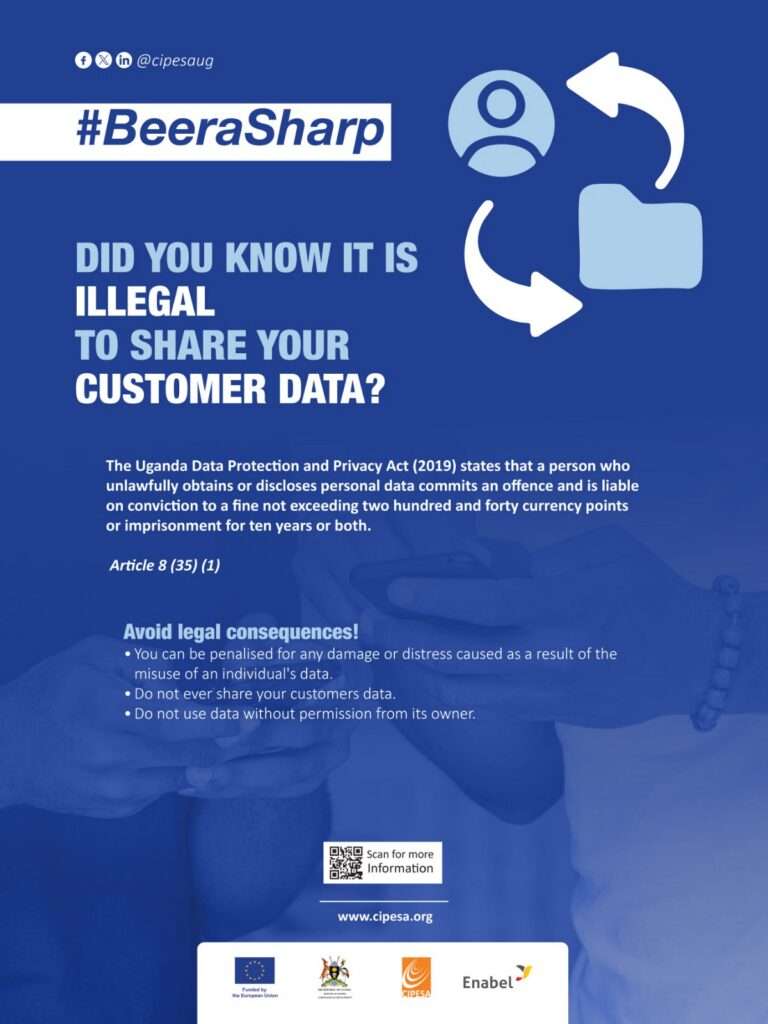
#BeeraSharp Campaign

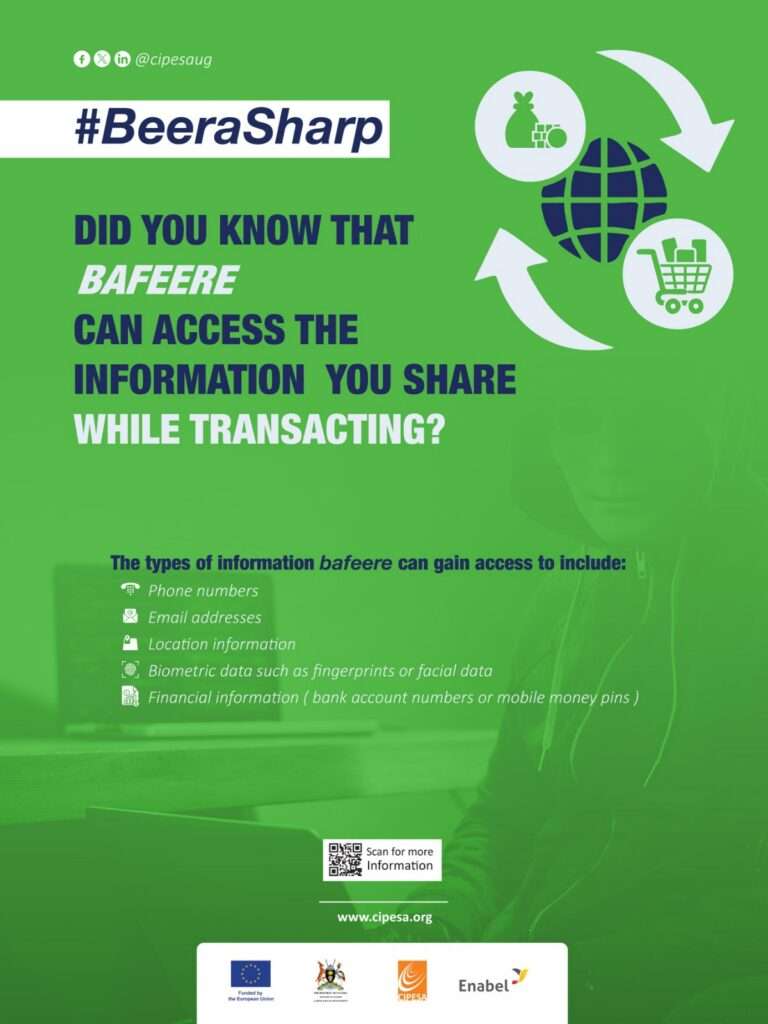
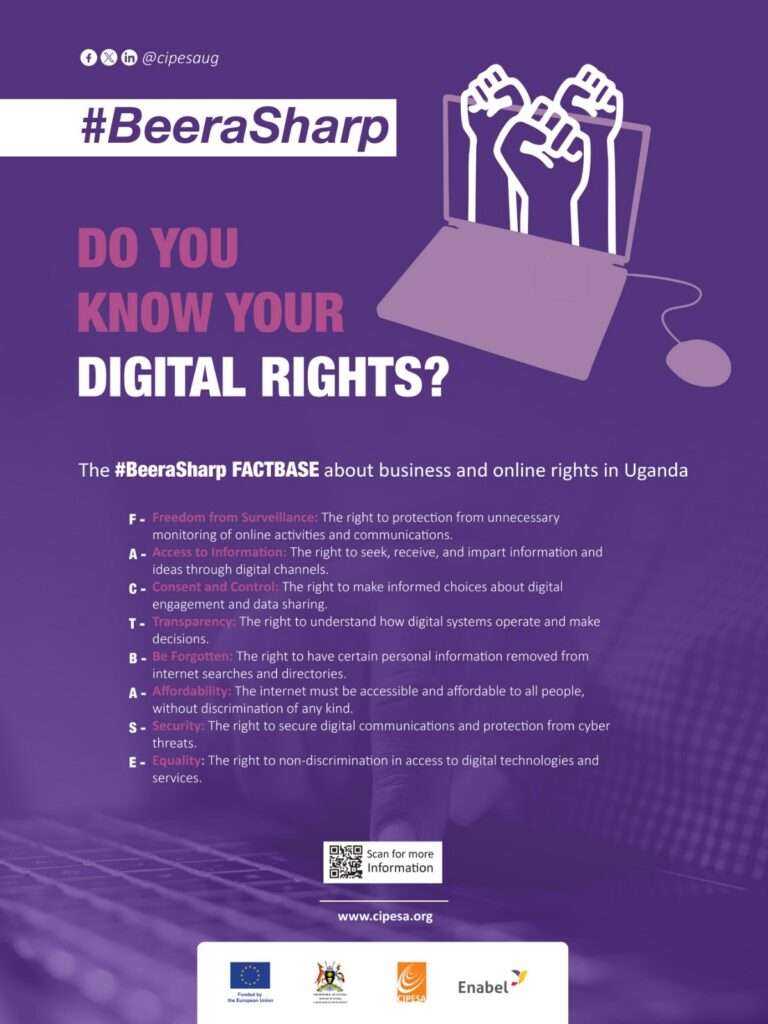
The #BeeraSharp (“be smart” in Luganda) campaign is our response in addressing the gaps that Ugandan businesses face when navigating digital rights, online spaces and digital data. It aims to fill key knowledge gaps on the understanding of business legal obligations through adopting secure and ethical digital practices to build a smarter, safer, and more resilient business ecosystem in Uganda.