CIPESA and UNESCO Partner on Project to Strengthen Climate Change Information Integrity in Africa

By Juliet Nanfuka |

The Collaboration on International ICT Policy for East and Southern Africa (CIPESA), in partnership with UNESCO, is launching a new project to address the growing challenge of climate change disinformation and strengthen information integrity in the public sphere.

At a time when false and misleading narratives are weakening public trust and distorting public understanding of the climate crisis, the initiative will support fact-based public discourse and strengthen the ability of journalists and civil society actors to engage with climate issues using credible information.

Reliable climate information is essential to informed public debate and effective climate action. Yet journalists, content creators, and Civil Society Organisations (CSOs) working on climate and environmental issues often lack the resources and skills needed to verify information, identify disinformation and effectively communicate accurate findings to the public.

CIPESA’s research has documented some of these challenges. Journalists and activists working on climate-related issues, including environment, land and extractives, face significant information gaps and have to navigate disinformation and misinformation campaigns, often with limited avenues to independently verify information.

The initiative recognises that public communication relies on facts and the ability of credible voices to deliver information. The project is supported by the UNESCO-led Global Initiative for Information Integrity on Climate  Change, which was established to investigate, expose, and dismantle disinformation related to climate change.

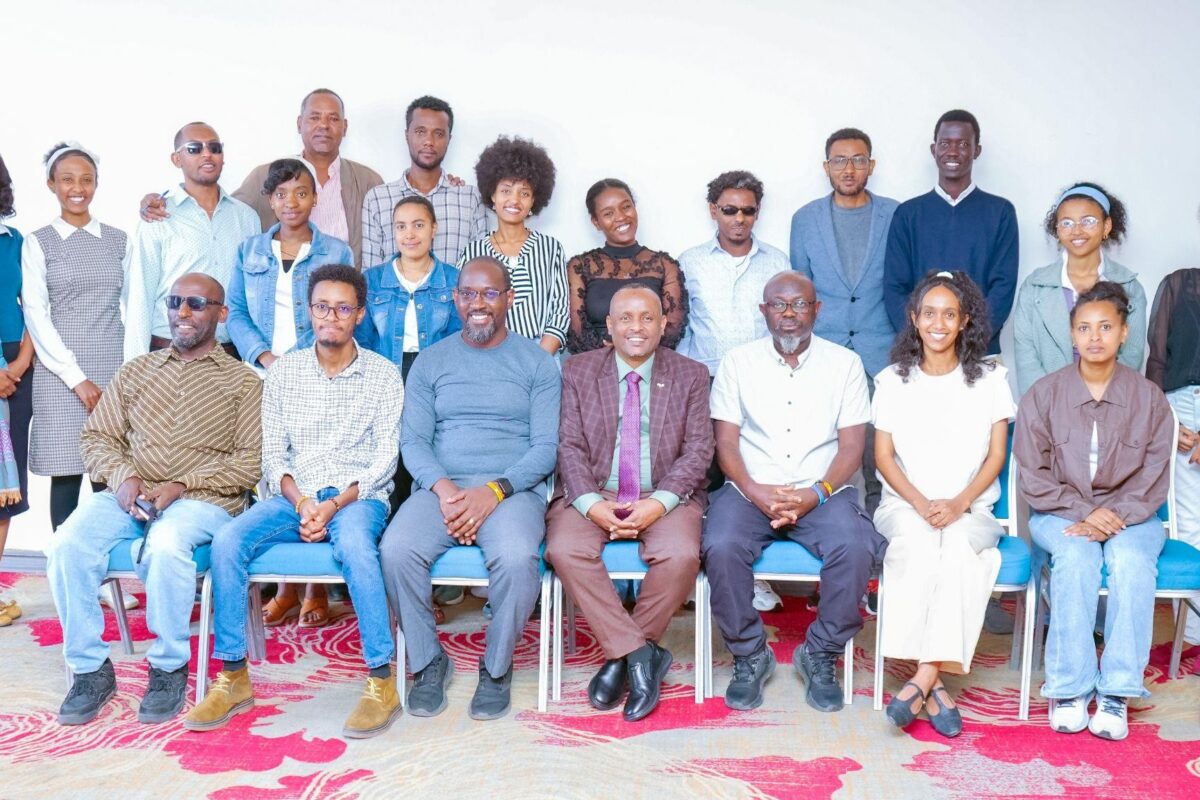
The project will respond to these challenges by combining research, capacity building, and public communication. Research will map how climate disinformation spreads across African digital ecosystems, who drives it, and what tactics they use. Findings will inform a Fact-checking Masterclass at the upcoming 2026 Forum on Internet Freedom in Africa, an online training for journalists and civil society actors, and a communications campaign aimed at strengthening public awareness of climate disinformation and promoting credible sources of information.

This approach builds on the Declaration on Information Integrity on Climate Change, which commits its signatories to protect information integrity on climate change at international, national, and local levels. It also reflects the broader United Nations Global Principles for Information Integrity, which envision “an information ecosystem that delivers choice, freedom, privacy and safety for all,” and support those working to share facts in the public interest.

Reporting on climate change in Africa is increasingly taking place in a difficult information environment. Journalists, activists and human rights defenders covering environmental, land and extractives issues face surveillance, censorship, online harassment and coordinated disinformation campaigns. CIPESA’s research has documented these risks, as well as the limited digital security resources available to many of those doing this work.

The project will focus on Uganda and Ethiopia, both of which are experiencing a rise in misleading narratives related to climate change in their digital ecosystems. These narratives frequently revolve around issues such as deforestation, dam and water system developments, droughts, landslides, oil and gas exploration.

The project’s research will also track the information environment, including the public positions and communications of African governments ahead of the 31st Session of the Conference of Parties (COP31) scheduled for November 2026 in Ankara, Türkiye. The conference brings together nearly 200 nations under the United Nations Framework Convention on Climate Change (UNFCCC) to negotiate climate action, set emission-reduction targets, and coordinate policies to limit global warming.

Looking further ahead, Ethiopia’s hosting of the 32nd session of the (COP32) in 2027, will bring the global climate conversation back to Africa for the fifth time after Kenya (2006), South Africa (2011), Morocco (2016), and Egypt (2022). This makes the CIPESA-UNESCO partnership particularly timely.  As technology increasingly shapes how people access, interpret and contest information about the environment, there is a growing need to understand the evolving relationship between digital platforms, climate narratives, and the integrity of public debate.

Is Africa’s Digital Future Being Bargained Away?

By Juliet Nanfuka |

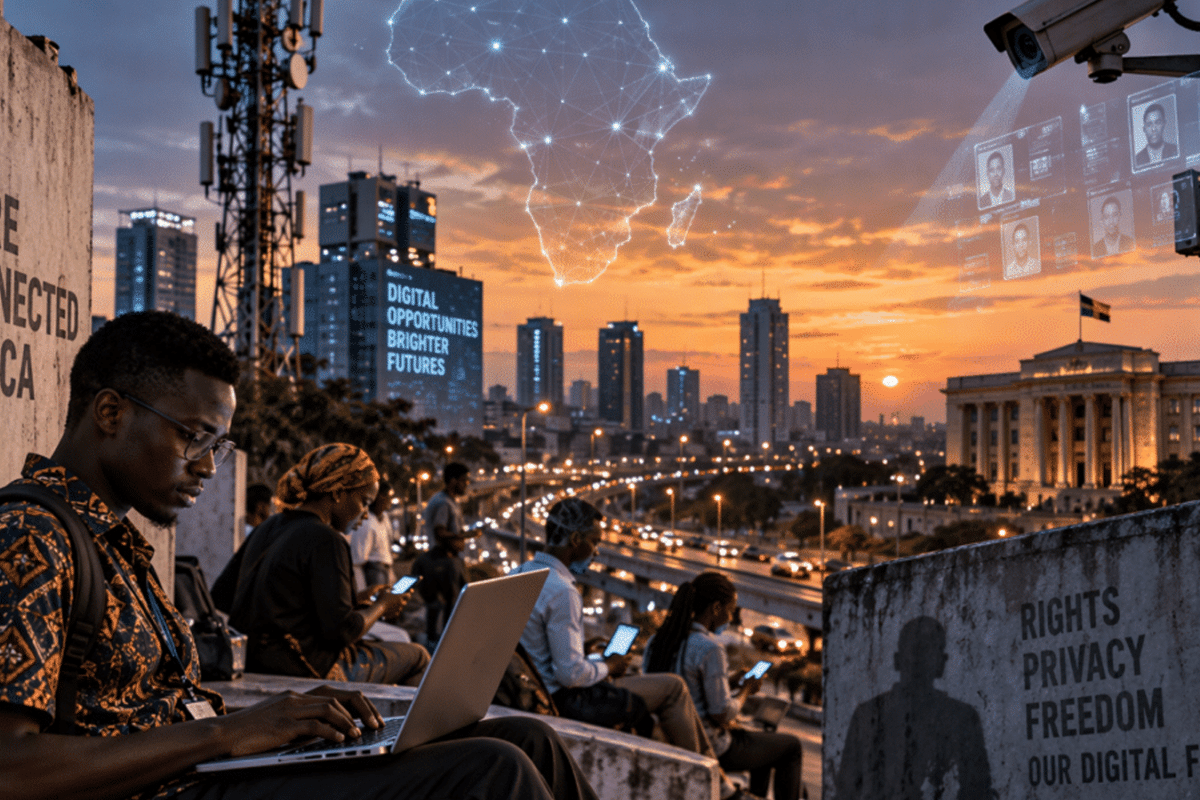
Africa’s digital future is being negotiated away piece by piece – through opaque infrastructure deals, data-sharing arrangements, and political decisions that narrow the space for journalists, civil society, and other stakeholders to gather and speak freely.

Just over a month ago, this year’s UNESCO World Press Freedom Day (WPFD) Global Conference was set to be held under the theme “Journalism Shapes Peace: Promoting Press Freedom for Human Rights, Development and Security” – and it could not have come at a more critical time, as media freedom and digital rights in Africa are under pressure.

The WPFD was scheduled to share a host city (Lusaka, in Zambia) with RightsCon, the world’s largest gathering on technology and human rights. Combined, the events were set to attract thousands of journalists, technologists, human rights defenders, and policymakers from all over the world, signaling Africa’s growing role in global debates on journalism, digital rights, and internet governance.

However, the Government of Zambia abruptly “postponed” RightsCon, citing the need to ensure “full alignment with Zambia’s national values, policy priorities, and broader public interest considerations.” According to Access Now, the conference organiser, “foreign interference” was the reason RightsCon 2026 did not proceed in Zambia.

Officials from Zambia’s Ministry of Technology and Science had purportedly informed Access Now that they were under pressure from Chinese diplomats over the participation of Taiwanese civil society actors in RightsCon. Critics have argued that this is a clear abuse of power and influence over other governments to silence dissent and restrict fundamental rights.

Following this, Zambia also lost out on hosting key WPFD-related events, which shifted online or to Paris, France. A scaled-down physical event was held in Zambia.

These developments exposed a broader pattern: civic space in Africa is not only constrained by arrests, vague laws and media intimidation, but also by foreign pressure and various forms of dependence. Zambia illustrated how quickly external political pressure can contribute to narrowing civic space on the continent, and how geopolitical influence is most dangerous where local institutions are already vulnerable and democracy is under strain.

Geopolitical tensions are no longer limited to military alliances or commodity diplomacy. They are instead increasingly being exercised through digital infrastructure, platform governance, cross-border data arrangements, cyber laws, standards-setting, mining rights, and now, the policing of civic forums. Powerful states are influencing digital policy choices through debt dependency, mineral extraction, infrastructure dependence, diplomatic pressure, or access to funding and technical systems.

The developments in Zambia illustrate a worrying phenomenon that the Collaboration on International ICT Policy for East and Southern Africa (CIPESA) has been tracking – the steady erosion of digital rights and press freedom on the continent, through attacks on information integrity and financial dependency on larger economies.

Text Block: In Zambia, China is also deeply embedded in mining, energy, healthcare, and the construction of national facilities, including the conference venue where RightsCon was due to be held. Source:  Just Security

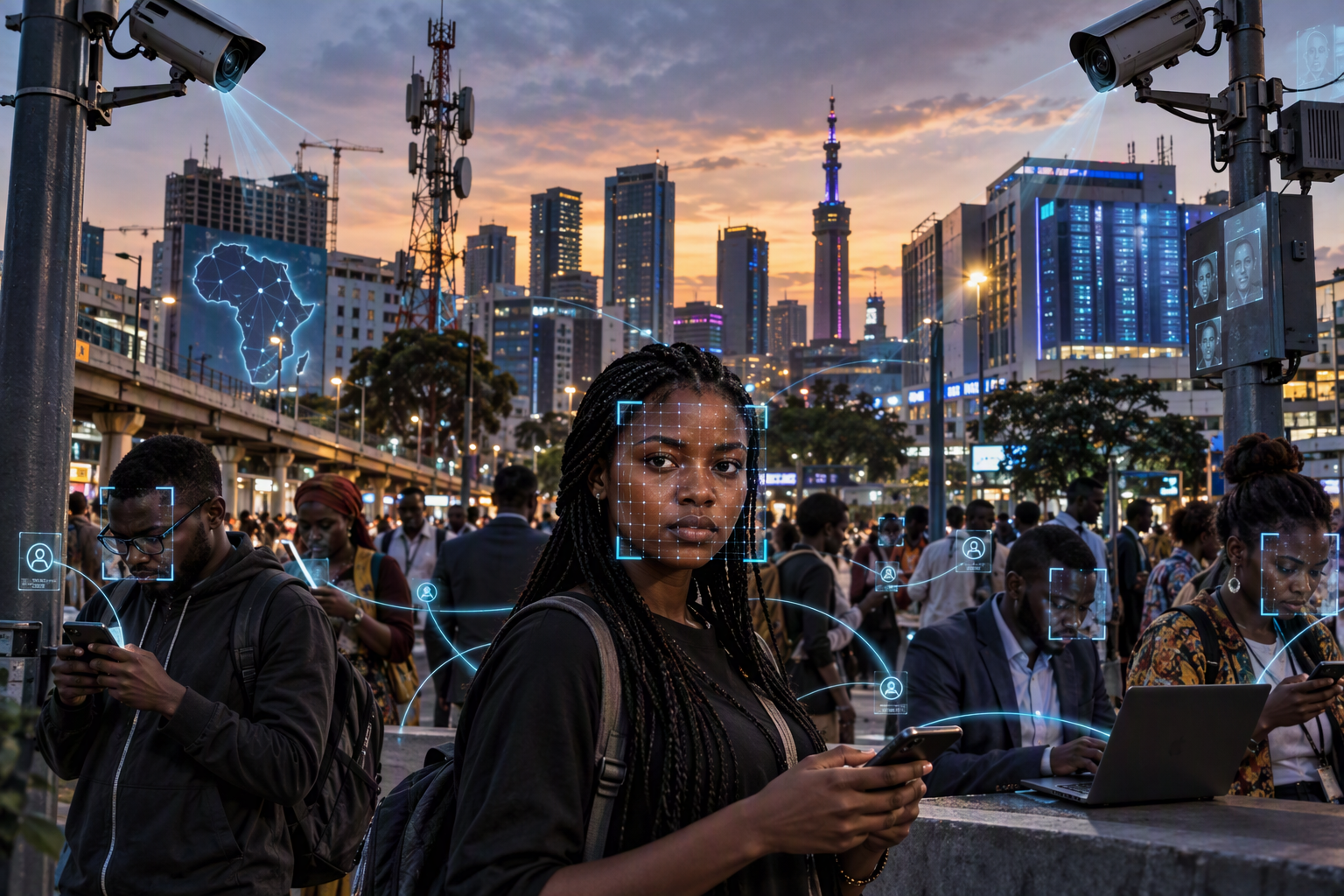
Over the years, Chinese firms such as Huawei have invested heavily in Africa’s internet infrastructure, including through “smart city” deployments,  national fibre-optic backbones, and data transmission projects including in South Africa and in Senegal. In Uganda, China has invested more than USD 110 million in the National Backbone Data Transmission Project through additional concessional financing. Critics have argued that these investments also limit civic rights, including through enabling surveillance and undermining elections.

However, not every African government decision involving China is coerced. Yet dependence can narrow the room for resistance when political demands are made, and that influence can extend into tighter restrictions on civic participation and digital rights organising.

Moreover, to frame Africa’s sovereignty challenges as a problem created only by China is incorrect, as some Western powers are also advancing strategic interests through data-heavy arrangements that can test national safeguards.

For instance, as part of the America First Global Health Strategy, the United States has signed bilateral health agreements with numerous African states including Botswana, Cameroon, Côte d’Ivoire, the Democratic Republic of Congo, Kenya, Nigeria, Rwanda, Lesotho, and Uganda.

These agreements tie funding to extensive data-related cooperation including long-term sharing of comprehensive national health data for periods of up to 25 years, alongside expansive health surveillance arrangements. In exchange for financial support, African states are surrendering health data without the guarantee of equitable access to vaccines or research outputs developed from that data. Zambia, Ghana, and Zimbabwe have expressed reservations about signing on, and a court in Kenya suspended implementation of the agreement pending alignment with the country’s national data protection regime.

As African countries navigate shifting technology standards, expanding digital infrastructure, and competing data governance regimes – often without a shared rights-based framework – the result is an increasingly fragmented digital landscape. This fragmentation is not accidental; it is being shaped by geopolitical interests and power asymmetries that determine who builds the technologies, who controls the data, and ultimately, who governs the digital future.

 Meanwhile, African governments appear ready to trade civic rights, with countries like Nigeria, Ghana, Morocco, Malawi, and Zambia collectively spending at least USD 1 billion a year on digital surveillance technology contracts with companies in the United States, the United Kingdom, China, the European Union, and Israel.

Text block: However, the key policy challenge facing Africa is not whether governments should work with powerful economies like China, the United States, and various European states, or private technology firms. They will, and they must. The issue is whether African states have the legal, institutional, and political capacity to engage those powers without trading away civic space, data autonomy, and democratic accountability.

The continent is not without policy tools. The African Union Data Policy Framework, the African Union Convention on Cyber Security and Personal Data Protection (Malabo Convention), the African Continental Free Trade Area Digital Trade Protocol, and new calls such as the African Declaration on Digital Freedom and Democracy all point toward a more rights-respecting path. They emphasise harmonised safeguards, trusted data governance, universal and meaningful internet access, transparency, and accountability. However, implementation remains a persistent challenge, with limited progress in practice across many states.

The Zambia case offers clear lessons.  African governments should require parliamentary review and public engagement for all major cross-border data-sharing and digital infrastructure agreements. Procurement contracts involving critical digital systems should be published, including provisions on data storage, access, transfers, and vendor liability. Transparency in DPI procurement processes is critical in ensuring that deployed systems are rights-respecting and those responsible can be held accountable.

While numerous global convenings are hosted on the continent, Zambia set a worrying precedent. Organisations that co-host global convenings in Africa should demand enforceable non-discrimination and freedom-of-assembly guarantees from host states as regional civil society spaces must be protected and expanded, not treated as expendable.

The spaces where African civil society, journalists, and policymakers can gather are fundamental to the digital rights movement on the continent. If African governments cannot protect the right of journalists and civil society actors to assemble freely, then they will struggle to protect anything else in the digital age. These communities are integral parts of the democratic infrastructure Africa needs to negotiate its way out of debt dependency, surveillance overreach, and geopolitical capture.

This is why global and regional gatherings, such as the upcoming Forum on Internet Freedom in Africa (FIFAfrica26), are critical. They are necessary spaces for interrogation, debate, and the forging of consensus on civic and digital rights. These are the convenings where the shifts in sovereignty are understood, including the risks of opaque cross-border data-sharing agreements, unchecked surveillance infrastructure, and politically motivated cyber laws, all of which are named and challenged through multistakeholder engagement.

Ultimately, Africa’s digital future should not be bargained away through debt dependency, opacity agreements and geopolitical pressure. It must be shaped openly, democratically, and on terms that serve its people rather than the geopolitical interests of others.

Protecting Children Online in Africa Must Move from Policy to Practice

By Patricia Ainembabazi |

Child online safety has returned to the forefront of digital governance discussions across Africa and globally. New regulatory initiatives from the United Nations, the African Union, and industry coalitions reflect growing concern about the risks children face in increasingly digital societies. Yet, while policy commitments are multiplying, implementation continues to lag.

The challenge is particularly acute in Africa, where internet access is expanding rapidly while child protection systems struggle to keep pace. As more children go online, they are increasingly exposed to cyberbullying, online grooming, sexual exploitation, harmful content, privacy violations, and emerging Artificial Intelligence (AI)-enabled risks such as disinformation and misinformation.

Just last month, the United Nations Human Rights Office called for stronger regulation and government oversight, publishing 10 key points to make platforms safer for children, urging technology companies to embed child safety into their product design and address the growing risk posed by AI. This reflects a broader shift in global digital policy. The Global Digital Compact has committed states to strengthen legal and policy frameworks for children’s rights in digital spaces and to prioritise national online child safety policies and standards by 2030.

At the continental level, the African Union Child Online Safety and Empowerment Policy of 2024 sets out principles on children’s safety and privacy, and participation to guide member states in developing national strategies, while the Global System for Mobile Communications Association (GSMA), UNICEF, and partners recently launched the Africa Taskforce on Child Online Protection to strengthen coordination among governments, mobile operators, technology companies, regulators, law enforcement, civil society, and young people.

Some African countries are already taking steps to strengthen child protection online. Rwanda is considering restrictions on social media access for children under 16, while Zimbabwe recently approved a National Child Online Protection Policy for 2026–2030 aimed at addressing online sexual exploitation, cyberbullying, grooming, harmful content, sextortion, and privacy violations.

These developments reflect a broader global shift in approaches to child online safety. Australia has legislated to restrict social media access for children under 16, while the United Kingdom recently concluded a national consultation examining age-based protections and enforcement mechanisms. Across several countries, governments, regulators, and civil society organisations are increasingly calling on technology companies to strengthen safeguards and take greater responsibility for protecting children online.

A broader strategy would expand efforts to ensure that while policies and frameworks on child protection are being developed, children are involved. This would help them understand the several platforms available for use, associated risks, pressures, and opportunities for digital life. The Africa Taskforce on Child Online Protection recognises this mode of participation and has now included youth representatives by integrating their voices for a child-centered digital future in Africa. Replicating this approach at the national level, through wide youth consultations, school-based dialogues, child-friendly policy forums, and participatory design of reporting and safety tools, will foster a healthy digital environment for the young.

It is against this backdrop that the Digital Rights Alliance Africa (DRAA) report, “Child Protection and Safety Online in Africa: The Law, Privacy, Challenges and Solutions, provides crucial, ground-level evidence across 10 countries – Algeria, Botswana, Egypt, Ghana, Kenya, Nigeria, Rwanda, South Africa, Tanzania, and Uganda. It highlights the gaps in child safety and protection online despite technological advancement and expansion.

The report highlights several recommendations that could help foster child safety and protection online, which are directed to different stakeholders, including the government, civil society organisations, international organisations, development partners, the technology sector, media, academia, parents, and the general community, and among others include;

  1. Parliaments should enact specific national laws that protect children’s privacy and safety in digital spaces, with clear safeguards tailored to children’s particular vulnerabilities, such as cyberbullying, grooming, online sexual exploitation, image-based abuse, harmful content, misuse of children’s data, profiling, and age-inappropriate design.
  2. Governments should invest in the implementation of national strategies that set out the roles of government agencies, the judiciary, data protection authorities, law enforcement actors, educators, parents, and the private sector in protecting children in the digital age.
  3. Platforms and telecom companies should design child-friendly products and services, minimise the collection and retention of children’s data, introduce age verification and parental controls, publish transparency reports, and submit protection measures to independent audits.
  4. The media should monitor, document, and report objectively, and expose all cases of online child abuse and demand accountability from the responsible parties.
  5. Civil society organisations should engage in advocacy, awareness raising, legal reform, evidence-based research, and documentation of issues affecting child safety online in order to demand and push for accountability of all the relevant stakeholders.
  6. All stakeholders must ensure that children are meaningfully included in innovation and programming, and that children and young people are actively engaged as participants in discussions, collaborations, and co-design of digital solutions.

Ultimately, for children to stay online, measures must go beyond mere policy expressions and aspirations as reiterated in the Global Digital Compact’s 2030. Laws and frameworks specific to child protection and safety online should be developed and stringently implemented. Moreover, digital service providers must be held accountable, and other stakeholders, including parents, schools, and communities, should join efforts to ensure that children are empowered to safely utilise digital technologies.

CIPESA and partners continue to advocate for rights-respecting policies that advance children’s protection, participation, access, and safe use of digital technologies, while calling on technology companies to embed these principles in platform design, governance, and accountability systems.

Overview of CIPESA Policy Submissions to International Bodies and Governments

By CIPESA Writer |

Africa’s digital rights landscape is evolving rapidly, shaped by new legislation, emerging technologies, and recurring threats to civic space. CIPESA has remained actively engaged in documenting these developments, including through the annual State of Internet Freedom in Africa reports and through broader programming.

Over the last few months, we have made submissions to various international bodies and national governments, filed legal interventions, and provided expert commentary to advance internet freedom, digital inclusion, and democratic governance.

Below is an overview of our key submissions and commentaries in recent months.

Engaging Global Bodies on Technology Governance

Submission on How the WHO Digital Health Strategy Should Govern Data, Artificial Intelligence (AI) and Digital Public Infrastructure (DPI): In March 2026, CIPESA submitted recommendations to the World Health Organization (WHO) Regional Office for Africa on the development of the Global Digital Health Strategy for 2028–2033, urging that the strategy be anchored on human rights, equity, and accountability. CIPESA warned that most AI systems used in African healthcare are trained on non-African datasets, increasing risks of inaccurate diagnoses and exclusions, and called for mandatory “explainability” standards, equity impact assessments, and domestic investment in digital health infrastructure.

Recommendations to the OHCHR: Also in March, CIPESA submitted to the UN Human Rights Council under Resolution 58/23 on the risks digital technologies pose to human rights defenders in Africa. The submission examined legal and policy developments, tech-facilitated attacks including against women HRDs, AI-related risks, and challenges facing civil society and companies, while recommending stronger corporate measures to identify, assess, and prevent harm to HRDs. CIPESA submitted comments and recommendations on due diligence and improved responses to digital technology-related risks faced by human rights defenders.

Engaging National Governments on Digital Legislation Commentary on Zimbabwe National AI Strategy: The Southern African state recently adopted its National AI Strategy 2026–2030 (AI strategy)  to guide its digital technology and transformation. The strategy aims to accelerate development, enhance industrialisation, and improve service delivery in sectors such as health, finance, agriculture, education and public administration. The strategy also emphasises building local data infrastructure as opposed to relying on foreign data storage infrastructure while promoting an AI governance approach grounded in Ubuntu, human rights, accountability, transparency and inclusivity. However, an important question is whether Zimbabwe’s approach offers useful lessons for other African countries developing national AI strategies. Find our commentary here.

Submission on the Uganda AI and Emerging Technologies Strategy: In March 2026, CIPESA submitted recommendations to Uganda’s National AI and Emerging Technologies Strategy Taskforce, welcoming the country’s ambition to harness AI for development while cautioning that innovation must be matched with legal, institutional, and ethical safeguards. Find a commentary here.

CIPESA called for a rights-by-design approach including mandatory Human Rights Impact Assessments for high-risk AI systems, algorithmic transparency, local data representation, and meaningful civil society participation in shaping Uganda’s AI strategy.

Outpaced by Its Own Ambition: Can Kenya Bridge Its AI Regulation Gap? This commentary highlighted the raw paradox at the heart of Kenya’s AI, noting that the country is simultaneously sprinting ahead in AI adoption while grappling with a shrinking space for the very digital voices that AI empowers. A key remains between ambition and readiness as the country ranks 93rd in the 2025 Government AI Readiness Index, due to persistent weaknesses in infrastructure, implementation, and institutional capacity. Find a commentary here.

Submission to the White Paper on ICT Tax Reduction in Uganda: A year ago, CIPESA submitted a position paper to the National Task Team on Enhancement of Government Revenue from the ICT Sector at the Uganda Ministry of ICT and National Guidance. The paper benchmarked Uganda’s ICT sector tax policies, licensing fees, and regulatory regimes against those of Kenya, Rwanda, and Tanzania. Since then various developments have emerged which inform the ICT tax regime in Uganda including the April 2026 passing of the Value Added Tax (Amendment) Bill, 2026, which rejected the controversial government proposal to impose an 18 percent tax on imported software after lawmakers warned it would undermine the country’s digital transformation agenda.

Engaging the African Commission on Human and Peoples’ Rights (ACHPR)

ACHPR Resolution 630 on Monitoring Technology Companies: In March 2025, the ACHPR adopted Resolution 630, a timely step toward holding technology companies accountable for information integrity in Africa. CIPESA welcomed the move, contributed recommendations across key regional forums, and looks forward to strengthening the newly developed guidelines through the review process.

Prioritising Human Rights Defenders: CIPESA reviewed the Draft Declaration on the Promotion and Protection of Human Rights Defenders in Africa, which seeks to help restore civic space for the effective protection of human rights. In its submission to the Special Rapporteur on Human Rights Defenders and Focal Point on Reprisals in Africa, CIPESA highlighted the draft’s strengths, weaknesses, and gaps, and offered practical recommendations to align it with continental and global standards, particularly the 1998 UN Declaration on Human Rights Defenders. Find the submission here

Supporting the Ratification of the AU Disability Protocol: CIPESA has consistently called upon African Union member states to ratify the Protocol to the African Charter on Human and Peoples’ Rights on the Rights of Persons with Disabilities in Africa. Our submission to the ACHPR Working Group on the Rights of Older Persons and People with Disabilities in Africa (April 2022) argued that ratification is a matter of utmost priority and that without it, the digital rights of persons with disabilities across the continent remain inadequately protected.

Contributing to the Universal Periodic Review (UPR)

Joint Stakeholder Submission on Tanzania’s Digital Rights Record: Ahead of Tanzania’s fourth cycle UPR before the UN Human Rights Council set to take place in November 2026, CIPESA, alongside the Pan African Lawyers Union (PALU) and JamiiAfrica, submitted a joint stakeholder report documenting the state of digital rights in the country.

While acknowledging positive developments including the enactment of the Personal Data Protection Act, 2022, and reforms to the Media Services Act, the submission highlighted persistent concerns: the use of vague laws to suppress online expression, the blocking of platforms including Clubhouse, X, and JamiiForums, a nationwide internet shutdown during the 2025 general elections, and the escalating threat of Technology-Facilitated Gender-Based Violence (TFGBV) against women journalists and activists.

The submission called on Tanzania to repeal or amend vague and overly broad laws, comply with international human rights standards on internet access, establish judicial oversight over surveillance, and invest in digital rights literacy.

Rwanda’s fourth cycle UPR review: Rwanda had its UPR review in January 2026 where following the November 2025 pre-session in Geneva, several permanent missions expressed eagerness to advance strong recommendations for Rwanda, and CIPESA’s evidence and recommendations were expected to inform their engagement during the formal review.

A joint submission by CIPESA and the Association for Progressive Communications (APC) noted that digital technologies have expanded the avenues through which women are targeted, often enabling harm that is faster, more pervasive, and harder to remedy.

Rwanda’s UPR presented a timely opportunity to adopt meaningful, future-focused reforms that uphold human rights, ensure accountability, and create a digital environment where all citizens, especially women, can participate safely, freely, and equally.

Since the review, the Rwandan government has noted they would undertake national consultations with relevant stakeholders to assess the recommendations and determine its position.

Liberia’s fourth cycle UPR review: CIPESA, in collaboration with the West Africa ICT Action Network (WAICTANET), submitted a joint stakeholder submission for Liberia’s consideration during the 50th session of the UPR. The joint submission observed that, although Liberia has taken preliminary steps towards aligning its domestic legal and policy framework with applicable regional and international human rights standards, substantial legal, institutional, and enforcement gaps persist. It called for the Government to adopt comprehensive data protection and cybersecurity legislation; safeguard the right to freedom of expression online; ensure accountability for violations against journalists, human rights defenders, and online actors; strengthen transparency and effective access to information; and implement targeted measures to bridge the digital divide.

Malawi’s fourth cycle UPR review: A joint submission was made by CIPESA alongside the The Centre for Human Rights and Rehabilitation (CHRR), the International Press Institute (IPI), the University of Birmingham, and Small Media, on digital rights in Malawi. The submission recommended law reform, full implementation of the Access to Information Act, affordable and inclusive internet access, independent oversight for digital rights violations, operationalisation of the Data Protection Act, protection of encryption, and safeguards against unlawful spyware use.

Looking Ahead

Across these engagements with the ACHPR, the Universal Periodic Review of the UN Human Rights Council, the WHO, and national governments in Uganda, Kenya, Tanzania, and Zambia, CIPESA’s work reflects a consistent commitment to promoting inclusive and effective use of ICT in Africa for improved governance and livelihoods.As the digital governance landscape continues to shift, our submissions serve as a continued resource for policymakers, civil society, the media and other entities committed to advancing internet freedom in Africa.