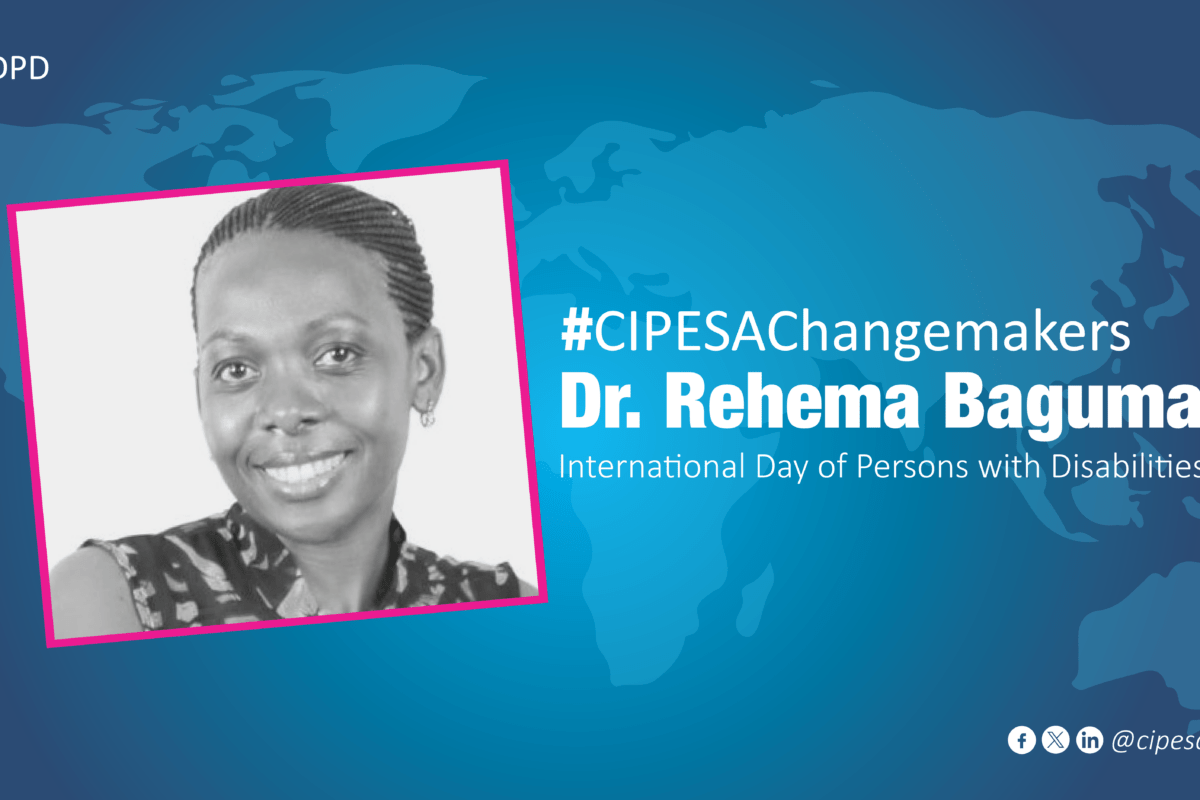
Dr. Rehema Baguma

Who is Dr. Rehema Baguma?

I am Rehema Baguma, currently working at Makerere University in Uganda, where I serve as an Associate Professor of Information Systems. My research interests include: Digital Inclusion, Data & AI Governance, EduTech & eGovernance. I have extensively researched and consulted in Uganda and neighbouring countries to make ICTs accessible to persons with Disabilities, among other areas. I have had the privilege of engaging in a series of industry initiatives in collaboration with government agencies, CSOs, international actors and DPOs. Notable among these include:

  • Development of ICT Accessibility and Disability Indicators-A framework for monitoring Obligatory National Implementation of ICT Accessibility for the Fulfilment of the Human Rights of Persons with Disabilities for the ICT Policy Centre for Eastern and Southern Africa (CIPESA), in 2018.
  • Leading a research study on the Audit of Inclusive ICTs for Education in Uganda, which established the extend to which ICTs used in education are accessible to Persons with Disabilities (May to September 2015).
  • Training of over 100 Government Web Administrators and Public Relations Officers (PROs) in Uganda in Web Accessibility in 2016.
  • Development of an Implementation Strategy of the Digital Talent Policy (DTP) for Persons with Disabilities in Rwanda (June 2017–January 2018).
  • Sensitisation and training of Policy Makers from Government Ministries, Departments and Agencies about ICTs used by Persons with Disabilities and Monitoring ICTs and Disability Policy in Uganda, in April 2018.
  • Member of the project on promoting the Rights of Persons with Disabilities Access to inclusive education and information in Uganda in partnership with UNESCO, UNICEF & National Union of Disabled Persons in Uganda (NUDIPU) between 2015 to 2017.
  • Contributor to the ICT for Inclusive Education policy for Uganda (draft)
  • Contributor to the National ICT for Disability policy for Uganda (draft)

My motivation came during my PhD research, which focused on Web accessibility through the Web Content Accessibility Guidelines. I was led to the area by a senior staff member at my School at the time, who told me that ICT accessibility could be a good area to research. My PhD research was on “Making the Web accessible to Persons with Disabilities through the Web Content Accessibility Guidelines” which demonstrated that the guidance given in WCAG (the most comprehensive and widely used set of Web accessibility guidelines developed by W3C) is relevant to the Web accessibility problems faced by people with disabilities; that WCAG has a higher potential to influence the development of accessible Web based systems save for its usability limitations; and proposed a solution to the usability limitations of WCAG grounded in a broader mature field of information retrieval. After completing my PhD, I felt compelled to apply the results of my research in practice, which led to several collaborations and assignments within Uganda and abroad.

There is an increasing awareness and appreciation of the need for and possibilities of digital rights, as well as the inclusion of people with disabilities, through advocacy, training, development, and the implementation of digital rights/inclusive ICT policies. This also includes the development of more inclusive technologies and platforms. For example, in June 2025, the government of Kenya committed to making all its digitised public services accessible to persons with disabilities, in alignment with the Accessibility Standard for Digital Products.  Additionally, there is an increasing number of advocacy initiatives focused on digital inclusion for people with disabilities. For instance, the Global Accessibility Awareness Day (GAAD) has evolved into an advocacy platform for inclusive policy audits, innovation labs for assistive technologies, and training programs to build capacity for disability rights advocacy and technology development.

There is an increase in the development of AI-driven Assistive Technologies and Tools for persons with disabilities, including those customised for the African context. For example, Signvrse, a Kenyan startup, is developing AI-powered sign language translation toolsthat convert speech and text into visual representations of sign language. Additionally,there are several advocacy and capacity-building efforts in different parts of Africa, such as accessibility audits, innovation labs, and fellowship programs to support affordable, local assistive technologies, and train Activists to advance digital inclusion for Persons with Disabilities.

The key threats and challenges to the digital rights and inclusion of people with disabilities in Africa are gaps in policy implementation and enforcement, the high cost and inaccessibility of assistive technologies, and general infrastructure gaps. Most African countries have progressive laws and policies regarding disability and ICT access; however, these often remain on paper due to a lack of political will and weak enforcement mechanisms. For instance, a legal requirement for all TV stations to provide sign language interpretation is often ignored. Also, government websites and e-services, which are increasingly vital for accessing public services, are frequently not designed to be accessible to people with disabilities (e.g., lacking alt text for screen readers or video captions). Further, essential assistive devices and software (like screen readers, Braille displays, and speech input software) are often expensive and out of reach for most people with disabilities who are, on average, poorer than their mainstream counterparts.

Additionally, unreliable electricity, poor internet connectivity, and the high cost of mobile data in many rural and remote areas create fundamental barriers to access for disadvantaged groups like People with Disabilities. Additionally, AI systems, including those used in screening for admission to educational institutions and job recruitment, may amplify existing discrimination and perpetuate negative stereotypes if not designed with accessibility and inclusion in mind. Moreso, the continent-wide limited availability of reliable and disaggregated data on the challenges faced by different disability groups continues to negatively impact the design and implementation of targeted interventions and policies. 

Building trust, fostering strong partnerships, and promoting regional collaboration in Africa’s disability rights movement requires intentional structures, shared power, and sustained dialogue among governments and various stakeholders.  There is a need for a shared rights-based framework grounded in the UN Convention on the Rights of Persons with Disabilities (CRPD) and African human rights instruments. People with disabilities and their representative organisations must be decision-makers, not just consultees, in line with the principle of “Nothing About Us Without Us”.  Also, tracking commitments and progress should be spearheaded by independent monitoring mechanisms led by Disabled Persons’ Organisations (DPOs). Furthermore, there is a need to establish permanent regional or sub-regional forums on disability rights and digital inclusion, rather than holding one-off events. These can be organised into thematic working groups (e.g., digital accessibility, education, employment, media, assistive technology, AI, etc.). Examples of good practice include national and regional Internet Governance Forums (IGFs) that feature disability-focused tracks, as well as the AU- or REC-hosted Disability and Digital Inclusion Roundtables, which have rotating leadership. Additionally, there is a need to utilise regional standards to align efforts and reduce fragmentation, thereby facilitating easier collaboration across borders. Furthermore, there is a need to invest in capacity building across all sectors on accessibility, disability budgeting, and inclusive policy design for governments; disability-inclusive and non-stigmatising reporting for journalists; universal design and accessibility testing for the tech development community; and policy, research, and digital skills for DPOs.

There is a need to implement community-led digital literacy, design accessible & affordable technology, create inclusive policies, foster multi-stakeholder partnerships (including NGOs, tech companies, and government), and collect disaggregated data to tailor programs to their specific needs. Additionally, it is important to involve these groups in decision-making to foster trust and develop solutions that address the unique barriers of cost, accessibility, and safety concerns. 

There is a need to promote research and innovation in ICT and disability/ICT accessibility for persons with disabilities, which can inform local policy, practice (including the development of interventions), and technology development for persons with disabilities. To date, most efforts have focused on advocacy, policy development, capacity building, and, to some extent, the development of assistive technologies. Grounding these initiatives in research can lead to more effective policies, practices and local assistive technologies.
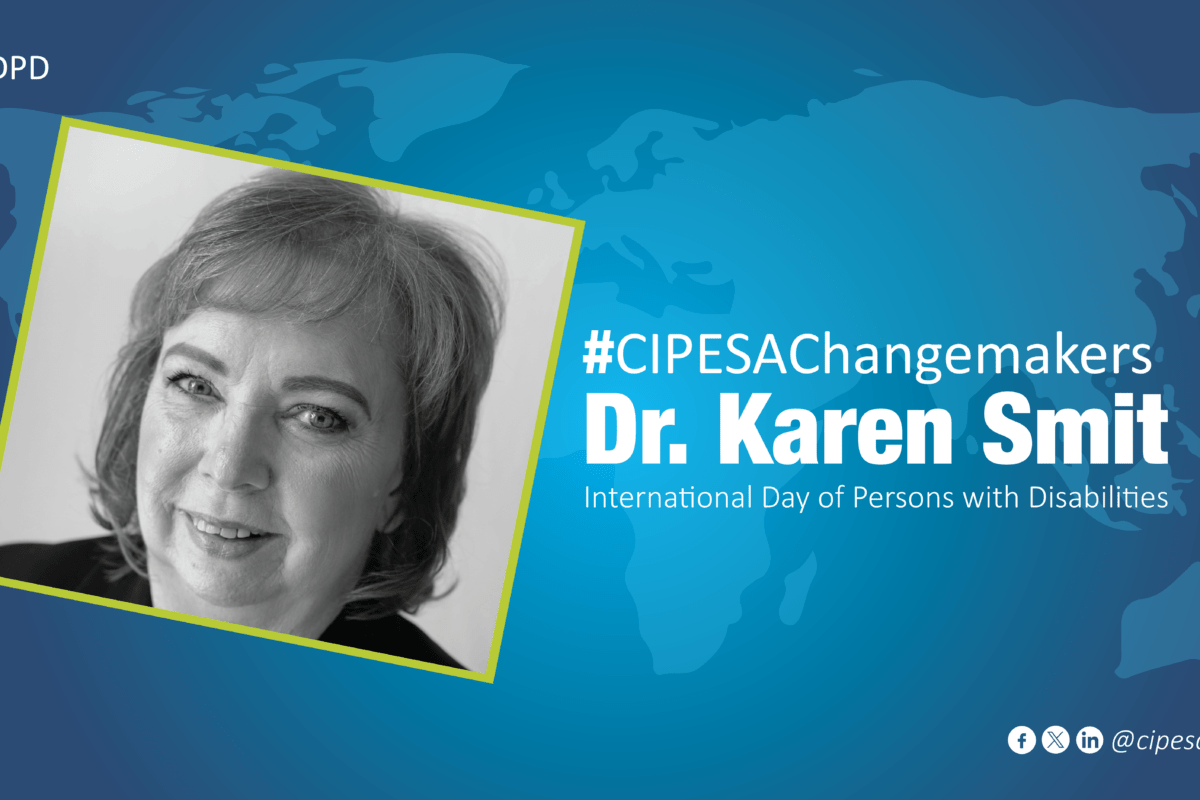

Dr. Karen Smit

Who is Dr. Karen Smit?

I am a mother, wife, sister, expert, and a professional with a disability who has dedicated my life to advocating for the inclusion of persons with disabilities in Africa. My lived experience has shaped my worldview and strengthened my commitment to social justice, particularly in advancing digital inclusion, so that persons with disabilities can fully enjoy their human rights and access opportunities. For 28 years, I have worked at Vodacom, driving disability inclusion and influencing systemic change.

I have been married to my wonderful husband for 31 years, and being a mom reminds me every day that miracles do happen.

My journey as a disability and digital rights advocate began shortly after completing my undergraduate studies in the 1990s, when I realised the power of using my voice to make a meaningful difference in people’s lives. I completed my MA in Social Work at the University of Stellenbosch, where I identified barriers to employment for individuals with disabilities and provided guidelines for line managers on the successful recruitment of candidates with disabilities.

The turning point came when I experienced the enabling role of technology firsthand. Becoming a user of accessible technology revealed its power to open doors, level the playing field, and create opportunities. This realisation fueled my passion to drive accessibility and digital inclusion across Africa. My vision is clear: I want all Africans with disabilities to fully participate in the digital society and economy – accessing opportunities, resources, and becoming active citizens who contribute to economic empowerment.

Over the past 28 years at Vodacom [in South Africa], my advocacy has deepened significantly as I pushed for inclusive innovations. The company’s senior leadership created a platform that empowered me to champion inclusion for employees and consumers with disabilities. The unwavering support of Vodacom’s Group CEO and senior leaders has been transformative – shifting the focus from a “tick-box” approach to embedding inclusion systemically into the company’s technology, products, services, and processes, in alignment with Vodacom’s Purpose Strategy.

Having worked for Vodacom for many years and being responsible for driving the accessibility agenda for consumers with disabilities sparked my interest in pursuing a PhD in disability studies, with a focus on developing a Framework for promoting the digital inclusion of disabled consumers that companies can implement.

There has been some progress in expanding digital rights and inclusion for persons with disabilities in Africa, but it remains limited. In many ways, we are still only scratching the surface. I am, however, encouraged that some countries are taking active steps to promote disability inclusion, which is a positive sign. Most African nations have disability legislation and regulations in place, which is commendable.

However, the real challenge lies in implementation and creating real impact. Progress is slow, and without effective enforcement and commitment, transformation stalls, leaving behind many persons with disabilities.

Vodacom markets have several disability inclusion initiatives, including creating inclusive workplaces, accessible contact (customer service) centres, and retail stores offering multiple communication channels for persons with various disabilities. Additionally, digital centres provide smartphones and digital skills training to organisations for persons with disabilities.

The company also provides text Emergency Services for Deaf, hard-of-hearing, and persons with speech disabilities, accessible apps such as M-Pesa and VodaPay for visually impaired users, [it] hosts the annual Africa Accessibility conference, and offers tailor-made packages for disabled contract users, as well as training for store consultants.

Furthermore, the African Union (AU) Protocol to the African Charter on Human and Peoples’ Rights (ACHPR) on the Rights of Persons with Disabilities in Africa recently came into effect to protect and promote the rights of persons with disabilities across Africa. In 2025, Kenya enacted a progressive Persons with Disabilities Act, 2025 (Act No. 4 of 2025), marking a major milestone in disability inclusion and rights protection.

Research indicates that there are several barriers that persons with disabilities face, such as affordability, a lack of digital skills, and limited access to devices. Women with disabilities and those in rural areas face compounded barriers due to cultural norms, infrastructure gaps, and affordability challenges.

Meanwhile, with the emergence of new technologies, intentional efforts must be made to ensure that Artificial Intelligence (AI) systems are not trained on biased datasets that fail to represent persons with disabilities. Innovators must prioritise accessibility when designing solutions for smart cities, environmental sustainability, safety, security, and tourism.

To stay ahead, we must involve the disability community at every stage – from the conceptualisation of innovations to implementation – ensuring their voices shape innovation. This transforms persons with disabilities from passive beneficiaries into active partners and co-creators of solutions for a barrier-free Africa.

To build trust, foster partnerships, and strengthen regional collaboration among African stakeholders in the disability rights movement, it is essential to create a unified ecosystem that drives systemic change. These actors must recognise that disability is a natural part of the human experience and that exclusion stems from societal barriers, not just individual limitations. When these barriers are removed, persons with disabilities can fully exercise their rights and participate equally in all aspects of life.

Efforts to promote digital rights and inclusion in Africa must intentionally address how disability intersects with other marginalised identities – such as women, youth, and older persons – so that no one is left behind. Women with disabilities represent more than half of all persons with disabilities worldwide, and yet they continue to face numerous barriers, including being less likely to hold leadership roles, to be employed, to use the internet, and to experience barriers to sexual and reproductive healthcare. Their voices and specific needs must be prioritised and integrated into every stage of innovation and policy development to ensure an inclusive society for all.

Media Training on Disability and Digital Rights in Africa

Call for Applications |

In the lead up to the International Disability Day, on December 3, 2021, the Collaboration on International ICT Policy for East and Southern Africa (CIPESA) is inviting journalists from Kenya, Tanzania, and Uganda to apply for a two-day media training on Disability and Digital Rights in Africa. The virtual training will take place over two full days on December, 1-2, 2021.

Background

Although the East African region has experienced considerable growth in the use of Information and Communications Technologies (ICT), persons with disabilities in the region still face difficulties in accessing and using  these technologies and thus continue to miss out on the benefits that they bring. According to national census data, the percentage of persons with disabilities in Tanzania is 8% of the total population, 3.5% in Kenya, and 14% in Uganda.

A study on ICT Accessibility Barriers for Persons with Disabilities, found that while Kenya, Tanzania, and Uganda have enacted various laws and policies to advance the rights of persons with disabilities, including those on access to and use of ICT, these have largely remained on paper with key provisions not being implemented. As a result, a large section of persons with disabilities continue to face digital exclusion.

The situation is exacerbated by the high cost of assistive technologies, low literacy levels among persons with disabilities, and lack of investments in supportive infrastructure by public and private entities.

Many of the obstacles and challenges faced by persons with disabilities in accessing information, education and employment can be mitigated through equitable access to ICT. To achieve this, several stakeholders, including the media, policy makers, regulators and ICT service providers must take decisive steps in terms of the development, production, cost and availability of certain requirements and equipment and creating an enabling environment for the promotion and respect of ICT accessibility rights for persons with disabilities. For media in particular, there is need for investigate and highlight digital exclusion challenges faced by persons with disabilities; provide a platform and voice for persons with disability; through their reporting, hold duty bearers accountable for any violations of digital rights of persons with disability; and offer their news and other programmes in accessible  formats, especially the broadcast and online platforms.

Purpose of the Workshop

The workshop will equip the participants with the requisite knowledge and skills  to effectively report about  the digital inclusion of persons with disabilities and contribute towards promoting digital accessibility through fair, accurate, and enterprise coverage  on persons with disabilities.

Topics to be covered will include:

  • Laws and Policies on Disability and ICT
  • Key ICT and Disability Rights Issues in East Africa
  • Disability and Technology – Facts and Myths
  • The Media and Digital Rights for Persons with Disability
  • Checklist for Media Coverage of ICT and Disability

CIPESA will cover participants’ internet connectivity costs.

If interested, please fill this application Form by  November 20, 2021

Successful applicants will be notified on November 26, 2021

Calling Out the African Union and Telecoms Associations to Prioritize ICT Access for Persons with Disabilities

By Edrine Wanyama |

The International Day of Persons with Disabilities (IDPD) has been observed every December 3 since 1992. The annual event aims to “promote the rights and well-being of persons with disabilities in all spheres of society and development, and to increase awareness of the situation of persons with disabilities in every aspect of political, social, economic and cultural life.”

The theme for 2020 was “Building back better: towards an inclusive, affordable, accessible and sustainable post COVID-19 world by, for and with persons with disabilities”. This is in line with the 2030 Agenda for Sustainable Development Goals (SDGs), which pledges to leave no one behind, and five of whose goals outline inclusion of persons with disabilities.

In the past year, the Collaboration on International ICT Policy for East and Southern Africa (CIPESA) has highlighted the need to remove barriers to ICT accessibility for persons with disabilities in Kenya, Tanzania and Uganda. Likewise, it has called for greater access to information for persons with disabilities, especially during the COVID-19 pandemic. Further, CIPESA has pointed out the need for telecommunications service providers, governments and donors to do more to promote ICT accessibility for persons with disabilities in Africa.

CIPESA is now shining the spotlight on the African Union Commission (AUC), the African Telecommunications Union (ATU) and the East African Communications Organisation (EACO) as critical regional bodies with  mandates to promote inclusive, affordable, accessible and sustainable information and communications technology (ICT) for persons with disabilities.

In separate  letters addressed to the  three organisations on International Day of Persons with Disabilities (IDPD), CIPESA acknowledges their critical roles, and that of their respective members, in promoting the rights of persons with disabilities in the digital sphere.

Specifically, the letters recall these organisations’ obligation to protect and advance the rights of persons with disabilities in line with the African Charter on Human and Peoples’ Rights, the United Nations’ Convention on the Rights of Persons with Disabilities and its Optional Protocol, the Treaty to Facilitate Access to Published Works for Persons Who Are Blind, Visually Impaired or Otherwise Print Disabled (the Marrakesh Treaty); the SDGs; and the Protocol to the African Charter on Human and Peoples’ Rights on the Rights of Persons with Disabilities in Africa (the Protocol).

The Protocol is critical for the promotion and effective protection of the rights of persons with disabilities. However, it is yet to be ratified by any African Union (AU) Member State and only has nine signatoriesAngola, Burkina Faso, Cameroon, Central African Republic, Gabon, Mali, Rwanda, South Africa, and Togo.

The Protocol  calls upon AU Member States to take “effective and appropriate measures to facilitate full enjoyment by persons with disabilities of the right to access “information, communications, sign language and tactile interpretation services, braille, audio and other services, including electronic services and emergency services.” Further, the Protocol calls upon States to ensure that persons with disability have access to quality and affordable mobility aids and assistive devices or technologies.

Despite states’ obligations in regional instruments, the letters point to continued inequality in accessing assistive technologies such as screen readers, screen magnification software, text readers, and speech input software; and  digital inaccessibility of websites mobile applications and services. e.

In the advent of the Covid-19 pandemic, the digital exclusion of persons with disabilities has deepened, as many cannot access vital information on the pandemic, lack access to education and remote working opportunities, which increasingly require the use of ICT..

The recommendations made in the letters include the following:

  • Ratify the Protocol to the African Charter on Human and Peoples’ Rights on the Rights of Persons with Disabilities in Africa as a matter of utmost priority, and promote awareness on its content and the rights it protects.
  • Provide incentives for innovation and investment in accessible ICT products and services, such as software solutions and accessible handsets and mobile devices.
  • Offer tax exemptions on handsets and mobile devices tailored to the needs of persons with disabilities.
  • Support the implementation of the International Telecommunications Union (ITU) Resolution 175 on Telecommunication/information and communication technology accessibility for persons with disabilities and persons with specific needs.
  • Ensure that information on COVID-19 is inclusive and provided in accessible and appropriate formats and languages.
  • Support the development, implementation and enforcement of relevant and enabling national policies and legislation on accessible communication products and services such as disability laws, Codes of Practice, consumer rights regulations, and ICT and disability policies.
  • Promote awareness on, and access of persons with disabilities to specialist devices and technologies such as manual Perkins Brailler, hand-held magnifiers, hand frames/slates and communication boards, screen readers, text-to-speech software and Augmentative and Alternative Communication (AAC).
  • Promote the participation of persons with disabilities in decision-making and policy development processes at national and regional levels.
  • Ensure the systematic collection, analysis, storage and dissemination of national statistics and data covering disability to increase the availability of high-quality, timely and reliable disaggregated data by disability, in order to facilitate the protection and promotion of the rights of persons with disabilities.
  • Promote multi-stakeholder cooperation between governments, the private sector, civil society and other relevant actors to incorporate diverse perspectives and promote the rights of persons with disabilities in accordance with the Protocol.

The detailed letters can be found here: African Union Commission (AUC) letter, the African Telecommunications Union (ATU) letter, and the East African Communications Organisation (EACO) letter.

Report Launch: How Telecom Operators in Africa Are Failing Persons With Disabilities

#FIFAfrica20 |

Today, the Collaboration on International ICT Policy for East and Southern Africa (CIPESA) has released a new report which shows that several telecom companies in Sub-Saharan Africa have failed to meet their obligations to provide information and services to persons with disabilities. The report assessed 10 telecom companies in five countries: Botswana, Kenya, Nigeria, South Africa, and Uganda and was based on guidelines from the International Telecommunications Union (ITU) Model Accessibility Policy 2014, the  World Wide Web Consortium’s Web and Mobile Content Accessibility Guidelines, and the United Nations Convention on the Rights of Persons with Disabilities (CRPD).

Most of the companies assessed – despite being long-established operators with the majority market share in their respective countries – failed to prioritise the needs of telecom customers with disabilities in contravention of the companies’ obligations under national laws and the CRPD.

Safaricom in Kenya and Vodacom South Africa were found to be leading in improving accessibility of communication products and services for persons with disabilities. The good performance by Safaricom and Vodacom in comparison to other companies reviewed appears to be driven by the policies and culture of the Vodafone group to which both belong and not by regulations or regulators in Kenya and South Africa.

MTN’s operations in Nigeria, South Africa, and Uganda, as well as Airtel’s operations in Nigeria and Uganda seemed to give low consideration to accessibility of their services by persons with disabilities. This was evidenced by the consistent non-compliance with the accessibility indicators covered in the study across the countries where MTN and Airtel operated.

The report was launched at the Forum of Internet Freedom in Africa 2020 (FIFAfrica20) as part of commemorations of the International Day for Universal Access to Information (September 28). The findings  featured in panel discussions on how Covid-19 has accelerated the digital exclusion of persons with disabilities, which is undermining a key pillar of the 2030 Agenda for Sustainable Development Goals (SDGs) – the pledge to leave no one behind.

Given the critical role the telecom industry plays in providing information and communication services, it is of utmost importance that it takes deliberate measures to promote accessibility of its products and services. The industry also needs to create awareness of accessible mobile communications among persons with disabilities, their caregivers, and organisations of persons with disabilities (DPOs).

Recommendations

  1. Telecom operators need to address concerns of persons with disabilities regarding their services and products, including through provision of information in accessible formats such as Braille, large print, visual and audio formats; understand the numbers and needs of their customers with disabilities so that they build focused products and services to suit these customers; ramp up sensitivity training for their staff, including in basic sign language.
  2. Government agencies such as communication regulators and consumer protection units should enforce legislation on accessible communication products and services. More vigilance is needed in enforcing implementation of national disability laws, Codes of Practice, consumer rights regulations, and ICT and disability policies.
  3. Safaricom and Vodacom South Africa provide learning examples for other operators on proactively improving digital accessibility and building partnerships that improve service provision to persons with disabilities. Regulators also need to learn from these examples to offer guidance to operators in their jurisdictions.
  4. Telecom companies should form partnerships with academia, civil society, DPOs, tech developers and innovators and device manufacturers to develop accessible mobile communication solutions.
  5. Governments should offer incentives for investment and innovation in accessible mobile devices and software solutions to encourage the development and availability of such technologies and solutions. Examples of such incentives are tax exemption on handsets/mobile devices tailored to the needs of persons with disabilities.

The full report can be found here.