Access to Information in Uganda to be Recognised at Internet Freedom Forum

As part of its OpenNet Africa initiative which is aimed at promoting internet rights in Africa, the Collaboration on International ICT Policy for East and Southern Africa (CIPESA) is next week set to host the second Forum on Internet Freedom in East Africa. The two-day event is scheduled for 28 and 29 September 2015, in Kampala, Uganda and will coincide with the International Right to Know Day.

Uganda was the first of two  countries in East Africa to adopt  an Access to Information Act (ATIA) in 2005 (the other is Rwanda in 2013) which promotes the right of access to information and supports public participation in decision-making processes. As part of the forum the Ministry of Information and National Guidance in the Office of the Prime Minister (Uganda) in partnership with CIPESA and the Africa Freedom of Information Centre (AFIC) will celebrate the 10th anniversary of ATIA, host discussions to evaluate the implementation of the law, how to overcome challenges on implementation and proposals for amendments. The second State of Right to Information (RTI) in Africa report will also be presented.

In Africa, Government Ministries, Departments and Agencies (MDAs), Civil Society Organisations (CSOs), the private sector, academia and ordinary citizens are increasingly utilizing online tools for social and economic engagement, online debate, advocacy and business development. The Forum will serve as a platform to discuss how the current state of internet freedoms in Africa affects these engagements. Further, it will also explore the threats online engagements face, how emerging global issues impact upon local users, as well as the opportunities for action to promote access, privacy and security online.

The 2015 edition of the State of Internet Freedom in East Africa Report will be launched at the Forum.

Ashnah Kalemera, Programmes Associate at CIPESA, says that, “This report is the culmination of exploratory research conducted in Burundi, Ethiopia, Kenya, Rwanda, Tanzania and Uganda into the threats to access, privacy and security online, as well as the knowledge, attitudes and practices of citizens on internet freedoms in these countries. The insights gathered can help guide policy makers, civil society, telecommunication regulatory authorities in understanding the internet freedom landscape in the region including the challenges, opportunities and developments.”

According to the International Telecommunication Union, by the end of 2015, there will be 3.2 billion users of the internet, of which 2 billion will come from developing countries. This translates to 34% of households in developing countries accessing the Internet, compared with more than 80% in developed countries. In the report focus countries, internet penetration in Burundi stands at 4.9% (2013 statistics), while according to 2014 statistics, Kenya had a penetration of 52%, while Rwanda was 20%, Tanzania at 4.8% and in Uganda at 20%.

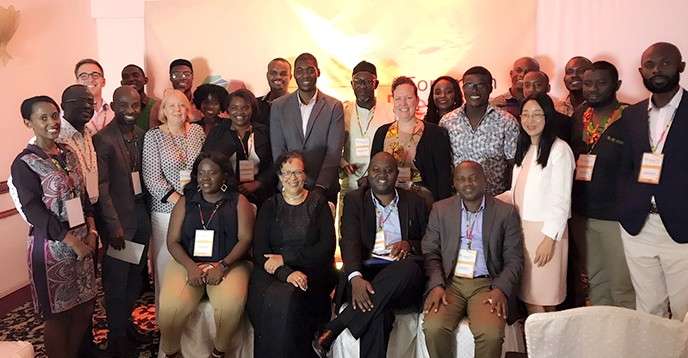
The Forum brings together human rights defenders, journalists, government officials, academia, bloggers, developers, the arts community, law enforcement agencies and communication regulators, all of whom have a role to play in advancing the rights of citizens to privacy and freedom of expression in the online sphere.

Participants confirmed to attend hail from Burundi, Cameroon, Democratic Republic of Congo, Ethiopia, Germany, Italy, Kenya, Nigeria, Rwanda, Tanzania, South Africa, South Sudan, Sudan, Somalia, Uganda, United Kingdom, United States of America, Zambia, and Zimbabwe.

Speakers at the panel will come from organizations including Article 19, Bayimba (Uganda), Bloggers Association Kenya, Chapter 4, ICT Association Uganda (ICTAU), Globaleaks, Global Voices (Uganda), Great Lakes Voices (Rwanda), Hub for Investigative Media (HIM), iHub Research (Kenya), Internet Society [(Africa, Burundi and Uganda Chapters], Jamii Forums (Tanzania), UNESCO, Facebook, Kenya ICT Action Network (KICTANet), Makerere University (Uganda), Media Institute of Southern Africa (MISA), Paradigm Initiative Nigeria, Protège QV, Uganda Media Centre, Uganda Communications Commission (UCC), Uganda Police Cybercrime Unit, University of Nairobi, Web We Want, Writivism (Uganda) and the Women Of Uganda Network (WOUGNET) among others.

Topics to be discussed include electioneering and extremism in the digital age, press freedom, access to information online, the economics of the internet, digital safety, online violence against women and cybercrime. See the Programme.

We are thankful for the support received from the African Centre for Media Excellence (ACME)Ford Foundation, Hivos, Open Technology Fund, UNESCO and Web We Want.


Hunting Down Social Media ‘Abusers’ in Uganda as Elections Near

By CIPESA Staff |
As Uganda draws closer to the February 2016 presidential elections, the fever of anxiety in government corridors is rising. Over the years, election periods have seen a crackdown on social media, voices critical of the ruling party, and independent media in the guise of promoting public order and unity as well as preventing the spread of false information. This, however, has sparked debate on the fine line between preserving national cohesion and hampering free speech.
See our full analysis of Hunting Down Social Media ‘Abusers’ in Uganda as Elections Near in our Policy Briefing Series

World Press Freedom: Ugandan Journalists Convened for Digital Security Training

By Juliet Nanfuka |
On May 2, a total of 27 Ugandan journalists were trained in digital security procedures. The training was held in commemoration of World Press Freedom Day (May 3), which this year was celebrated under the theme “Let Journalism Thrive! Towards Better Reporting, Gender Equality, and Media Safety in the Digital Age”.
The training, which was organised by the Collaboration on International ICT Policy in East and Southern Africa (CIPESA) in partnership with Uganda Journalists Union (UJU) and the East and Horn of Africa Human Rights Defenders Project (EHARDP), explored the status of journalism in Uganda as well as the legal and regulatory frameworks affecting freedom of expression in the country. Participants at the training workshop represented print, online and broadcast media houses from across Uganda.
During the training, it emerged that some journalists are not cautious about their online security, similar to those in a previous training hosted by CIPESA. The reuse of one password across different websites and platforms, and overexposure of personal information online were common among the training participants. Email encryption, the use of Virtual private networks (VPNs) and Multi Factor Authentication for passwords, were taught as skills that can aid journalists when investigating sensitive stories that may be prone to surveillance.
Norman Katende, an international award winning journalist, shared his experiences of being threatened while reporting on controversial stories and encouraged journalists to practice caution both online and offline. He questioned how journalism can thrive in the face of police attacks on the media, noting that journalists should not compromise on their security when covering sensitive stories just to earn a living.
According to the Committee to Protect Journalists (CPJ), an international organisation that defends the rights of journalists, over the past two decades, 1125 journalists across the world lost their lives while reporting or investigating stories. The medium increasingly used by journalists to source and disseminate information is the internet.
Last month, Somalia journalist Daud Ali Omar and his wife were murdered. The same month, Kenyan journalist Johan Kituyi, proprietor of the newspaper Mirror Weekly, which has covered controversial national issues, was also murdered.
Increasingly, online publishers and bloggers are also coming under attack in Africa. For instance, a year after their arrest, the Ethiopian Zone9 bloggers remain behind bars and in Burundi, civil unrest related to upcoming elections has led to government restrictions of information flow through various media houses – and radio stations.
Such attacks necessitate digital safety skills for journalists. “When you look at the level of knowledge on ICT that a journalist has – it’s really basic. We have several unsecured email accounts and we visit any website without [considering] security,” noted a journalist at the training in Kampala.
Journalists noted that they do not always exercise their rights and do not request security from their media houses when pursuing sensitive stories. They also indicated a lack of awareness of the laws in place that can aid them in developing stories, such as the Access to Information Act (2005), which compels Ministries, Departments and Agencies to release information.
Following a CIPESA presentation on the legal and regulatory frameworks affecting internet freedom, especially freedom of expression online in Uganda, a Soroti-based journalist said the training had made him re-evaluate how he used his mobile phone and the internet, saying that he had been using these tools “without considering their implications.”
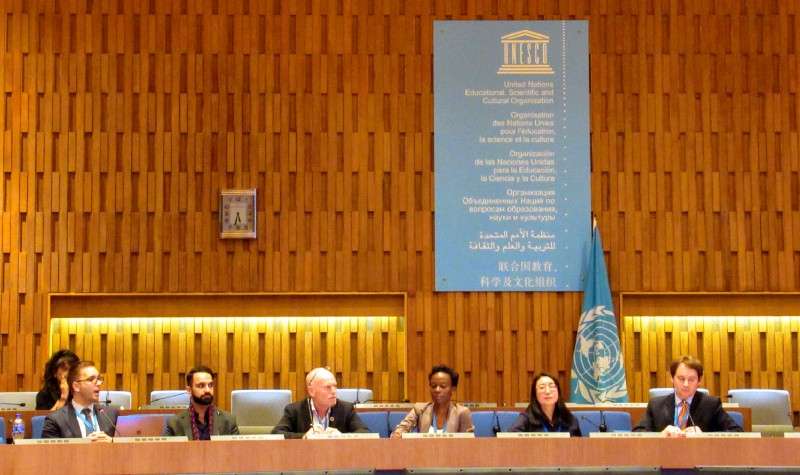
Further to the commemoration of World Press Freedom day, CIPESA participated in the “Digital safety for journalists” plenary session of the global event hosted by UNESCO.  CIPESA and its partners in various countries were also involved in a series of Twitter engagements which explored press freedom, including in the digital world, particularly for African journalists.
The training was conducted in the context of CIPESA’s OpenNet Africa initiative that promotes internet freedom in Africa and is supported by the Open Technology Fund, Hivos and the Association for Progressive Communications (APC).

Let Journalism Thrive! Towards Better Reporting, Gender Equality, and Media Safety in the Digital Age

UNESCO |
Every year, 3 May is a date which celebrates the fundamental principles of press freedom; to evaluate press freedom around the world, to defend the media from attacks on their independence and to pay tribute to journalists who have lost their lives in the exercise of their profession.
Over 100 national celebrations take place each year to commemorate this Day. UNESCO leads the worldwide celebration by identifying the global thematic and organizing the main event in different parts of world every year.
The international day was proclaimed by the UN General Assembly in 1993 following a Recommendation adopted at the 26th Session of UNESCO’s General Conference in 1991. This in turn was a response to a call by African journalists who in 1991 produced the landmark Windhoek Declaration on media pluralism and independence.
To mark the 2015 World Press Freedom day, UNESCO will lead the global celebration with a main event under the theme “Let Journalism Thrive! Towards Better Reporting, Gender Equality, and Media Safety in the Digital Age”.  The event is co-organized by UNESCO and the Government of Latvia, and will take place from 2-4 May 2015 in Riga, Latvia.
The Collaboration on International ICT Policy in East and Southern Africa (CIPESA) will be participating in the event represented by Wairagala Wakabi as one of the speakers in the Plenary 3 Session on “Digital Safety for Journalists” on 4 May 2015.  The discussions during this session will be enriched by CIPESA’s experience and expertise, particularly under its OpenNet Africa initiative.
Meanwhile, on May 2, CIPESA will convene journalists in Kampala, Uganda for digital safety training as part of its ongoing online security capacity building efforts for human rights defenders, minority groups, activists and the media in East Africa.

Is Kenya Putting the Chill on Internet Freedoms?

By Juliet Nanfuka |
The rights of Kenya’s digital citizens are fast shrinking in the face of new restrictive laws and increased arraignment of individuals for expressing online opinions which authorities deem in breach of the law.
The Security Laws (Amendment) Act 2014, assented to by President Uhuru Kenyatta last December, allows blanket admissibility in court of electronic messages and digital material regardless of whether it is not in its original form.
It is feared that retrogressive provisions in this law could be used to put the chill on internet freedoms in East Africa’s most connected country where mobile phone penetration stands at 80% and internet access at 50% of the population.
Part V of the new security law regarding “special operations” has raised particular concerns, as it expands the surveillance capabilities of the Kenyan intelligence and law enforcement agencies without sufficient procedural safeguards.
It gives broad powers to the Director General of the National Intelligence Service to authorise any officer of the Service to monitor communications, “obtain any information, material, record, document or thing” and “to take all necessary action, within the law, to preserve national security.”
In addition, the amendments also contain unclear procedural safeguards especially in the interception of communications by “National Security Organs” for the purposes of detecting or disrupting acts of terrorism.
Even though there is a provision for a warrant to be issued by a court of law, the broad definition of ‘national security’ leaves no room for restrictions on the extent of power the law grants to National Intelligence Service when it comes to accessing personal data, information and communications.
In February 2015, the Kenya High Court struck some clauses from the security law. The government says it may appeal.
Government says the new law is necessary to fight al Shabaab militants who have repeatedly rocked the country with fatal attacks such as the Westgate shopping centre attack on September 21, 2013, which left 67 people dead. Human rights activists blame President Kenyatta’s government for steadily shrinking the space for civil actors, a pattern they say was manifested in the Kenya Information and Communications (Amendment) Act 2013 and the Media Council Act 2013. These laws, they say, placed restrictions on media freedom and general freedom of expression.
The proposed Cybercrime and Computer related Crimes Bill (2014) also falls short of constitutional guarantees as it is contains “broad” speech offences with potentially chilling effects on free speech. See a full legal analysis of the Bill by Article 19. Proposed regulations to the law governing non-government organisations, which cap the funds received from foreigners at 15% of their overall budgets, have also been criticised as aimed to curtail and control the activities of civic groups engaged in governance and human rights work.
Over the 2012-2013 election period, several individuals were charged in court over their online communications. The National Cohesion and Integration Act of 2008 has been used to charge many for promoting hate speech – which some Kenyan citizens found justifiable given the role that hate speech played in the 2007 to 2008 post-election violence.
Hate Speech is defined by the 2008 Act as speech that is “threatening, abusive or insulting or involves the use of threatening, abusive or insulting words” with the intention to stir up ethnic hatred or a likelihood that ethnic hatred will be stirred up. Authorities, however, seem to be shifting gear and using this charge among others against online journalists and bloggers that criticise the Kenyatta government.
In December 2014, blogger Robert Alai was arrested and charged with undermining the authority of a public officer contrary to Section 132 of the Penal Code by allegedly calling President Kenyatta an “adolescent president” in a blog. He was again arrested in February 2015 for offending a businessman online by linking him to a land saga that involved the illegal acquisition of the Langata Primary School playground.
Meanwhile, Allan Wadi – a student – was also arrested for “hate speech” and jailed in January 2015 for posting negative comments on Facebook about the president. In the same month, journalist Abraham Mutai was arrested following tweets he posted on corruption in the Isiolo County Government. He was charged with the “misuse of a licensed communication platform to cause anxiety.”
Nancy Mbindalah, an intern with the department of finance at the Embu County Government, was charged on similar grounds for social media posts dating as far back as 2013 in which she is alleged to have abused County Governor Martin Wambora.
In all instances, some social media users claimed there were “selective” arrests and prosecution of those critical of government. Critics cited the case of Moses Kuria, a Member of Parliament (MP) for Gatundu South, who allegedly made remarks on Facebook against the Luo Community but did not face the same punitive actions.
A recent news report, however, indicates that the National Cohesion and Reconciliation Commission and the Public Prosecutor are calling for the MP’s case to be revisited for the “incitement to violence, hate speech and fanning ethnic hatred.”
The incidents of arrest, prosecution and law amendments demonstrate a recurring theme of clamping down on dissenting citizen voices, a concern that was highlighted by the Kenya Human Rights Commission and the International Federation for Human Rights following the enactment of the Security Laws (Amendment) Act.
While the country remains on a constant alert for terror attacks, this has been used to strengthen the control that the state has on freedom of expression and surveillance. The lack of laws that limit state access to citizens’ information further exacerbates this concern.