Navigating Digital Rights in Africa amidst Increasing Foreign Malign Influence

By CIPESA Writers | 

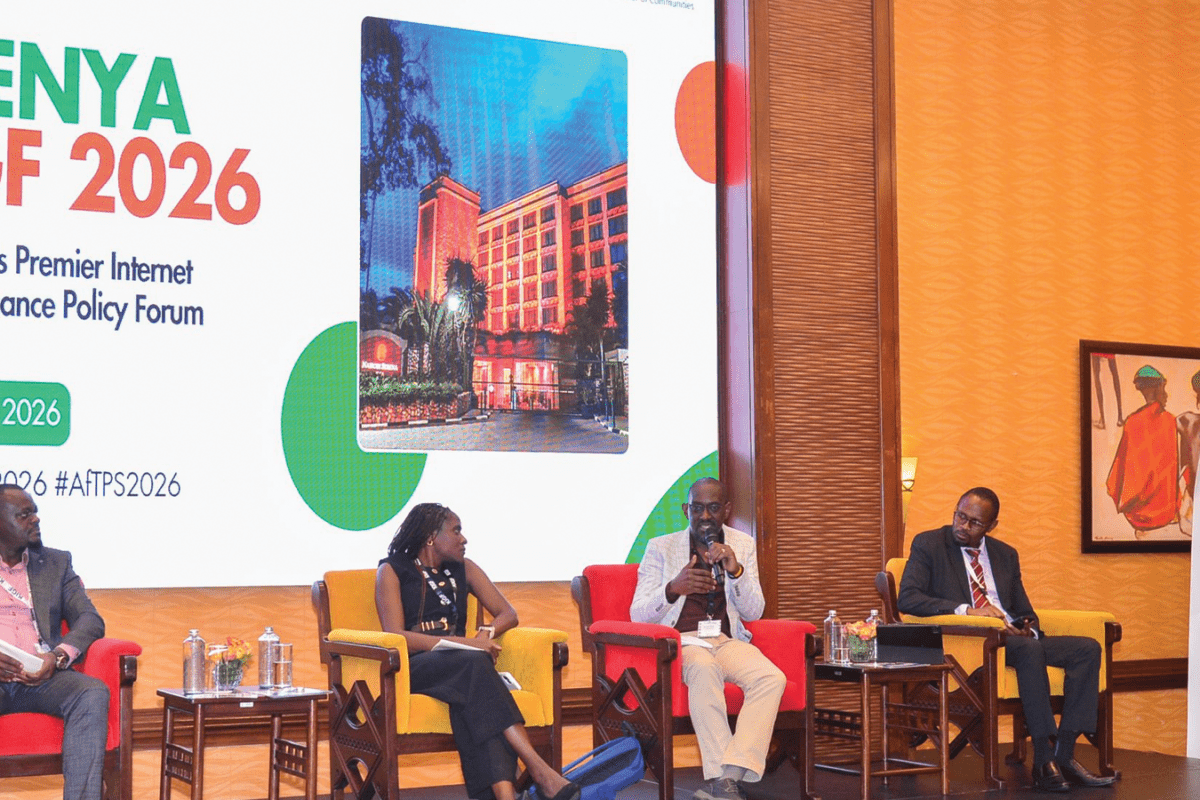
On May 21, 2026, more than 300 delegates convened in Nairobi, Kenya, for the 19th edition of the Kenya Internet Governance Forum (KeIGF) to discuss the state of digital rights and internet governance on the continent.

The KeIGF was held three weeks after the continent’s digital landscape was jolted by the Zambian government’s decision to postpone RightsCon, the global digital rights forum, four days before it was scheduled to start. Efforts to resolve the issue yielded no positive results, and Access Now, the event organiser, decided to cancel the conference.

According to the Access Now statement, officials in Zambia’s Ministry of Technology and Science had reached out to them with concerns raised by diplomats from the People’s Republic of China, who were “pressuring” the Zambian government over the planned in-person participation of Taiwanese civil society.

Proceeding with the event while excluding some participants at the behest of certain countries would have set a bad precedent. The RightsCon cancellation, however, had a ripple effect. Several in-person sessions of the World Press Freedom Day 2026 Global Conference, which was to be held alongside the RightsCon conference at the Mulungushi International Conference Centre in Lusaka, were cancelled, while others were rescheduled to later dates.

These events highlight the growing influence of national governments on the success or failure of regional and international digital rights convenings. As Access Now explained, such convenings often involve extensive diplomatic engagement between conference organisers and host countries to secure their commitments, among other things, to respect the fundamental human rights of all participants and to ensure smooth logistical preparations. For example, in March 2026, the Zambian Ministry of Technology and Science issued a statement announcing that the government would be a co-host of the RightsCon conference.

Access Now’s decision was a timely reminder that fundamental human rights, including digital rights, are non-negotiable and interdependent, and that national governments should not be at liberty to choose which rights to respect.

Growing Incidents of Foreign Malign Influence in Africa

Foreign governments’ interference in the internal affairs of African countries is not new, and while incidents of foreign malign influence in Africa’s trajectory toward digital authoritarianism have been well documented, the RightsCon cancellation was possibly the first time a foreign entity worked so blatantly to influence the direction of a digital rights convening itself. This clearly demonstrated the dangers posed by the growing economic and power imbalances between African countries and their trading partners.

Because many African countries have turned to China and Russia for support for their economic and security agendas, respectively, they have inadvertently surrendered part of their sovereignty to these superpowers due to what is referred to as the “debt trap”. 

For example, in April 2026, China was reported to have scrapped tariffs on all African countries except Eswatini, which maintains diplomatic relations with Taiwan, a move that contributed to friction between Access Now and the Zambian government. Earlier in 2022, the Chinese government was reported to have “forgiven” 23 interest-free loans to 17 African nations after it had also cancelled more than USD 3.4 billion in debt and restructured around USD 15 billion in debt in Africa between 2000 and 2019.

Reports by the Institute for Security Studies (ISS) and the Collaboration on International ICT Policy for East and Southern Africa (CIPESA) have shown that geopolitical interests have often crossed national boundaries, with powerful nations exerting influence on the legal landscapes and digital public infrastructure of many African countries. 

According to an Institute of Development Studies study that mapped smart surveillance technologies in 11 African countries, many African countries that have embraced smart city surveillance have tended to rely on China for financing their digital public infrastructure, including tools, software, and capacity-building, which are often deployed to conduct digital surveillance of their citizens. Digital rights actors and individual government critics have often borne the brunt of these surveillance practices.

Unfortunately, the deployment of these digital surveillance tools and software is often characterised by limited oversight and a lack of transparency regarding their purchases and operations, raising serious concerns about their intentions and their impact on human rights. 

In April 2026, a team of United Nations Experts raised serious concerns about the proliferation of digital surveillance technologies, including artificial intelligence (AI), noting that their misuse by states in law enforcement, counter-terrorism, border management, and national security and military contexts poses serious human rights risks. 

Disinformation and Information Warfare

Africa has also become a battlefield for disinformation campaigns as different superpowers scramble to expand their spheres of influence. Foreign disinformation campaigns are particularly prominent during periods of contestation, such as elections, protests, and civil strife. 

Because they are more covert, disinformation campaigns have become more insidious as they are rarely noticeable or easily associated with foreign actors. For example, in countries such as Kenya, Ethiopia, Ghana, and Nigeria, Russia has worked with locally based influencers and digital content creators to amplify pro-Kremlin narratives and messaging while keeping their connections to Russian-backed initiatives a secret. 

In 2024 alone, there were at least 80 documented cases of Russian-linked disinformation campaigns targeting more than 22 African countries. Indeed, several of Africa’s fragile autocracies, such as Burkina Faso, the Central African Republic (CAR), Mali, and Sudan, have come to rely on Russia’s well-coordinated digital propaganda to sustain their stay in power. 

Mitigating the Malign Influence

Foreign malign influence has continued to thrive in Africa, partly due to African countries’ overreliance on the “generosity” of superpowers seeking to shape Africa’s political, social, and economic landscape. While development partnerships and support are critical to a country’s development, these should be anchored in rights-respecting frameworks and geared towards benefiting ordinary citizens.

Taken together, the various aspects of foreign malign influence are undermining the democratic practices of many African countries, including electoral processes, while emboldening autocratic leaders to embrace digital authoritarianism.

For digital rights activists, especially in Africa, it is therefore important to understand and address the factors driving the expansion of foreign digital malign influence and to develop strategies to counter it, including mechanisms to hold governments accountable when they purchase and deploy digital surveillance tools and software. 

More specifically, digital rights actors should:

  • Strengthen Digital and Media Literacy

Because foreign malign influence most often thrives in contexts with limited media and information literacy, weak media systems, and digital inequalities, it is important that rights actors build systems that promote information integrity, such as media independence, fact-checking, and independent journalism, to counter information manipulation. In most of Africa, the media and information ecosystems are so integrated, enabling the viral spread of misinformation through influencers and digital content creators with large followings. Quite often, media houses amplify the disinformation tapped from influencers with large followings without verification.  

  • Build Stronger Coalitions and Regional Networks

In many African countries, governments have often used the tried-and-tested “divide and rule” approach, mischaracterising digital rights actors as either sympathetic to them or “enemies”. The main purpose is always to isolate certain actors deemed too critical. 

To mitigate the risks associated with engaging with less democratic governments, digital rights actors should aim to build synergies and support systems, ensuring that collective voices among like-minded organisations, such as academia, media, and telecom companies, can, among other things, challenge government excesses. This could include issuing joint statements, which is critical as it does not expose any entity; and providing technical and financial assistance to more at-risk organisations. 

  • Leverage Digital Rights Convenings

Digital rights convenings such as the Forum on Internet Freedom in Africa (FIFAfrica) and Internet Governance Forum have become strategic platforms for digital rights advocacy and engagements, especially with national governments. It is therefore important that digital rights actors use these platforms to continuously ask duty bearers the hard questions regarding the conduct of due diligence reports on any technologies imported into the continent and their impact on fundamental human rights. 

For example, Africa will host several international and regional digital rights convenings, including the 21st Global Internet Governance Forum, which will be held in Kenya in December 2026, the fourth time the event will be held on the continent. In September, Mauritius will host the 13th FIFAfrica edition, while Ghana will host the 15th Annual Africa Internet Governance Forum in November 2026. 

These events present great opportunities for digital rights actors to reflect on Africa’s digital rights record and the progress made so far, and to table concrete African positions on digital rights, including data sovereignty, Artificial Intelligence, and platform accountability.
CIPESA At the 2022 Internet Governance Forum

By CIPESA Writer |

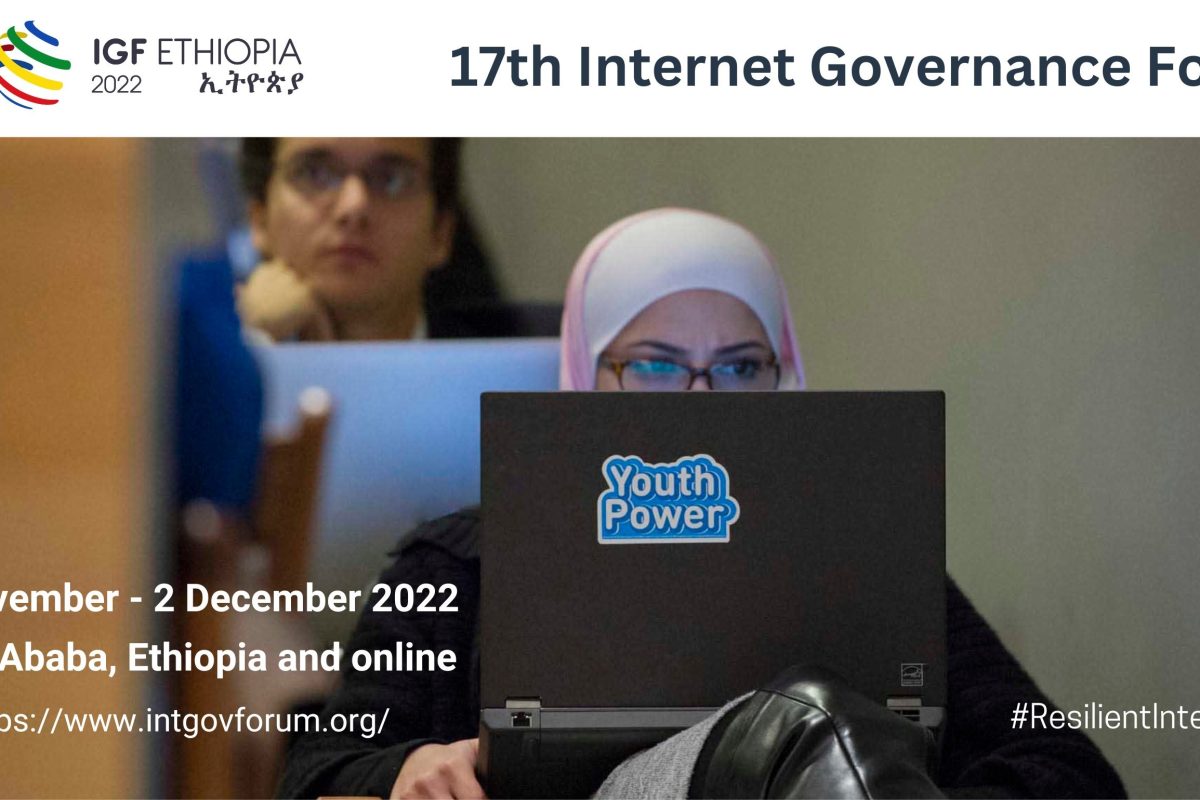
The global internet governance community is set to convene in Addis Ababa, Ethiopia, for the 17th Internet Governance Forum (IGF) from November 28-December 2, 2022. Ethiopia is hosting the IGF 2022 against a backdrop of internet freedom reforms, a recently liberalised telecommunications sector and an ongoing conflict that has seen the Tigray region without internet access for two years. 

The IGF 2022 theme of Resilient Internet for a Shared Sustainable and Common Future, and the five sub-themes which are drawn from the Global Digital Compact (GDC) in the UN Secretary-General’s Our Common Agenda report, resonate with the work of the Collaboration on International ICT Policy for East and Southern Africa (CIPESA).

  • Connecting All People and Safeguarding Human Rights
  • Avoiding Internet Fragmentation
  • Governing Data and Protecting Privacy
  • Enabling Safety, Security and Accountability
  • Addressing Advanced Technologies, including Artificial Intelligence  (AI)

CIPESA will co-convene and participate in various sessions at the IGF 2022 to showcase its work that supports the ambitions of the GDC.

A joint effort by DefendDefenders, Greenhost, Digital Society of Africa, Dig/Sec Initiative, Digital Security Alliance, AccessNow, CChub, Center for Digital Resilience, and CIPESA will run an onsite digital security hub to build the digital resilience of at-risk groups and organisations.

At a session titled “Jointly tackling disinformation and promoting human rights” facilitated by the AU-EU Digital for Development (D4D) Hub, CIPESA will contribute in an open exchange of ideas, experiences and lessons learned on how to address disinformation through a multi-stakeholder and human-centric approach.

Furthermore, CIPESA is among the organisers of the Dynamic Coalition roundtable on Strengthening digital ecosystems through shared principles and the Day 0 event on Shaping global digital governance and measuring meaningful connectivity for all: the ROAM approach, both of which are in support of ongoing efforts by CIPESA and UNESCO to raise awareness about and application of the Internet Universality Indicators across more countries in Africa.

The CIPESA team will also feature on a panel discussion on technology and human rights as part of the Peer Learning Event for National Human Rights Institutions (NHRIs) hosted by Danish Institute for Human Rights.

Further, CIPESA will participate at the Africa member convening of the Association for Progressive Communications (APC) and at a Digital ID Civil Society Summit hosted by the Open Society Foundations, under the auspices of an external digital ID fund and initiative (DIDIF), housed at Rockefeller Philanthropic Advisors.

Follow @cipesaug and #InternetFreedomAfrica

Kenya Internet Governance Forum 2020

The Kenya Internet Governance Forum 2020 – a multi-stakeholder platform for policy dialogue bringing together all the public and private sector stakeholders, technical community, academia and civil society to openly discuss emerging issues on internet governance in an inclusive process and equal. For further information on the event, please click here.

Placing ICT Access for Persons with Disabilities at the Centre of Internet Rights Debate in Kenya

By CIPESA Writer |
Persons with disabilities have unique needs and have for long been disadvantaged, yet, the more some African countries get digitally connected, the deeper the digital divide for this community seems to grow. Indeed, debates about internet governance and the inclusiveness of the information society have not prominently featured the needs of persons with disabilities. This, despite Information and Communications Technology (ICT) having the potential to improve the lives of persons with disabilities.
However, it was a different story in Kenya a month ago, with disability rights featuring prominently at the Kenya Internet Governance (KIGF) and being the focus of a multi-stakeholder workshop held the day before the forum.
ICT for us is an enabler; for a person with disability, ICT makes the world go round,” remarked Erick Ngondi of the United Disabled Persons of Kenya (UDPK), at the end of a workshop organised by the Collaboration on International ICT Policy for East and Southern Africa (CIPESA) alongside the Kenya Internet Governance Week that is spearheaded by the Kenya ICT Action Network, or KICTANet. “For me this has been one of the first meetings as relates to ICT and disability, so this is an excellent move.”
The workshop brought together 28 participants who included representatives of disabled persons’ organisations, government departments, telecom companies, academic institutions, technology companies, civil society organisations, and the media. The workshop explored ICT inclusion obligations for the state and for private companies and discussed what Kenya needs to do so as to improve access and usage of ICT for persons with disabilities. (Watch video with highlights from the meeting.)

“This workshop is one of its kind because it is not only about issues of physical accessibility but also informational and technological accessibility for persons with disabilities. This is a good initiative by CIPESA and I want to applaud them for this. It is a journey that has started and I look forward to us going on with this journey until we achieve our goal of persons with disabilities being included in technology.” George Shimanyula, Cheshire Disability Services Kenya.

In addition, the workshop disseminated a draft tool for monitoring compliance and implementation of ICT and disability rights obligations, including those specified by national laws and the United Nations Convention on the Rights of Persons With Disabilities (CRPD). The aim was to receive feedback on the tool, and to create awareness of how state and non-state actors can assess the compliance of government departments and private entities with digital accessibility obligations.
Kenya’s constitution is strong on disability rights, outlawing discrimination on the grounds of disability in article 27(4); and providing that a person with disability shall be entitled to treatment with respect and dignity, access educational institutions and facilities, have reasonable access to all places, public transport and information, and access materials and devices including for communications (article 54). Moreover, Kenya’s National ICT Policy of 2016 outlines, under article 13, strategies for “an accessible ICT environment in the country in order to enable persons with disabilities to take full advantage of ICTs.”
https://twitter.com/BakeKenya/status/1156905814122217487
However, as was noted by Judy Okite, founder of the Association for Accessibility and Equality, many of the digital accessibility strategies outlined in the 2016 policy remained unfulfilled. While Kenya’s government is making significant steps to move its services online, the platforms are not favorable to those who are visually imparied. “Are we widening the digital divide by moving our services online? Is ICT recognised as an enabler for PWD in Kenya?” wondered Okite.

Unfulfilled: Digital accessibility strategies outlined in the Kenya National ICT Policy 2016
The Government will where appropriate take measures to:
(a) ensure that ICT services and emergency communications made available to the public are provided in alternative accessible formats for persons with disabilities (PWD);
(b) review existing legislation and regulations to promote ICT accessibility for PWDs in consultation with organisations representing PWDs among others;
(c) promote design, production and distribution of accessible ICT at an early stage;
(d) ensure that persons with disabilities can exercise the right to access to information, freedom of expression and opinion;
(e) require both public and private entities that render services to the public to provide information and services in accessible and usable formats for persons with disabilities;
(f) Require content producers for distribution and public consumption in Kenya to produce such content in accessible format such as audio description, audio subtitles, captions and signing for access to persons with disabilities.
(g) ensure that websites of government departments and agencies comply with international web accessibility standards and are accessible for persons with disabilities
(h) provide incentives to providers of accessible technology solutions including software, hardware and applications
(i) take such measures that will lessen the burden of acquisition of accessible technologies and associated gadgets by PWDs through fiscal means such as tax exemptions, subsidization, funding acquisitions, etc.
(j) ensuring that licensed ICT service providers offer special tariff plans or discounted rates for persons with disabilities communicate with the rest of society.
(k) Ensure that licensed providers of telecommunications services make available services and supporting technologies for persons with disabilities including emergency services, accessible public phones and relay services to enable persons with speech, hearing and seeing disabilities

Similar sentiments were shared by lawyer and digital rights activist Angela Minayo, who said the workshop “was very productive” and had enabled participants to realise that there is a gap in the implementation of ICT policy and in awareness of how national policies and international legal frameworks provide for persons with disabilities to be able to access and use ICT.
Conversations from the workshop were carried forward to the KIGF, with a session on inclusion, where Okite joined Paul Kiage (Communications Authority), Nivi Sharma (BRCK), Ben Roberts (Liquid Telecom), Josephine Miliza (KICTANet) and Alfred Mugambi (Safaricom) on a panel.
Kiage, an assistant director in charge of the Universal Service Fund (USF), said the fund had collected KShs 9 billion (USD 86.6 million), mostly used to extend network coverage to areas without voice services and to offer broadband connection to 896 secondary schools across the 47 counties. He said they had installed JAWS software and other assistive devices in eight learning institutions, partnered with the National Council for Persons with Disabilities to create a portal to enable persons with disabilities to access information including job advertisements, and created platforms in some libraries to enable accessibility to digital content.
But, according to Okite, despite USF’s efforts, “the digital divide is growing bigger for persons with disabilities”. Research she was part of last year showed that computers in some of the learning institutions had not been replaced for several years, requisite software was not installed or out of date, and staff managing the labs were not trained to teach users. Sustainability of the initiative was thus in question.
Kiage’s response? “We could do a lot more because we know there’s even primary schools that are catering for persons with disabilities in Kenya so we could go lower and support such schools.”
As of March 2019, Kenya had a mobile penetration of 106%, or 51 million subscriptions, while internet subscriptions stood at 46.8 million, of which 46.7% were on broadband. But as the KIGF panel on inclusion heard, segments of Kenyans can not afford to use ICT, and those in rural areas, poor and uneducated women, and many persons with disabilities were cited.
Dr. Wairagala Wakabi of CIPESA asked the Kenya government to conduct a gap analysis to establish the unmet ICT needs of persons with disabilities, collect on a regular basis disaggregated data that shows how persons with different types of disabilities are using technology and the challenges hindering greater use, and invest a larger portion of universal service funds in promoting digital accessibility. He added that Kenya should grow awareness about assistive technologies and make these technologies affordable.
“We should leave no one behind when it comes to digital inclusion,” he said. “Clearly, the Communications Authority can do more to improve access for people with disabilities, including through the use of the Universal Service Fund,” he said.
The private sector needs to be compliant too, and to be held to account to fulfil its obligations. In Kenya, and indeed across Africa, Safaricom has been a pace-setter. Last November, it launched the DOT Braille Watch service to enable the use of its M-Pesa mobile money service by persons with disabilities, said Karimi Ruria, Public Policy Manager at the provider. In December 2017, Safaricom introduced the Interactive Voice Response (IVR) that enables visually impaired and blind customers to control their M-Pesa transactions.