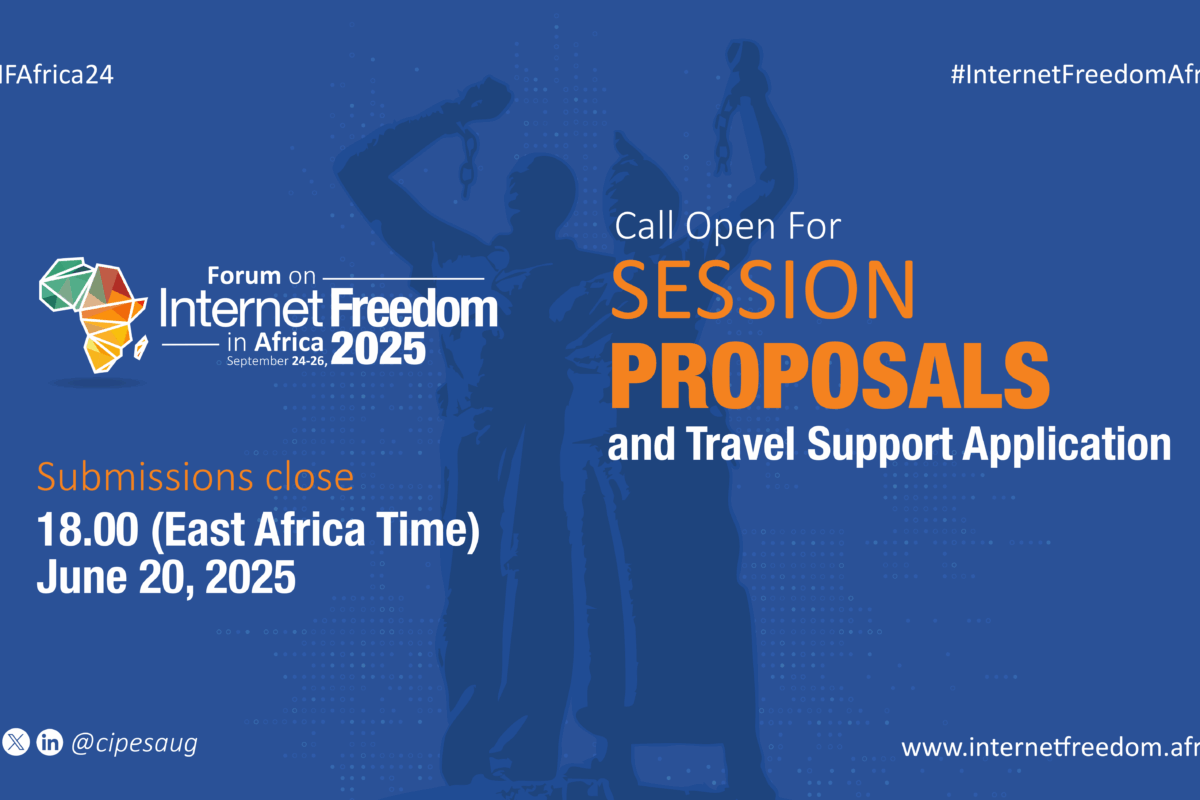
FIFAfrica24: Shaping the Future of Internet Freedom in Africa!

By FIFAfrica |

The highly anticipated Forum on Internet Freedom in Africa 2024 (FIFAfrica24) is just around the corner, and this year we’re heading to the vibrant city of Dakar, Senegal that in 2024,  has been the backdrop of a variety of both controversial and pivotal developments impacting democracy and digital rights.

Senegal was to host its elections on February 25, 2024, but instead was thrown into turmoil following a February 3, 2024 announcement that the elections had been postponed and that the incumbent – Macky Sall’s presidency would be extended until his successor is installed.  Shortly after the announcement,  internet access in the country was restricted in a move that the Ministry of Communication, Telecommunications, and Digital Economy justified as a response to the spread of “hateful and subversive messages” threatening public order.

Elections would eventually be held on March 24 vote and would run smoothly with no major incidents reported, and an eventual peaceful transition of power to President Bassirou Diomaye Diakhar Faye. Senegal’s electoral journey stands out, particularly in contrast to the turbulent electoral climates in other African states.

While 2024 has been hailed as the Year of Democracy in which more than 2 billion people will go to the polls in 65+ elections across the world, in the biggest elections megacycle so far this century, with several taking place in Africa. 

Meanwhile, despite its economic challenges, Senegal is among a handful of African states alongside Benin, Mauritius, and Rwanda that have developed national Artificial Intelligence strategies. This goes against the trend in which the most developed or largest economies are the first to create national AI strategies. In the case of Africa, countries like South Africa or Nigeria would create national AI strategies first, yet neither has done so (though Nigeria’s strategy is reportedly in development).

Senegal’s commitments to a progressive legal, regulatory and institutional framework for the technology sector include its efforts in data governance, a hub for innovation, a  National Digital Addressing, and advancing a comprehensive National Data Strategy.

This year, Senegal joined 17 African countries that have put at least one satellite in orbit. It joined countries such as South Africa and Egypt which have 13 satellites each, with Nigeria ranking in third with seven satellites. President Bassirou Diomaye Faye remarked that the move signified a major step towards Senegal’s “technological sovereignty”.

This points to the wide spectrum along which many African countries sit regarding digital adoption, digital inclusion, technology-related regulation and legislation. The Forum aims to capture this diversity through the following themes:

  • Digital Inclusion
  • Digital Resilience                             
  • Freedom of Expression & Access to Information
  • Information disorder (mis/disinfromation)          
  • Implications of AI            
  • Governance and Policy
  • Movement Building

See the agenda

As a member of the #InternetFreedomAfrica community, FIFAfrica24 offers a unique platform to explore a wide range of themes and also provides valuable networking opportunities with participants from around the world with the shared vision of digital rights in Africa.

Join the Conversation

Can’t make it to Dakar? Don’t worry FIFAfrica24 will be streamed live here! You can still participate in discussions, watch live panels, and engage with attendees using the hashtag #FIFAfrica24 on social media. Better yet, you can register to attend remotely or in person and engage directly with participants within the event platform.

Be sure to stay connected, follow the debates and discussions, and contribute your thoughts and insights to the #InterneyFreedomAfrica community.

Report Highlights Collaborative Efforts to Counter Disinformation in Africa

By Patricia Ainembabazi |

Disinformation is an escalating challenge across Africa, threatening democratic processes, social cohesion, and undermining trust in the media. However, evidence of the successes and pitfalls of initiatives that are working to counter disinformation remains minimal.

A new report by  CIPESA, in collaboration with Bertelsmann Stiftung, examines the evolving landscape of disinformation in Africa, highlighting key protagonists involved in the pushback against it and the tactics they employ, as well as the challenges. It offers recommendations for a comprehensive, multi-stakeholder approach to tackling the vice. The report includes case studies on the Democratic Republic of Congo, Ethiopia, Kenya, and South Africa.

The disinformation campaigns often exploit existing social and political divisions, including during electoral periods, when false and misleading content is utilised to sow discord and manipulate public opinion. The tactics used are becoming increasingly sophisticated, with technologies such as deep fakes increasingly being employed. The consequences of these campaigns can be particularly severe in fragile democracies, where disinformation undermines election integrity and fuels conflicts.

The study identifies various protagonists fighting disinformation, including country-specific protagonists, multi-country initiatives, pan-African protagonists, international protagonists, media, and coalitions. However, most rely on basic and moderate methods in identifying and pushing back against disinformation despite the increasing sophistication with which it is generated and disseminated. 

Another notable challenge is that some platforms are not doing enough to fight disinformation or moderate harmful content. Although they derive financial benefits from the region, some platforms do not seem to invest appropriately in human resources or respect national laws regarding content. The report notes that some platforms have run election-related adverts containing patent disinformation while making it expensive and cumbersome for African researchers to gain access to data on political advertising, which would be crucial to tackling disinformation in the region.

In addition, many African countries lack comprehensive legal frameworks to combat disinformation effectively. In some cases, existing laws are outdated, while in others they are poorly enforced and end up stifling legitimate expression.

The study highlights the need for more symbiotic approaches where different protagonists such as multi-stakeholder coalitions that include the state, civil society, platforms, and technologists collaboratively reinforce truth and debunk disinformation. An example is Kenya’s National Coalition on Freedom of Expression and Content Moderation (FECOMO) which brings together more than 20 state, civil society, and media entities to ensure that content moderation protects freedom of expression while tackling harmful content. 

In South Africa, ahead of the 2024 elections, the Electoral Commission entered a Framework of Cooperation with social media platforms Google, Meta, TikTok, and the non-profit Media Monitoring Africa (MMA), to curb disinformation. A related initiative is the Real411 run by the MMA, whose Digital Complaints Committee (DCC) receives complaints on disinformation and hate speech from the public and makes public the outcomes of its investigations of such complaints. 

The success of these efforts, however, often hinges on the active participation of local actors uniquely positioned to address their communities’ specific needs and dynamics. It is without a doubt that the fight against disinformation requires a coordinated response from various stakeholders, including governments, civil society, media, and tech companies.

The report makes various recommendations, such as:

  • Strengthening legal frameworks by developing and updating laws so that they balance freedom of expression with disinformation countermeasures.
  • Enhancing media literacy by educating the public on disinformation and promoting critical thinking across various sectors.
  • Rebuilding trust in media by ensuring accurate and unbiased reporting, particularly during elections.
  • Increasing platform accountability by asserting pressure on social media platforms to be transparent in their content moderation and algorithms.
  • Facilitating public reporting by establishing accessible channels for reporting disinformation and ensuring transparency in addressing reports of abuse.
  • Encouraging public discourse by promoting broader public engagement and awareness to enhance critical thinking on disinformation.
  • Investing in skills development by providing continuous training for fact-checkers, journalists, and researchers to effectively counter disinformation.

In conclusion, disinformation is a complex and multifaceted issue that requires a comprehensive and collaborative response from all stakeholders. Governments, civil society, media, and tech companies must work together to build resilient systems that can effectively combat the spread of false information. By promoting media literacy, holding intermediaries accountable, and fostering multi-stakeholder engagement, Africa can take significant steps toward countering disinformation and protecting democratic processes on the continent. The report can be accessed here. To read more about CIPESA’s work on disinformation, see here.

Leveraging Digital Technologies to Enhance Data Governance Practices in Africa

By Paul Kimumwe |

Data governance policies and practices in many African countries have continued to attract attention due to their inadequacy in ensuring the protection and respect for the rights of individual data subjects. Key concerns have been raised regarding the data management practices, particularly related to biometrics, that have undermined the safety, confidentiality, accuracy, accessibility, and reliability of personal data, which are critical principles in data governance.

Several studies have documented cases of misuse of digitalised personal data, including data breaches, surveillance, misuse of personal information, unwarranted intrusion, and financial harm. Despite these misgivings, digitisation of data has been recognised within the African Union’s Digital Transformation Strategy for Africa (2020-2030) as critical in promoting and building confidence for the continent’s digital economy. For many governments, the desire to transform service delivery and enhance public participation has been a key driver for the adoption of biometric data collection and digital identities for purposes of issuing National Identity cards and updating of biometric voter registration and identification programmes.

In this blog, we highlight the critical areas in which advances in digital technologies can enhance data governance practices in Africa.

Understanding Data Governance

Data governance refers to the holistic approach to data management that entails the development and implementation of relevant norms, procedures, and standards to ensure that data is secure, accurate, reliable and consistently available, particularly spelling out clear standards and protocols that govern data collection, storage, and management, resulting in accurate, consistent, and up-to-date data. There is a growing concern that without a robust data governance framework, the continent risks missing out on maximising the benefits from its own datasets as they would be prone to abuse and misuse by poorly regulated data collectors and controllers.

Demand for a Robust Data Governance Framework

In Africa, the demand for a robust data governance framework has gained traction as a response to several countries moving away from paper-based to more digitised data management practices, raising concerns about the rights of data subjects, particularly the safety and confidentiality of user data.

While progress has been registered normatively – with the adoption of regional instruments such as the African Union Convention on Cyber Security and Personal Data Protection and the AU Data Policy Framework, both of which provide frameworks for rights’ respecting data protection practices, and with several countries adopting relevant privacy and data protection laws – full implementation remains a challenge.

In addition, the African Union’s Digital Transformation Strategy for Africa (2020-2030) calls upon states to “promote open data policies that can ensure the mandate and sustainability of data exchange platforms or initiatives to enable new local business models, while ensuring data protection and cyber resilience to protect citizens from misuse of data and businesses from cybercrime.”

Unfortunately, several laws contain problematic and vague provisions that provide for sharing of sensitive information and data localisation that are prone to abuse and misinterpretation. For example, provisions such as section 18 of Algeria’s Law No. 18-07 of 2018 on the protection of personal data, sections 44-47 of Kenya’s Data Protection Act 2019, and section 9 of Uganda’s Data Protection and Privacy Act, 2019, provide for circumstances under which sensitive personal information can be accessed, such as safeguarding national security, public interest, enforcement of the law, and conduct of criminal investigations. In addition, in many countries, biometric data collection programmes were initiated before the enactment of relevant data protection laws.

Leveraging Digital Technologies

While for the most part digital technologies have been used by various states to undermine the legitimacy and enjoyment of digital rights through surveillance and interception of communication, internet shutdowns, and data breaches, there is a growing belief that these technologies can be instrumental in building a robust data governance framework if applied correctly.

Ease of Authentication

Recent technological advancements including the multi-factor authentications (MFA) that enable secure access to services on the go are critical in facilitating seamless data collection, processing, verification and enhancing the authenticity and reliability of data compared to paper-based identifiers. Data subjects can easily request access to and verify their digitised data in the possession of data controllers. As technology becomes more accessible and affordable, governments and private entities can leverage biometrics and biometric technologies for functional and foundational identity purposes, and for an expanding array of applications.

Improving Data Storage and Confidentiality

Data storage is a key pillar within the data governance framework as it easily allows data subjects to exercise their individual rights to request and obtain their personal data in the hands of data controllers in a structured, commonly used, and machine-readable format, as well as request that their data be transferred directly to another organisation. With advances in technology, data controllers can easily encrypt, de-identify and destroy personal data in their possession. Technologies such as the Identity Management Systems (IDMS) facilitate interoperability, allowing seamless integration between different data management systems used by data controllers. In addition, new technologies such as blockchain facilitate the secure storage of datasets in blocks that are connected through cryptography.

Ease of Data Rectification

One of the fundamental rights of data subjects is the right to request data controllers to correct any inaccurate and incomplete data the data controller may have collected. Under Principles 5 and 16 of the European Union’s General Data Protection Regulation (GDPR), data controllers are required to keep personal data accurate and up-to-date,  and to take “every reasonable step” to ensure that inaccurate personal data is erased or rectified.

In many countries, data controllers have been accused of collecting and processing inaccurate and incomplete personal data due to the analogue way data is collected. The adoption of digital technologies and use of biometric data identifiers such as fingerprint, facial, or iris recognition become critical forms of authentication in issuing different forms of identities as well as easing on the verification and rectification processes by both data subjects and controllers.

As Africa strives to improve its data governance framework, it is important that we leverage on the new and emerging technologies such as biometric data collection, blockchain, and identify management systems to enhance the safety, security, accuracy, reliability and confidentiality of personal data.

Rollout of Digital Number Plates Poses Privacy Concerns in Uganda

By CIPESA Writer |

The rollout of the digital number plate system in Uganda is well underway. At a press conference last month, the Ministry of Works and Transport announced January 2025 as the deadline for full roll out. The system – over two years in the making – is a joint project between the government of Uganda and Russian company Joint Stock Company Global Security and has caused alarm among rights activists as it introduces another layer of massive personal data collection and processing amidst weak controls.

The stated objective of the Intelligent Transport Monitoring System (ITMS) is to improve the country’s transport management systems and security by enabling the authorities to “swiftly identify vehicles involved in criminal activities and improve traffic management through efficient ticketing and revenue collection”. It will involve the installation of digital number plates on all vehicles and motorcycles in the country, allowing security agencies to track and pinpoint their location at any one time.

  Overview of ITMS
Digital Number Plate ComponentsStatus of Fitment on Government Vehicles as at June 2024Target Installations (Registered Vehicles as at July 2024)
Aluminium plates – front and back1,0912,145, 988
A tracker
A sim chip
Bluetooth beacons – front and back
Snap locks

Once rolled out, the digital plates will add to the catalogue of surveillance apparatus in Uganda. The country already has a plethora of retrogressive laws, such as the Regulation of Interception of Communications Act 2010 and the Anti-Terrorism Act 2002 that require communication service providers to aid in intercepting communication by ensuring that their systems are always technically capable of supporting lawful interception. The laws also grant powers to an authorised officer to intercept the communications of a person and to conduct surveillance of individuals.

The components of the digital number plates will enable the government through its security agencies, such as the police, to swiftly identify vehicles and their owners. Instantaneous data exchanges pose major challenges to data privacy, especially in cases where there are calculated targets such as civil society organisations (CSOs), human rights defenders (HRDs), activists, and political opponents, government critics, or dissidents.

An added concern is that, according to the Uganda Police, the digital number plate system will be integrated with the Closed Circuit Television System (CCTV) system and others such as the motor vehicle registration system, the e-tax system managed by the Uganda Revenue Authority (URA) and the national identity database managed by the National Identification and Registration Authority (NIRA) to “ensure comprehensive vehicle and personal identification.” Given weak controls over data held by public bodies and rare punishment for data breaches and unauthorised access, linking these databases absent clear data-sharing frameworks and robust controls poses grave concerns. Notably, Uganda does not have a law or regulations governing CCTV/ video surveillance.

Whereas there are efforts to localise parts of the system through the establishment of a local production facility for the various components, the partnership with Joint Stock Company Global Security underscores Uganda’s reliance on foreign entities for purposes of conducting surveillance and interception of private communication of its citizens. For example, in August 2022, there were reports that the Uganda Police had purchased UFED, a technology developed by the Israeli firm Cellebrite that enables authorities to hack into password-protected smartphones.

Earlier, starting in 2018, Uganda turned to a Chinese company, Huawei, for the supply and installation of CCTV across major cities. The decision to install the CCTV cameras came on the heels of a spate of murders that had engulfed the country, with the security forces keen on using the CCTV cameras to improve security in the country. Like many other government security procurements, the CCTV deal raised a lot of transparency and accountability issues, including the secrecy that surrounded the entire process.

Additionally, there were reports that security agencies were working with Huawei technicians in Uganda to spy on opposition critics by intercepting encrypted communications and using cell data to track their movements. This appeared to be the continuation of a trend that was documented earlier in 2012, when the Uganda government reportedly relied on a Germany-made spyware, FinFisher, which it is said to have covertly installed in various places, including hotels, the parliament and key government institutions, for purposes of surveilling on its opponents, including politicians, civil society, and the media.

Given the country’s history of repressing the civic space and harassing political opponents, CSOs and HRDs, the ITMS digital number plates could further the suppression of civil liberties, including political participation, freedom of expression, access to information and assembly and association. Moreover, deeper democratic regression could occur since these liberties largely depend on privacy and the ability to express oneself with minimal interruptions or interference.

While the government has a legitimate desire to improve the security of its people and transport management, recent events as discussed above where the same government has used the acquired technologies to surveil its citizens and undermine digital rights, it is critical that any future attempt to enhance its surveillance apparatus is anchored in law with clear oversight mechanisms. This is because the deployment of surveillance technologies such as ITMS, FinFisher, and Huawei’s CCTV present a veritable avenue for economic and political exploitation by collecting extensive data on people’s behaviour, location, activities, and interests online and offline. This makes the risk of violation of privacy apparent, rendering citizens helpless because they essentially have no control over how the data will be used, even when they are aware that data is being collected.

It is, therefore, important that the government reduce its reliance on foreign-manufactured surveillance technologies, particularly from countries whose human rights record is wanting, as these have tended to use these tools to suppress civic spaces. In addition, the government should reconsider its regulatory framework to ensure it conforms to international standards on privacy and data protection, especially during the procurement and deployment of potentially intrusive technology that is prone to abuse.

Portal on Gender-Based Violence in Africa Expanded with ADRF Support

Update |

The Covid-19 pandemic was characterised by a sharp increase in gender-based violence (GBV) in Kenya, Nigeria, and South Africa, as well as other countries across the world. This was largely attributed to lockdown restrictions, which left victims isolated in the same physical space as their abusers, reduced availability of shelters and other support mechanisms, and exacerbated economic anxiety and mental health pressures – all key drivers of GBV.

The pandemic also accelerated digitalisation, which widened the scope of Technology-Facilitated Gender-Based Violence (TFGBV). According to UN Women, in Africa, online abuse, harassment and exploitation increased as learning went online during the pandemic. Similar  concerns about online harms are discussed in the African Union Guidelines on Gender-Responsive Responses to COVID-19.

Alt Advisory, a South Africa based public interest advisory firm, launched the endgbv.africa as a resource on domestic and international responses to GBV online and offline before, during and after the pandemic. At the time of its launch in 2022, the portal featured GBV mapping and assessments on the legal and policy developments, trends and statistics as well as key terminologies on six African countries – Malawi, Mozambique, Namibia, South Africa, Zambia, and Zimbabwe.

With a grant from the Africa Digital Rights Fund (ADRF) – an initiative of the Collaboration on International ICT Policy for East and Southern Africa (CIPESA) –  Alt Advisory has revamped and expanded the portal to cover an additional seven countries – Eswatini, Ethiopia, Ghana, Kenya, Mauritius, Nigeria and Uganda. The project has also featured a spotlight series on experiences of sexual minorities in Botswana and Uganda.

The new seven country factsheets were developed in collaboration with researchers from various fields, with multidisciplinary perspectives regarding GBV, thereby expanding the breadth of information relating to organisations and movements hitherto unknown due to varied degrees of online visibility. This collaborative approach has strengthened the regional network of gender rights advocates beyond national borders.

“Our hope is that the project’s focus on TFGBV enabled researchers to develop their own insights on emergent forms of harm which may potentially enrich future policy advocacy in their contexts,” said S’lindile Khumalo, a Senior Associate at Alt Advisory.

Alt Advisory’s Equity and Inclusion as well as Media teams are working to publicise the portal to maximise uptake and impact. The firm will also continue to fundraise to expand the portal’s coverage to the full African continent and translate the resources to increase relevance and accessibility to a diversity of audiences. All this, in tandem with efforts in law and policy reform, advocacy, and activism on GBV and related issues. “As the portal undergoes further development, we hope that it contributes to the end of GBV in our lifetime,” concluded Khumalo.