
A Section of Uganda’s Computer Misuse Act Outlawed! But, the Greater Part of the Law Remains Thorny

By Juliet Nanfuka |

The Collaboration on International ICT Policy for East and Southern Africa (CIPESA) welcomes the ruling by Uganda’s Constitutional Court that section 25 of the Computer Misuse Act of 2011, which penalises “offensive communication”, is null and void. This section has severally been used by state authorities to silence dissent, and CIPESA has for long supported efforts to expunge it from the eastern African country’s key internet law.

On January 10, 2023, Uganda’s constitutional court ruled that section 25 of the Computer Misuse Act is inconsistent with the country’s constitution and called for an immediate halt to its enforcement, including for all cases being prosecuted or investigated. The court’s decision could bring to an end the utilisation of this problematic provision that has for a decade been weaponised to silence critics, political opponents and dissidents. The government can appeal the constitutional court’s decision to the Supreme Court within 14 days.

This week’s ruling is the result of a 2016 petition in which the litigants argued that section 25 was vague, violated civil liberties, and contravened constitutional guarantees. 

The law on computer misuse defines offensive communication as the “willful and repeated use of electronic communication to disturb or attempt to disturb the peace, quiet or right of privacy of any person with no purpose of legitimate communication whether or not a conversation ensues.” The offence is punishable by a fine not exceeding USD 130 or imprisonment not exceeding one year, or both. 

However, opponents of the law have argued that this provision is vague, overly broad and ambiguous. Further, they contended that the provision does not give a fair warning regarding what conduct is deemed illegal under the right and freedom of speech and expression pursuant to article 29(1)(a) of Uganda’s constitution.

In this week’s ruling, Justice Kenneth Kakuru, who wrote the lead judgement, stated that he  had determined that the words used under section 25 were “vague, overly broad and ambiguous.” According to the judge, what constitutes an offence is “unpredictable” and this gives the law enforcer the discretion to choose what qualifies as offensive. Justice Kakuru added that the provision “gives law enforcement unfettered discretion to punish unpopular or critical protected expression.” 

Section 25 of the Computer Misuse Act has severally been invoked to issue threats, effect arrests, detention, and prosecution of individuals over their online communications. 

The Computer Misuse Act has been previously used to suppress digital rights including free expression and access to information. For instance, academic and social critic Dr. Stella Nyanzi was arrested for insulting the president in a social media post. In 2019, she was convicted of cyber harassment contrary to section 24 of the Act but acquitted of offensive communications, which is proscribed under section 25. Other individuals who have suffered the wrath of the same law include former presidential aspirant Henry Tumukunde who was arrested over alleged treasonable utterances in radio and television interviews, the Bizonto comedy group who were arrested over alleged offensive and sectarian posts, and author Kakwenza Rukirabashaija who was arrested, detained and prosecuted over offensive communication against the president and his son. (Source: CIPESA Submits Comments on the Computer Misuse (Amendment) Bill, 2022 to Parliament )

Despite this progressive decision by the Constitutional court, the Computer Misuse Act will remain a key impediment to free expression and the enjoyment of digital rights, notably because of amendments made to the law in late 2022. Those amendments ambiguously prohibit the “misuse of social media,” sending or sharing of unsolicited information through a computer, and sending, sharing or transmission of malicious information about or relating to any person. These prohibitions, whose introduction was condemned by wide sections of Ugandan civil society, human rights defenders and some government officials, present a key curtailment of freedom of expression and access to information. 

Promoters of the amendments argued that existing laws did not “specifically address the regulation of information sharing on social media” or were “not adequate to deter the vice”. However, critics argued that efforts should instead have focused on addressing the existing retrogressive provisions in the law, notably those on “cyber harassment” and “offensive communication”. 

Accordingly, CIPESA alongside 13 civil society organisations and individuals filed a petition challenging those amendments. This followed CIPESA’s submission of comments and presentation of concerns before the Parliamentary Committee on Information and Communication Technology ahead of the enactment of the amendments. In those submissions, CIPESA argued that since its enactment, the Computer Misuse Act had been used to suppress digital rights including free expression and access to information and the proposed amendment would present a further blow to online civil liberties.

In its ruling, the constitutional court noted that, “In a democratic and free society, prosecuting people for the content of their communication is a violation of what falls within guarantees of freedom of expression in a democratic society.” The ruling is a step in the right direction in combating wanton limitations to digital rights in Uganda, where a flurry of technology-related laws were enacted in the wake of the 2010 Arab Spring during which users leveraged digital platforms and social media to build movements and mobilise public protests against their autocratic governments.

Besides the Computer Misuse Act, other laws enacted in Uganda during this time include the Regulation of Interception of Communications Act, 2010, the Electronic Signatures Act, 2011, and the Electronic Transactions Act, 2011, all of which variously interfere with digital rights including data privacy, access to information, and freedom of expression.

Move Fast and Fix Policy: African Digital Rights Advocacy in an Era of Rapid Policy Change

By CIPESA Staff Writer |

Across Africa, the fast-evolving technology landscape has created pressure to adopt appropriate legislation to keep up with the pace of technological development. However, these efforts are being shackled by numerous challenges, including silo approaches to policy development, limited citizens’ inclusion in policy formulation, failure to harmonise stakeholder positions, ad hoc advocacy efforts by Civil Society Organisations (CSOs), and the failure to leverage the influence of private sector actors.

At the Forum on Internet Freedom in Africa 2022 (FIFAfrica22), digital rights activists and policymakers examined how existing processes and mechanisms that provide input into digital policies can be improved. In a panel session organised by the Centre for International Private Enterprise (CIPE), participants explored experiences and practical tips for policy engagement that upholds democratic values.

A key concern was that, on the one hand, Africa’s digital rights landscape has for years remained unregulated, leading to resistance to efforts to regulate it, and yet the absence of laws creates room for violation of rights online and abuse by state and non-state actors. On the other hand, where laws have been enacted, implementation and enforcement have been weaponised to target critics and dissent, as reflected in the continued infringement of rights online. This creates the need for proactive multi-stakeholder efforts in pushing back against regressive developments.

“While we should be [engaged] at the beginning of the process, we are ignored and when we enact a law, CSOs come to challenge it, yet if they involve us early enough, we would all be in agreement,” said Neema Lugangira, Member of Parliament from Tanzania and Chair of the African Parliamentary Network on Internet Governance (APNIG).

She noted that with a negative attitude towards each other, many parliamentarians question the motives of CSOs in pushing certain agendas and called for a change in approach. “I want to champion issues in which I have been involved. How do we make your agenda my agenda? You can scream whatever you want but you cannot get legislative change without working with Parliament,” said Lugangira. 

Indeed, Boye Adegoke from Paradigm Initiative reiterated that one of the pitfalls of policy advocacy was to adopt the angel/devil relationship approach. He added that many CSOs lack  adequate knowledge and skills to engage in policy processes. In turn, he called for more proactive efforts in tracking parliamentary debates and business related to digital policy and undertaking research to inform policy advocacy. 

Building alliances, including with the local business and the tech community, was also cited as critical to strategic support for policy influence. “When they [business and tech community] speak, they tend to be listened to and governments tend to respect their views,” said Nashilongo Gervasius, a Namibian technology policy researcher and founder of NamTshuwe Media.

Equally emphasised was the need to leverage the power and influence of private sector players  at international level, where the quality of policy negotiations by some African governments remains wanting,  as noted by Ayaan Khalif, the Co-Founder of Digital Shelter, a digital rights group in Somalia. Citing the example of the 15% tax agreement between OECD countries and multinational companies, Ayaan stated that African countries and CSOs must bring the continent’s big market potential to the “negotiating table” in order to tap into the multinationals’ revenue.

Away from negotiations, the need to increase inclusive participation in public policy processes was also stressed. As Khalif stated, “Holistic stakeholder involvement should clearly define those being involved, ensure that they are actually given the opportunity to make meaningful input and outline the issues being addressed”.

Ultimately, context remains paramount given that most countries on the continent are at different levels of democracy and what is possible in one may not be tenable in another. What is important is to understand the policy making ecosystem and respond appropriately. “Policy advocacy is about incremental wins. If you are not invited to the table you can bring your own chair to the table, or you can set up your own table and bring people to it,” concluded Adegoke.

Three Years After Al-Bashir Ouster, Sudan’s Internet Freedom Landscape Remains Precarious

By Khattab Hamad |

Over three years since the ouster of long-term authoritarian president Omar al-Bashir, Sudan’s ongoing political crisis continues to present challenges for internet freedom in the country. Initial positive reforms initiated by the transitional government led by Prime Minister Abdalla Hamdok have been clawed back since a  military coup in October 2021. The new military government has weaponised laws, continues to institute network disruptions, and is clamping down on civil society organisations so as to consolidate its grip on power and silence critics.

The political situation in the country has had a marked correlation with the state of internet freedom in the north African state, whose record was largely poor even before the crisis deepened. According to the Freedom On The Net 2022 report, Sudan scored 29 out of 100 on internet freedom, thus continuing its classification on the index as “Not Free”. Developments in 2022 signalled a rapid decline from the progress recorded in 2021 and 2020, when the country scored 33 and 30 respectively on the index, up from a lower score of 25 in 2019.

The Cybercrime Law Continues to Repress

One of the measures adopted by Sudanese authorities has been the use of internet-related laws as a weapon for repression. The cybercrimes law, which first came into force in the final days of al-Bashir’s regime in 2018, and its amendments in subsequent years, appear to be aimed at thwarting mass protests and restricting critical opinion of the government and its officials. The most recent amendment to the law, which contains vague provisions, was first announced in April 2022, with some reports stating that it was intended to criminalise acts such as insulting the leaders of the state and undermining the prestige of the state.

On November 2, 2022, the government spokesperson announced that the cabinet had adopted the amendments. The announcement stated that the law was necessary to address the proliferation of information-related crimes and the concealment of their perpetrators through the use of modern computer applications. Also, it claimed that it was necessary to address the shortcomings of the application of court fines that had failed to achieve complete deterrence. The amendment obliges courts to imprison offenders where the victim of defamation or fake news is a governmental public figure.  As of December 2022, the amendment law is yet to be published and is awaiting the final approval of the President of the Sovereign Council.

Article 21 of the cybercrime law provides that: “Whoever prepares or uses the information or communications network or any information means or any applications to publish or promote ideas, programs, words or actions contrary to public order or morals, shall be punished with imprisonment for a period not exceeding six years”. Under article 24, “Anyone who publishes lies or fake news in cyberspace will be punished [with imprisonment of] four years, fined or both”.

Meanwhile, article 25 states that “Whoever prepares or uses the information or communications network, or any information means or applications to defame any person shall be punished with imprisonment for a term not exceeding six years.” The law also imposes a penalty of up to seven years imprisonment for anyone who obtains data or information that affects the “economy or the national security” of the country, which terms are not defined.

These articles limit access to information and freedom of expression as they fail to provide a clear definition of the acts constituting the offence, are excessive, and use undefined terms such as “public order” and “morals”, which can be interpreted subjectively by security and prosecutorial agencies and applied to punish legitimate expression.

Censorship

The contentious provisions of the cybercrime law have been used to limit press freedom through the blockage of access to online news websites. In September 2022, the public prosecutor ordered the blockage of the website of the Al-Sudani newspaper, one of the most respected dailies in Sudan, without even notifying the newspaper’s management. The Sudanese Electronic Press Association condemned the order, stating: “We reject prior trials and convictions from any party except the judiciary”. Ultimately, the website was not blocked after the leakage of the prosecutor’s order.

In the same month, Abdalrahman Al-Aqib, a journalist, was arrested by police after publishing an investigative article on corruption at the Ministry of Minerals in a local daily and on his Facebook account. Al-Aqib was charged under articles 24 and 25 of the cybercrimes law for publishing lies and fake news. Following his arrest, the Sudanese Journalists Syndicate condemned the actions of the police. It stated: “Al-Aqib was treated in a humiliating manner, and they did not respect his most fundamental rights, amid delays from the police’s duty officer, so as not to obtain his legal right to the guarantee”.

In both cases, the government’s response was primarily reprisal as opposed to offering counter-responses to the allegations raised in the stories. Notably, authorities did not use the press law against the journalist, perhaps because it prescribes less penalties in comparison to the harsh penalties under the cybercrimes law. The press law does not provide for imprisonment of journalists; rather, it stipulates disciplinary sanctions, such as fines and suspending a journalist from publishing for a specific period.

Network Disruptions

Disruptions to internet access and blockage of social media continues unabated, with authorities justifying them as necessary to ensure “national security and emergency state”. Five have been recorded during the past 15 months.

During the October 2021 coup, the army imposed a nationwide internet shutdown to isolate the protestors from mobilisation to resist the coup. The shutdown lasted 25 days, and after access was restored, some social media platforms remained blocked for two more days. On the one year anniversary of the coup, the authorities shut down the internet for eight hours during a public march organised by pro-democracy groups against the coup. Earlier the same month on October 18, 2022, a regional internet shutdown was imposed in Wad Al-Mahi, a governorate in the Blue Nile region. The shutdown was in response to tribal conflict in several villages in the area. It could not be independently verified when access was restored.

Also, on June 11, 2022, the public prosecutor ordered the shutdown of the internet for three hours on a daily basis, over a 12-day period. The reason given was that it was necessary to prevent cheating during the national secondary school exams. Following the 12-day period, the internet was again disrupted for 25 hours on June 30, 2022, during the “Million Man March” to mark the anniversary of the 2019 massacre of protestors by the military.

Catalogue of Internet Disruptions in Sudan Since October 2021

Start dateEnd dateReasonGeo-scaleShutdown typeDuration
October 25, 202118 November 2021CoupNationwideMobile data25 days
June 11, 2022June 22, 2022ExamsNationwideMobile data12 days (3 hours daily internet-curfew)
June 30, 2022July 1, 2022ProtestsNationwideBlackout25 hours
October 18, 2022Could not verifyLocal conflictRegional: Wad Al-mahi (Blue Nile State)Mobile dataCould not verify
October 25, 2022October 25, 2022ProtestsNationwideBlackout8 hours

These recent incidents mirror Sudan’s long history of instituting network disruptions, rivalled only by neighbouring Ethiopia. Crucially, the disruptions are indicative of the current regime’s bias and disregard for freedom of association and assembly. Three of the internet disruptions (October 2021, June 2022 and October 2022) were in response to protests against military rule. In contrast, the military did not implement any disruptions on October 29, 2022, when the Sudan People’s Appeal Initiative held protests. The initiative comprises supporters of former president Al-Bashir’s ousted regime, who protested in Khartoum demanding that the United Nations not interfere in Sudanese affairs.

Crackdown on Civil Society

The government has also led an onslaught against civil society organisations. For example, on October 23, 2022, the Human Aid Commission (HAC), which is the regulator of non-governmental organisations in Sudan, notified the director of the Sudanese Consumers Protection Society (SCPS) of its decision to cancel SCPS’s registration, seize its assets and properties and freeze its bank accounts inside and outside Sudan. The SCPS has been at the forefront of advocating against network disruptions by pushing for the enforcement of contractual obligations of Internet Service Providers (ISPs) to provide services to their customers.

Looking Ahead

The affronts by the Sudanese government on internet freedom and civic space go against its obligations under international human rights law. The design and deployment of punitive laws by authorities to target and silence activists, government critics, journalists, human rights defenders (HRDs), and the political opposition create an environment of fear and self-censorship. Equally, responses such as the deregistration of civil society organisations only serve as a threat to other civil society organisations, of possible sanctions. Lastly, these actions together with internet shutdowns and the repression of digital rights through the cybercrime laws constitute unjustifiable limitations of freedom of expression, assembly, association, access to information, rights of the media, and rights to political participation.

In order to chart a democratic path in the coming years, the Sudanese government must show commitment to uphold media and internet freedom. Policy reforms should repeal regressive provisions such as the cybercrimes law. Sudan should also desist from interrupting access to the internet and social media.

+ Khattab Hamad is a journalist and digital rights researcher who has recently co-founded the Digital Rights Lab Sudan.

Uganda’s Changes On Computer Misuse Law Spark Fears It Will Be Used To Silence Dissidents

By News  Writer |

Uganda’s controversial Computer Misuse (Amendment) Bill 2022, which rights groups say will likely be used to silence dissenting voices online, has come into force after the country’s President Yoweri Kaguta Museveni signed it into law yesterday.

The country’s legislators had passed amendments to the 2011 Computer Misuse Act in early September, limiting writing or sharing of content on online platforms, and restricting the distribution of children’s details without the consent of their parents or guardians.

The bill was brought before the house to “deter the misuse of online and social media platforms.” A document tabled before the house stated that the move was necessitated by reasoning that “enjoyment of the right to privacy is being affected by the abuse of online and social media platforms through the sharing of unsolicited, false, malicious, hateful and unwarranted information.”

The new law, which is also curbing the spread of hate speech online, recommends the application of several punitive measures, including ineligibility by offenders to hold public office for 10 years and imprisonment for individuals who “without authorization, accesses another person’s data or information, voice or video records and shares any information that relates to another person” online.

Rights groups and a section of online communities are worried the law might be abused by regimes, especially the current one, to limit free speech and punish persons that criticize the government. Some have plans to challenge it in court.

Fears expressed by varying groups come in the wake of increasing crackdowns on individuals that don’t shy away from critiquing Museveni’s (Uganda’s longest-serving president, who also blocked social media in the run up to last year’s general election) authoritarian regime online.

Recently, a Ugandan TikToker, Teddy Nalubowa, was remanded in prison for recording and sharing a video that celebrated the death of a former security minister, who led the troops that killed 50 civilians protesting the arrest of opposition politician Robert Kyagulanyi Ssentamu (Bobi Wine) in 2020. Nalubowa, a member of Ssentamu’s National Unity Platform, was charged with offensive communication in contravention of the Computer Misuse Act 2011 amid public outcry over the harassment and intimidation of dissidents. Ssentamu, Museveni’s critic and country’s opposition leader, recently said the new amendment is targeting his ilk.

The Committee to Protect Journalists (CPJ) had earlier called on Museveni not to sign the bill into law, saying that it was an added arsenal that authorities could use to target critical commentators, and punish media houses by criminalizing the work of journalists, especially those undertaking investigations.

The Collaboration for International ICT Policy in East and Southern Africa (CIPESA) had also made recommendations including the deletion of Clause 5, which bars people from sending unsolicited information online, saying that it could be abused and misused by the government.

“In the alternative, a clear definition and scope of the terms “unsolicited” and “solicited” should be provided,” it said.

It also called for the scrapping of punitive measures, and the deletion of clauses on personal information and data, which duplicated the country’s data protection law.

The CIPESA said the law also is likely to infringe on the digital rights of individuals, including the freedom of expression and access to information, adding that the provisions did not address issues, like trolling and harassment, brought forth by emerging technologies as the law sought to do in the first place.

This article was first published by the Ghana Business on Oct 15, 2022.

Participant Reflection on #FIFAfrica22: Effective Engagement in the UPR Process for Digital Rights Promotion

By Murungi Judith |

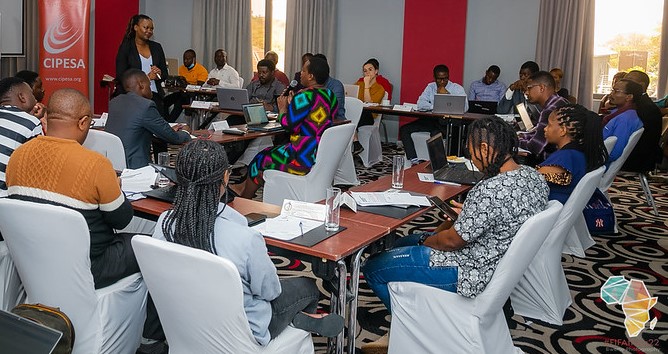
The Collaboration on International ICT Policy for East and Southern Africa (CIPESA) and Small Media held a workshop on the Universal Periodic Review (UPR) process as part of  Forum on Internet Freedom in Africa (FIFAfrica 22), which was held in Lusaka Zambia from September 26-29, 2022. The workshop is a product of the UPROAR project aimed at advancing the cause of digital rights globally by supporting engagement in international advocacy at the UPR. 

The 32 participants at the workshop represented a diverse array of backgrounds including  civil society, digital rights activism and advocacy, legal, journalism, and academia.  A total of  20 countries were also represented -Benin,Burundi, Botswana,  Cameroon, Democratic Republic of Congo, Ethiopia, Ghana, India Kenya, Mozambique, Nigeria,  Senegal, Sri Lanka, Sudan, Tanzania,Uganda,United Kingdom, United States of America, Zambia, and Zimbabwe.

The workshop entailed an overview of the UPR, its  purpose and the processes. Also included were in depth  discussions on international and regional normative frameworks on digital rights. Specific attention was drawn to the Universal Declaration of Human Rights as the first normative framework on freedom of expression. The International Convention on Civil and Political Rights (ICCPR) was also explored under the core tenets of the right to hold opinions without interference (freedom of opinion), the right to seek and receive information (access to information) and the right to impart information (freedom of expression).

It was noted that the right to freedom of expression is not absolute and that the three-part test is key in determining the circumstances which potentially justify limitations. Under Article 19 (2) of the ICCPR, limitations are specifically listed as ( i) it must be provided for in law (ii) it must pursue a legitimate aim (iii) it must be necessary for a legitimate purpose.

The three-part-test formed the basis of heated debate related to electoral democracy and internet shutdowns in countries like Cameroon and Tanzania when compared to Kenya where the government did not impose an internet shutdown during their recent elections. As a result of the comparative discussions, participants reached  the conclusion that there are still actions of governments that are a threat to internet freedom such as arrests, detention and assassination of some journalists. It is the responsibility of civil society, activists and human rights defenders to hold governments accountable through the use and increased participation in the UPR process. 

The presence of Hon. Neema Lugangira from Tanzania, a member of Tanzanian Parliament and the Chairperson of the African Parliamentary Network on Internet Governance in the sessions was priceless and a beacon of hope in bridging the gap between civil society and policy makers towards promoting digital rights through the UPR.

The workshop also explored various case law on freedom of expression in Africa including precedent such as in Lohé Issa Konaté v Burkina Faso. Participants deliberated on the relevance of evaluating and critically assessing the law and ensuring that cases are framed in a manner that is in line with the jurisdiction of the particular court of law approached without which matters could be thrown out. This session gave the participants a clear understanding of the link between offline and online rights and specific laws that apply to minority and marginalised groups such as children, women, persons with disabilities and other vulnerable communities. 

The session on campaign and advocacy planning aimed at equipping participants with the necessary tools required to engage partners on how to carry out campaigns and to execute advocacy strategies through the UPR. It highlighted the eye-catching and precise advocacy materials that could be used in social media as well as other platforms for the UPR at local level. It led to discussions on the critical role played by local stakeholders in leveraging the UPR for digital rights development in their various contexts. The session helped the participants understand how to engage with local partners and to ensure that there is effective implementation of recommendations made to their respective countries. This involved fact sheets and how to use them during the UPR process. 

Participants engaged in a practical lobbying session where they had to appear before a UN delegate and present the issues affecting digital rights in their respective countries and recommendations for reform. This practical group exercise was very beneficial and informative because it gave the participants a chance to apply what they had learnt in regard to the UPR process. It gave them an opportunity to experience the review process at Geneva. 

Through the UPROAR Website, participants were guided on how to leverage research and social media platforms online for effective design and branding as part of UPR engagements  related to digital rights. The workshop also entailed guidance on what stakeholder mapping is and its importance.

In a subsequent panel entitled ‘Stemming the Tide: Has the Universal Periodic Review Mechanism Contributed to Changes in the Digital Rights Landscape of States Under Review?’ panelists shared experiences from Namibia, Democratic Republic of Congo, Uganda, Rwanda and many others. This gave the participants in the workshop an understanding on how to prepare for stakeholder engagements and how to conduct evidence-based advocacy at the United Nations Human Rights Council.

It was noted that the Covid-19 pandemic led to the imposition of travel restrictions which caused difficulties in traveling to Geneva to physically participate in the UPR process. Online opportunities were a welcome alternative but the lack of reliable internet access among civil society on the continent during the sessions presented an additional barrier

Beyond making submissions and engaging during review sessions, participants were urged to also take part in monitoring recommendations. Experiences were shared about governments such as that of Uganda which rejected all the recommendations that were given in regard to digital rights. In such instances participants were encouraged not to give up and draw back due to such government response but to keep doing the work of advocacy in line with digital rights since the same is also a notable step in the right direction. They were also encouraged to collaborate with law and policy members to ensure that they know about the UPR process and that they are able to positively respond to the recommendations given. They were also encouraged to ensure that there is in-country pressure from civil society to ensure that governments act on the recommendations given to them. It was noted that in Tanzania there has been a significant increase in the acceptance of recommendations after there has been collaboration between civil society and parliamentarians.  

The UPR sessions at FIFAfrica22 were very informative and intriguing as it engaged well-equipped workshop trainers. Experiences from those who had participated in Geneva engagements on digital rights stirred the urge for proactive engagement and participation by those coming up for review like Botswana.