
Addressing Online Harms Ahead of Rwanda’s 2026 UPR Review

By Patricia Ainembabazi |

As the world commemorates the 16 Days of Activism Against Gender-Based Violence (November 25 to December 10), global attention is drawn to the rising risks women and girls face in digital environments. These harms increasingly undermine political participation, public discourse, and the safety of women across Africa.

Accordingly, the Collaboration on International ICT Policy for East and Southern Africa (CIPESA) and the Association for Progressive Communications (APC) have stressed the urgent need to address technology-facilitated gender-based violence (TFGBV) in Rwanda in written and oral submissions to the Universal Periodic Review (UPR) 51st pre-session for Rwanda at the United Nations Human Council in Geneva. In a joint CIPESA–APC fact sheet on human rights, the two organisations highlighted critical gaps in legal protections, online safety, and digital inclusion in Rwanda.

The joint UPR report notes that TFGBV has become a major deterrent to Rwandan women’s participation online, affecting women in politics, journalism, activism, and advocacy. The 2024 online smear campaign against opposition figure Victoire Ingabire Umuhoza illustrates the gendered nature of digital disinformation and harassment. Such attacks rely on misogynistic narratives designed to humiliate, silence, and delegitimise women’s public engagement. This pattern is not only a violation of rights; it also reinforces structural inequalities and dissuades other women from engaging in civic or political life.

These concerns reflect global trends. UN Women has warned of the rapid escalation of deepfake pornography, a form of digitally manipulated sexualised content disproportionately deployed against women and girls. Deepfakes can cause severe psychological, reputational, and professional harm, often leaving survivors without effective avenues for redress. They are increasingly used to silence women, distort electoral participation, and discourage women from entering political leadership. Such harms undermine democratic processes, distort public debate, and entrench gender inequality.

Rwanda’s obligations under the Convention on the Elimination of All Forms of Discrimination Against Women (CEDAW) require the state to take comprehensive measures to eliminate discrimination (Articles 2 and 3) and ensure women’s full participation in political and public life (Article 7). However, as documented in the joint UPR report and fact sheet, gaps persist. The 2018 Cybercrime Law lacks survivor-centred provisions, and its broad definitions have on occasion been applied in ways that disadvantage victims.

Moreover, enforcement remains inconsistent, and the absence of specialised mechanisms for investigating and prosecuting online violence limits accountability. In this context, TFGBV is not merely a digital phenomenon; it is a direct barrier to fulfilling Rwanda’s CEDAW obligations and achieving SDGs 5 and 16.

The gender digital divide further compounds these harms. Internet penetration in Rwanda stands at 34.2%, with women representing just 38.2% of social media users. Structural inequalities, including device affordability, income disparities, and limited digital literacy, restrict women’s participation in digital spaces. These inequalities heighten vulnerability to online harm and restrict access to safety tools, reporting mechanisms, and digital rights resources. As the joint CIPESA–APC evidence indicates, without targeted investment in digital literacy, device access, and connectivity for women, Rwanda risks deepening existing socio-economic and civic inequalities.

During the UPR pre-session, CIPESA and APC presented a set of recommendations aimed at promoting rights-respecting digital governance. These included adopting survivor-centred TFGBV protections aligned with CEDAW, strengthening investigative and prosecutorial capacities to effectively respond to online harms, and compelling technology platforms to improve reporting, moderation, and accountability mechanisms. The submission also called for amending restrictive provisions in the Penal Code and Cybercrime Law, establishing independent oversight over surveillance operations, and addressing the gender digital divide through targeted digital literacy and affordability initiatives.

The 16 Days of Activism provide an important reminder that violence against women is evolving in both form and reach. Digital technologies have expanded the avenues through which women are targeted, often enabling harm that is faster, more pervasive, and harder to remedy. Ending violence against women, therefore, requires recognising online spaces as critical sites of protection.

Rwanda enters its fourth UPR cycle with a number of unaddressed commitments. During the 2021 review, the Rwandan government received 32 recommendations on freedom of expression and media freedom, including 24 urging reforms to restrictive speech provisions and 17 calling for enhanced protections for journalists and human rights defenders. Yet implementation has been limited. Provisions in Rwanda’s 2018 Penal Code and 2018 Cybercrime Law continue to criminalise “false information”, edited content, and criticism of public authorities, enabling arrests of journalists and discouraging dissenting expression.

These laws have contributed to widespread self-censorship, shrinking civic space, and undermining public participation in digital environments. At the same time, reports of intrusive surveillance, such as the documented use of Pegasus spyware targeting thousands of journalists, activists, and diaspora members, further erode trust and violate privacy rights. The absence of independent oversight in surveillance practices intensifies this concern.

The Country’s ongoing engagement with the UPR process and its upcoming review scheduled for January 21, 2026, offers a timely opportunity to address these challenges. During the pre-sessions 51 from 26 -27 November 2025 in Geneva, several permanent missions expressed eagerness to advance strong recommendations for Rwanda, and there is hope that these delegations will amplify our proposals during the formal review.

CIPESA and APC remain committed to supporting evidence-based reforms that strengthen digital rights protections across Africa. Rwanda’s review presents a defining moment for the government to adopt meaningful, future-focused reforms that uphold human rights, ensure accountability, and create a digital environment where all citizens, especially women, can participate safely, freely, and equally in shaping the country’s democratic and digital future.

Applications are Open for a New Round of Africa Digital Rights Funding!

Announcement |

The Collaboration on International ICT Policy for East and Southern Africa (CIPESA) is calling for proposals to support digital rights work across Africa.

This call for proposals is the 10th under the CIPESA-run Africa Digital Rights Fund (ADRF) initiative that provides rapid response and flexible grants to organisations and networks to implement activities that promote digital rights and digital democracy, including advocacy, litigation, research, policy analysis, skills development, and movement building.

 The current call is particularly interested in proposals for work related to:

  • Data governance including aspects of data localisation, cross-border data flows, biometric databases, and digital ID.
  • Digital resilience for human rights defenders, other activists and journalists.
  • Censorship and network disruptions.
  • Digital economy.
  • Digital inclusion, including aspects of accessibility for persons with disabilities.
  • Disinformation and related digital harms.
  • Technology-Facilitated Gender-Based Violence (TFGBV).
  • Platform accountability and content moderation.
  • Implications of Artificial Intelligence (AI).
  • Digital Public Infrastructure (DPI).

Grant amounts available range between USD 5,000 and USD 25,000 per applicant, depending on the need and scope of the proposed intervention. Cost-sharing is strongly encouraged, and the grant period should not exceed eight months. Applications will be accepted until November 17, 2025. 

Since its launch in April 2019, the ADRF has provided initiatives across Africa with more than one million US Dollars and contributed to building capacity and traction for digital rights advocacy on the continent.  

Application Guidelines

Geographical Coverage

The ADRF is open to organisations/networks based or operational in Africa and with interventions covering any country on the continent.

Size of Grants

Grant size shall range from USD 5,000 to USD 25,000. Cost sharing is strongly encouraged.

Eligible Activities

The activities that are eligible for funding are those that protect and advance digital rights and digital democracy. These may include but are not limited to research, advocacy, engagement in policy processes, litigation, digital literacy and digital security skills building. 

Duration

The grant funding shall be for a period not exceeding eight months.

Eligibility Requirements

  • The Fund is open to organisations and coalitions working to advance digital rights and digital democracy in Africa. This includes but is not limited to human rights defenders, media, activists, think tanks, legal aid groups, and tech hubs. Entities working on women’s rights, or with youth, refugees, persons with disabilities, and other marginalised groups are strongly encouraged to apply.
  • The initiatives to be funded will preferably have formal registration in an African country, but in some circumstances, organisations and coalitions that do not have formal registration may be considered. Such organisations need to show evidence that they are operational in a particular African country or countries.
  • The activities to be funded must be in/on an African country or countries.

Ineligible Activities

  • The Fund shall not fund any activity that does not directly advance digital rights or digital democracy.
  • The Fund will not support travel to attend conferences or workshops, except in exceptional circumstances where such travel is directly linked to an activity that is eligible.
  • Costs that have already been incurred are ineligible.
  • The Fund shall not provide scholarships.
  • The Fund shall not support equipment or asset acquisition.

Administration

The Fund is administered by CIPESA. An internal and external panel of experts will make decisions on beneficiaries based on the following criteria:

  • If the proposed intervention fits within the Fund’s digital rights priorities.
  • The relevance to the given context/country.
  • Commitment and experience of the applicant in advancing digital rights and digital democracy.
  • Potential impact of the intervention on digital rights and digital democracy policies or practices.

The deadline for submissions is Monday, November 17, 2025. The application form can be accessed here.

Human Rights Day: Here’s How African Countries Should Advance Digital Rights

By Edrine Wanyama and Patricia Ainembabazi |

As the world marks Human Rights Day 2024, themed Our Rights, Our Future, Right Now, we are reminded of the urgent need to advance and protect human rights in an increasingly digital world.  Today, CIPESA joins the world in commemorating Human Rights Day and reflecting on the immense opportunities that the digital age brings for the realisation of human rights. Indeed, this year’s theme emphasises the need for immediate actions to safeguard rights in the digital sphere for a just and equitable future.

Whereas human rights have traditionally been enjoyed in offline spaces, the digital landscape presents unprecedented opportunities for the enjoyment of a broad range of rights, including access to information, civic participation, and freedom of expression, assembly, and association. However, the potential of digital technology to catalyse the enjoyment of these rights has steadily been threatened by challenges such as internet shutdowns, regressive laws that enable governments to clamp down on the digital civic space, and the digital divide.

The threats to digital rights, democracy, and the rule of law in Africa are numerous. They are often the result of growing authoritarianism and repression, political instability, corruption, the breakdown of public institutions, gender disparities, and growing socio-economic inequalities. Below are key intervention areas to advance digital rights on the continent.

Combat Internet  Shutdowns and Internet Censorship  

Internet shutdowns are increasingly used as a tool to suppress dissent, stifle freedom of expression, restrict access to information and freedom of assembly and association. The #KeepItOn coalition documented at least 146 incidents of shutdowns in 37 countries in Africa between January 2016 and June 2023. These disruptions continue despite evidence that they harm individuals’ rights, are counterproductive for democracy, and have long lasting impacts on national economies and individuals’ livelihoods.

A separate survey of 53 African countries shows that, as of 2023, the majority (44) had restrictions on political media, 34 had implemented social media restrictions, two restricted VPN use and seven restricted the use of messaging and Voice Over IP applications.
Governments must commit to keeping the internet open and accessible, while telecom companies must uphold transparency and resist arbitrary shutdown orders. The African Union’s recent Resolution 580 by the African Commission on Human and Peoples’ Rights (ACHPR) should specifically guide governments in keeping the internet on, even during electoral periods.

Curb Unmitigated Surveillance  

The privacy of individuals while using digital technologies is critical to protecting freedom of expression, the right to privacy, assembly, and association. Unregulated surveillance practices threaten privacy and freedom of expression across Africa, often targeting journalists, activists, and political opponents. Governments must adopt robust data protection laws, ensure judicial oversight over surveillance, and implement transparency mechanisms to prevent abuse.  In many countries,  laws governing state surveillance have gaps that allow state institutions to target government critics or political opposition members by conducting surveillance without sufficient judicial, parliamentary, or other independent, transparent and accountable oversight. 

Through research and training, CIPESA has highlighted the dangers of mass surveillance and supported the development of data protection frameworks. Our work with National Human Rights Institutions in countries like Ethiopia has strengthened their capacity to monitor and address surveillance abuses. 

Combat Disinformation  

The proliferation of disinformation is detrimental to citizens’ fundamental rights, including freedom of expression, access to information, freedom of assembly and association and participation, especially in electoral democracy. It also means that many citizens lack access to impartial and diverse information. Disinformation undermines trust, polarises societies, and disrupts democratic processes. Combating disinformation requires governments, civil society, and private sector collaboration on fact-checking, media literacy campaigns, and rights-respecting regulations.  

Our extensive research on countering disinformation in Africa provides actionable recommendations for addressing this challenge. By partnering with media organisations, platforms, and fact-checking initiatives, CIPESA has promoted factual reporting and fought misinformation, particularly during elections.

Fight Technology-Facilitated Gender-Based Violence (TFGBV)

Online harassment and abuse disproportionately target women and marginalised groups, limiting their ability to engage freely in digital spaces. Governments, intermediaries, and civil society must collaborate to ensure safer online environments and provide support systems for victims. Also, African countries need clear laws against TFGBV, with attendant capacity development for the judiciary and law enforcers to implement those laws.

CIPESA continues to conduct workshops on addressing gender-based violence in digital spaces and supporting organisations working on these issues, equipping key actors with tools to report and counter this vice. Our advocacy efforts have also emphasised platform accountability and comprehensive anti-TFGBV policies. 

De-weaponize the Law  

The digital civic space and the emerging issues such as disinformation, misinformation, false news and national security and public order have created opportunities for authoritarian governments to weaponise laws in the name of efforts to curb “abuse” by citizens. Unfortunately, the laws are employed as repressive tools targeted at curtailing freedom of expression, access to information, assembly and association online. Indeed they have been employed to gag the spaces within which freedoms were enjoyed, and to silence critics and dissenters. Governments should embark on a clear reform agenda to repeal all draconian legislation and enact laws which are progressive and align with the established regional and international human rights standards. 

As part of CIPESA’s efforts to expose civic space wrongs and manipulations through publishing of policy briefs and legal analyses, we enjoin partners, collaborators and other tech sector players in amplifying voices that call for actions to expose the misuse of laws on information disorder, anti-cybercrime laws and other repressive legislation through evidence based advocacy that could fundamentally  influence successful challenge of unjust laws in courts, regional forums and  human rights enforcement mechanisms for galvanisation of success across the continent.  

Arrest the Digital Divide  

The digital divide remains a significant barrier to the enjoyment of rights and to inclusive citizen participation, with rural, underserved communities, and marginalised groups disproportionately affected. This divide excludes millions from accessing opportunities in education, healthcare, and economic participation. Common contributing factors include high internet usage costs, expensive digital devices, inadequate digital infrastructure and low digital literacy. Addressing this gap requires affordable internet, investment in rural connectivity, and digital literacy programmes.

CIPESA’s research sheds light on the main barriers to connectivity and affordability, including the effective use of Universal Service Funds. Promoting inclusive digital access, particularly for marginalised communities, requires collective action from governments and other tech sector players, calculated towards enabling equitable access to, and utilisation of digital tools.

Promote Multistakeholder Engagements  

The complexity of digital rights challenges necessitates continuous collaboration and building of partnerships amongst governments, civil society, and private sector actors. CIPESA has facilitated multistakeholder dialogues that bring together diverse actors to address digital rights concerns, including national dialogues and the annual Forum on Internet Freedom in Africa (FIFAfrica). These engagements have led to actionable commitments form governments, civil society and other tech sector players and strengthened partnerships for progressive reforms. 


Last Word

CIPESA reaffirms its commitment to advancing digital rights for all across Africa. However, the challenges to meaningful enjoyment of digital rights and the advancement of digital democracy are myriad. The solutions lie in concerted efforts by various actors, including governments, the private sector, and civil society, all of whom must act now to protect digital rights for a better human rights future . 

CIPESA Conducts Digital Rights Training for Ethiopian Human Rights Commission Staff

By CIPESA Writer |

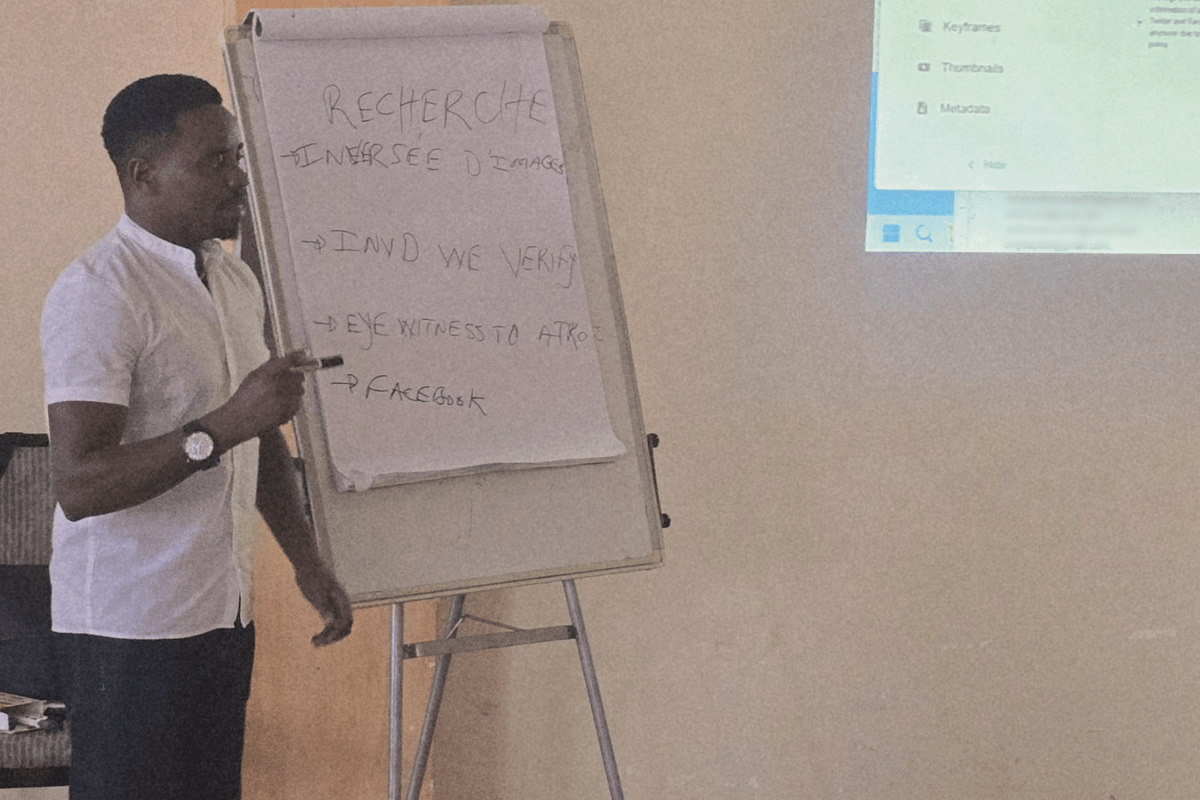
The Collaboration on International ICT Policy for East and Southern Africa (CIPESA) has conducted a digital rights training for staff of the Ethiopian Human Rights Commission (EHRC) in a programme that benefitted 22 experts from various departments of the statutory entity. 

The training was a response to the desire by the commission to build its organisational capacity in understanding and defending digital rights and CIPESA’s vision to grow the ability of African national human rights institutions (NHRIs) to monitor, protect and promote digital freedoms.

Conducted in the Ethiopian capital Addis Ababa on October 11-12, 2023, the programme aimed to build the EHRC staff’s understanding of digital rights issues and the link with traditional rights. Participants went on to brainstorm how the EHRC should strengthen human rights protection in the digital space and through the use of technology.

Dr. Abdi Jibril, the Commissioner for Civil and Political and Socio-Economic Rights at the EHRC, noted that the proliferation of digital technology has contributed positively to human rights protection. It was therefore necessary to maximise the benefits of digital technology and to expand its usage for the promotion and enforcement of human rights.

The importance of growing the capacity of NHRIs was underscored by Line Gamrath Rasmussen, Senior Adviser, Human Rights, Tech and Business at the Danish Institute for Human Rights and CIPESA Executive Director Dr. Wairagala Wakabi. African NHRIs are not always well versed with the opportunities and challenges which technology presents, which creates a need for capacity development and developing partnerships with stakeholders such as civil society. 

As legislation governing the technology domain is fast-evolving, NHRIs in many countries are playing catch up. As such, these institutions need to constantly keep updating themselves on new legislation and implications of these laws on human rights in the digital domain. The NHRIs need to  enhance their capacity to document, investigate and report on digital rights. 

The NHRIs also need to pay specific attention to the vices such as hate speech, disinformation, and technology-facilitated gender-based violence (TF GBV), that are being perpetuated with the aid of technology.

Dr. Daniel Bekele, the Chief Commissioner at EHRC, stated that social media companies and messaging platforms are not doing enough to moderate harmful content in Africa yet in other geographical regions they have invested more resources and efforts in content moderation. He said African countries need to work together in order to build a strong force against the powerful platforms. The official proposed that the African Union (AU), working with relevant governments and other stakeholders, should spearhead the development of regulations which African countries can jointly use in their engagements with the tech giants on issues such as content moderation. 

 The two-day training discussed the positive and negative effects of digital technology on human rights and how the commission’s work to enforce human rights can be strengthened through the use of digital technology.

Among other topics, the training also addressed the human rights, governance and technology landscape in Sub-Saharan Africa; public and private sector digitalisation and challenges for human rights; the link between online and offline rights; transparency and accountability of the private sector in upholding human rights; and opportunities for NHRIs to advance online rights at national, regional and international levels. It also featured deep dives into key digital rights concerns such as surveillance, online violence against women, disinformation, and network disruptions. 

At the end of the training, the EHRC staff identified key actions the commission could integrate in its annual work plans, such as digital rights monitoring, advocacy for enabling laws to be enacted, and developing tools for follow up on implementation of recommendations on digital rights by treaty bodies and the Human Rights Council. Others were collaborations with local and regional actors including media, fact-checkers, civil society organisations, and platforms; working with the police and other national mechanisms to tackle hate speech and disinformation while protecting human rights; and conducting digital literacy.

Trainers in the programme were drawn from CIPESA, the Centre for the Advancement of Rights and Democracy (CARD), the Danish Institute for Human Rights, the Centre for International Private Enterprise (CIPE), the African Centre for Media Excellence (ACME), Inform Africa, and the Kenya National Cohesion and Integration Commission (NCIC).

Meanwhile, after the aforementioned training, CIPESA teamed up with Ethiopian civil society partners to conduct a training on disinformation and hate speech for journalists, bloggers and digital rights activists. Like many African countries, Ethiopia is grappling with a significant and alarming rise in hate speech and disinformation, particularly on social media platforms. This surge in disinformation is undermining social cohesion, promoting conflict, and leading to a concerning number of threats against journalists and human rights defenders.

The proliferation of disinformation is to citizens’ fundamental rights as studies have shown that many Ethiopians feel their right to freedom of expression is compromised. The prevalence of disinformation also means that many Ethiopians lack access to impartial and diverse information.

Disinformation has been directly fueling conflict in several regions of Ethiopia. According to workshop participants and reports, both pro-government and anti-government actors have perpetuated this vice, whose real-world consequences are severe, including the loss of life and large-scale violent events.

Whereas Ethiopia in 2020 enacted legislation to curb hate speech and disinformation, the effectiveness of this law has been called into question. Some critics argue that it has not been effectively implemented and could be used to undermine citizens’ rights.

The training equipped 21 journalists, bloggers and activists with knowledge to navigate this law and with skills to call out and fight disinformation and hate speech. The efforts of the trained journalists, and those which the human rights commission could implement, are expected to boost the fight against online harms and contribute to the advancement of digital rights in Ethiopia.

1 2 3 5