Fostering Responsible Business Conduct in Uganda’s Digital Age

By Patricia Ainembabazi |

The sixth edition of the Business and Human Rights Symposium in Uganda marked an essential step in Uganda’s journey to foster responsible and rights-respecting business conduct. Hosted on November 4-5, 2024, the symposium brought together over 200 participants from government, the private sector, academia, and civil society. It offered a platform to reflect on Uganda’s advancements in implementing its National Action Plan on Business and Human Rights and to consider newer frameworks such as the Corporate Sustainability Due Diligence Directive (CSDDD).

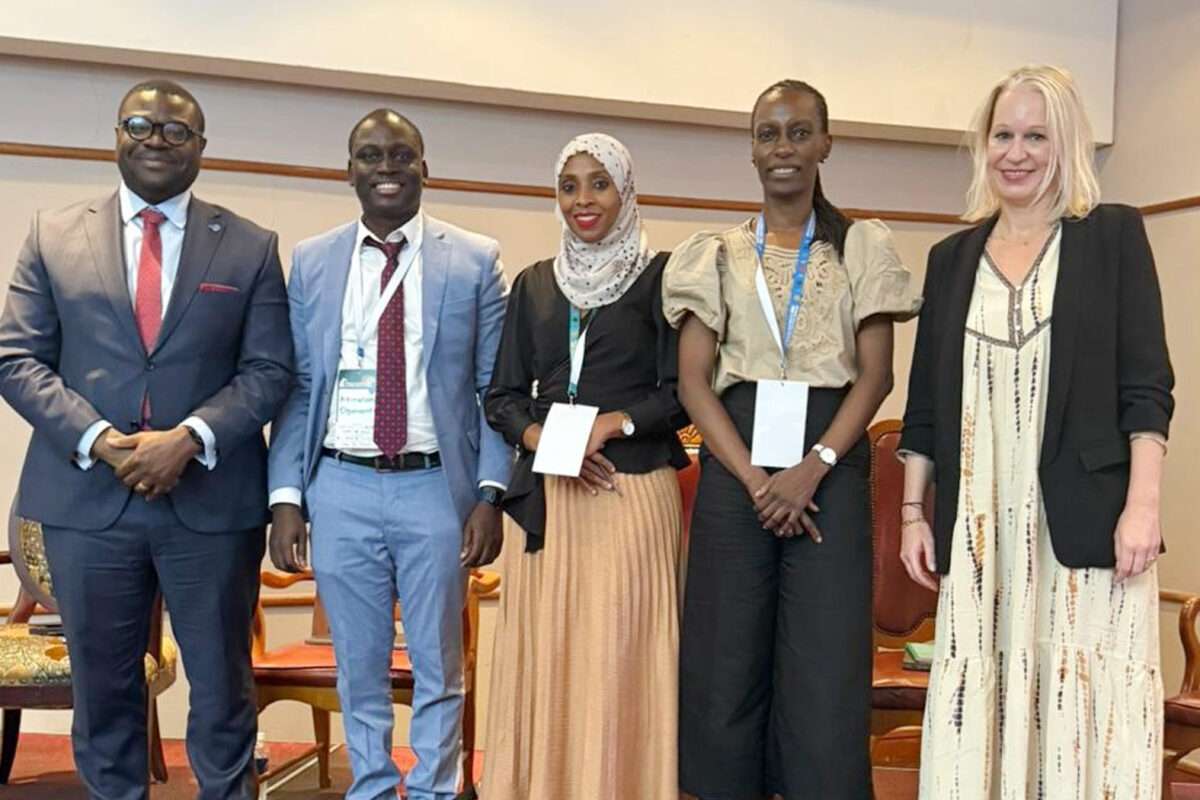
As part of the two-day proceedings, the Collaboration on International ICT Policy for East and Southern Africa (CIPESA) hosted a panel discussion on the interplay between digital innovation and the protection of human rights, highlighting both successes and challenges in Uganda’s tech ecosystem. The panel discussed the United Nations (UN) Guiding Principles on Business and Human Rights and how they align with the technology sector.

Source: Business for Social Responsibility  

Highlighting Uganda’s growing technology sector, including increased mobile and internet penetration as well as digitalisation of private and public services, the session also spotlighted pressing concerns, such as internet disruptions, labour rights violations, gender discrimination, and data protection and privacy, which continue to challenge human rights protections in the country’s growing digital economy.

Joel Basoga, Head of Technology Practice at H&G Advocates, stated that ​​it was “essential” for businesses in Uganda to embed respect for human rights as a core performance indicator guided by the UN Guiding Principles on Business and Human Rights. He added that for a tech-driven business landscape, legal frameworks surrounding digital rights need to be prioritised.

According to Patricia Ainembabazi, a Project Officer at CIPESA, there was limited understanding of business and human rights in the technology sector. Platforms such as the symposium were crucial in building a thematic understanding of digital rights. 

In 2021, Uganda became the first African country to finalise a National Action Plan on Business and Human Rights (NAPBHR), based on the United Nations Guiding Principles on Business and Human Rights. The plan strengthens the government’s duty to protect human rights, enhances the corporate responsibility to respect human rights, and ensures access to remedies for victims of human rights violations and abuses resulting from non-compliance by business entities.

In October 2024, CIPESA joined the first meeting of the Multi-Sectoral Technical Committee on Business and Human Rights, which supports the Uganda labour ministry’s role of coordinating the National Action Plan and provides technical guidance on all business and human rights interventions. At that meeting, CIPESA made the case for mainstreaming digital rights in the implementation of the action plan and also urged stakeholders to leverage innovative technologies to improve the outcomes of the action plan.

Similar to other countries in Africa, Uganda’s plan does not provide for digital rights protection, yet digital technologies have become central not only to how many businesses operate, but also to how individuals learn, work, socialise, and participate in community affairs. This increased digitalisation has had an impact on the ability of businesses to respect their human rights obligations.

Objectives of Uganda’s National Action Plan on Business and Human Rights
1. To strengthen institutional capacity, operations and coordination efforts of state and non-state actors for the protection and promotion of human rights in businesses;  
2. To promote human rights compliance and accountability by business actors;  
3. To promote social inclusion and rights of the vulnerable and marginalised individuals and groups in business operations;  
4. To promote meaningful and effective participation and respect for consent by relevant stakeholders in business operations; and  
5. To enhance access to remedy to victims of business-related human rights abuses and violations in business operations.

Speakers urged for increased cross-sector collaboration among stakeholders to align national frameworks more closely with the UN Guiding Principles. Opportunities for intervention include a push for robust data protection and privacy protections by the private sector; affordability of the internet and related technologies to ensure access to digital spaces; and raising awareness on digital rights roles and responsibilities for consumers and business owners. The symposium called upon stakeholders such as telecommunication companies, Internet Service Providers (ISP), financial institutions, innovators, and online platform operators to harmonise business goals with digital rights principles.

As part of the implementation of the NAPBHR, CIPESA is part of the newly launched Advancing Respect for Human Rights by Businesses in Uganda project led by Enabel and Uganda’s Ministry of Gender Labour and Social Development. The project is part of the European Union’s support towards the implementation of Uganda’s National Action Plan on Business and Human Rights and focuses on three thematic areas: labour rights in the agricultural sector, natural resource governance and land, and digital rights and internet governance. The project will work with six civil society organisations to drive advocacy, dialogue, and actions that strengthen Uganda’s Business and Human Rights agenda. Additionally, 50 businesses will receive support to implement human rights due diligence aligned with national and international standards.

Explorer le paysage complexe des droits numériques au Sahel : Parole aux défenseurs

Par Simone Toussi |

Les pays de la région sahélienne, tels que le Burkina Faso, le Mali et le Niger, présentent un environnement périlleux pour les défenseurs des droits humains, au moment où des régimes militaires s’enlisent au pouvoir. L’espace numérique, autrefois perçu comme un symbole de liberté d’expression et d’accès à une information plurielle, est progressivement assiégé, les droits à la vie privée, à la liberté d’expression et à l’accès et au partage d’informations y étant de plus en plus restreints.

Si ces pays font face à des problématiques numériques communes à d’autres pays francophones d’Afrique – interruptions d’Internet, surveillance étatique, censure en ligne et instrumentalisation des lois sur la cybersécurité et la désinformation –, le renversement des gouvernements civils par l’armée y a aggravé le niveau d’autoritarisme.

Lors du Forum sur la liberté de l’Internet en Afrique – organisé par la Collaboration sur les Politiques Internationales des TIC pour l’Afrique de l’Est et Australe (CIPESA) et AfricTivistes en septembre 2024 à Dakar, Sénégal – des experts se sont réunis pour discuter des défis croissants et des opportunités en matière de droits numériques dans la région. Le panel a élucidé la position précaire des défenseurs des droits humains et le rôle ambivalent des technologies numériques, qui exacerbent autant qu’elles offrent des solutions à ces défis.

Dans le cadre des efforts de CIPESA pour lutter contre les troubles de l’information en Afrique subsaharienne et équiper les acteurs au plaidoyer pour de lois numériques plus justes, le panel a abordé des questions critiques relatives aux droits numériques ainsi que des problématiques sociales pressantes comme l’inégalité de genre, les conflits armés et la détérioration de la liberté de la presse, tout en examinant le cadre réglementaire émergent y afférent.

Les défenseurs des droits humains au Sahel, notamment les activistes pour les droits des femmes et les journalistes, rencontrent d’immenses difficultés en raison de l’instabilité politique, de la violence armée et des régimes autoritaires, qui imposent de sévères restrictions à la liberté de la presse, à la circulation de l’information et aux activités de la société civile.

Djibril Saidou, de International Media Support (IMS), a souligné que les défis des droits numériques au Sahel vont au-delà de la protection de la liberté d’expression. « Il s’agit de garantir l’accès à l’information sur des questions urgentes comme les droits des femmes et les conflits armés », a-t-il déclaré. Dans ces contextes difficiles, il a affirmé que les efforts d’intervention devraient se concentrer sur la résistance à la censure et le renforcement de la résilience des défenseurs des droits numériques et de la démocratie.

Chantal Nare, blogueuse féministe de Bloggueuses226 et activiste burkinabè, a partagé son expérience de militante pour les droits des femmes dans un environnement aussi fragile. Elle a évoqué la peur constante de représailles et de surveillance, qui entrave l’expression libre, même sur les plateformes numériques. Chantal a soulevé une question cruciale : « Comment les plateformes numériques comme WhatsApp ou les blogs peuvent-elles être utilisées pour protéger et autonomiser les femmes sans les exposer à davantage de risques face aux acteurs étatiques ou extrémistes ? »

Urbain Yameogo, du Centre d’Information et de Formation sur les Droits Humains en Afrique (CIFDHA), a cité l’abus des lois sur la cybercriminalité et le terrorisme pour restreindre la liberté d’expression. « La loi antiterroriste de 2015 au Burkina Faso permettait aux journalistes un certain accès à des informations sensibles liées au terrorisme. Cependant, les révisions du Code pénal en 2019 ont supprimé ces exemptions, exposant les journalistes à des poursuites pour des actes qu’ils exerçaient dans le cadre de leur travail, comme l’accès aux sites liés au terrorisme. Cette modification a créé une zone grise juridique qui rend les journalistes et les défenseurs des droits humains vulnérables à des persécutions. »

Les panélistes ont souligné que les journalistes de la région, rapportant sur des sujets sensibles comme le terrorisme et les violations des droits humains, sont de plus en plus poursuivis sous des lois sur la cybercriminalité, plutôt que sous les lois traditionnelles sur la presse, qui offraient historiquement plus de protection. Ce changement compromet les droits des journalistes à rapporter librement, car les lois sur la cybercriminalité, souvent mal définies, peuvent être interprétées de manière extensive pour réprimer un travail journalistique légitime.

Face au défi de défendre les droits numériques dans un climat de peur des représailles des régimes militaires, certains participants ont souligné la nécessité d’exercer une prudence extrême et d’adopter une approche conciliatrice dans leur travail. Cheikh Fall, de l’organisation régionale des droits humains AfricTivistes, a affirmé : « Parfois, il faut choisir entre la vie et la liberté. Dans les pays du Sahel sous régime militaire, les droits numériques sont éclipsés par le besoin immédiat de survie. Cette réalité souligne que la lutte pour les droits humains fondamentaux est indissociable du combat pour la liberté. »

Des propositions ont été faites pour créer des lois unifiées traitant à la fois des enjeux numériques et médiatiques. Cependant, étant donné les craintes que ces lois puissent renforcer la répression plutôt que protéger les libertés, un dialogue inclusif et des processus politiques participatifs ont été jugés cruciaux. Cela permettrait de garantir une meilleure protection non seulement pour les journalistes et les défenseurs, mais aussi pour les femmes et d’autres groupes vulnérables. À cet égard, Chantal Nare a appelé à une législation englobant les formes de répression physique et numérique.

Outre les réformes juridiques, les panélistes ont également insisté sur la nécessité d’une formation renforcée à la sécurité numérique et d’une collaboration accrue entre les acteurs locaux et internationaux.

Navigating the Complex Digital Rights Terrain in the Sahel: Advocates Speak Out

By Simone Toussi |

Countries in the Sahel region, including Burkina Faso, Mali, and Niger, present a perilous environment for human rights defenders as military regimes entrench themselves in power. The digital space, once considered a beacon of opportunity for free speech and access to pluralistic information, has steadily come under siege, with the rights to privacy, freedom of expression, and the ability to access and share information increasingly being stifled. 

Whereas these countries face the digital rights prevalent in other Francophone African countries, such as internet disruptions, state surveillance, online censorship, and weaponisation of cybersecurity and disinformation laws, the overthrow of civilian governments by the military  in the three countries has deepened the level of authoritarianism. 

At the Forum on Internet Freedom in Africa – hosted by the Collaboration on International ICT Policy for East and Southern Africa (CIPESA) and AfricTivistes in September 2024 in Dakar, Senegal, experts gathered to discuss the mounting challenges and opportunities for digital rights in the region. The session highlighted the precarious position of human rights defenders in the region and the role of digital technologies in both exacerbating and addressing these challenges. 

In line  with CIPESA’s work to address the information disorder in Sub-Saharan Africa and equip actors to better advocate for rights-respecting digital laws, the session addressed critical digital rights concerns  as well as pressing social issues such as gender inequality, armed conflict, and the deteriorating press freedom, while examining the regulatory framework emerging in response to these issues. 

Human rights defenders in the Sahel, particularly women’s rights activists and journalists, face immense challenges due to the political instability, armed violence, and authoritarian regimes which have imposed severe restrictions on press freedom, the flow of information, and civil society activities. 

According to Djibril Saidou from International Media Support (IMS), digital rights challenges in the Sahel go beyond protecting free speech. It’s about ensuring access to information on urgent issues like gender rights and armed conflicts,” said Saidou. Given the challenging contexts, he stated that intervention efforts should be focused on resisting censorship and promoting resilience for advocates of digital rights and democracy. 

Chantal Nare, a feminist blogger of Bloggueuses226 and activist from Burkina Faso, shared her experience advocating for women’s rights in such a volatile environment. She highlighted the constant fear of retaliation and surveillance, which stifles free expression, even on digital platforms. Chantal raised a crucial question: “How can digital technologies like WhatsApp or blogs be used to protect and empower women without exposing them to further risk from state or extremist actors?”

Urbain Yameogo from Centre for Information and Training on Human Rights in Africa (CIFDHA) cited the abuse of cybercrime and anti-terrorism laws to curtail freedom of expression. 

The 2015 Anti-Terrorism law in Burkina Faso, initially allowed journalists some latitude to access sensitive information related to terrorism for professional purposes. However, revisions to the Penal Code in 2019 removed these exemptions, exposing journalists to prosecution for acts they would have previously carried out in the course of their work, such as accessing websites linked to terrorism. This change has created a legal grey area where journalists and human rights defenders are left vulnerable to legal persecution.” – Urbain Yameogo, CIFDHA.

Panelists emphasised that journalists in the region who report on sensitive topics such as terrorism and human rights violations are increasingly prosecuted under cybercrime laws rather than traditional press laws, which historically offered more protection for media practitioners. This shift undermines the rights of journalists to report freely, as cybercrime laws are often ill-defined and can be interpreted broadly to suppress legitimate journalistic work.  

Faced with the challenge of defending digital rights in an environment of heightened fear of reprisals from the military regimes, some participants emphasised the need for exercising extreme caution and  taking  a conciliatory approach to their work. 

This was underscored by Cheikh Fall from the regional human rights organisation AfricTivistes: “Sometimes, we must choose between life and freedom. In Sahel countries under military rule, digital rights are overshadowed by the immediate need for survival. This stark reality emphasises that when basic human rights are at stake, the struggle for freedom becomes paramount. It’s essential to recognise that in such situations, the struggle for basic human rights is intertwined with the fight for freedom.” 

Proposals were made to create unified laws addressing both digital and media issues. However, given concerns that such laws could be double-edged, potentially enhancing repression rather than protecting freedoms, inclusive dialogue and participatory policy processes were crucial. This would ensure strengthened protection not only for journalists and advocates, but also women and other vulnerable groups.  In this regard, Nare called for legislation that encompasses both physical and digital forms of repression. 

Beyond the legal reforms, the panelists also emphasised the need for increased digital security training and stronger collaboration between local and international actors.

ACHPR 81st Ordinary Session: CIPESA and Partners Host Dialogue on Advocacy Against Internet Shutdowns

By Patricia Ainembabzi |

At the 81st Ordinary Session of the African Commission on Human and Peoples’ Rights (ACHPR) held in Banjul on October 17-November 6, 2024, the Collaboration on International ICT Policy for East and Southern Africa (CIPESA), the International Center for Not-for-Profit Law (ICNL), and the Kenya Human Rights Commission (KHRC) hosted a side event centered on technology and electoral democracy in Africa. While drawing impetus from various experts, discussions delved into the impact of internet shutdowns on freedom of expression, access to information, business transactions, and exclusion of vulnerable communities across the African continent. This is despite the growing role of technology as an enabler of democratic participation and increased transparency and accountability.

In March 2024, the ACHPR adopted Resolution 580, urging African states to refrain from imposing internet shutdowns, particularly during electoral periods. Eight months on, the resolution is yet to gain traction. Over 100 shutdowns have been documented in Africa since 2019, reflecting a worrying escalation in digital rights abuses. The cumulative effect of these shutdowns includes suppression of political discourse, economic losses, and an erosion of public trust in government institutions, ultimately infringing on fundamental rights to free and fair participation in the digital age.

“37% of Africa’s population has experienced internet disruptions in recent years”, Florence Nakazibwe, ICNL.

Thobekile Matimbe of Paradigm Initiative, stated that national security as the rationale for internet shutdowns was disproportionate and Courts including at the Economic Community for West African States (ECOWAS) had rejected the security argument in favour of protecting digital rights. Acknowledging disinformation as a growing threat on the continent and one of the common themes in the national security justifications, Matimbe recommended targeted policies that balance free expression and countering disinformation alongside digital literacy programmes towards strengthening public trust and promoting access to information during electoral periods.

According to Grace Wangenchi from the  Independent Medico-Legal Unit (IMLU) internet shutdowns also have social impacts. Citing the example of heightened risks and isolations for victims of violence who rely on online resources for support, Wangechi called on interventions pushing back against shutdowns to be centred around the unique needs of vulnerable and marginalised communities.

Martin Mavenjina from the Kenya Human Rights Commission, added that documenting the social impact of internet shutdowns through case studies could support strategic litigation against shutdowns. He noted precedent set by the ECOWAS Court in cases from Togo, Guinea and Nigeria, Mavenjina called for advocacy efforts to ensure rulings “led to meaningful change”. 

Other avenues for pushing back against shutdowns put forward included the development of toolkits for civil society, that are anchored in ACHPR resolutions and continued research and documentation to inform engagements with policymakers, regulators, and internet service providers. Where opportunities were available, advocates were also called upon to inform consultations and calls for input by national task forces on elections.

Discussions also featured unpacking the newly developed toolkit to support the monitoring, documentation, and reporting on digital rights violations such as internet shutdowns by National Human Rights Institutes (NHRIs). The side-event builds on CIPESA and partners’ efforts to prioritise and spotlight digital rights issues as part of ACHPRs proceedings.

Confronting the Toll of Online Work on Women in Africa

By Ashnah Kalemera |

From domestic work, ride hailing, content moderation, and delivery services, to sex work, technology has revolutionised employment and labour across the world. In Africa, according to a 2023 report by the World Bank, between 2016 and 2020, job postings on one of the largest digital labour platforms more than doubled. This demand on the continent is expected to grow over the coming years.

These new forms of labour and employment have generally advanced inclusion in the workforce and promoted economic empowerment. However, despite the existence of initiatives such as SheWorks! that are dedicated to engaging women in online work, the promise of new skills, flexibility and income, the potential of women’s participation in digital work has not been fully realised. For instance, in South Africa, the share of women in online work (52%) is growing but still less than in similar occupations in the workforce at large (61%). 

Documented barriers to African women’s participation in online work include the gender digital divide and uneven access to the internet and digital tools. Meanwhile, the wider challenges of digitalisation of work and labour, including the lack of social protections, job insecurity, unequal pay, unfair treatment, discrimination, bias, increased surveillance and lack of autonomy, are exacerbated for women.

In an effort to build narratives and movements on gender and labour online, the recently concluded Forum on Internet Freedom in Africa 2024 (FIFAfrica24) featured discussions on feminist futures of work that highlighted lived experiences and advocacy strategies.

Speaking at the Forum, Abigail Osiki, a Lecturer in the Department of Mercantile and Labour Law at the University of Western Cape, South Africa, stated that fair and decent work for women online not only encompasses security, fair wages and productivity, but also mental health. The mental health challenges of online employment opportunities for women were said to be compounded by stigmas about certain forms of labour – such as sex work being considered prostitution and virtual assistants being “just secretaries”.

“The worst part about working for OnlyFans for me is the toll it takes on my mental health. For a long time I kind of swallowed my emotions and didn’t care what anyone thought because I was making so much money, but then it got to a point where I felt like I was selling my soul. I would often break down to my younger brother that I feel like I sold my soul.” – an Interview with an OnlyFans Worker.

The “uneven power” within online employment was also pointed out. Highlighting the example of non-disclosure agreements (NDAs), speakers at FIFAfrica24 argued that such agreements perpetuated “master-servant relationships” and “forced labour”, leaving many women with no option but to work “from a point of desperation as opposed to choice”.

A former content moderator for a social media platform narrated her recruitment as a language translator, signing of an NDA, and only finding out the scope of her work upon exposure to graphic content. She recalled the mental health side effects of the job and the inability to disclose the nature of her work to healthcare professionals for “fear of going to jail for 20 years” as stipulated in the NDA. She added that she worked in a foreign country without a work permit for a year, isolated in a hotel for six months and without leave days. Whereas she and colleagues were able to unionise, they had no legal support. The unionisation initially led to salary increments but their employment contracts were later terminated without benefits.

For African women in the informal sector, the situation was said to be even more dire. As part of her address in the opening ceremony, Catherine M’seteka of the International Domestic Workers Federation (IDWF) argued that limited access to information and digital illiteracy had made it harder for domestic workers to mobilise or report common violations such as forced labour, exploitation and sexual harassment.

According to Siasa Place’s Angela Chukunzira, digitalisation also had an impact on non-tech based labour. She cited the example of online reviews in the hospitality sector and their impact on the rights of housekeeping workers – who are usually women.

“Marginalised workers are invisible in policy making,” said M’Seteka as she called for more platforms  – both formal and informal – for multi-stakeholder engagement and advocacy on the digital economy.

M’Seteka’s and others’ calls echo recommendations in a policy brief on Labour and Digital Rights in Africa, which emphasised the need to strengthen legal recognition of workers online to ensure their safety and welfare alongside efforts to foster innovation and economic growth that overcome inequalities, bias and discrimination.

In visioning a future of work from a feminist perspective, Osiki stated that advocacy and policy interventions must consider women in the digital workforce as heterogeneous – of different cultures, contexts and involved in different types of work. That way, regulation of uneven power relations and efforts in collective bargaining would articulate varied interests to avoid exploitation. Priorities put forward for collective bargaining were equal pay, contract transparency, protection against harassment and exploitation, alongside career mobility and progression as well as health and safety. “All these [interests] vary for freelancers, domestic workers, location-based service providers and content moderators,” said Osiki.

African states were urged not to politicise technology-based jobs as a solution to the continent’s unemployment and poverty crisis. Rather, they should negotiate partnerships and equitable regulation with a view of increasing tax revenue to enable provision of social and welfare protections for citizens.

For the wider community – users, activists, media, the legal fraternity and civil society organisations – there were calls for solidarity such as in strategic litigation and establishing communities of care to support women in digital workspaces. This, together with efforts to promote cultural and language sensitivity for some forms of employment would go a long way in overcoming derogatory and biased narratives in society.