Mukanyandwi Marie Louise is an experienced multimedia journalist with an extensive background in television production, photography, and reporting. She worked with Goodrich TV and Authentic TV, and currently serves as an editor and reporter at UbumweNews.com where she covers a range of social, economic, and development issues. She holds an advanced diploma in Information Management. Over the years, she has completed specialised training in gender and media, sexual and reproductive health reporting, and business journalism, among others, through programs supported by institutions such as the University of Rwanda, Media High Council, and UNDP. Marie Louise is passionate about telling impactful, inclusive stories that inform and empower local communities. She brings a dynamic, cross-platform approach to journalism. As a DPI Journalism Fellow, she is committed to exploring how digital public infrastructure can enhance transparency and civic engagement.
Jean de Dieu Ndikumasabo is a bilingual (French-English) news reporter, fact-checker, photographer, editor, and community manager at the Burundi News Agency (ABP). He specializes in investigative journalism, focusing on underreported issues related to climate change, public health, digital transformation, and community-driven stories. He has covered key topics at the intersection of climate and health through prestigious fellowships, including the Excellence in Health Journalism Fellowship (National Press Foundation) and the African Disease Reporting Fellowship (ADRAP). His international reporting experience includes major events such as the Forum for Young African Entrepreneurs (Tony Elumelu Foundation Forum, 2019, Lagos) and the 5th United Nations Conference on the Least Developed Countries (LDC5, 2024, Doha). In June 2025, he covered the Internet Governance Forum (IGF 25) held in Lillestrøm, Norway. Jean de Dieu has received advanced training in journalism and fact-checking from several renowned institutions, including the National Press Foundation, The World Bank, Lille School of Journalism, Radio Netherland Training Center (RNTC), Code for Africa, and PesaCheck. He is the recipient of the Pro Economic Liberty Award from CDE-Great Lakes and is an active member of the Africa Fact-checking Alliance (AFCA).
Canary Mugume is an investigative journalist, and prime time news anchor at NBS Television whose work sits at the intersection of journalism, technology, and public accountability. With over a decade of experience, he has used digital media to shape public discourse on governance, online freedoms, and access to public services. Through his platforms including NBS Television, Canary leverages storytelling to make complex digital policy issues accessible and impactful. His investigative reporting and online influence as the most followed active media personality online in Uganda today, have driven national conversations around public policy, civic technology, governance and inclusive digital transformation.
This EPS saga highlighted implementation gaps and illuminated a systemic failure to promote equitable access, public accountability, and safeguard fundamental rights in the rollout of DPI.
When the State Forgets the People
The Uganda EPS, established under section 166 of the Traffic and Road Safety Act, Cap 347, serves as a tech-driven improvement to road safety. Its goal is to reduce road accidents and fatalities by encouraging better driver behaviour and compliance with traffic laws. By allowing offenders to pay fines directly without prosecution, the system aims to resolve minor offences quickly and to ease the burden on the judicial system. Challenges faced by the manual EPS system, which the move to the automated system aimed to eliminate, include corruption (reports of deleted fines, selective enforcement, and theft of collected penalties).
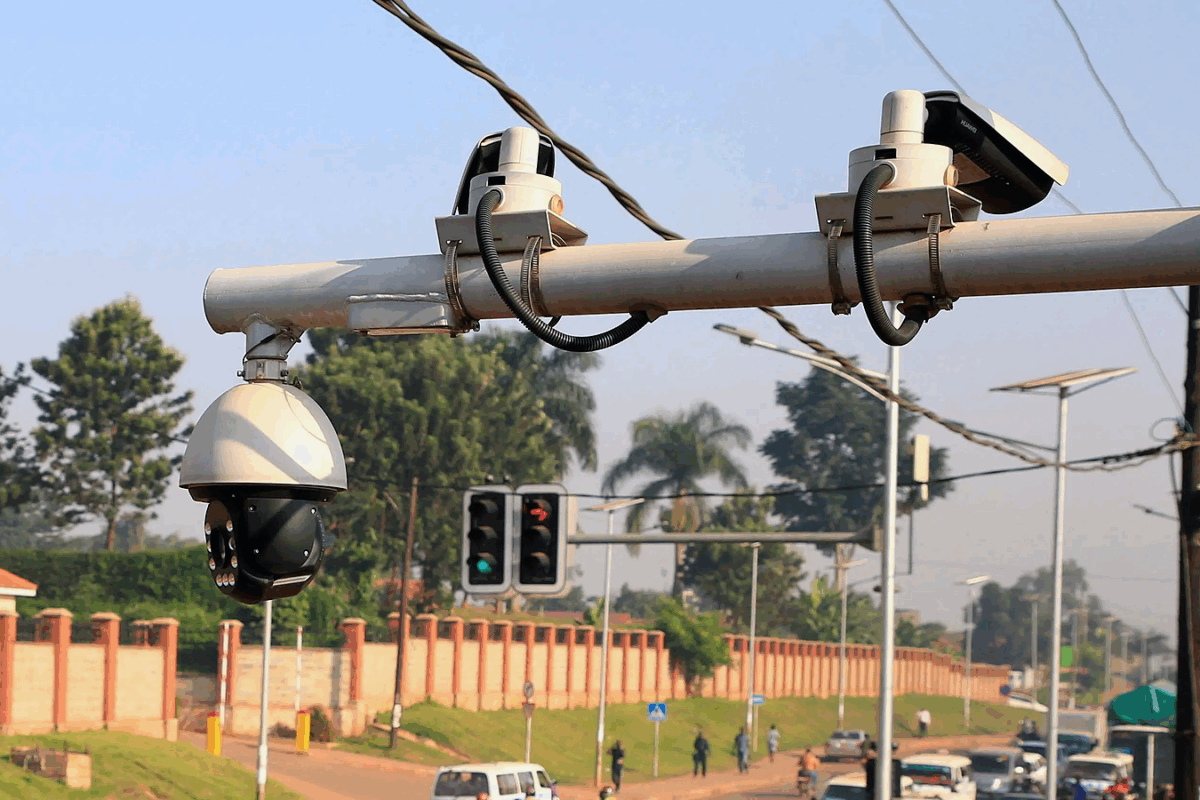
At the heart of the EPS was an automated surveillance and enforcement system, which used Closed Circuit Television (CCTV) cameras and license plate recognition to issue real-time traffic fines. This system operated with almost complete opacity. A Russian company, Joint Stock Company Global Security, was reportedly entitled to 80% of fine revenues, despite making minimal investment, among other significant legal and procurement irregularities. There was a notable absence of clear contracts, publicly accessible oversight mechanisms, or effective avenues for appeal. Equally concerning, the collection and storage of extensive amounts of sensitive data lacked transparency regarding who had access to it.
Such an arrangement represented a profound breach of public trust and an infringement upon digital rights, including data privacy and access to information. It illustrated the minimal accountability under which foreign-controlled infrastructure can operate within a nation. This was a data-driven governance mechanism that lacked the corresponding data rights safeguards, subjecting Ugandans to a system they could neither comprehend nor contest.
This is Not an Isolated Incident
The situation in Uganda reflects a widespread trend across the continent. In Kenya, the 2024 Microsoft–G42 data centre agreement – announced as a partnership with the government to build a state-of-the-art green facility aimed at advancing infrastructure, research and development, innovation, and skilling in Artificial Intelligence (AI) – has raised serious concerns about data sovereignty and long-term control over critical digital infrastructure.
In Uganda, the National Digital ID system (Ndaga Muntu) became a case study in how poorly-governed DPI deepens structural exclusion and undermines equitable access to public services. A 2021 report by the Centre for Human Rights and Global Justice found that rigid registration requirements, technical failures, and a lack of recourse mechanisms denied millions of citizens access to healthcare, education, and social protection. Those most affected were the elderly, women, and rural communities. However, a 2025 High Court ruling ignored evidence and expert opinions about the ID system’s exclusion and implications for human rights.
The clear pattern is emerging across the continent: countries are integrating complex, often foreign-managed or poorly localised digital systems into public governance without establishing strong, rights-respecting frameworks for transparency, accountability, and oversight. Instead of empowering citizens, this version of digital transformation risks deepening inequality, centralising control, and undermining public trust in government digital systems.
The State is Struggling to Keep Up
National Action Plans (NAPs) on Business and Human Rights, intended to guide ethical public–private collaboration, have failed to address the unique challenges posed by DPI. Uganda’s NAP barely touches on data governance, algorithmic harms, or surveillance technologies. While Kenya’s NAP mentions the digital economy, it lacks enforceable guardrails for foreign firms managing critical infrastructure. In their current form, these frameworks are insufficiently equipped to respond to the complexity and ethical risks embedded in modern DPI deployments.
Had the Ugandan EPS system been subject to stronger scrutiny under a digitally upgraded NAP, key questions would likely have been raised before implementation:
What redress exists for erroneous or abusive fines?
Who owns the data and where is it stored?
Are the financial terms fair, equitable, and sovereign?
But these questions came too late.
What these failures point to is not just a lack of policy, but a lack of operational mechanisms to design, test and interrogate DPI before roll out. What is needed is a practical bridge that responds to public needs and enforces human rights standards.
Regulatory Sandboxes: A Proactive Approach to DPI
DPI systems, such as Uganda’s EPS, should undergo rigorous testing before full-scale deployment. In such a space, a system’s logic, data flows, human rights implications, and resilience under stress are collectively scrutinised before any harm occurs. This is the purpose of regulatory sandboxes – platforms that offer a structured, participatory, and transparent testbed for innovations.
Thus, a regulatory sandbox could have revealed and resolved core failures of Uganda’s EPS before rollout, including the controversial revenue-sharing arrangement with a foreign contractor.
How Regulatory Sandboxes Work: Regulatory sandboxes are useful for testing DPI systems and governance frameworks such asrevenue models in a transparent manner, enabling stakeholders to examine the model’s fairness and legality. This entails publicly revealing financial terms to regulators, civil society, and the general public. Secondly, before implementation, simulated impact analyses can also highlight possible public backlash or a decline in trust. Sandboxes can be used for facilitating pre-implementation audits, making vendor selection and contract terms publicly available, and conducting mock procurements to detect errors. By defining data ownership and access guidelines, creating redress channels for data abuse, and supporting inclusive policy reviews with civil society, regulatory sandboxes make data governance and accountability more clear.
This shift from reactive damage control to proactive governance is what regulatory sandboxes offer. If Uganda had employed a sandbox approach, the EPS system might have served as a model for ethical innovation rather than a cautionary tale of rushed deployment, weak oversight, and lost public trust.
Beyond specific systems like EPS or digital ID, the future of Africa’s digital transformation hinges on how digital public infrastructure is conceived, implemented, and governed. Foundational services, such as digital identity, health information platforms, financial services, surveillance mechanisms, and mobility solutions, are increasingly reliant on data and algorithmic decision-making. However, if these systems are designed and deployed without sufficient citizen participation, independent oversight, legal safeguards, and alignment with the public interest, they risk becoming tools of exclusion, exploitation, and foreign dependency.
Realising the full potential of DPIs as a tool for inclusion, digital sovereignty, and rights-based development demands urgent and deliberate efforts to embed accountability, transparency, and digital rights at every stage of their lifecycle.
By Elonnai Hickok (GNI), Anriette Esterhuysen (APC), and Lillian Nalwoga (CIPESA)
Alongside the Africa School for Internet Governance (AfriSIG) and the regional Africa Internet Governance Forum (AfricaIGF) that took place in late May in Dar-es-Salaam, Tanzania, the Global Network Initiative (GNI), the Association for Progressive Communications (APC), and the Collaboration on International ICT Policy for East and Southern Africa (CIPESA) held several meetings that brought together civil society, governments, parliamentarians, and the private sector from across the continent to reflect on Africa’s role in the World Summit on the Information Society +20 (WSIS+20) Review Process . This included a session at the AfriSIG, the regional workshop “The Road to WSIS+20”, and the session “Forging connections between Internet Governance, human rights, and development through the WSIS+20 process” at the AfricaIGF. The meetings highlighted key policy priorities across countries that stakeholders would like reflected in the WSIS+20 review process, surfaced challenges in past implementation of the WSIS framework and action lines with forward-looking recommendations, and emphasized the opportunity for Africa to play a leadership role in the WSIS+20 review process going forward.
In 2025, the world faces an important moment for digital governance. The WSIS+20 review — marking two decades since the World Summit on the Information Society — will not only evaluate past progress but also shape the future of Internet governance, rights, and development as it considers how to align the Global Digital Compact (GDC) into the WSIS process and evaluates the renewal of the Internet Governance Forum (IGF). For Africa, this is a pivotal opportunity to lead, to center the continent’s priorities in global digital discourse, and to champion a people-centered, equitable information society.
Since its founding documents — the Geneva Declaration, the Plan of Action, and the Tunis Agenda — the WSIS has put forward a vision rooted in multistakeholderism, human rights, and inclusive digital development. But nearly 20 years on, that vision is under question amid accelerating technological shifts, geopolitical tensions, billions of people without meaningful connectivity, and the marginalization of voices from the Global Majority. Africa’s leadership in the WSIS+20 review process will be an essential counterbalance to these challenges.
Africa has always participated strongly in WSIS, with robust contributions from the technical community, civil society, many governments, and the WSIS prize winners who have taken high-level action lines and worked to implement them at the local community level. Recent months have seen growing momentum across the continent for the WSIS+20 review process. From Dar-es-Salaam to Cotonou, the United Nations Economic Commission for Africa (UNECA) has convened civil society, governments, parliamentarians, and the private sector to reflect on Africa’s role in the WSIS. This has been complemented by national-level dialogues driven by civil society with participation from the technical community, including in Zambia, Ghana, and South Africa. These dialogues reveal national-level priorities and the potential for Africa to shape the future of the WSIS.
Two major declarations — the Dar es Salaam Declarationand the Cotonou Declaration — highlight Africa’s vision for the WSIS. They underscore issues central to the region: bridging the digital divide, fostering AI innovation, building resilient digital public infrastructure, ensuring data governance, and using the WSIS as a catalyst for Agenda 2063 and the Sustainable Development Goals (SDGs). Crucially, both declarations reaffirm the importance of the IGF and call for its strengthening.
The global WSIS+20 Preparatory and Stocktaking Meeting held on May 30 gave us some insight into the positions that African countries will take. Statements by Uganda, South Africa, and Morocco aligned with the G77’s call for digital sovereignty and technology transfer, recognized the importance of leveraging the WSIS to achieve the 2030 Agenda, called for aligning the GDC with the WSIS, and highlighted new challenges such as AI, but stopped short of unanimously advocating for the renewal, strengthening, and making the mandate of the IGF permanent.
The geopolitical landscape only heightens the urgency of strong participation from African countries. The United States’ controversial stance during the 28th session of the Commission on Science and Technology for Development (CSTD) — particularly its resistance to language on climate, the SDGs, and diversity, equity, and inclusion — has raised alarms. While this may signal a shift in the U.S. government’s approach, it also can be seen as opening space for Africa and other actors to step into leadership roles and push for a rights-based digital future that reflects national priorities.
Nationally, progress is tangible. Countries are expanding digital public infrastructure, reforming cybersecurity laws, and working to reduce connectivity gaps. At the same time, challenges persist — from Internet shutdowns and online surveillance to shrinking civic space and rising digital authoritarianism, as highlighted in Paradigm Initiative’s 2024 Londa report. These challenges underscore why a rights-respecting, multistakeholder framework is essential for Africa’s digital future.
As the WSIS+20 review process continues, it will be critical that African countries actively engage in the process, emphasizing inclusive multistakeholder participation from all stakeholders as articulated by a cross-stakeholder group in the Five-Point Plan for an Inclusive WSIS+20 Review and a further set of eight recommendations. Going forward, the UNECA and the African Union will play an essential role in not only coordinating regional positions but in ensuring this participation.
The WSIS+20 presents a timely chance for Africa to take forward the original spirit of the WSIS: a digital world built by and for the people, across sectors and borders. To seize this moment, it will be important for African governments and regional bodies to:
Participate robustly and cohesively in the WSIS+20 review process, ensuring Africa’s priorities are reflected.
Promote inclusive multistakeholder engagement, proactively engaging with and empowering civil society, academia, and the technical community to robustly participate in the WSIS+20 process and inform the position of African governments.
Advance a shared agenda rooted in human rights, sustainable development, the renewal of the IGF, the alignment of the GDC into the WSIS, and Africa-centric innovation and development.
The discussions at AfricaIGF indicated an important opportunity for Africa to shape the future of the WSIS process and ensure country-level and regional priorities are reflected in the review and implementation, that the review process is truly multistakeholder, and results in implementation that is meaningful and effective.