CIPESA Joins The Global Network Initiative

Announcement | The Collaboration on International ICT Policy for East and Southern Africa (CIPESA) is the newest member of the civil society constituency of the Global Network Initiative.
CIPESA works to inform policymakers and other stakeholders across the African continent about the connection between rights-based ICT policies and good governance and improved livelihoods. GNI will benefit from CIPESA’s policy and legal expertise to advance Internet freedom and privacy in Africa, and from its convening power as coordinator of the regional ICT4Democracy in East Africa Network and hosts of the Forum on Internet Freedom in Africa (FIFAfrica).
Through engagement with GNI companies and experts, CIPESA hopes GNI membership will allow them to widen their network, and enhance their multi-stakeholder approach at the global level. CIPESA’s Executive Director Dr. Wairagala Wakabi said: “Our membership will enable us to gain more skills and knowledge from a multiplicity of important actors, to continue playing the role of multipliers and advocates who are able to reach wide audiences and to influence the perceptions and actions of relevant African actors on digital rights.”
Some highlights of CIPESA’s work include an intensive regional training on ICT policy research for different stakeholders, annual reporting on the trends affecting Internet  freedom across Africa, and analyses or commentary on corporate transparency and laws and policies on the ground in a number of countries, including BurundiRwandaSouth Africa, and Tanzania. You can learn more about their work, which has received wide coverage. 
CIPESA’s membership marks a period of notable expansion for GNI’s civil society constituency in the Global South. For more information about CIPESA, visit: CIPESA.org. To learn more about GNI’s multi-stakeholder membership see here.

Bridging Cyber Security Gaps: SMEs Trained in Uganda

By Edrine Wanyama |
Uganda’s Small and Medium Enterprise (SME) sector is credited with contributing 20% to the country’s Gross Domestic Product (GDP) in 2016. While the level of adoption of technology as a key component of operations within the sector remains unclear, its effective utilisation requires entities to also embrace safety and security measures as a priority.
Identifying security controls to defend against cyber threats and data protection thus formed the basis of discussions at a cyber standards training workshop for SMEs in Uganda. Organised by the National Information Technology Authority (NITA-U) in collaboration with the Commonwealth Telecommunications Organization (CTO), the workshop, held in Kampala, Uganda on August 23-24,2017 targeted SME entrepreneurs, banking industry officials as well as ICT sector representatives from non-government organisations and other ICT stakeholders.
The workshop explored the Information Assurance for Small Information Assurance for Small to Medium Enterprises (IASME) which encourages SME’s to comply with international information security management standards
Possible risks include; theft of data for monetary gain or competition by criminals, hacking, physical insecurity to staff and office equipment, malware attacks, insecure configuration, updating software from unreliable sources, access control and spam.
Discussions on information security are abound in Uganda as the Data Protection and Privacy Bill, 2015 makes slow progress in Parliament while laws like the Computer Misuse Act, 2011, The Electronics Signatures Act, 2011 and the Electronic Transactions Act, 2011 do not fully address the issue of data protection and privacy.
According to a 2016 report based on a global survey of cybersecurity managers and practitioners, cyber security and information security is considered a technical issue rather than a business imperative.  The findings of this study echo sentiments held by civil society organisations which face similar digital security threats including increasingly sophisticated threats and rate of incidents according research conducted by the Collaboration for International ICT Policy in East and Southern Africa (CIPESA). It revealed that various CSOs were concerned about, or had been victims of hacking attempts on their email accounts and internal networks, that they had been targeted by phishing emails, and that they feared their activities were being surveilled by authorities
In order to be better positioned to address cyber threats, civil society and SME need to be equipped with skills encompassing both online and offline responses. These include knowhow on policy and compliance, physical environmental protection, risk assessment, access controls, incident management, monitoring, backup, malware identification and technical intrusions.
Through a cyber essentials course and practical exercises, participants at the workshop were equipped with basic skills for enabling non-technical users to establish five information security controls including malware protection, access control, patch management, secure configuration, boundary firewalls and internet gateways.
As a follow-up to the exercise, selected participants will undergo further training for possible contracting as IASME information security assessors for SME’s. CTO’s international events and seminars are conducted in all countries of the Commonwealth, across the continents of Africa, Europe, the Americas, Asia and the Pacific region. Specifically, in Africa, the events have been held in Botswana, Cameroon, Ghana, Kenya, Liberia, Mozambique, Nigeria, Papua New Guinea, South Africa, Swaziland and Uganda.
 

DR Congo Parliament Urged to Pass Laws That Support Citizens’ Rights Online

Statement |
Civil society actors in the Congolese town of Goma have urged the Government of the Democratic Republic of Congo (DRC) to make amendments to its current laws governing Information and Communication Technologies (ICT) to make them favourable to the growth of internet usage, as well as online privacy, access to information and freedom of expression.
The civil society actors, including journalists, digital rights activists and bloggers, also urged the country’s Parliament and the Ministry for ICT to offer meaningful avenues for citizens to provide inputs to proposed new laws related to the telecommunications industry.
The Government has recently sent to the Parliament the Telecommunications and ICT Bill which is aimed at updating the Framework Law 013/2002 on Telecommunications, as well as the e-Transactions Bill, and a law amending the Act that set up the regulator – the Authority of the Post and Telecommunications of Congo (ARPTC). However, neither the Parliament, nor the Ministry, have announced opportunities for other stakeholders to make comments or submissions on these draft laws.
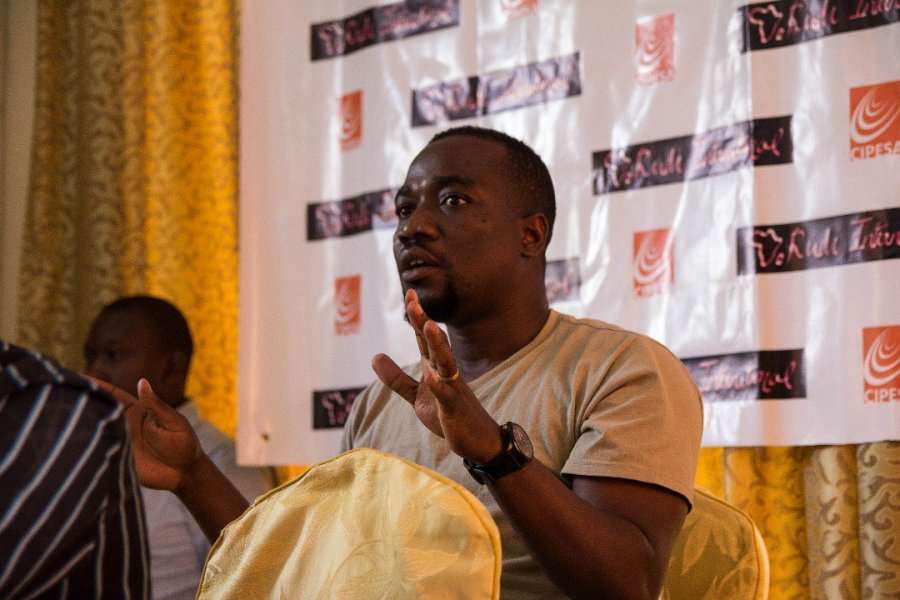
The importance of stakeholder consultations in Congo’s policy-making processes was among the issues that emerged during a two-day ICT policy and advocacy training workshop hosted in Goma on June 10- 11, 2017, by Rudi International and the Collaboration on International ICT Policy for East and Southern Africa (CIPESA). Participants noted that the exclusion of private sector and civil society actors from the law-making process could lead to the passing of laws that are detrimental to internet access and usage in the central African country.
Presently, ICT adoption in DRC faces several challenges including unreasonably high data costs which have largely contributed to the low internet penetration rate of 4.2% as of 2016. The Framework Law 013/2002 on Telecommunications and the Law 14/2002 on the Regulator are the primary laws governing online communication but they do not adequately provide for citizens’ rights to privacy, nor do they provide a conducive environment for citizens to enjoy the right to free expression.
Further, these laws contain vague clauses such as ‘public interest’, ‘disruption of public order’, ‘ultimate truth’, and ‘national security’ which create the latitude for unwarranted abuse of the laws including through censorship and surveillance. Meanwhile, internet and telecommunications services providers lack protection from undue state interference as has been evidenced by the evolution of communications shutdowns in recent years.
The proposed new laws are welcome because they present an opportunity to expunge retrogressive articles from the existing laws and to address the current gaps. However, the current drafts neither reflect sufficient protections for citizens’ rights to privacy and freedom of expression, nor do they adequately support the free flow of information online. For instance, the Telecommunications and ICT Bill contains several problematic clauses, including granting the minister excessive powers over the interception of communications and interruptions to communications. The minister and the regulator also maintain strong over the operations of service providers. Furthermore, there are weak provisions related to data protection, with the bill lacking independent oversight mechanisms particularly with regards to the state making user information requests to service providers.
The lack of independent oversight mechanisms to safeguard against the abuse of the excessive power by the minister fails to ensure that citizens are protected against unwarranted interception of communication.
While article 175 of the proposed ICT and Telecommunications law recognises the right of a citizen to demand for information on their personal data from the state or another entity, there are no clear provisions on how this information can be requested or whether the holders of this information are obliged to respond to an information request within a specified timeframe.
Secure online communication is prioritised in articles 116–117. However, clauses which permit the state to intercept private communication with limited safeguards are also included. Further, article 119 includes a provision for the General Prosecutor to designate a chief magistrate who can instruct any qualified agent from the Ministry of ICT or a telecommunications company to put in place mechanisms that allow for interception of citizens’ online communication.
During the training workshop, the civil society actors noted that these clauses contravene international human rights standards as set out in a number of instruments including the Universal Declaration of Human Rights, African Charter on Human and Peoples’ Rights and the African Declaration on Internet Rights and Freedoms. As such, they recommended that:

  • There should be increased participation by more stakeholders in the law development process, as well as regular multi-stakeholder engagements between government, service providers and civil society;
  • Government, particularly the Ministry of ICT and Parliament, should widely circulate the three bills, create awareness about their objectives and invite comments on the draft laws from various stakeholders;
  • The legislature should ensure that  vague terminologies in the bills, including “national security”, “illicit” and “public order interference”, are defined before they are passed;
  • Since in its current form the Telecommunications and ICT bill creates room for abuse by giving excessive powers to the regulator and the Ministers of Interior, Defence and Security Affairs, the judiciary and Parliament should be granted wider oversight mandate over the regulator and the minister.
  • A specific law on data protection should be enacted to  ensure that citizens’ personal data and privacy are safeguarded;
  • The ICT and telecommunications bill should specify the procedures for citizens to request for information from the state, and the release of such information by the state;
  • The three laws under consideration by Parliament should include clauses that protect the right to freedom of expression and the free flow of information.
  • Clauses on non-discrimination and equality should be introduced in the proposed law on Telecommunications and ICT specifically through criminalising actions that promote cyber bullying, cyber stalking, revenge pornography, and other acts that constitute online violence against women and other minority and vulnerable groups.

These recommendations echo those made by CIPESA in the State of Internet Freedom in DR Congo 2016 report, which also called for the Parliament to work with more stakeholders including civil society, internet users, private sector, academics and the media to review laws and amend those that limit and restrict citizens’ rights to privacy, assembly, expression and access to information. The report also stated that the drafting and amendment of laws should meet acceptable international human rights standards.

Joint Letter on Internet Shutdown in Uganda

By Access Now |
Mr. Zeid Ra’ad Al Hussein, Mr. David Kaye, Mr. Joseph Cannataci, Mr. Maina Kiai, Mr. Michel Forst, Ms. Faith Pansy Tlakula, and Ms. Reine Alapini-Gansou
cc: African Union
African Peer Review Mechanism (APRM) Secretariat
Common Market for Eastern and Southern Africa Secretariat
Domestic & International Election Observer Missions to the Republic of Uganda
East African Community Secretariat
International Conference on the Great Lakes Region Secretariat
New Partnership for Africa’s Development (NEPAD) Secretariat
Uganda Communications Commission
Uganda Electoral Commission
Uganda Ministry of Information and Communications Technology
23 February 2016
Re: Internet shutdown in Uganda and elections
Your Excellencies,
We are writing to urgently request your immediate action to condemn the internet shutdown in Uganda, and to prevent any systematic or targeted attacks on democracy and freedom of expression in other African nations during forthcoming elections in 2016. [1]
On February 18, Ugandan internet users detected an internet outage affecting Twitter, Facebook, and other communications platforms. [2] According to the Uganda Communications Commission (UCC), blocking was carried out on orders of the Electoral Commission, for security reasons. [3] The shutdown coincided with voting for the presidential election, and remained in place until the afternoon of Sunday, February 21. During this period, two presidential candidates were detained under house arrest. [4] The telco MTN Uganda confirmed the UCC directed it to block “Social Media and Mobile Money services due to a threat to Public Order & Safety.” [5] The blocking order also affected the telcos Airtel, Smile, Vodafone, and Africel. President Museveni admitted to journalists on February 18 that he had ordered the block because “steps must be taken for security to stop so many (social media users from) getting in trouble; it is temporary because some people use those pathways for telling lies.” [6]
Research shows that internet shutdowns and state violence go hand in hand. [7] Shutdowns disrupt the free flow of information and create a cover of darkness that allows state repression to occur without scrutiny. Worryingly, Uganda has joined an alarming global trend of government-mandated shutdowns during elections, a practice that many African Union member governments have recently adopted, including:  Burundi, Congo-Brazzaville, Egypt, Sudan, the Central African Republic, Niger, Democratic Republic of Congo. [8], [9], [10], [11], [12], [13], [14]
Internet shutdowns — with governments ordering the suspension or throttling of entire networks, often during elections or public protests — must never be allowed to become the new normal. Justified for public safety purposes, shutdowns instead cut off access to vital information, e-financing, and emergency services, plunging whole societies into fear and destabilizing the internet’s power to support small business livelihoods and drive economic development.
Uganda’s shutdown occurred as more than 25 African Union member countries are preparing to conduct presidential, local, general or parliamentary elections. [15]
A growing body of jurisprudence declares shutdowns to violate international law. In 2015, various experts from the United Nations (UN) Organization for Security and Co-operation in Europe (OSCE), Organization of American States (OAS), and the African Commission on Human and Peoples’ Rights (ACHPR), issued an historic statement declaring that internet “kill switches” can never be justified under international human rights law, even in times of conflict. [16] General Comment 34 of the UN Human Rights Committee, the official interpreter of the International Covenant on Civil and Political Rights, emphasizes that restrictions on speech online must be strictly necessary and proportionate to achieve a legitimate purpose. Shutdowns disproportionately impact all users, and unnecessarily restrict access to information and emergency services communications during crucial moments.
The internet has enabled significant advances in health, education, and creativity, and it is now essential to fully realize human rights including participation in elections and access to information.
We humbly request that you use the vital positions of your good offices to:

  • call upon the Ugandan government to provide redress to victims of the internet shutdown, and pledge not to issue similar orders in the future;
  • call on African states to uphold their human rights obligations, and not to take disproportionate responses like issuing shutdown orders, especially during sensitive moments like elections;
  • investigate shutdowns, in their various forms, in order to produce public reports that examine this alarming trend and its impact on human rights, and make recommendations to governments and companies on how to prevent future disruptions;
  • encourage telecommunications and internet services providers to respect human rights and resist unlawful orders to violate user rights, including through public disclosures and transparency reports;
  • encourage the African Commission on People’s and Human Rights, the United Nations Human Rights Council, and the UN General Assembly to resolve that Internet Shutdowns violate freedom of expression per se and without legal justification.

We are happy to assist you in any of these matters.
Sincerely,
Access Now
African Centre for Democracy and Human Rights Studies (ACDHRS)
Association for Progressive Communications (APC)
Article 19 East Africa
Chapter Four Uganda
CIPESA
CIVICUS
Committee to Protect Journalists
DefendDefenders (The East and Horn of Africa Human Rights Defenders Project)
Electronic Frontier Foundation (EFF)
Global Partners Digital
Hivos East Africa
ifreedom Uganda
Index on Censorship
Integrating Livelihoods thru Communication Information Technology (ILICIT Africa)
International Commission of Jurists Kenya
ISOC Uganda
KICTANet (Kenya ICT Action Network)
Media Rights Agenda
Paradigm Initiative Nigeria
The African Media Initiative (AMI)
Unwanted Witness
Web We Want Foundation
Women of Uganda Network (WOUGNET)
Zimbabwe Human Rights NGO Forum
Endnotes
[1] Uganda election: Facebook and Whatsapp blocked’ (BBC, 18 February 2016) <http://www.bbc.co.uk/news/world-africa-35601220> accessed 18 February 2016.
[2] Omar Mohammed, ‘Twitter and Facebook are blocked in Uganda as the country goes to the polls’ (Quartz Africa, 18 February 2016) <http://qz.com/619188/ugandan-citizens-say-twitter-and-facebook-have-been-blocked-as-the-election-gets-underway/> accessed 18 February 2016.
[3] Uganda blocks social media for ‘security reasons’, polls delayed over late voting material delivery (The Star, 18 February 2016) <http://www.the-star.co.ke/news/2016/02/18/uganda-blocks-social-media-for-security-reasons-polls-delayed-over_c1297431> accessed 18 February 2016.
[4]  Brian Duggan, “Uganda shuts down social media; candidates arrested on election day” (CNN, 18 February 2016) <http://www.cnn.com/2016/02/18/world/uganda-election-social-media-shutdown/> accessed 22 February 2016.
[5] MTN Uganda <https://twitter.com/mtnug/status/700286134262353920> accessed 22 February 2016.
[6] Tabu Batugira, “Yoweri Museveni explains social media, mobile money shutdown” (Daily Nation, February 18, 2016) <http://www.nation.co.ke/news/Yoweri-Museveni-explains-social-media-mobile-money-shutdown/-/1056/3083032/-/8h5ykhz/-/index.html> accessed 22 February 2016.
[7] Sarah Myers West, ‘Research Shows Internet Shutdowns and State Violence Go Hand in Hand in Syria’ (Electronic Frontier Foundation, 1 July 2015)
<https://www.eff.org/deeplinks/2015/06/research-shows-internet-shutdowns-and-state-violence-go-hand-hand-syria> accessed 18 February 2016.
[8] ‘Access urges UN and African Union experts to take action on Burundi internet shutdown’ (Access Now 29 April 2015) <https://www.accessnow.org/access-urges-un-and-african-union-experts-to-take-action-on-burundi-interne/> accessed 18 February 2016.
[9] Deji Olukotun, ‘Government may have ordered internet shutdown in Congo-Brazzaville’ (Access Now 20 October 2015) <https://www.accessnow.org/government-may-have-ordered-internet-shutdown-in-congo-brazzaville/> accessed 18 February 2016.
[10]  Deji Olukotun and Peter Micek, ‘Five years later: the internet shutdown that rocked Egypt’ (Access Now 21 January 2016) <https://www.accessnow.org/five-years-later-the-internet-shutdown-that-rocked-egypt/> accessed 18 February 2016.
[11] Peter Micek, ‘Update: Mass internet shutdown in Sudan follows days of protest’ (Access Now, 15 October 2013) <https://www.accessnow.org/mass-internet-shutdown-in-sudan-follows-days-of-protest/> accessed 18 February 2016.
[12] Peter Micek, ‘Access submits evidence to International Criminal Court on net shutdown in Central African Republic’(Access Now 17 February 2015) <https://www.accessnow.org/evidence-international-criminal-court-net-shutdown-in-central-african-repub/> accessed 18 February 2016.
[13] ‘Niger resorts to blocking in wake of violent protests against Charlie Hebdo cartoons.’ (Access Now Facebook page 26 January 2015) <https://www.facebook.com/accessnow/posts/10153030213288480> accessed 18 February 2016.
[14] Peter Micek, (Access Now 23 January 2015) ‘Violating International Law, DRC Orders Telcos to Cease Communications Services’ <https://www.accessnow.org/violating-international-law-drc-orders-telcos-vodafone-millicon-airtel/> accessed 18 February 2016.
[15] Confirmed elections in Africa in 2016 include: Central African Republic (14th February), Uganda (18th February), Comoros and Niger (21st February), Rwanda (22nd -27th February), Cape Verde (TBC February), Benin (6th-13th March), Niger, Tanzania and Congo (20th March), Rwanda (22nd March), Chad (10th April), Sudan (11th April), Djibouti (TBC April), Niger (9th May), Burkina Faso (22nd May), Senegal (TBC May), Sao Tome and Principe (TBC July), Zambia (11th July), Cape Verde (TBC August), Tunisia (30th October), Ghana (7th November), Democratic Republic of Congo (27th November), Equatorial Guinea (TBC November), Gambia (1st December), Sudan, and Cote d’Ivoire (TBC December). Other elections without confirmed dates are scheduled to occur in Sierra Leone, Mauritania, Libya, Mali, Guinea, Rwanda, Somalia, and Gabon.
[16] Peter Micek, (Access Now 4 May 2015) ‘Internet kill switches are a violation of human rights law, declare major UN and rights experts’ <https://www.accessnow.org/blog/2015/05/04/internet-kill-switches-are-a-violation-of-human-rights-law-declare-major-un> accessed 18 February 2016.
GISWatch 2012 Reports Published

The 2012 Global Information Society Watch (GISWatch) reports have been published. GISWatch is a collaborative community committed to building an open, inclusive and sustainable information society, through collaborative monitoring of implementation of international (and national) commitments made by governments towards the creation of an inclusive information society.
It focuses on monitoring progress made towards implementing the World Summit on the Information Society (WSIS) action agenda and other international and national commitments related to information and communications. It also provides analytical overviews of institutions involved in implementation. GISWatch aims to make governments and international organisations accountable for meeting the commitments they make through contributing to building a strong and sustainable global civil society policy advocacy network.
The GISWatch Reports are a series of yearly reports covering the state of the information society from the perspectives of civil society.
GISWatch is not only a publication, it is a process. The long term goal of the project is to build policy analysis skills and ‘habits’ into the work of civil society organisations that work in the areas of ICT for development, democracy and social justice.
ICT4Democracy in East Africa network partners CIPESA and WOUGNET are contributors to the 2012 edition.
Download the reports here.
This article was published by the ICT4Democracy in East Africa Network on February 18, 2013.