CIPESA Announces Largest ADRF Grants – USD 320,000 to 18 Initiatives

By Ashnah Kalemera |

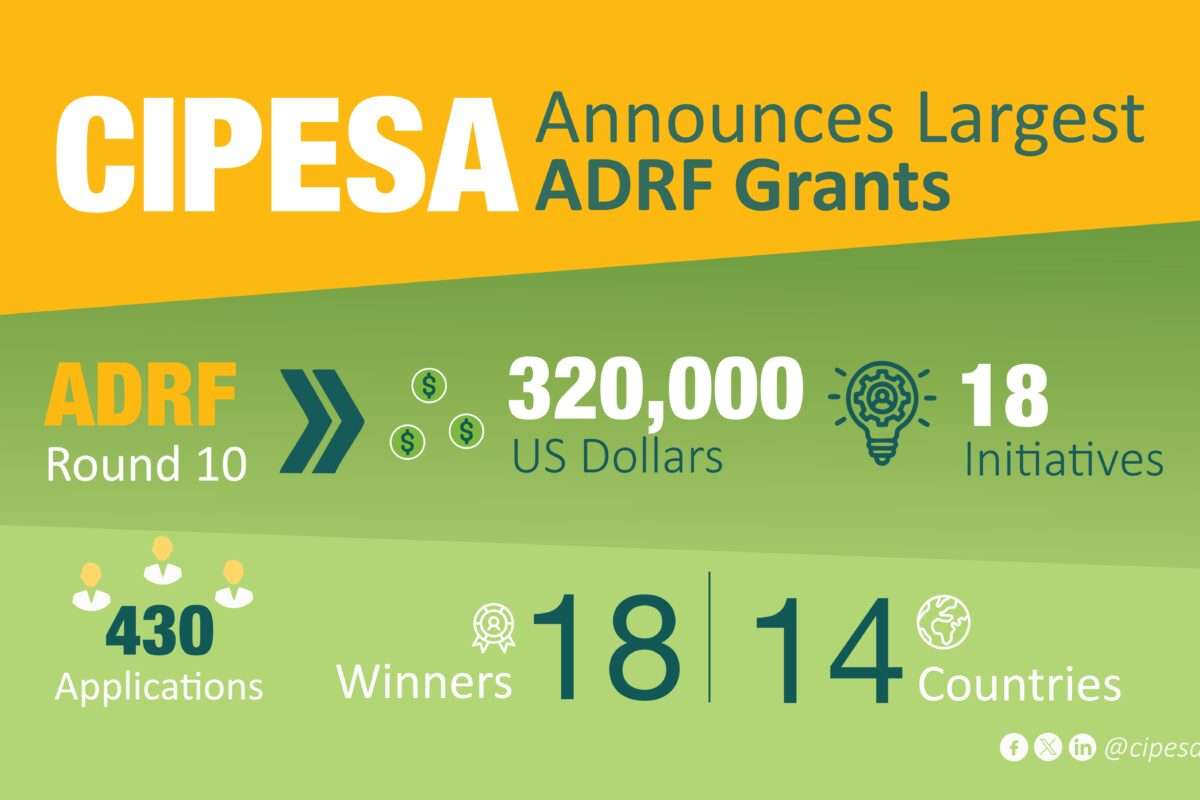
The Africa Digital Rights Fund (ADRF) has awarded USD 320,000 to 18 initiatives in 14 countries to support efforts to advance digital rights, inclusion, and online safety.

The grant recipients will promote responsible data governance, advance accessibility for persons with disabilities, counter Technology-Facilitated Gender-Based Violence (TFGBV), and support digital equity for refugees. Others will build digital resilience among at-risk groups, deepen youth engagement in digital democracy, and promote women’s participation in the governance of Artificial Intelligence (AI).

Based in the Democratic Republic of Congo, Ethiopia, Ghana, Guinea, Kenya, Liberia, Madagascar, Rwanda, South Africa, South Sudan, Tanzania, Uganda, Zambia and Zimbabwe, the awardees will tackle some of Africa’s most pressing digital challenges.

The latest awards under the 10th funding round bring to USD 1.3 million, the total amount the Collaboration on International ICT Policy for East and Southern Africa (CIPESA) has disbursed under the ADRF. The fund was launched in 2019 to support organisations advancing digital rights in the face of limitations of reach, skills, resources and consistency in engagement.

“The overwhelming number of applications received in this round reflects the changing funding landscape for digital rights and democracy in Africa,” said Dr. Wairagala Wakabi, CIPESA’s Executive Director. “We are excited that the ADRF continues to bridge the prevailing funding gap and expand into new geographies and constituencies.”

The funding round received the largest number of applicants ever (430) and has expanded ADRF’s footprint into new countries such as Guinea, Liberia and Madagascar, and new beneficiary groups including youths, migrants, and a National Human Rights Institute (NHRI). The four most recent calls for proposals – Rounds eight, seven, six and five –  received 130, 280, 283 and 120 applications respectively.

Applications went through several rounds of reviews by two internal committees at CIPESA and an external committee of independent experts.

Overview of ADRF 10 Grantees

Digital Accessibility for Persons with Disabilities

The Rwanda-based Organisation d’Integration et de Promotion des Personnes Atteintes d’Albinisme (OIPPA) will build digital literacy and online safety skills for youth with disabilities, and conduct accessibility audits of government online platforms. In Ghana, Open Knowledge will enhance capacity and awareness of accessibility standards among civil society, parliamentary committees, and communications service providers.

Meanwhile, the Zimbabwe Council for the Blind will conduct accessibility audits of public sector websites, provide training in inclusive design, and advocate for implementation of inclusion and equity  under the country’s recently launched AI Strategy. The three initiatives will be anchored in CIPESA’s Disability and ICT Accessibility Framework Indicators.

The ADRF’s first NHRI grantee, the Ethiopia Human Rights Commission (EHRC), will strengthen staff capacity in digital inclusion and accessibility for persons with disabilities, and mainstream these principles into its broader human rights monitoring and oversight mandate.

Youth Engagement

Restless Development in Uganda will empower young media professionals and influencers to champion digital rights. Using its Youth Hack Methodology, the initiative will co-create innovative digital rights campaigns that combat disinformation and promote platform accountability.

AI Governance

As AI development and governance conversations continue to take root in Africa, women remain largely excluded. Women in Data Science and AI Zambia will build skills in ethical AI and algorithmic bias detection, and establish a national network to amplify women’s voices in Zambia’s AI policy conversations.

Technology-Facilitated Gender-Based Violence (TFGBV)

Given the gaps in state actors’ understanding of digital harms and the need to equip them with practical tools and guidance, ALT Advisory will develop and pilot adjudication training materials for judicial officers in Kenya and South Africa. These materials will address online harms such as TFGBV, disinformation, and digital rights violations.

Research ICT Africa will examine the drivers of TFGBV in South Africa, identifying regulatory and AI ethics gaps. Findings will inform workshops and policy discussions aimed at strengthening national responses and safer digital environments.

In Zambia, Asikana Network will develop a safety toolkit with reporting guides, evidence collection tips and referral resources. This will be complemented by digital safety labs for women to build skills in managing online risks and responding to incidents.

In Madagascar, Communication Idea Development (CID) will counter gender-based disinformation and hate speech through digital literacy campaigns and workshops targeting organisations and activists working in Antananarivo, Boeny, and Vakinankarata.

Data Governance

Building on Liberia’s ongoing national data governance journey, including support from the African Union and CIPESA to develop a Data Governance Policy, the West Africa ICT Action Network (WAICTNet) will build awareness of data rights and support stakeholder readiness ahead of the launch of the Policy and the enactment of the Data Protection and Privacy Act (2024).

Similarly, Amnesty International Kenya’s Privacy First Team will engage Kenyan university students to understand data rights and promote transparent data governance in line with the Data Protection Act of 2019.

Technology and Migration

In Kenya, Haki Na Sheria will examine cross-border data collection and sharing under the Shirika Plan that promotes refugee inclusion and settlement, highlighting risks such as surveillance and exclusion. The project will focus on the Dabaab Complex – the world’s largest refugee camp – offering digital rights literacy sessions and producing data rights guides in Somali and Swahili.

In South Sudan, the Lim Nguen Foundation will build digital literacy and safety among refugees and Internally Displaced Persons (IDPs) in the Gorom and Juba camps. The project will establish “Digital First Responders” to support survivors of TFGBV, particularly women and girls.

Digital Resilience

Hexabelt, in partnership with Eleza Fact, a Congolese disinformation and fact-checking initiative, will strengthen the digital resilience of journalists in Kinshasa and Lumbubashi through hands-on training, newsroom security audits, and cybersecurity drills.

Across the border, the Tanzania Human Rights Defenders Coalition (THRDC) will combine legal assistance, strategic litigation, and emergency support to safeguard environmental defenders and journalists from digital threats.

Information Integrity

In the aftermath of Guinea’s presidential election, tensions remain high ahead of the May 2026 legislative and municipal elections. Djikke Media will deliver workshops on fact-checking, open source investigations, digital hygiene, and deepfake detection.

In Uganda, a new knowledge agency – the House of Seshat – is being supported to explore how social media and generative AI are shaping political discourse and political accountability.
Building Digital Safety and Agency for Young Women in Somalia

By Digital Shelter |

Digital inclusion is often framed as access and numbers – how many people are trained, device ownership, and how many users are connected. In Somalia, however, the reality is far more complex. While recent data suggest that internet penetration has reached approximately 55 percent of the population, and there are over 10 million internet users, social media adoption remains low and skewed toward male users, with women constituting a smaller proportion of those who are online.

Meanwhile, the political and civic space remains constrained. Due to protracted conflict, fragmented governance and insecurity, Somalia is classified as “Not Free” in global democracy assessments. The country also ranks near the bottom in press freedom indices, with journalists and media houses facing threats, harassment, arbitrary closures, and censorship pressures, particularly in conflict-affected regions, making open expression online and offline perilous.

Young Somali women are joining digital spaces shaped by these fragile conditions, coupled with unequal power relations and persistent safety concerns. Many are navigating unstable job markets, expectations to contribute to family livelihoods, and social norms that continue to question women’s visibility and voice, both online and offline. In such a context, digital upskilling is not merely technical but rather deeply social, economic, and political. If approached narrowly, it risks reproducing existing exclusions by focusing only on tools and outputs.

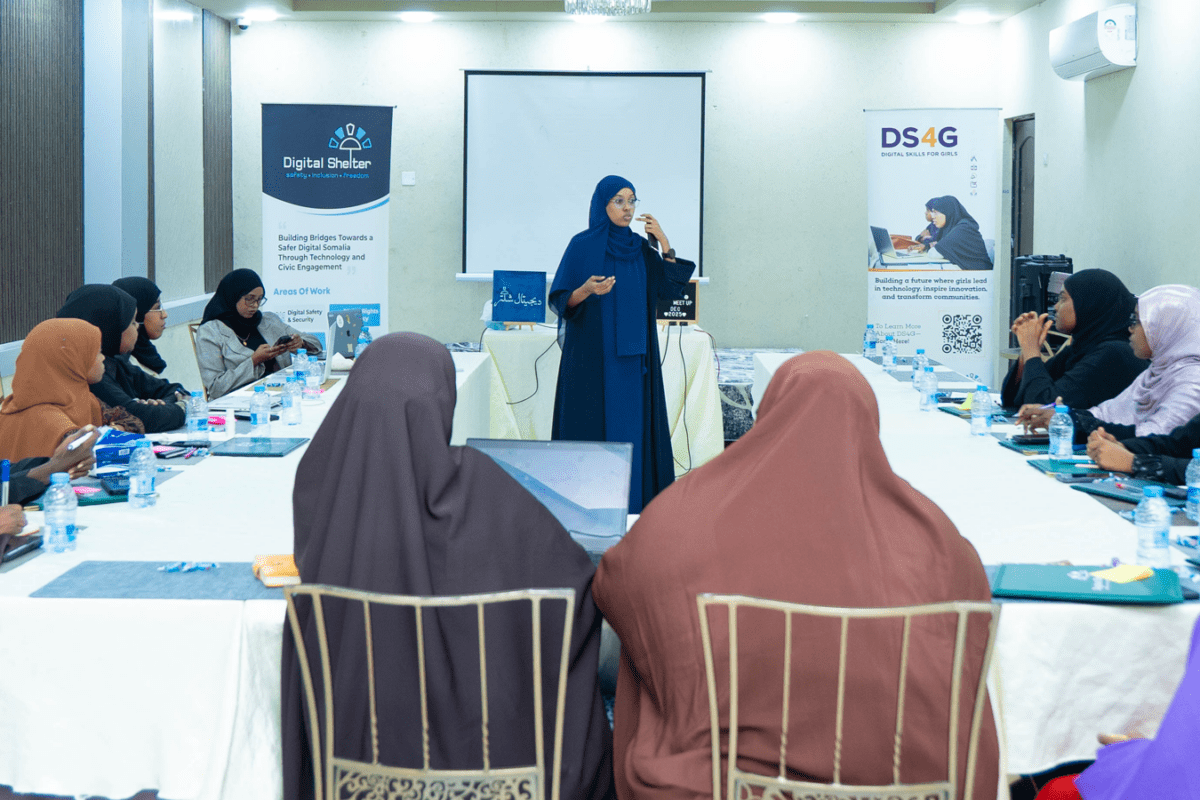
The Digital Skills for Girls (DS4G) programme by Digital Shelter is designed with this in mind, treating digital skilling and inclusion not as isolated competencies but as entry points into broader questions of participation, agency, and voice within Somalia’s evolving digital ecosystem. Combining practical digital skills, digital safety and rights awareness, DS4G has supported 35 women and girls, conducted monthly meet ups and stakeholder engagements to empower young Somali women.

With initial funding from AccessNow in 2024, the US funding cuts affected the continuity of DS4G. A discretionary award under the Africa Digital Rights Fund (ADRF) – an initiative of the Collaboration on International ICT Policy for East and Southern Africa (CIPESA)—supported continued implementation through 2025.

As noted by Ali, “At a time when many organisations were forced to scale back activities due to funding instability, CIPESA’s discretionary support allowed Digital Shelter to remain operational and responsive, ensuring that young women continued to access skills and learning spaces designed to support meaningful participation in digital, social and civic life”. He added that through DS4G, Digital Shelter had strengthened its role as a trusted, women-centered digital rights actor with a replicable programme model.

The DS4G’s sessions included graphic design, personal branding, emerging technologies, data protection and privacy, online threats and risks, and career development. A key component of DS4G was the Cyber Safety for Women event, which reinforced digital safety as a collective concern. The event featured a documentary screening on lived digital experiences and panel discussions on gender, online safety, and participation.

“DS4G recognised that technical skills alone are insufficient unless young women are also equipped to navigate digital environments safely, communicate confidently and position themselves for future opportunities,” said Digital Shelter’s Executive Director, Abdifatah Ali.

According to Digital Shelter, the inclusion of graphic design in the DS4G programme was a strategic one. The team argues that sitting at the intersection of creativity, communication, and influence, design shapes how information is interpreted, whose stories are amplified, and which messages gain traction. For the participants of DS4G, many of whom were students or recent graduates, it offered an accessible entry into digital work.

“As the training progressed, participants moved beyond executing tasks to interrogating purpose and impact, asking who messages are for, what they communicate, and how design can support causes, campaigns, and community conversations,” said Ayan Khalif, Digital Shelter’s Program Manager.

Indeed, participant feedback reflects positive outcomes – both skills acquisition and agency. “Before this project, I used social media without thinking much about safety. Now I understand how to protect myself online and how important digital security is for women like us,” said one participant. As part of reflection exercises, participants explored how design could support community initiatives, advocacy efforts and communicate messages. Another participant stated, “The monthly meetups helped me gain confidence. Speaking in front of others was difficult at first, but now I feel more comfortable expressing my ideas.”

The DS4G initiative has empowered a cohort of young women to navigate digital spaces with confidence and security, equipped with skills to exploit economic opportunities, advocate for change, and engage safely and confidently in community affairs.

Applications are Open for a New Round of Africa Digital Rights Funding!

Announcement |

The Collaboration on International ICT Policy for East and Southern Africa (CIPESA) is calling for proposals to support digital rights work across Africa.

This call for proposals is the 10th under the CIPESA-run Africa Digital Rights Fund (ADRF) initiative that provides rapid response and flexible grants to organisations and networks to implement activities that promote digital rights and digital democracy, including advocacy, litigation, research, policy analysis, skills development, and movement building.

 The current call is particularly interested in proposals for work related to:

  • Data governance including aspects of data localisation, cross-border data flows, biometric databases, and digital ID.
  • Digital resilience for human rights defenders, other activists and journalists.
  • Censorship and network disruptions.
  • Digital economy.
  • Digital inclusion, including aspects of accessibility for persons with disabilities.
  • Disinformation and related digital harms.
  • Technology-Facilitated Gender-Based Violence (TFGBV).
  • Platform accountability and content moderation.
  • Implications of Artificial Intelligence (AI).
  • Digital Public Infrastructure (DPI).

Grant amounts available range between USD 5,000 and USD 25,000 per applicant, depending on the need and scope of the proposed intervention. Cost-sharing is strongly encouraged, and the grant period should not exceed eight months. Applications will be accepted until November 17, 2025. 

Since its launch in April 2019, the ADRF has provided initiatives across Africa with more than one million US Dollars and contributed to building capacity and traction for digital rights advocacy on the continent.  

Application Guidelines

Geographical Coverage

The ADRF is open to organisations/networks based or operational in Africa and with interventions covering any country on the continent.

Size of Grants

Grant size shall range from USD 5,000 to USD 25,000. Cost sharing is strongly encouraged.

Eligible Activities

The activities that are eligible for funding are those that protect and advance digital rights and digital democracy. These may include but are not limited to research, advocacy, engagement in policy processes, litigation, digital literacy and digital security skills building. 

Duration

The grant funding shall be for a period not exceeding eight months.

Eligibility Requirements

  • The Fund is open to organisations and coalitions working to advance digital rights and digital democracy in Africa. This includes but is not limited to human rights defenders, media, activists, think tanks, legal aid groups, and tech hubs. Entities working on women’s rights, or with youth, refugees, persons with disabilities, and other marginalised groups are strongly encouraged to apply.
  • The initiatives to be funded will preferably have formal registration in an African country, but in some circumstances, organisations and coalitions that do not have formal registration may be considered. Such organisations need to show evidence that they are operational in a particular African country or countries.
  • The activities to be funded must be in/on an African country or countries.

Ineligible Activities

  • The Fund shall not fund any activity that does not directly advance digital rights or digital democracy.
  • The Fund will not support travel to attend conferences or workshops, except in exceptional circumstances where such travel is directly linked to an activity that is eligible.
  • Costs that have already been incurred are ineligible.
  • The Fund shall not provide scholarships.
  • The Fund shall not support equipment or asset acquisition.

Administration

The Fund is administered by CIPESA. An internal and external panel of experts will make decisions on beneficiaries based on the following criteria:

  • If the proposed intervention fits within the Fund’s digital rights priorities.
  • The relevance to the given context/country.
  • Commitment and experience of the applicant in advancing digital rights and digital democracy.
  • Potential impact of the intervention on digital rights and digital democracy policies or practices.

The deadline for submissions is Monday, November 17, 2025. The application form can be accessed here.

Democratising Big Tech: Lessons from South Africa’s 2024 Election

By Jean-Andre Deenik | ADRF

South Africa’s seventh democratic elections in May 2024 marked a critical turning point — not just in the political sphere, but in the digital one too. For the first time in our democracy’s history, the information space surrounding an election was shaped more by algorithms, platforms, and private tech corporations than by public broadcasters or community mobilisation.

We have entered an era where the ballot box is not the only battleground for democracy. The online world — fast-moving, largely unregulated, and increasingly dominated by profit-driven platforms — has become central to how citizens access information, express themselves, and participate politically.

At the Legal Resources Centre (LRC), we knew we could not stand by as these forces influenced the lives, choices, and rights of South Africans — particularly those already navigating inequality and exclusion. Between May 2024 and April 2025, with support from the African Digital Rights Fund (ADRF), we implemented the Democratising Big Tech project: an ambitious effort to expose the harms of unregulated digital platforms during elections and advocate for transparency, accountability, and justice in the digital age.

Why This Work Mattered

The stakes were high. In the run-up to the elections, political content flooded platforms like Facebook, YouTube, TikTok, and X (formerly Twitter). Some of it was civic-minded and constructive — but much of it was misleading, inflammatory, and harmful.

Our concern wasn’t theoretical. We had already seen how digital platforms contributed to offline violence during the July 2021 unrest, and how coordinated disinformation campaigns were used to sow fear and confusion. Communities already marginalised — migrants, sexual minorities, women — bore the brunt of online abuse and harassment.

South Africa’s Constitution guarantees freedom of expression, dignity, and access to information. Yet these rights are being routinely undermined by algorithmic systems and opaque moderation policies, most of which are designed and governed far beyond our borders. Our project set out to change that.

Centering People: A Public Education Campaign

The project was rooted in a simple truth: rights mean little if people don’t know they have them — or don’t know when they’re being violated. One of our first goals was to build public awareness around digital harms and the broader human rights implications of tech platforms during the elections.

We launched Legal Resources Radio, a podcast series designed to unpack the real-world impact of technologies like political microtargeting, surveillance, and facial recognition. Our guests — journalists, legal experts, academics, and activists — helped translate technical concepts into grounded, urgent conversations.

We spoke to:

Alongside the podcasts, we used Instagram to host

Holding Big Tech to Account

A cornerstone of the project was our collaboration with Global Witness, Mozilla, and the Centre for Intellectual Property and Information Technology Law (CIPIT). Together, we set out to test whether major tech companies (TikTok, YouTube, Facebook, and X) were prepared to protect the integrity of South Africa’s 2024 elections. To do this, we designed and submitted controlled test advertisements that mimicked real-world harmful narratives, including xenophobia, gender-based disinformation, and incitement to violence. These ads were submitted in multiple South African languages to assess whether the platforms’ content moderation systems, both automated and human, could detect and block them. The findings revealed critical gaps in platform preparedness and informed both advocacy and public awareness efforts ahead of the elections.

The results were alarming.

  • Simulated ads with xenophobic content were approved in multiple South African languages;
  • Gender-based harassment ads directed at women journalists were not removed;
  • False information about voting — including the wrong election date and processes — was accepted by TikTok and YouTube.

These findings confirmed what many civil society organisations have long argued: that Big Tech neglects the Global South, failing to invest in local language moderation, culturally relevant policies, or meaningful community engagement. These failures are not just technical oversights. They endanger lives, and they undermine the legitimacy of our democratic processes.

Building an Evidence Base for Reform

Beyond exposing platform failures, we also produced a shadow human rights impact assessment. This report examined how misinformation, hate speech, and algorithmic discrimination disproportionately affect marginalised communities. It documented how online disinformation isn’t simply digital noise — it often translates into real-world harm, from lost trust in electoral systems to threats of violence and intimidation.

We scrutinised South Africa’s legal and policy frameworks and found them severely lacking. Despite the importance of online information ecosystems, there are no clear laws regulating how tech companies should act in our context. Our report recommends:

  • Legal obligations for platforms to publish election transparency reports;
  • Stronger data protection and algorithmic transparency;
  • Content moderation strategies inclusive of all South African languages and communities;
  • Independent oversight mechanisms and civil society input.

This work is part of a longer-term vision: to ensure that South Africa’s digital future is rights-based, inclusive, and democratic.

Continental Solidarity

In April 2025, we took this work to Lusaka, Zambia, where we presented at the Digital Rights and Inclusion Forum (DRIF) 2025. We shared lessons from South Africa and connected with allies across the continent who are also working to make technology accountable to the people it impacts.

What became clear is that while platforms may ignore us individually, there is power in regional solidarity. From Kenya to Nigeria, Senegal to Zambia, African civil society is uniting around a shared demand: that digital technology must serve the public good — not profit at the cost of people’s rights.

What Comes Next?

South Africa’s 2024 elections have come and gone. But the challenges we exposed remain. The online harms we documented did not begin with the elections, and they will not end with them.

That’s why we see the Democratising Big Tech project not as a one-off intervention, but as the beginning of a sustained push for digital justice. We will continue to build coalitions, push for regulatory reform, and educate the public. We will work with journalists, technologists, and communities to resist surveillance, expose disinformation, and uphold our rights online.

Because the fight for democracy doesn’t end at the polls. It must also be fought — and won — in the digital spaces where power is increasingly wielded, often without scrutiny or consequence.

Final Reflections

At the LRC, we do not believe in technology for technology’s sake. We believe in justice — and that means challenging any system, digital or otherwise, that puts people at risk or threatens their rights. Through this project, we’ve seen what’s possible when civil society speaks with clarity, courage, and conviction.

The algorithms may be powerful. But our Constitution, our communities, and our collective will are stronger.

CIPESA-Run ADRF Awards USD 140,000 to Eleven Digital Democracy Non-Profits Amidst Funding Cuts

By Ashnah Kalemera |

With many funders shifting their funding priorities about human rights, governance and livelihood issues, African Civil Society Organisations (CSOs), human rights defenders and activists have been severely impacted. As a result, critical programming on civic participation, tech accountability, digital rights and digital inclusion, which was scoring wins in the face of growing authoritarianism on the continent, has been crippled. 

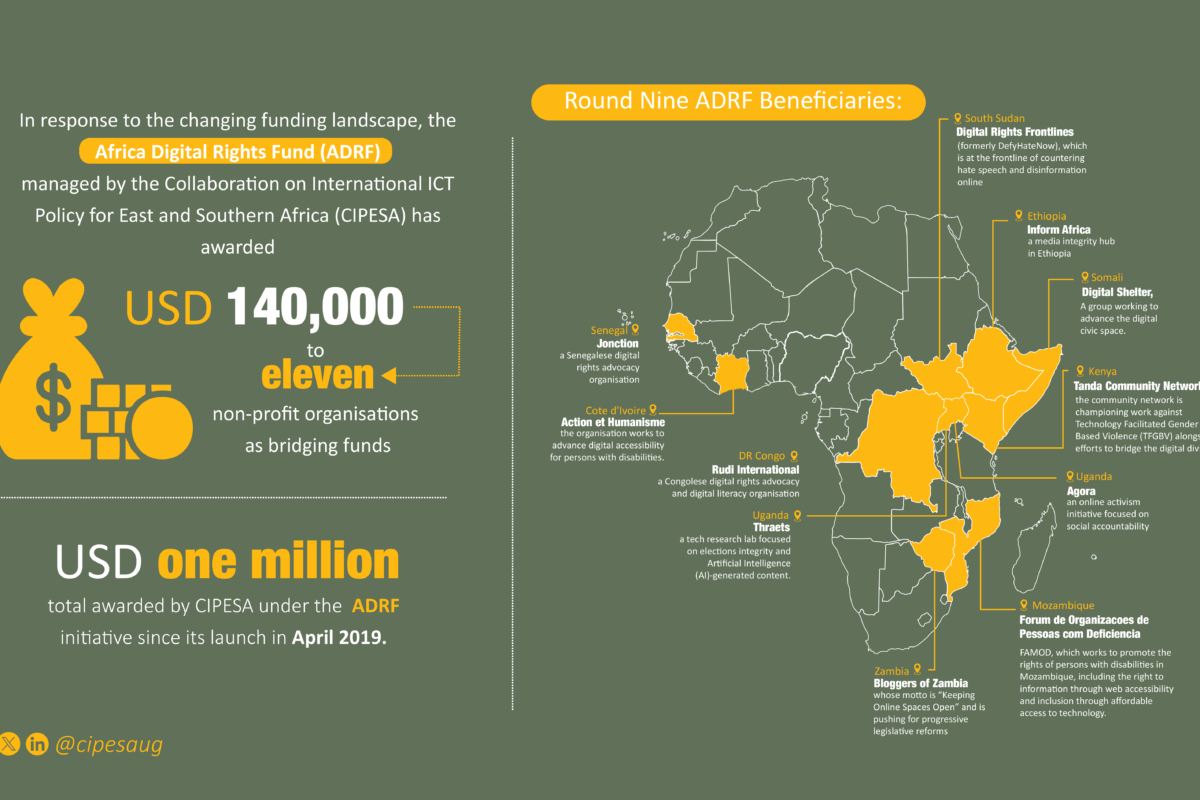
In response to this changing funding landscape, the Africa Digital Rights Fund (ADRF) managed by the Collaboration on International ICT Policy for East and Southern Africa (CIPESA) has awarded USD 140,000 to eleven non-profit organisations as bridging funds. The discretionary awards are aimed at bridging the gap in operations and programming faced by CIPESA’s past and present partners and subgrantees. The funds bring to USD one million the total awarded by CIPESA under the  ADRF initiative since its launch in April 2019.

According to CIPESA’s Executive Director, Dr. Wairagala Wakabi, “anchor institutions such as CIPESA have lost funding and that means many crucial but smaller actors across the continent have equally been affected”. Nonetheless, CIPESA is committed to “defending digital democracy amidst the steady  democratic regression we are witnessing, and the cruciality of funding organisations that are battling rising authoritarianism cannot be overemphasised,” said Wakabi.

The recipient organisations work on various digital democracy issues in 10 countries – Cote d’Ivorie, the Democratic Republic of Congo (DR Congo), Ethiopia, Kenya, Mozambique, Senegal, Somalia, South Sudan, Uganda and Zambia. These organisations work on catalytic issues in difficult contexts and have established track records. The selection of beneficiaries was guided by a survey on the impact of funding termination by the United States (US) government. 

Round Nine ADRF Beneficiaries:

  1. Action et Humanisme – based in Cote d’Ivoire, the organisation works to advance digital accessibility for persons with disabilities. 
  2. Agora, an online activism initiative focused on social accountability in Uganda.
  3. Bloggers of Zambia, whose motto is “Keeping Online Spaces Open” and is pushing for progressive legislative reforms in Zambia.
  4. Digital Rights Frontlines (formerly DefyHateNow), which is at the frontline of countering hate speech and disinformation online in South Sudan.
  5. Digital Shelter, a Somali group working to advance the digital civic space.
  6. Forum de Organizacoes de Pessoas com Deficiencia – FAMOD, which works to promote the rights of persons with disabilities in Mozambique, including the right to information through web accessibility and inclusion through affordable access to technology.
  7. Inform Africa, a media integrity hub in Ethiopia.
  8. Jonction, a Senegalese digital rights advocacy organisation.
  9. Thraets, a tech research lab focused on elections integrity and Artificial Intelligence (AI)-generated content.
  10. Rudi International, a Congolese digital rights advocacy and digital literacy organisation.
  11. Tanda Community Network, based in Kibera, Nairobi, Kenya, the community network is championing work against Technology Facilitated Gender Based Violence (TFGBV) alongside efforts to bridge the digital divide.

The survey revealed that following the suspension and eventual termination of U.S. funding, many organisations had reduced the scope of their activities, scaled back staff salaries and benefits, and in a number of cases laid off staff. Over 90% of the organisations surveyed  were uncertain about their ability to maintain operations beyond two months. Only one of the surveyed organisations said it would remain fully operational if it did not receive additional funding.

A staggering 92% of respondents had reduced programming scope and one in three respondent organisations reported that they had slashed staff. For one recipient, over 60% of the team was “not able to continue working in any capacity going forward”. The percentage of US funding was between 20% and 60% of the annual budgets of the organisations surveyed.

Even in the face of a grim funding future, civil society organisations that face harassment and operate in volatile political environments remain resilient. As the head of one of the grant beneficiary organisations stated: “Unfortunately, we do not have the luxury to cease activities”. The same unwavering commitment to continue operations was demonstrated by the DR Congo-based recipient whose digital literacy training centre was robbed during the January 2025 rebel attacks in Goma.

The ADRF provides financial support to organisations and networks to overcome barriers to accessing funding and building a stronger movement of digital and human rights advocates in Africa. The Fund has also built the capacity of initiatives in advocacy, public communication, research and data-for-advocacy. Supported initiatives commend the ADRF as a unique funding initiative that has broken ranks with traditional funders’ structure. See previous ADRF recipients here.

The discretionary round of the ADRF was supported by funding from the Skoll Foundation, the Wellspring Philanthropic Fund and the Ford Foundation. Other supporters of the ADRF in the past include the Center for International Private Enterprise (CIPE), the Swedish International Development Cooperation Agency (Sida), the German Society for International Cooperation Agency (GIZ), the Omidyar Network, the Hewlett Foundation, the Open Society Foundations and New Venture Fund (NVF).

1 2 3 5