Namibia and Sierra Leone’s Digital Rights Record to be Assessed at the 38th Session of the Universal Peer Review

By Edrine Wanyama |

Namibia and Sierra Leone are among the countries that will undergo their Universal Periodic Review (UPR) at the upcoming 38th session of the United Nations Human Rights Council slated to take place in May 2021. The two countries have distinct human rights and governance track records, accompanied by  increasing digitalisation, making it important that the UPR recommendations for both states reflect the need for the protection of fundamental freedoms both online and offline.

Despite being coastal countries with direct connection to  submarine cables, internet penetration rates remain low – 36.8% in Namibia and 13.2 % in Sierra Leone. Namibia continues to suffer from high income inequality which exacerbates internet affordability and  service delivery. These factors contribute to its poor ranking at 84 out of the 100 countries assessed as part of  the 2020 Inclusive Internet Index on internet availability, affordability, relevance of content and readiness. For its part, Sierra Leone ranks at 57 out of 61 countries assessed by the Alliance for Affordable Internet on  internet affordability. Prevailing challenges include poor service delivery and reported  misappropriation of funds.

                See insights on digital access by our Africa Digital Rights Fund (ADRF) Grantee, Global Voices

Out of the 218 recommendations made to Namibia by 88 countries in the second cycle of the UPR in 2016, only one reference was made to freedom of expression and the press. Understandably, it is the highest ranked African country  on the global press freedom index – 23rd in  2019 and 2020 out of 180 countries assessed. Namibian Courts have also been instrumental in upholding freedom of expression and other related rights as reflected in a judgment in which an appeal by the Namibia Central Intelligence Service (NCIS) that sought to stop the publication of an article about corruption was dismissed. Similarly, the Supreme Court in 2018 ruled that the collection of licensed operators’ turnover by the Communications Regulatory Authority of Namibia was unconstitutional since the Universal Service Fund which is provided for by Section 57 of the Communications Act, 2009 (Act No. 8 of 2009) was not operational yet.

Nonetheless, there are freedom of expression challenges in Namibia including government threats to media independence, harsh criticisms of the media, calls to gag social media under the guise of  fighting misinformation and cybercrime, and preferential treatment accorded to state-owned media. Further, there are reported cases of harassment, assault and threats against media practitioners such as the assault of two journalists by the President’s Security Unit during the opening of the Covid-19 isolation facility. During the elections in 2019, there were blatant attacks on media practitioners over alleged influence of elections, while the government warned citizens against bullying and irresponsible use of social media platforms, which purportedly endangers lives. The publication of false or misleading statements on Covid-19 was outlawed in April 2020 with a potential penalty of a fine of up to 2,000 Namibian Dollars (USD 134) or imprisonment of up to six months. Since the outlaw, various incidents of arrests and detention of citizens have been reported.

On access to information, Namibia’s proposed access to information bill contains wide ranging exemptions that could negatively impact on the exercise of digital rights and freedoms if passed into law. Some of the notable exemptions include information and records pertaining to national security, proceedings of the cabinet, confidentiality of judicial functions, and information in possession of some public bodies.

In comparison, at the second UPR cycle, Sierra Leone received 213 recommendations from 88 countries, of which  seven recommendations were on freedom of expression. Ranked at 85 on the global press freedom index, the country continues to grapple with press freedom as witnessed in the arrests and arbitrary detention of individuals over online expression on allegations of incitement and subversion, false news and defamation. Moreover, the recent Independent Media Commission (IMC) Act 2020 creates room for censorship of media by empowering the Independent Media Commission to shut down media houses on ambiguous grounds of “public interest”. In July 2019, the IMC threatened  to suspend 12 media houses for non-payment of fines.

Progressive developments in Sierra Leone have included the cabinet move to decriminalise defamation and libel by repealing Part V of the Public Order Act . However, there have been instances where freedom of expression online has been undermined. In March 2018, the internet was shut down on the general election day consequently denying party affiliates an opportunity to receive results from the National Electoral Commission, and citizens and the media the opportunity to engage freely at this critical time. This block to digital access to information was contrary to Sierra Leone’s Access to Information law, 2013 which provides for disclosure of information held by public authorities or by persons providing public services. Notwithstanding the 2013 law’s promotion of openness, there are wide ranging exemptions  under Part II. These include, among others, information related  to national security and defense, international relations, investigations and law enforcement, economic and commercial interests related information.

On data protection, both countries are yet to enact legislation, which has left citizens’ right to privacy and personal data at risk of abuse and misuse. Amidst reports of state sponsored surveillance and online violence against women, the draft bill in Namibia has been undergoing consultations since early 2020. Sierra Leone’s Cybersecurity Bill engenders aspects of privacy and data protection. However, it is yet to be passed by parliament.

As part of the upcoming UPR for both countries, it is important to fasttrack the protection of fundamental human rights and basic freedoms both online and offline against the national, regional, and international human rights obligations. Accordingly, the Collaboration on International ICT Policy for East and Southern Africa (CIPESA) and Small Media, together with civil society organisations made joint stakeholder submissions on digital rights in the two countries. The Sierra Leone submission was made in partnership with Campaign for Human Rights and Development International, Sierra Leone Reporters Union, Citizens Advocacy Network and the The Institute for Governance Reform while that for Namibia was in partnership with the Internet Society (ISOC) Namibia chapter.

The submissions among others recommend for the two countries to:

  • Repeal and or amend laws to remove erroneous restrictions on freedom of expression and access to information. Notably, for Namibia – Article 21(2) of the Constitution, the Protection of Information Act, 1982, and Section 4 of Central Intelligence Services Act, 1997; and for Sierra Leone – Independent Media Commission Act, 2020
  • Uphold privacy of the individual by among others, repealing section 9 of the Communications Act (Namibia), and enacting Cybercrime, Data Protection and Privacy legislation through participatory and consultative processes (both countries)
  • Operationalise the Universal Service Funds and continue efforts to promote equitable access and inclusion for minority, marginalised and underserved communities
  • Abstain from arbitrary arrests and detention of journalists, media workers and critics over the exercise of their right to freedom of expression online or offline.
  • Comply with the established regional and international human rights standards and obligations on freedom of expression and access to information online and offline.

Read the full submissions, Namibia and Sierra Leone.
Nigeria Fails to Guarantee Human Rights for Marginalised Groups

By Babatunde Okunoye and Ashnah Kalemera |

With a population of over 190 million, Nigeria is Africa’s largest telecommunications market, boasting more telephone and internet users than any other country on the continent. Over the past 20 years, the country has transitioned from a military regime to a relative democracy, albeit with human rights challenges,  especially for marginalised populations and increasingly, in the online sphere.

With an internet penetration of 27%, millions of Nigerians have flocked online to communicate and express themselves in ways not possible during the decades of military rule. The internet and social media have become effective vehicles for channelling citizens’ criticism of government, and have also enabled journalists to quickly report and disseminate stories on corruption and poor service delivery.

However, the vigorous online activity of Nigerians has been met with stiff resistance from the political elite. Although sections 38 and 39 of the Nigerian Constitution guarantee freedom of thought and expression, a number of laws restrict free speech. Among them is the 2015 Cybercrime (Prohibition, Prevent) Act. Section 24 of this law which speaks to cyber-stalking is a major instrument for the prosecution of bloggers, journalists and critical voices online.

Similarly, sections 52 and 60 (chap. 7) of the Criminal Code provide that slander, libel and defamation are criminal offences punishable by imprisonment. Accusations of libel are used by state authorities against journalists and bloggers for critical or “negative” reporting. Meanwhile, although the Constitution guarantees the privacy of citizens’ correspondence, Nigeria has no specific legislation that protects data privacy of citizens offline and online.

As a United Nations (UN) member state, Nigeria underwent the third cycle human rights assessment under the Universal Periodic Review (UPR) mechanism during the 31st session of the Human Rights Council in November 2018. In its national report, the Nigeria delegation noted the development of a Cyber Security Strategy with key components on data protection and privacy. It added that the country was in the process of finalising a national action plan on business and human rights “in response to the call by the United Nations to address the negative impact of business on human rights.”

During the session, Nigeria went on to receive a total of 290 recommendations regarding human rights protection at legal and institutional level. Whereas digital rights including the right to privacy and the right to freedom of opinion and expression online were not reflected in the recommendations made to Nigeria, five from Australia, Italy, Canada, Ireland and Chile relating to freedom of association, expression, and privacy are implicitly relevant to the online sphere. Nigeria also received up to 14 recommendations on equality and non-discrimination, with regards to women and sexual minorities, which are relevant to internet freedom.

These recommendations echoed those in previous reviews  that remained largely unimplemented, with the internet freedom landscape characterised by censorship, arbitrary detentions and arrests of journalists, bloggers and citizens for comments made online. Obtaining access to public information also remained a challenge, as did access and affordability to the internet. Read more about UPR and internet Freedom in Nigeria under cycle one and two and recommendations submitted  by the Collaboration on International ICT Policy for East and Southern Africa (CIPESA), Small Media, and Paradigm Initiative

In March 2019, Nigeria went on to accept 240 of the 290 recommendations. It is reported that the Nigerian delegation stated that they did not support recommendations on rights of sexual minorities, on the grounds of being “against national values”. Provisions under section 4 of the Same Sex Marriage Prohibition Act prohibit the “registration of gay clubs, societies and organisations” as well as “the public show of same sex amorous relationship directly or indirectly”. If found guilty, the penalty is 10 years imprisonment.

As internet freedom advocacy in Nigeria continues, including via the push to pass the revised Digital Rights and Freedom Bill, and implementation of the recommendations from the 31st session of the Human Rights Council in preparation for Nigeria’s next UPR in November 2023, it is imperative that efforts emphasise the need for freedom of opinion, expression, association and assembly, online and offline, to be realised for all segments of society – including religious, ethnic and sexual minorities.

Championing Internet Freedom and Universal Periodic Review (UPR) at #FIFAfrica2019

By Sandra Acheng |
Due to the rise of internet usage, there is an increasing rate of abuse, threats, and attacks on the internet users’ which women usually fall prey to. The internet can lead to disruption and disinformation and this determines the intensifying need for defending digital human rights violations with a focus on freedom of expression, press freedom and digital rights. Human rights online is a topic that is often forgotten during discussions of human rights violations because the concept is still quite new without acknowledging the reality that human rights offline can translate online.  Many people usually face numerous human rights violations online but they are not even aware that their rights are being violated or where and who to report to in case this happens.
The growing rate of human rights violations online is a result of more people getting online and this greatly affects internet freedom.  Uganda experienced internet shutdowns by the government during elections in 2016 and this affected freedom of expression and online digital rights of users. Also, the introduction of Over the top (OTT) by the Ugandan Government last year in June 2018 has limited users from accessing and using the internet. The increased use of ICT has led to women facing abuse and violence more than ever for instance the growing rate of  Non Consensual distribution of images commonly done by intimate partner (NCII) commonly referred to as “Revenge Porn” is usually associated to morality and decency of women which violates their privacy, women’s rights as well as criminalizing and undermining women who exercise their right to sexual expression.
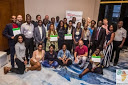
This year, Collaboration on International ICT Policy for East and Southern Africa (CIPESA) in partnership with Small Media convened a two days’ pre-event workshop on the 23rd and 24th September 2019 @FIFAfrica2019 at Ethiopian Sky Light Hotel for human rights defenders on UPR. It was an intense, interactive and fun training that gathered over 30 male and female participants from different African countries that are doing incredible work to champion freedom of expression, press freedom, and human rights online also known as digital rights to influence government and non-government actors in their country or others in defense of human rights. The two days’ workshop tackled;

  • Introduction to the Universal Periodic Review Advocacy Assembly
  • Making an Impact with the Universal Periodic Review

The understanding of UPR
The human rights system that previously existed was criticized for being selective (not all states, not all rights), non-collaborative, paralyzed by political games, therefore, the UPR came as a response to the Human Rights system because UPR is non-selective, collaborative and have no double standard. UPR is Universal Periodic Review and the first United Nations Human rights mechanism on Human rights online to create a more just world for everyone since it requires every UN member country to review, therefore, it gives entry to CSOs.
The UPR CYCLE
The universal periodic review happens every 4 to 5 years for 6 months. However, Countries have limited time to make recommendations.
How can internet freedom be championed in UPR?
Human rights review mechanism such as United Nations Universal Periodic Review provides a good opportunity to review human rights violations online among African countries and can be a good way of arguing that digital human rights are universal and hold African governments accountable on how they treat their citizens on this. Here are incredible ways internet freedom can be championed in UPR;

  • Building capacity of more human rights defenders and activists in African civil society organizations
  • Encourage collaborations at the national level; by bringing in new people during the periodic reviews of states doing the same work to get more people aware. Collaborations by group increase credibility because local NGOs collaborate with international bodies and togetherness is better.
  • Increase participation by involving different actors in CSO activism and human rights in different Africa civil society countries to lobby governments to submit recommendations.
  • Make UPR an expert mechanism because UPR is a political mechanism and it focuses on states which consider only national priorities.
  • Increase the time taken by each state to raise issues and make recommendations at Geneva because usually 50-100 states take the floor for 3-5 hours and make 4-5 recommendations which are limited time for each state to put the recommendations
  • Gather more activists and human rights defenders to convince African states to raise the issues of policy and laws during the UPR and take up recommendations made.
  • Showcase more research to make the UPR recommendations valuable.
  • Form a coalition in different African countries or states so that the group get accurate and real time information and participate in UPR which will give a sense of responsibility and commitment by different states to make submissions in time.

However, there are relevant tips or rules for advocacy of issues for considerations during the preparation of recommendations of a state under review;

  • The recommendation must be specific enough by mentioning specific laws and should be easy to follow up on the recommendations
  • It is good if the recommendations focus on only one issue.
  • It is better if the recommendations are action oriented.
  • Use Human rights language. Avoid languages that make the recommendations impossible.
  • Make the recommendations stronger by backing it up with references in your country for instance treaties or laws in your country.
  • Back up your recommendations from the African commission or other international bodies.
  • It is useful to put yourself in the shoe of the person you are trying to interest on your issues for instance on time.
  • Know your country very well in terms of internet freedom.
  • Prepare a statement of UPR for 2 weeks in about 10 countries.
  • It is good to make the presentation of recommendation a dialogue
  • It is always good to contact the person you are convincing before because they may not support your issues.
  • Note that not all diplomats are familiar with human rights online.
  • Pitch your idea.

There is need to build capacity, encourage collaborations and increase participation in Universal Periodic Review (UPR) process.

Senegal Fails to Prioritise Human Rights Online

By Ashnah Kalemera |
Senegal’s diverse media landscape helps it to attain relatively high scores in international press freedom rankings. It is ranked 50 out of 180 countries in the 2018 World Press Freedom Index, up from 79 in 2015. The country’s Constitution guarantees the right to freedom of expression thus: “Everyone shall have the right to freely express and disseminate his opinions by word, written word or image or peaceful march, provided that the exercise of these rights shall not undermine the honour of and respect due to other persons, nor threaten public order.”
However, freedom of expression online is restricted under various legislation including the Penal Code, 1965, Law No. 14/2017 on the Press Code and Law No. 2011-01 which governs the telecommunications sector. In 2018, the Senegalese government moved to tighten its grip on online communication after parliament passed a law regulating the internet, a move justified as necessary to stem the spread of misinformation. These laws have facilitated the arrest and prosecution of critical journalists and artists, including for content published online.
Meanwhile, although the country has had a privacy and data protection law for over a decade, the enforcement authority – the Commission of Personal Data (CDP) – has not been able to sufficiently fulfill its mandate due to resource limitations. Nonetheless, several private and public actors continue to collect personal data in Senegal without any regulatory enforcement by the CDP. This is the case for mandatory SIM card registration implemented by the Regulatory Authority for Telecommunications and Posts (ARTP) through mobile telecom operators and linked to the national identity database.
Article 5 of the Press Code provides that journalists and the media have “free access” to information but there are exemptions such as where the information is a “defense secret” or relates to “secret investigations” or regulations applicable to access to some sites or structures. However, Senegal remains without an access to information law to facilitate citizens’ requests for information and proactive disclosures, and there are widespread calls for a law to be passed in order to promote transparency and accountability.
Meanwhile, low affordability and poor quality of service further hinder adoption of technology in an otherwise thriving sector. Mobile telephony, for example, now offers solutions for virtual financial services ranging from banking services to payment services. Further, leading money transfer application WARI, which was founded in Senegal and remains hugely popular, has been adopted in many countries in West Africa. In the agriculture sector, MLouma, which connects sellers and buyers of agricultural products, has grown from 1,000 to 75,000 users since developing a version which allows users without smartphones or the internet to access the service, as well as integrating a payment service.
As a United Nations (UN) member state, Senegal underwent her third cycle human rights assessment under the Universal Periodic Review (UPR) mechanism during the 31st session of the Human Rights Council in November 2018. Digital rights did not feature explicitly in the 257 recommendations made regarding human rights protection at legal and institutional level. However, up to seven recommendations made by France, Chile, Sweden, Peru and Greece related to media rights and free speech. These recommendations echoed those in previous reviews  that remained largely unimplemented.
As part of Internet Freedom and UPR advocacy efforts at the Human Rights Council, the Collaboration on International ICT Policy for East and Southern Africa (CIPESA), Small Media, Jonction Senegal and the Senegal ICT Users Association (ASUTIC) made the following recommendations to UN members to consider putting forward to the Senegal delegation:

Key Issue/s Recommendations
Freedom of Expression
  • Amend Article 28 of the draft Electronic Communications Code to ensure judicial oversight over the regulator’s powers to impose any traffic management measures.
  • Reform press legislation, eliminating tough penalties for press offenses.
  • Uphold citizens’ rights to freedom of expression by discontinuing the practice of arrest and intimidation of critical journalists and artists.
Freedom of information and censorship of content
  • Provisions of the press code infringing freedom of information, notably Article 5, should be amended to provide clear definitions of information exempt from access by journalists. Meanwhile, Article 192 should be repealed.
  • Draft an access to information law in compliance with international human rights standards. The law should be drafted through participatory/consultative processes.
  • Reform the entire legal framework that restricts journalists’ freedom to inform or which promotes censorship, in particular articles 254 (Offense to the Head of State), 255 (False News),  and 258 (Defamation) of the Penal Code.
Equality and barriers to access
  • Take concrete and effective measures to lower barriers to access including extending rural infrastructure and promote a competitive industry to ensure easy and affordable internet access for underserved communities.
  • Enforce licensing obligations on telecommunications operators in order to improve the quality of service offered.
Right to data protection and privacy on the Internet
  • Take concrete measures for the effective implementation of Law No. 2008-12 of 25 January 2008 to ensure the protection of personal data.
  • Allocate sufficient resources (financial, logistical, and personnel) to the Personal Data Commission (CDP) to support fulfilment of its mandate
Freedom of creation and innovation
  • Prioritise funding and subsidies for digital literacy and innovation programmes

See the full advocacy brief here. French version is also available here.  
On March 14, 2019, Senegal accepted 229 out of the 257 recommendations it received in the  UPR assessment. A full list of the accepted and rejected recommendations is not yet available so it remains unclear whether recommendations accepted prioritise reforms to fully guarantee citizens’ rights – online and offline – to freedom of expression, access to information, and to privacy.
 

Ethiopia’s Digital Rights Record on the Spot at May 2019 Universal Peer Review

By Ashnah Kalemera |
Despite the promises and efforts made by Ethiopia’s new Prime Minister, Abiy Ahmed Ali, to transform the country after years of political repression and state control of major forms of media, the country is yet to experience substantive change in the state of digital rights.
Restrictions to freedom of expression, privacy, and access to information remain in force including through legislation such as the 2008 Mass Media and Freedom of Information law, the 2009 Anti-Terrorism law, the Computer Crime law of 2016 and the Telecom Fraud Offences law (2012). While the establishment of the Advisory Law Reforms Committee, with a mandate to review existing laws to bring them in line with human rights standards, is a welcome development, pledges to reform problematic legislation are yet to be delivered.
Meanwhile, since November 2015, the Ethiopian government has consistently blocked and initiated national or regional shutdowns during public protest and exams, on grounds of national security. Whereas access to affected regions was restored during reforms in early 2018, there were reports of a shutdown in the eastern part of country in August 2018.   
At its upcoming Universal Periodic Review (UPR) by the Human Rights Council scheduled for May 14, 2019, Ethiopia should be tasked to implement reforms that fundamentally promote and protect citizens’ rights both online and offline.

What is the UPR? It’s a full assessment of a country’s human rights. Every United Nations (UN) member state has its human rights record assessed, and all UN member states are involved in the review process. It happens every four-and-a-half years, for every state.

Such reforms should include the amendment of the 2008 Mass Media and Freedom of Information law, the 2009 Anti-Terrorism law, the Computer Crime law of 2016 and the 2012 Telecom Fraud Offences law to bring them in line with international human rights instruments on freedom of expression. Further, changes should be implemented to curb state surveillance of citizens, including by introducing independent judicial oversight over interception of communications.
In this UPR advocacy brief, the Collaboration on International ICT Policy in East and Southern Africa (CIPESA) and Small Media analyse the state of freedom of expression, freedom of information, the right to equal access and opportunity, as well as data protection and privacy developments in Ethiopia since the previous UPR review in April 2014. We make recommendations for consideration by UN member states at the upcoming review of Ethiopia.
See the full brief.