
CIPESA and UNESCO Partner on Project to Strengthen Climate Change Information Integrity in Africa

By Juliet Nanfuka |

The Collaboration on International ICT Policy for East and Southern Africa (CIPESA), in partnership with UNESCO, is launching a new project to address the growing challenge of climate change disinformation and strengthen information integrity in the public sphere.

At a time when false and misleading narratives are weakening public trust and distorting public understanding of the climate crisis, the initiative will support fact-based public discourse and strengthen the ability of journalists and civil society actors to engage with climate issues using credible information.

Reliable climate information is essential to informed public debate and effective climate action. Yet journalists, content creators, and Civil Society Organisations (CSOs) working on climate and environmental issues often lack the resources and skills needed to verify information, identify disinformation and effectively communicate accurate findings to the public.

CIPESA’s research has documented some of these challenges. Journalists and activists working on climate-related issues, including environment, land and extractives, face significant information gaps and have to navigate disinformation and misinformation campaigns, often with limited avenues to independently verify information.

The initiative recognises that public communication relies on facts and the ability of credible voices to deliver information. The project is supported by the UNESCO-led Global Initiative for Information Integrity on Climate  Change, which was established to investigate, expose, and dismantle disinformation related to climate change.

The project will respond to these challenges by combining research, capacity building, and public communication. Research will map how climate disinformation spreads across African digital ecosystems, who drives it, and what tactics they use. Findings will inform a Fact-checking Masterclass at the upcoming 2026 Forum on Internet Freedom in Africa, an online training for journalists and civil society actors, and a communications campaign aimed at strengthening public awareness of climate disinformation and promoting credible sources of information.

This approach builds on the Declaration on Information Integrity on Climate Change, which commits its signatories to protect information integrity on climate change at international, national, and local levels. It also reflects the broader United Nations Global Principles for Information Integrity, which envision “an information ecosystem that delivers choice, freedom, privacy and safety for all,” and support those working to share facts in the public interest.

Reporting on climate change in Africa is increasingly taking place in a difficult information environment. Journalists, activists and human rights defenders covering environmental, land and extractives issues face surveillance, censorship, online harassment and coordinated disinformation campaigns. CIPESA’s research has documented these risks, as well as the limited digital security resources available to many of those doing this work.

The project will focus on Uganda and Ethiopia, both of which are experiencing a rise in misleading narratives related to climate change in their digital ecosystems. These narratives frequently revolve around issues such as deforestation, dam and water system developments, droughts, landslides, oil and gas exploration.

The project’s research will also track the information environment, including the public positions and communications of African governments ahead of the 31st Session of the Conference of Parties (COP31) scheduled for November 2026 in Ankara, Türkiye. The conference brings together nearly 200 nations under the United Nations Framework Convention on Climate Change (UNFCCC) to negotiate climate action, set emission-reduction targets, and coordinate policies to limit global warming.

Looking further ahead, Ethiopia’s hosting of the 32nd session of the (COP32) in 2027, will bring the global climate conversation back to Africa for the fifth time after Kenya (2006), South Africa (2011), Morocco (2016), and Egypt (2022). This makes the CIPESA-UNESCO partnership particularly timely.  As technology increasingly shapes how people access, interpret and contest information about the environment, there is a growing need to understand the evolving relationship between digital platforms, climate narratives, and the integrity of public debate.
African Perspectives on Operationalising UNESCO’s Guidelines for Regulating Digital Platforms

By Juliet Nanfuka |

Across the world, governments are introducing laws to regulate online content. Many of these laws contain provisions that may lead to the increasing removal of legitimate expression as opposed to harmful and illegal content. In turn, the global community continues to grapple with the question of how harmful online content should best be moderated in a manner that does not undermine citizens’ right of access to information and freedom of expression.

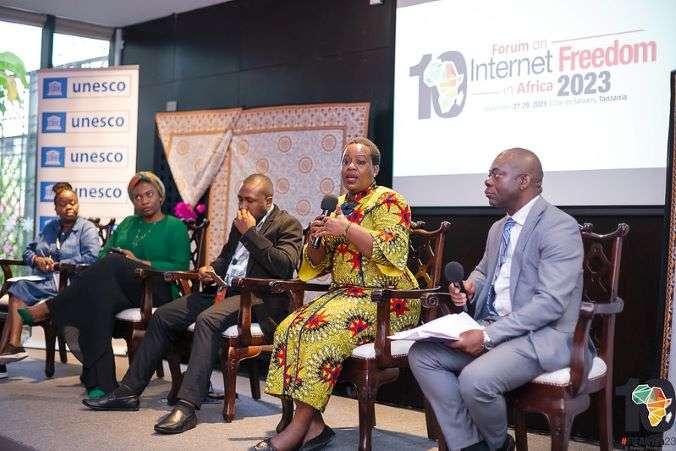
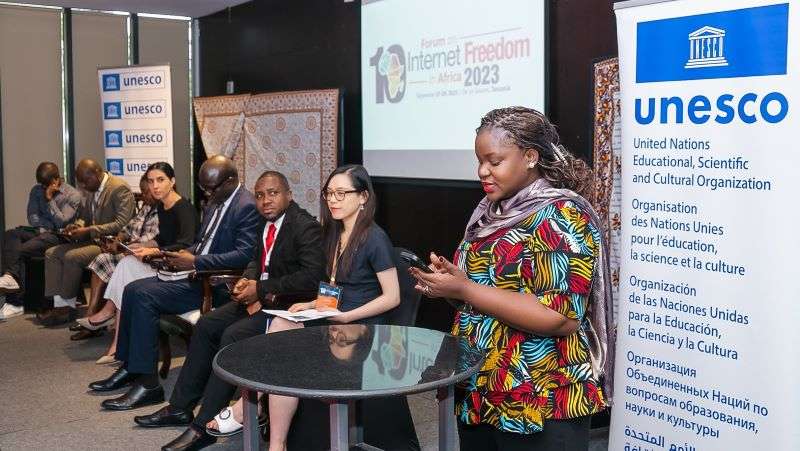
On September 28, the United Nations Educational, Scientific and Cultural Organization (UNESCO) held a high-level panel discussion on unpacking African perspectives on the operationalisation of UNESCO’s Guidelines for regulating digital platforms. The session was among the discussions held at the 2023 edition of the Forum on Internet Freedom in Africa (FIFAfrica) which assembled organisations from across Africa and beyond to deliberate on reigning concerns in the internet governance and digital rights landscape.

The UNESCO Guidelines (in full referred to as Guidelines for regulating digital platforms: a multistakeholder approach to safeguarding freedom of expression and access to information) aim to safeguard  freedom  of  expression,  access  to information,  and  other  human  rights in the context of the development and implementation of digital platform regulatory  processes. The guidelines outline rights-respecting regulatory processes and promote risk   and system-based processes for content moderation and curation. Following a series of multistakeholder consultations and contributions that started in September 2022 the guidelines have been under review with a launch of the final document yet to be announced. 

The panel featured at FIFAfrica comprised John Bosco Mayiga, Programme Specialist at UNESCO, who moderated the discussion, Hon. Neema Lugangira, Chairperson of the African Parliamentary Network on Internet Governance (APNIG), Grace Githaiga, Convenor of the Kenya ICT Action Network (KICTANet), Dr. Simon-Peter Kafui Aheto from the University of Ghana, and Samira Danburam, New Media and Security Manager at the Nigerian Communications Commission.

Mayiga noted that there are growing shared concerns by many actors in the digital society on how to better harness the benefits of information platforms while also addressing the challenges that come with it. “There is much to gain with digital transformation. However, amidst hate speech and disinformation, there is also much to lose,” he said.  “How do we move forward leveraging the advantages of the platforms, but also take care of the excesses that happen to be part and parcel of platforms?”

Githaiga noted that there are no fast and easy answers in dealing with the current challenges of content moderation. She further noted that the guidelines will be invaluable in serving as a basis for individual countries, especially as different countries are at different levels of digital regulation while socio-cultural contexts also vary across borders. 

Indeed, various countries, particularly in Africa, are still grappling with navigating issues such as hate speech, disinformation, protecting legitimate online freedom of expression, content moderation, and data privacy. Dr. Kafui-Aheto added that the Internet Universality Indicators (IUI’s) are a great complementary tool to the guidelines. He also stressed that digital literacy, including on regulatory frameworks, is fundamental in the realisation and utilisation of the indicators and the UNESCO guidelines by more stakeholders. 

The speakers discussed the potential paths that the operationalisation of the guidelines in Africa could take. There was consensus amongst panelists on the need to create regional and national multi-stakeholder networks that enable the active participation of diverse groups in the implementation of digital platform regulation. This consensus was reached as the challenge of ensuring that online platforms serve as places where individuals can seek factual information but without fear was a recurring theme across FIFAfrica. 

Ultimately, the session stressed that the creation of an internet of trust cannot be the preserve of any particular group however specialised they are; it should be a collaborative effort that includes all stake-holders.

The guidelines are designed to inform regulatory processes under development or review for digital platforms, in a manner that is consistent with international human rights standards. According to UNESCO, the Guidelines may serve as a resource for policymakers in identifying legitimate objectives, human rights principles, and inclusive and participatory processes that could be considered in policymaking. The guidelines could also inform the policies and practices of digital platforms; and provide an advocacy and accountability tool for civil society.

Advancing Awareness of the UNESCO Internet Universality Assessments in Africa

By Juliet Nanfuka |

In 2015, the 38th General Conference of the United Nations Educational, Scientific and Cultural Organization (UNESCO) endorsed a new definition on the universality of the internet. It was based upon four principles, namely Rights, Openness, Accessibility to all and Multi-stakeholder participation, or the ROAM principles. 

The addition of cross-cutting indicators in 2018 resulted in the ROAM-X Indicator framework comprising 303 indicators that assess the extent to which national stakeholders, including governments, businesses and civil society, comply with the ROAM principles. It was recognised that these indicators were central to the growth and evolution of the internet, and the achievement of the Sustainable Development Goals.  

Over the years, UNESCO has partnered with the Collaboration on International ICT Policy for East and Southern Africa (CIPESA) to increase awareness of the Internet Universality Indicators (IUI’s) and the ROAM-X framework. In 2015, at the CIPESA-convened Forum on Internet Freedom in Africa (FIFAfrica), the ROAM principles were featured in the opening discussion of the event, with then UNESCO regional advisor for Communication and Information, Jaco du Toit, explaining the practical use of the Internet Universality principles of human-rights, openness, accessibility and multi-stakeholder participation and their link to African development.

The  2018 edition of FIFAfrica again provided a collaborative platform for experts, policymakers, activists, and technologists to exchange ideas and strategies for advancing a more inclusive and accessible digital space. CIPESA also contributed to discussions at the 2018 Internet Governance Forum (IGF) where the link between internet shutdowns and the need for national assessments through the use of the ROAM-X framework was stressed.

At the October 2020 Africa IGF, CIPESA contributed to a discussion that served as a launch of the IGF Dynamic Coalition on Internet Universality Indicators (IUIs). The Dynamic Coalition is a shared space for advocating Internet Universality ROAM principles worldwide, sharing experiences and raising awareness of the value of the related indicators and good practice in applying them in more countries. Further discussions were held at the global IGF in November 2020. 

In March 2022, CIPESA hosted a regional dialogue on the Indicators, which highlighted lessons from countries where IUI assessments had been conducted, namely  Benin, Ethiopia, Ghana, Kenya, Niger and Senegal. This effort aimed to garner best practices in conducting national assessments of media and internet ecosystems using the indicators.

Later that year, CIPESA convened a regional training webinar to raise awareness of the Internet Universality ROAM-X indicators and their potential to promote internet development to advance media freedom and digital rights in Africa. The UNESCO Information for All Programme (IFAP) and International Programme for the Development of Communication (IPDC) jointly supported the training which targeted participants from Cameroon, Malawi, Namibia,  Somalia and Uganda. Outputs from the webinar went on to feed into discussions at the 2022 IGF which included sessions on the ROAM-X indicators and a session on the Internet Universality Indicators as part of the Dynamic Coalition.

At the 2023 edition of  FIFAfrica held in September in Tanzania, UNESCO hosted a session titled “Foster Internet Freedom in Africa through UNESCO’s ROAM-X Internet Universality Indicators Assessments”. The panel consisted of UNESCO experts, including John Okande, Programme Officer, Tatevik Grigoryan, Associate Programme Specialist; and Xiaojie Sun, Junior Professional Officer. Also on the panel were participants from earlier UNESCO/CIPESA collaborative efforts on ROAM-X, including Asrat M. Beyene from the Internet Society Ethiopia Chapter and Addis Ababa Science and Technology University; Grace Githaiga, Convenor of the Kenya ICT Action Network (KICTANet); and Dr. Simon-Peter Kafui Aheto of the University of Ghana.

The various speakers showcased the main findings and recommendations from the IUI  assessments they conducted,  and impacts of ongoing and completed ROAM-X national assessments in Africa (see some assessments here). They also shared best practices and lessons learnt during the implementation process. Panelists also highlighted that the IUI is due for revision following the amount of data collected over the years and the evolving digital landscape globally.   Since its introduction, ROAM-X has been integrated into discussions at FIFAfrica and into CIPESA programming, both of which have served as collaborative platforms for experts and policymakers to advance inclusivity and accessibility in the digital space.

CIPESA At the 2022 Internet Governance Forum

By CIPESA Writer |

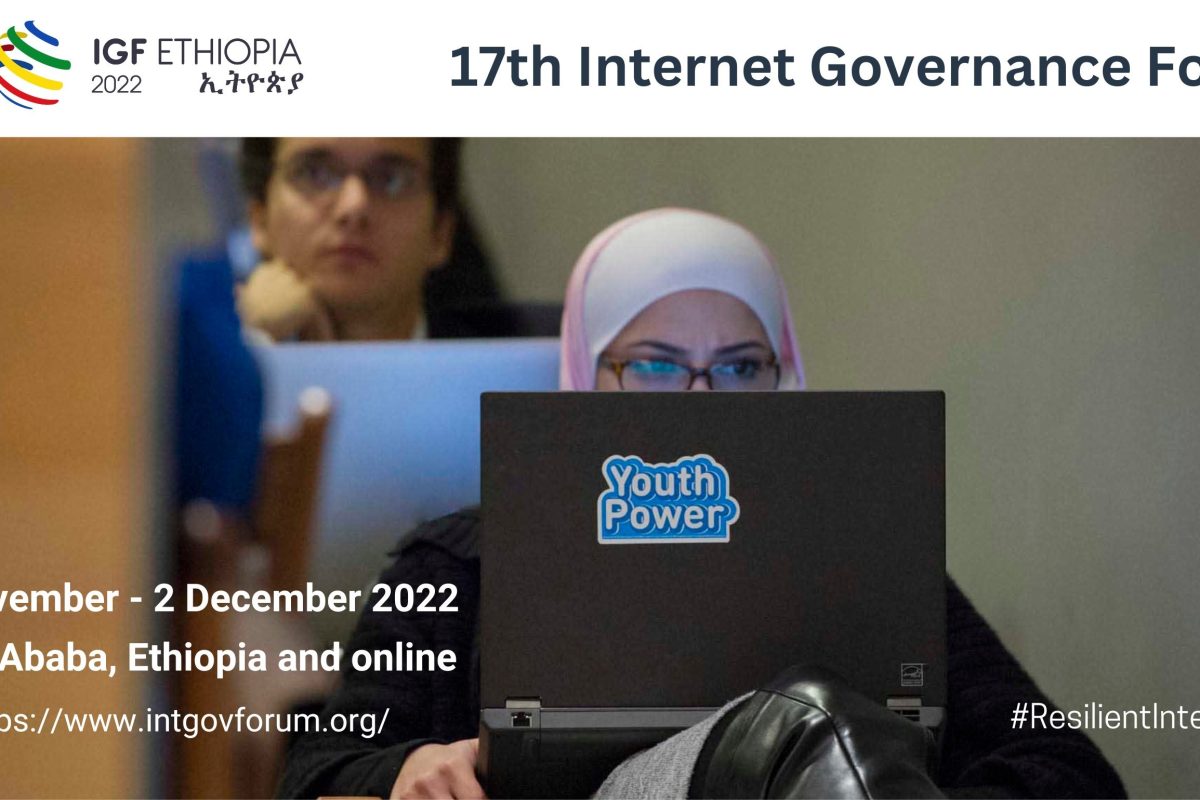
The global internet governance community is set to convene in Addis Ababa, Ethiopia, for the 17th Internet Governance Forum (IGF) from November 28-December 2, 2022. Ethiopia is hosting the IGF 2022 against a backdrop of internet freedom reforms, a recently liberalised telecommunications sector and an ongoing conflict that has seen the Tigray region without internet access for two years. 

The IGF 2022 theme of Resilient Internet for a Shared Sustainable and Common Future, and the five sub-themes which are drawn from the Global Digital Compact (GDC) in the UN Secretary-General’s Our Common Agenda report, resonate with the work of the Collaboration on International ICT Policy for East and Southern Africa (CIPESA).

  • Connecting All People and Safeguarding Human Rights
  • Avoiding Internet Fragmentation
  • Governing Data and Protecting Privacy
  • Enabling Safety, Security and Accountability
  • Addressing Advanced Technologies, including Artificial Intelligence  (AI)

CIPESA will co-convene and participate in various sessions at the IGF 2022 to showcase its work that supports the ambitions of the GDC.

A joint effort by DefendDefenders, Greenhost, Digital Society of Africa, Dig/Sec Initiative, Digital Security Alliance, AccessNow, CChub, Center for Digital Resilience, and CIPESA will run an onsite digital security hub to build the digital resilience of at-risk groups and organisations.

At a session titled “Jointly tackling disinformation and promoting human rights” facilitated by the AU-EU Digital for Development (D4D) Hub, CIPESA will contribute in an open exchange of ideas, experiences and lessons learned on how to address disinformation through a multi-stakeholder and human-centric approach.

Furthermore, CIPESA is among the organisers of the Dynamic Coalition roundtable on Strengthening digital ecosystems through shared principles and the Day 0 event on Shaping global digital governance and measuring meaningful connectivity for all: the ROAM approach, both of which are in support of ongoing efforts by CIPESA and UNESCO to raise awareness about and application of the Internet Universality Indicators across more countries in Africa.

The CIPESA team will also feature on a panel discussion on technology and human rights as part of the Peer Learning Event for National Human Rights Institutions (NHRIs) hosted by Danish Institute for Human Rights.

Further, CIPESA will participate at the Africa member convening of the Association for Progressive Communications (APC) and at a Digital ID Civil Society Summit hosted by the Open Society Foundations, under the auspices of an external digital ID fund and initiative (DIDIF), housed at Rockefeller Philanthropic Advisors.

Follow @cipesaug and #InternetFreedomAfrica

Training webinar on Internet Universality Indicators convened for African Countries

By Juliet Nanfuka |

On 26 October, the Collaboration on International ICT Policy for East and Southern Africa (CIPESA) convened a regional training webinar to raise awareness of the Internet Universality ROAM-X indicators and their potential to promote Internet development to advance media freedom and digital rights in Africa. ), The UNESCO Information for All Programme (IFAP) and International Programme for the Development of Communication (IPDC) jointly supported the training.

Present at the meeting were PROTEGE QV (Cameroon), Youth Net and Counselling, YONECO (Malawi), namTshuwe (Namibia), Digital Shelter (Somalia), and CIPESA (Uganda). Each partner presented the state of digital rights in their respective country as a foundation for discussing the ROAM-X indicators with Malawi and Somalia hosting physical convenings. 

In her opening remarks, Dorothy Gordon, Chair of UNESCO’s Internet For All Programme (IFAP) stated: “There is a need to take control of the digitally mediated future and understand the impact of policies on our digital environments: the ROAM-X indicators give stakeholders factual tools to discuss and advocate for the future we want to see in Africa.”  

Xianhong Hu, UNESCO’s Programme Specialist  representing IFAP Secretariat, unpacked the 303 the Internet Universality ROAM-X indicators and elaborated on the eight-step multi-stakeholder methodology of conducting national assessments. She highlighted that the unique value of applying ROAM-X indicators is to improve national digital ecosystems and foster cross-border and cross-jurisdictional digital collaboration. 

UNESCO encouraged more African countries to pursue a ROAM-X assessment as a tool to evaluate the ever-changing developments in technology, reverse the digital divide, and to harness digital transformation. Given the launch of the Namibian national assessment and the follow-up ROAM-X assessment in Kenya, as well as the monitoring of new developments following the Covid-19 pandemic and the 2022 national elections, incorporating ROAM-X assessment is critical.

UNESCO and CIPESA jointly reaffirmed the need for increased mobilisation using the multistakeholder approach to ensure an open and inclusive implementation process, and to scale up Internet development in African countries over the next two years. 

Participants urged UNESCO to continue its support in organising more capacity-building activities to meet the growing demand to assess ROAM-X indicators in African countries.  

All participants were invited to continue their engagement with UNESCO and attend its events at the December 2022 Internet Governance Forum (IGF), in  Addis Ababa, Ethiopia which include sessions on the ROAM-X indicators, a Day-0 pre-event and a Dynamic Coalition session.