Statement |
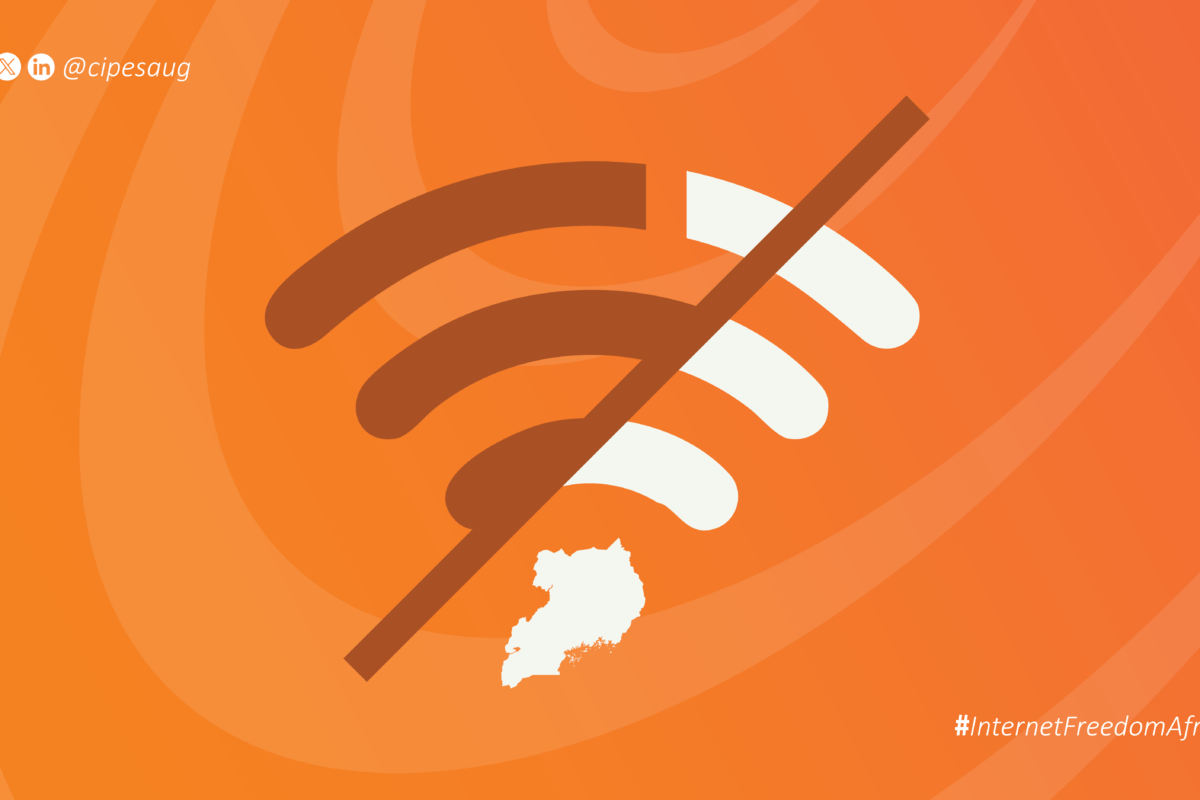
The Collaboration on International ICT Policy for East and Southern Africa (CIPESA) condemns the ongoing internet disruptions in Uganda and urges the government to immediately restore full access to social media platforms, blocked websites, and mobile money services. We further call upon the Government of Uganda to cease and desist from ordering internet throttling and blockages, which unjustifiably deny citizens the right to express themselves and to access, share and disseminate information. Internet disruptions further limit the public’s ability to conduct business, access public services, participate in community and civic affairs, socialise, and maintain contact with friends, family, and associates.
CIPESA joins numerous independent observers who have strongly condemned the disruptions to digital communications, including the Uganda Law Society, which has described the disruptions as unlawful. While the Uganda Communications Act (2013) grants powers to the national communications regulator, according to the Uganda Law Society, the Uganda Communications Commission (UCC) may order a blockage of communications following a formal declaration of a state of emergency. No such state of emergency was declared at the time the regulator ordered a nationwide shutdown two days before the January 15, 2026, polls. Government officials said the disruption was aimed at curbing the spread of online misinformation, electoral fraud, and incitement to violence in the lead-up to the elections.
As affirmed by the African Commission’s Special Rapporteur on Freedom of Expression and Access to Information, as well as global civil society organisations, governments must refrain from imposing network disruptions and instead address security or public order concerns through lawful, necessary, and proportionate measures. Indeed, internet shutdowns and restrictions are a disproportionate measure that violate Uganda’s constitutional guarantees and its regional and international human rights obligations, including those under the African Charter on Human and Peoples’ Rights.
Furthermore, CIPESA is concerned by the broader pattern of repression, including relentless attacks on civil society organisations. In the days preceding the elections, several organisations working on media rights, democratic governance, and human rights protection were suspended, in what appears to be a deliberate attempt to silence independent voices. This broader crackdown on civic space also included the arrest of human rights defender Sarah Bireete, Executive Director of the Centre for Constitutional Governance, further illustrating the shrinking environment for civil society and human rights work in the country.
A free, independent, and vibrant civil society is indispensable to any democratic society and should not be treated as government adversaries. The Government of Uganda should therefore recognise civil society organisations as legitimate and valuable partners in improving livelihoods, strengthening rights protection, and advancing democratic governance and socio-economic transformation.
Similarly, CIPESA urges the government to immediately cease attacks against journalists and media workers, particularly those from independent media houses and journalists who are critical of government actions. These violations, which have been widely documented by national and international actors, including the United Nations, undermine media freedom and the public’s right to access information, especially during electoral periods.