
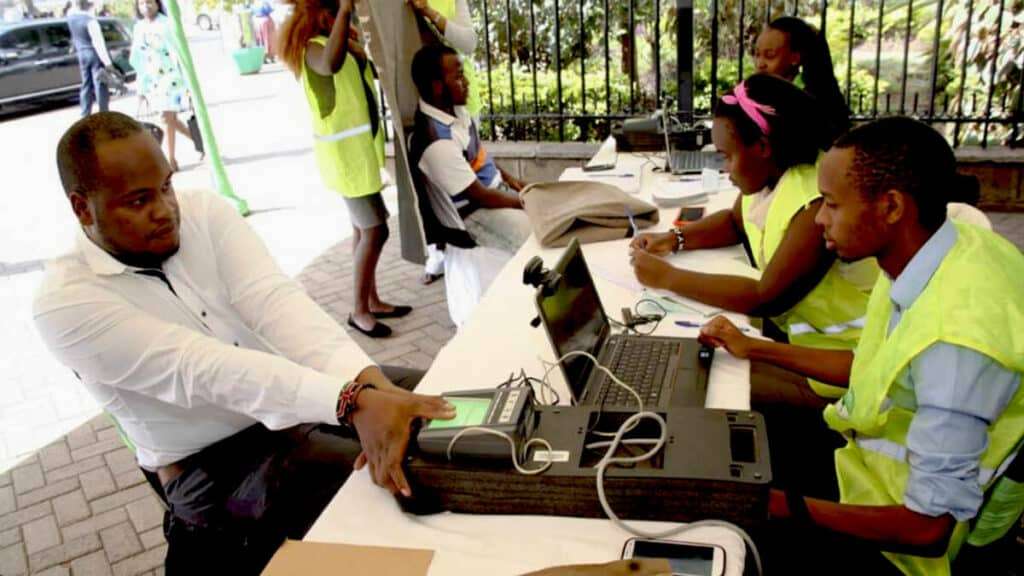
Digital public infrastructure reshaping state-citizen relations in Africa, report warns

By Lu-Hai Liang |

Study warns that expanding digital ID and public service systems could deepen exclusion without stronger governance and human rights safeguards.

A new report from CIPESA (Collaboration on International ICT Policy for East and Southern Africa) finds that the expansion of digital public infrastructure (DPI) systems across 11 African countries could have significant implications for human rights, democratic governance and civic participation.

The State of Internet Freedom in Africa 2026 report examines DPI developments in Egypt, Ethiopia, Ghana, Kenya, Nigeria, Senegal, South Africa, Tunisia, Uganda, Zambia and Zimbabwe. Governments across the continent are investing heavily in digital identity, payment and data-sharing systems to modernize public services and drive digital transformation.

But the report argues that insufficient attention has been paid to the governance and human rights implications of these systems. It calls for stronger rights-respecting frameworks before DPI becomes further entrenched in public administration and everyday life.

“Foundational credentials such as mandatory gateways and access to essential public and private services are increasingly facing flaws in architectural design and utility, technical failures, and inaccurate records,” the report claims in its conclusion.

The result is often widespread exclusion of vulnerable groups, according to the report, particularly affecting people with limited digital skills, poor connectivity or difficulties accessing civil registration systems which include rural communities, women, children and the elderly.

The report lists an extensive number of recommendations that can offset such problems. The recommendations include establishing robust governance such as rights-respecting national policies and laws, along with investment in complementary infrastructure to foster connectivity and capacity enhancement.

It recommends replacing coverage-only targets with disaggregated meaningful-connectivity and service-completion indicators; stopping internet shutdowns and other blanket connectivity restrictions as tools of political or security management, among other suggestions. The full State of Internet Freedom in Africa 2026 report can be read here.

The report was launched at the closing ceremony of the Forum on Internet Freedom in Africa (FIFAfrica26) held in Mauritius. Mauritius’ Minister of Information and Communication Technology, Dr Avinash Ramtoh, described DPI as “a critical infrastructure in any forward-looking country” and stressed the need to ensure digital systems are inclusive, accessible and rights-respecting.

The report’s release marked the conclusion of FIFAfrica26, a four-day gathering that brought together policymakers, researchers, civil society organizations, journalists, technologists, activists and development partners from across Africa and beyond. Discussions focused on issues including AI, data governance, platform accountability, digital inclusion and security, and civic participation. A recurring message was that technology is inseparable from society and that decisions about the design, governance and use of digital systems have profound consequences for rights, participation and power.

As Africa’s digital transformation accelerates, the report argues that these questions will become increasingly important in shaping how citizens access services, engage with governments and exercise their rights in the years ahead.

This article was originally posted by Biometric Update.Com on October 13, 2026.
It’s Almost Time For FIFAfrica26! Discover the Agenda. Meet the Speakers

By FIFAfrica |

This time next week, FIFAfrica26 will be underway in Mauritius!

The conversations we have been planning, the ideas we have been shaping, and the connections we have been looking forward to will finally shift into actions, debates, and new learning!

Across four days, FIFAfrica26 will bring together conversations on digital democracy and civic participation, AI and emerging technologies, data governance and sovereignty, platform accountability, digital inclusion, digital economy and trade, movement building, and digital security and safety.

Here is what you can look forward to:

  • Two days of engaging pre-event sessions (Be sure to sign up, as spaces are limited!)
  • Two days of an action-packed main event agenda, with in-depth sessions featuring speakers from across Africa and beyond. Be sure to explore the Agenda and meet the Speakers!
  • A Digital Rights Fun Run – come ready with your running shoes!
  • A Digital Reality Walk through Paths, Traps and Safe Passages.
  • An exhibition where you can discover new work, explore resources and meet the people behind some of the amazing digital rights work happening across the continent.

FIFAfrica is a unique opportunity to discover new work and organisations, exchange ideas and insights, make connections, and encounter conversations that expand how you think about the digital rights ecosystem. There will be plenty of opportunities to connect, contribute and make FIFAfrica26 your own.

Visit the FIFAfrica website for more information.

Shaping the Agenda for the Forum on Internet Freedom in Africa 2026 (FIFAfrica26): Thank You for Your Proposals

FIFAfrica26 |

The organisers of the upcoming Forum on Internet Freedom in Africa 2026 (FIFAfrica26) extend sincere appreciation to everyone who submitted a session proposal or travel support application in response to the recent Call.

We received over 450 submissions, reflecting a rich diversity of interests spanning the current digital rights landscape in Africa and their intersections with global dynamics. The submissions collectively reflected the pressing issues shaping digital rights, online freedoms, and internet governance across the continent while also highlighting the vibrant community working to advance internet freedom in Africa.

Successful Applicants

Successful applicants have been notified directly. We are excited to confirm that their sessions and contributions will form the core of the Forum’s agenda. We look forward to working closely with them to shape the programme and to bringing their insightful proposals to life during the Forum.

For Those Not Selected

If you have not received a success notification, please know that this does not reflect a lack of value in your submission. The volume of high-quality proposals far exceeded the available session slots, and difficult decisions had to be made. We remain grateful for your engagement and encourage you to stay connected with the Forum as there will be future opportunities to contribute.

Next Steps in the Process

  • The FIFAfrica26 agenda will be shared publicly in the coming weeks.
  • All applicants will continue to receive Forum updates and are warmly invited to attend as participants online or in person.
  • Registration to attend the Forum remains open: secure your seat here.

Plan Your Travel to Mauritius

The Forum will be hosted at the InterContinental Resort, Fort Coastal Road, MU, Balaclava 21306, Mauritius. All participants, those receiving travel support from CIPESA and other partners as well as independent participants, should refer to the FIFAfrica26 travel note and plan accordingly.

Thank you once again for your time, expertise, and commitment to building a free, open, and inclusive internet in Africa. We look forward to engaging with you online or in person at FIFAfrica26.