By MISA Tanzania Correspondent |
A prevailing culture of secrecy among public officials in Tanzania at both central and local government levels is hindering the work of journalists, according to findings by a recent study. This is affecting access to information necessary for media reporting towards increased civic participation, transparency and accountability in governance.
The study which was conducted by the Media Institute of Southern Africa (MISA) Tanzania Chapter in partnership with the Collaboration on International ICT Policy for East and Southern Africa (CIPESA) assessed the responsiveness of local government authorities (LGAs) and central government offices in Tanzania to citizens’ information requests.
The study found widespread laxity among officials in processing information requests, with many claiming to have misplaced or lost filed requests. “If you received someone’s documents, why would you say you can’t see them just a week later?” wondered Haika Kimaro, a newspaper correspondent in Mtwara town in the south-east of Tanzania. In the port town of Kigoma, Rhoda Ezekiel, a correspondent with Uhuru Newspaper, recounted how the secretary of the Ujiji Municipal Council once claimed to have misplaced her information request when she followed up on a query she had submitted.
Radio journalist George Binagi shared a similar experience from the town of Mwanza: “I submitted my questions in writing to the Regional Commissioner’s Office. I went back 10 days later and did not get the answers. They looked for my letter and [claimed they] never saw it.”
But it is not only the media affected by limited access to public information. Researchers are affected too. During the study, Jacqueline Jones, a mass communication graduate and intern at MISA Tanzania, went to the Dar es Salaam Regional Commissioner’s office posing as a student researcher. She requested for information pertaining to the office’s functions, ongoing projects, income and expenditure. However, she was turned away for lack of an introduction letter from a university, with officials claiming that work procedures do not allow them to disclose information without such a letter.
“Their customer service is awful and the people at the registry department were quite harsh and rude. One of them actually shouted at me for insisting on getting my answers in a written form,” said Jones.
She submitted a similar request to the Dar es Salaam City Council, which, according to the city’s Information Officer needed approval by at least four different Heads of Sections. The Information Officer provided her with the requested information upon receipt of the approvals.
Alternative platforms for accessing information offered their own challenges. According to Zulfa Musa, a Mwananchi Newspaper correspondent in Arusha, administrative assistants manage the City Council offices’ telephone numbers and getting in touch with the Director or his Secretary to request for information required one to have these officials’ personal phone numbers. It was difficult to make information requests as the administrators were reluctant to provide the personal contact information of the Director or his secretary.
The frustrations faced by the journalists who took part in the study indicates that it is likely that citizens face similar or worse challenges.
It is widely recognised that access to quality and timely information for citizens is crucial in facilitating informed dialogue, monitoring and evaluation of development issues at the local level, thereby accountable governance and improved public services delivery.
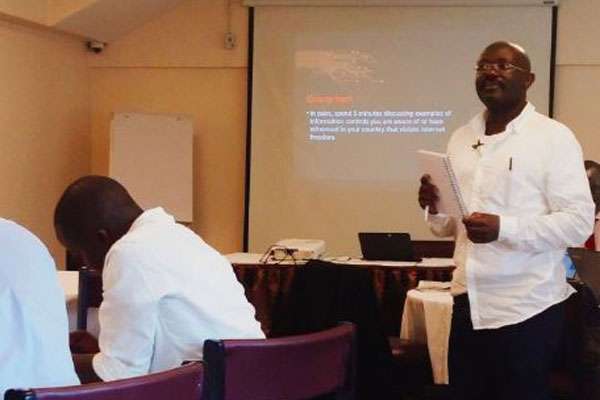
Gasirigwa Sengiyumwa, the National Director for MISA Tanzania, stated that whereas an Access to Information Act was passed in 2016, “it appears that both public servants and the general public remain unaware of this Law.” He added: “There is a need for sensitisation about the law through training workshops for both parties [public officials and citizens] to ensure that the rights and responsibilities provided for under the law are realised.”
The study was conducted as part of the ICT4Democracy in East Africa initiative’s objective to document and publicise the utility and effectives of Information and Communication Technologies (ICT) for government-citizen interaction, proactive information disclosure, and responsiveness to information requests, for the realisation of the right of access to information.
Seven out of Tanzania’s 28 regions were covered in the study, with a total of 28 information requests filed to 14 institutions during March and April 2017. The written requests were emailed as well as hand-delivered to the institutions. Follow ups on approval or denial of requests was conducted through phone calls and physical visits.
Read the full study at here.

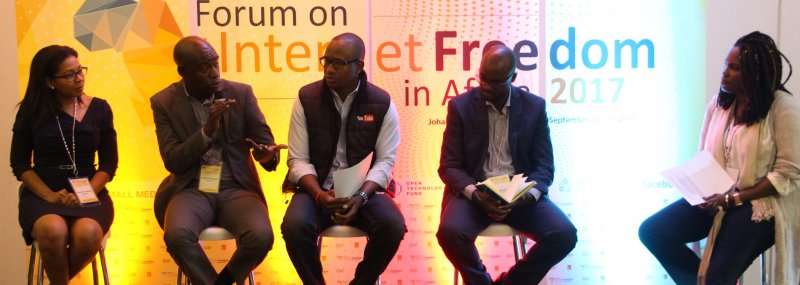
Forum sur la liberté de l'internet en Afrique 2017 : Notre première participation
Par Ababacar Diop |
Pour la première participation de Jonction au Forum sur la liberté de l’internet en Afrique (#FIFAfrica17) nous avons été ravi par la qualité de l’espace d’échange et de partage qui nous a été offert.
Organisé annuellement par the Collaboration on International ICT Policy for East and Soutier Arica (CIPESA) depuis 2014 à Kampala en Ouganda, et pour cette année 2017 en partenariat avec the Association for Progressive Communications (APC), à Johannesburg, le forum, s’est concentré sur plusieurs thématiques notamment la protection de la vie privée, l’accès à l’information, la libre expression, la non-discrimination et la libre circulation de l’information en ligne.
Des panélistes de haut niveau nous ont offert l’opportunité d’en apprendre davantage sur les enjeux et défis actuels de la société de l’information et de celui des droits numériques. Des interventions de qualités nous ont permis d’apprendre encore plus des expériences et des bonnes pratiques qui se développent en Afrique.
Nous témoignons, ce forum est un formidable espace de partage et d’échange d’expérience et de bonnes pratiques. Il permet en outre le renforcement des capacités des acteurs de la société de l’information et des défenseurs des droits numériques. La diversité linguistique en plus de la diversité géographique et de genre des participants constituent un vrai charme et une richesse intellectuelle du forum.
Nous avons appris à travers le forum que le réseautage est fondamental dans la défense des droits numériques. Les acteurs de la société de l’information ont besoin de collaborer et de travailler en synergie pour faire progresser les libertés sur internet, protéger davantage les données personnelles et le droit à la vie privée en ligne, faire face aux menaces qui pèsent sur la liberté d’expression sur internet partout en Afrique et lutter contre les coupures administratives d’internet pour des raisons politiques.
En effet, la présence de divers acteurs d’horizon divers a enrichi les panels et les discussions. Chacun exprimant ses préoccupations, ses expériences et ses objectifs pour une meilleure défense des droits et libertés sur internet. Tant les représentants de gouvernement que ceux de la société civile et du secteur privé chacun dans sa sphère d’activité s’est librement exprimé.
Nous avons également mesuré durant le forum toute l’importance de soutenir la recherche sur l’état de la liberté sur internet. En illustre le moment très fort lors du lancement du rapport annuel de recherche sur l’état de l’Internet en Afrique. Ce fut un intense moment de réflexion sur l’état de la liberté sur internet en Afrique. Ce rapport présentant l’état des lieux de la liberté sur internet en Afrique est si nécessaire pour les acteurs de la société civile africaine pour soutenir et documenter le plaidoyer et la sensibilisation.
Nous avons également appris que la réussite de tout forum repose sur le dynamisme et l’engagement des organisateurs. Nous félicitons ici les organisateurs et organisatrices qui n’ont ménagé aucun effort pour rendre agréable et studieux notre séjour. Toutes nos félicitations au comité d’organisation.
A la lumière de ce qui précède, nous lançons un appel à tous les bailleurs de renforcer leur soutien au Forum sur la liberté de l’internet en Afrique pour une plus grande participation des diverses régions de l’Afrique. La tenue annuelle du forum est d’une importance capitale pour les acteurs africain du Net. Un tel espace de rencontre, d’échange et de mise en réseau est nécessaire pour faire progresser le respect des droits numériques dans notre continent.
Nous lançons également un appel à tous les acteurs de travailler en synergie afin de mener la pression sur nos gouvernements pour le respect de la liberté d’expression sur internet et le respect du droit d’accès à l’information qui sont des piliers nécessaires à toute société démocratique qui aspire au développement économique, social et culturel. L’émergence de nos pays passe nécessairement par le respect des droits numériques.
L’Afrique a besoin de ce forum, l’Afrique doit soutenir le Forum sur la liberté de l’internet en Afrique.
Initialement publié sur le site de Jonction
Apply for the CIPESA-ICT4Democracy Fellowship Programme: Media
Fellowship Opportunity |
About the ICT4Democracy in East Africa network
The network works in Kenya, Tanzania, and Uganda to achieve two top-line objectives: 1) Increased citizen participation in governance and the realisation of human rights through ICT; and 2) Improved transparency and accountability of governments through ICT. Partners in the network are the Collaboration on International ICT Policy for East and Southern Africa (CIPESA), the Women of Uganda Network (WOUGNET), Transparency International Uganda, iHub Research (Kenya), the Kenya Human Rights Commission (KHRC), the Commission for Human Rights and Good Governance (CHRAGG, Tanzania) and Toro Development Network (ToroDev). Read more about the network here: www.ict4democracy.org.
Aim of the Fellowship Programme
The CIPESA-ICT4Democracy Fellowship (Media) aims to raise media understanding of, and its effective and consistent reporting of ICT-for-Democracy issues in East Africa. It is expected that the fellowships will result into increased quality and regularity of reporting, as well as a greater diversity of voices, in coverage related to ICT, democracy and human rights.
A total of 12 fellowships shall be issued each year starting May 2017. Applications will be accepted on a quarterly basis as per the below dates:
| Fellowship round | Application deadline |
| May – July | April 1st |
| August – October | July 1st |
| November – January | September 1st |
| February – April | January 1st |
Duration: The fellowship shall last for up to three months but can in some circumstances be shorter.
Outputs
Participants in the media fellowship programme will be expected to create various outputs, which may include print articles such as features, broadcast content, multimedia content (animations and infographics) and social media content, as will be agreed in advance of the start of the fellowship.
Eligibility
Applicants should be early career print, broadcast, online or multi-media journalists. Individuals passionate about media platforms such as bloggers and social media enthusiasts with relevant skills are also welcome to apply. Applicants must be based in Kenya, Uganda or Tanzania. It is preferred that applicants have experience in coverage of areas that are relevant to the work of ICT4Democracy in East Africa partners, which may include social accountability, gender and youth mainstreaming, technology, human rights and governance.
Compensation
The fellows shall be given a modest allowance to cater for expenses related to producing the outputs of their fellowship engagement.
Application process
To apply, email [email protected] with subject line stating Application for Media Fellowship. Submissions should include:
- Your CV
- A statement of interest that mentions the outputs you intend to produce from the fellowship, how they will be disseminated, and how these outputs are beneficial to the work of the ICT4Democracy network or its partner organisation(s), a suggestion of which partner organisation you wish to be attached to, the duration for which you wish to have the fellowship, and anticipated expenses. The statement of interest should not exceed 3 pages.
- Two samples of your work (written or other)
- Two reference letters.
Lobby Calls For Internet Freedom, Urges Responsible Use Of Social Media
By Lillian Mutavi |
Photo: The Collaboration on International Policy for East and Southern Africa (CIPESA) executive director Wairagala Wakabi makes his presentation on internet freedoms in Kenya on January 27, 2017. Lillian Mutavi | Daily Nation Media Group
This article was originally published in the Daily Nation
#FIFAfrica16: Agenda – Day 0 to Day 1

#FIFAfrica16 | See what we have lined up for the Forum on Internet Freedom in Africa 2016. On 27 September there will be a series of closed sessions by invite only while on 28 September the official launch of the Forum will take place.