
CIPESA Announces Largest ADRF Grants – USD 320,000 to 18 Initiatives

By Ashnah Kalemera |

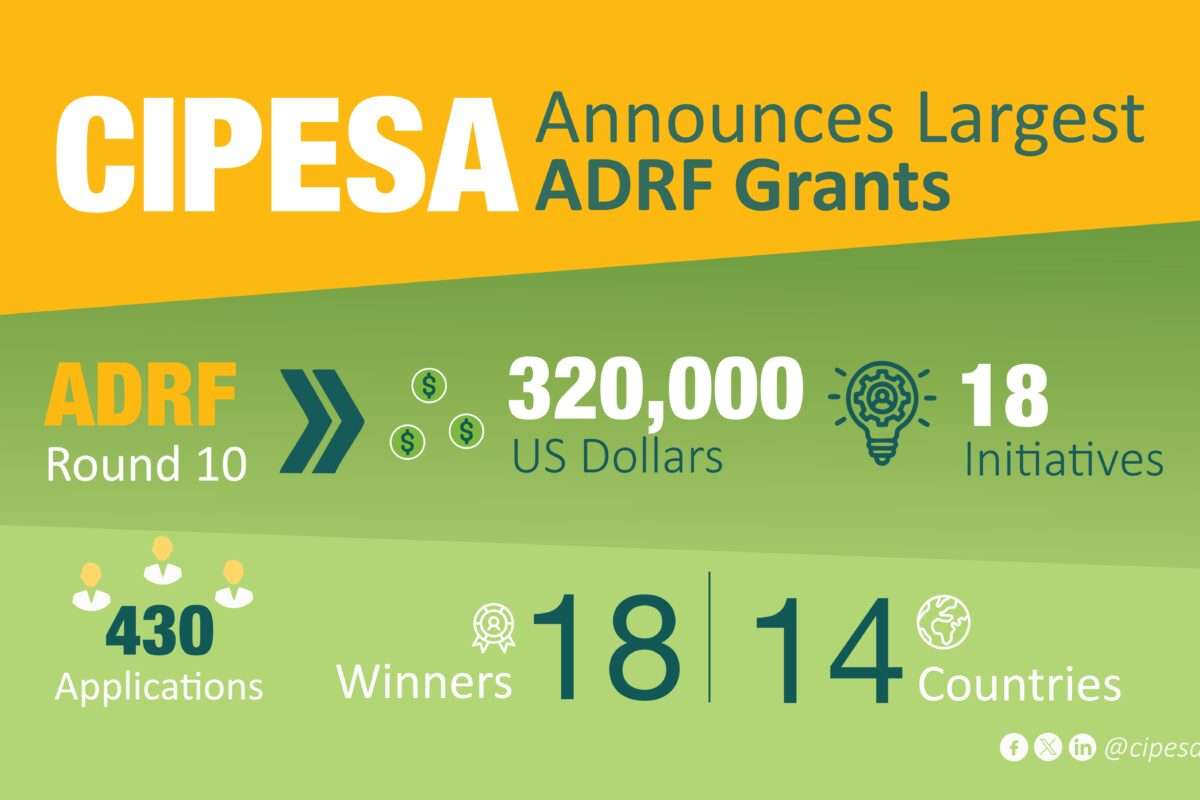
The Africa Digital Rights Fund (ADRF) has awarded USD 320,000 to 18 initiatives in 14 countries to support efforts to advance digital rights, inclusion, and online safety.

The grant recipients will promote responsible data governance, advance accessibility for persons with disabilities, counter Technology-Facilitated Gender-Based Violence (TFGBV), and support digital equity for refugees. Others will build digital resilience among at-risk groups, deepen youth engagement in digital democracy, and promote women’s participation in the governance of Artificial Intelligence (AI).

Based in the Democratic Republic of Congo, Ethiopia, Ghana, Guinea, Kenya, Liberia, Madagascar, Rwanda, South Africa, South Sudan, Tanzania, Uganda, Zambia and Zimbabwe, the awardees will tackle some of Africa’s most pressing digital challenges.

The latest awards under the 10th funding round bring to USD 1.3 million, the total amount the Collaboration on International ICT Policy for East and Southern Africa (CIPESA) has disbursed under the ADRF. The fund was launched in 2019 to support organisations advancing digital rights in the face of limitations of reach, skills, resources and consistency in engagement.

“The overwhelming number of applications received in this round reflects the changing funding landscape for digital rights and democracy in Africa,” said Dr. Wairagala Wakabi, CIPESA’s Executive Director. “We are excited that the ADRF continues to bridge the prevailing funding gap and expand into new geographies and constituencies.”

The funding round received the largest number of applicants ever (430) and has expanded ADRF’s footprint into new countries such as Guinea, Liberia and Madagascar, and new beneficiary groups including youths, migrants, and a National Human Rights Institute (NHRI). The four most recent calls for proposals – Rounds eight, seven, six and five –  received 130, 280, 283 and 120 applications respectively.

Applications went through several rounds of reviews by two internal committees at CIPESA and an external committee of independent experts.

Overview of ADRF 10 Grantees

Digital Accessibility for Persons with Disabilities

The Rwanda-based Organisation d’Integration et de Promotion des Personnes Atteintes d’Albinisme (OIPPA) will build digital literacy and online safety skills for youth with disabilities, and conduct accessibility audits of government online platforms. In Ghana, Open Knowledge will enhance capacity and awareness of accessibility standards among civil society, parliamentary committees, and communications service providers.

Meanwhile, the Zimbabwe Council for the Blind will conduct accessibility audits of public sector websites, provide training in inclusive design, and advocate for implementation of inclusion and equity  under the country’s recently launched AI Strategy. The three initiatives will be anchored in CIPESA’s Disability and ICT Accessibility Framework Indicators.

The ADRF’s first NHRI grantee, the Ethiopia Human Rights Commission (EHRC), will strengthen staff capacity in digital inclusion and accessibility for persons with disabilities, and mainstream these principles into its broader human rights monitoring and oversight mandate.

Youth Engagement

Restless Development in Uganda will empower young media professionals and influencers to champion digital rights. Using its Youth Hack Methodology, the initiative will co-create innovative digital rights campaigns that combat disinformation and promote platform accountability.

AI Governance

As AI development and governance conversations continue to take root in Africa, women remain largely excluded. Women in Data Science and AI Zambia will build skills in ethical AI and algorithmic bias detection, and establish a national network to amplify women’s voices in Zambia’s AI policy conversations.

Technology-Facilitated Gender-Based Violence (TFGBV)

Given the gaps in state actors’ understanding of digital harms and the need to equip them with practical tools and guidance, ALT Advisory will develop and pilot adjudication training materials for judicial officers in Kenya and South Africa. These materials will address online harms such as TFGBV, disinformation, and digital rights violations.

Research ICT Africa will examine the drivers of TFGBV in South Africa, identifying regulatory and AI ethics gaps. Findings will inform workshops and policy discussions aimed at strengthening national responses and safer digital environments.

In Zambia, Asikana Network will develop a safety toolkit with reporting guides, evidence collection tips and referral resources. This will be complemented by digital safety labs for women to build skills in managing online risks and responding to incidents.

In Madagascar, Communication Idea Development (CID) will counter gender-based disinformation and hate speech through digital literacy campaigns and workshops targeting organisations and activists working in Antananarivo, Boeny, and Vakinankarata.

Data Governance

Building on Liberia’s ongoing national data governance journey, including support from the African Union and CIPESA to develop a Data Governance Policy, the West Africa ICT Action Network (WAICTNet) will build awareness of data rights and support stakeholder readiness ahead of the launch of the Policy and the enactment of the Data Protection and Privacy Act (2024).

Similarly, Amnesty International Kenya’s Privacy First Team will engage Kenyan university students to understand data rights and promote transparent data governance in line with the Data Protection Act of 2019.

Technology and Migration

In Kenya, Haki Na Sheria will examine cross-border data collection and sharing under the Shirika Plan that promotes refugee inclusion and settlement, highlighting risks such as surveillance and exclusion. The project will focus on the Dabaab Complex – the world’s largest refugee camp – offering digital rights literacy sessions and producing data rights guides in Somali and Swahili.

In South Sudan, the Lim Nguen Foundation will build digital literacy and safety among refugees and Internally Displaced Persons (IDPs) in the Gorom and Juba camps. The project will establish “Digital First Responders” to support survivors of TFGBV, particularly women and girls.

Digital Resilience

Hexabelt, in partnership with Eleza Fact, a Congolese disinformation and fact-checking initiative, will strengthen the digital resilience of journalists in Kinshasa and Lumbubashi through hands-on training, newsroom security audits, and cybersecurity drills.

Across the border, the Tanzania Human Rights Defenders Coalition (THRDC) will combine legal assistance, strategic litigation, and emergency support to safeguard environmental defenders and journalists from digital threats.

Information Integrity

In the aftermath of Guinea’s presidential election, tensions remain high ahead of the May 2026 legislative and municipal elections. Djikke Media will deliver workshops on fact-checking, open source investigations, digital hygiene, and deepfake detection.

In Uganda, a new knowledge agency – the House of Seshat – is being supported to explore how social media and generative AI are shaping political discourse and political accountability.
The Africa Digital Rights Fund Awards USD 152,000 to Advance Digital Rights in 18 African Countries

By Ashnah Kalemera |

The second round of the Africa Digital Rights Fund (ADRF) has awarded a total of USD 152,000 to 14 initiatives that will work to advance digital rights in 18 African countries. Among the focus areas of the initiatives are access to information, data protection and privacy, digital economy, Digital Identity (ID), digital security, diversity and inclusion, freedom of expression, hate speech, misinformation, and innovation for democratic participation, transparency and accountability (civic and social tech).

ADRF Round Two focus countries: Algeria, Cameroon, Democratic Republic of Congo, Ethiopia, Ghana, Ivory Coast, Kenya, Malawi, Mozambique, Nigeria, Rwanda, Somalia, Somaliland, Sudan, Tanzania, Tunisia, Uganda and Zimbabwe

Launched in April 2019, the ADRF responds to rising digital rights violations such as arrests and intimidation of internet users, network shutdowns, and a proliferation of laws and regulations that hamper internet access and affordability. It offers flexible and rapid response grants to initiatives in Africa to implement activities that advance digital rights and the potential of technology to uphold human rights, advance democratic governance, and drive innovation. In the inaugural round of ADRF, initiatives with activities spanning 16 African countries received a total of USD 65,000.

The second call for applications attracted 164 applications from 33 countries. The applicants were assessed on the following attributes:

  • The applicant’s experience in advancing digital rights/track record on similar work;
  • Demonstrated need for the project, including relevance to described context and priorities of the Fund;
  • Eligibility in terms of geographic coverage, proposed activities, duration, and evidence of the applicant’s formal registration or operations;
  • Demonstration of innovation with regards to approach, feasibility of deliverables and timelines, and potential impact of the intervention;
  • Potential for data-driven advocacy;
  • Budget feasibility; and
  • Diversity considerations.

The assessment was conducted by CIPESA programme staff and five external experts with extensive experience in the digital rights field.

Together with the inaugural grantees, grantees from  the second round will be eligible for technical and institutional capacity building, including on data literacy and advocacy skills through the Data4Change initiative, as well as impact communication.

The grantees of the ADRF’s second call are:

Action et Humanisme – Ivory Coast: Action et Humanism will work to promote internet use among persons with disabilities in Cote d’Ivoire by conducting quality of service/user experience surveys, assessments of ICT accessibility compliance among government entities and telecommunications companies, and knowledge and skills building exercises on inclusive internet access for 100 representatives from media, disability rights organisations, academia and technology companies.

ADISI – Cameroon: ADISI will promote social accountability and citizen-duty bearer interactions beyond Cameroon’s economic capital Douala through its civic engagement and data journalism initiatives, and capacity building of youth leaders in digital advocacy, public policy participation, and  access to information.

African Feminism – Pan African: Through its network of writers, contributors and editors, African Feminism will document legal and policy developments as well as survivor experiences of revenge pornography in Malawi, Nigeria, and Uganda towards pushing for accountability (prevention, protection and redress) of governments and platform operators. The documentation will be via in-depth articles, visual stories and social media campaigns.

Centre for International Trade, Economics and Environment (CUTS) – Kenya: While acknowledging the potential gains of digital innovation in Kenya’s financial services sector, concerns about threats and vulnerabilities to privacy and data protection, as well as to consumer rights, prevail. Accordingly, through research, policy analysis and online campaigns, CUTS will examine the technological, institutional, and legal environment relating to digital financial consumer protection in Kenya and identify opportunities for strengthening the sector.

Digital Shelter – Somalia: In response to arrests and intimidation of several journalists and social media activists by the Somali federal government and federal states, digital attacks, and threats from terrorist groups, Digital Shelter will organise a series of events under the theme “Protect Our Online Space”. Targeting 120 human rights defenders, activists, journalists and bloggers, the project will work on digital safety and security, the shrinking civic space, freedom of expression and hate speech.

Forum de Organizacoes de Pessoas com Deficiencia (Disabled Persons Organisations Forum) – Mozambique: The Forum will conduct ICT accessibility and compliance assessments of Mozambique’s state obligations under the United Nations Convention on the Rights of Persons with Disabilities (CRPD) and work to build the capacity of disability rights organisations to advocate for accessible ICT for persons with disabilities including through the G3ict Digital Accessibility Evaluation Index. The findings and recommendations will form the basis of a stakeholder submission as part of Mozambique’s upcoming Universal Periodic Review (UPR).

Global Voices – Sub-Saharan AfricaMiddle East and North Africa: Building on “Writing Toward Freedom: Politics and digital rights in Africa”, Global Voices will investigate identity-driven hate speech, disinformation and harassment in online spaces in Algeria, Cameroon, Ethiopia, Nigeria, Sudan, Tunisia and Uganda. Through collaborative workshops, multilingual in-depth feature stories, and curated social media dialogue, the initiative will explore how language, culture, gender, religion and ethnicity affect digital spaces in the seven focus countries during politically charged periods, and how technology platforms regulate and moderate harmful content.

iWatch Africa – Ghana: This project will focus on tracking, documenting, and analysing online abuse and harassment against journalists and rights activists covering political and societal issues in Ghana. Based on the various cases, iWatch Africa will engage the Commission on Human Rights and Administrative Justice (CHRAJ) and policy makers to develop protocols for legal support for victims to seek redress.

Jamii Forums – Tanzania: In the run up to the general elections in Tanzania, Jamii Forums will work to enhance the digital security of 100 activists, journalists, lawyers, bloggers and human rights defenders, including raising awareness on digital vulnerabilities, the link to between digital vulnerabilities and physical/offline environments and effects on their work. A reporting and rapid response system will provide onward support in the elections period. The project will also feature stakeholder engagements on data protection and privacy, targeting law enforcement authorities and the communications regulator.

JP Media and Sobanukirwa – Rwanda: Based on Rwanda’s seven-year-old Access to Information Law and the five-year-old Sobanukirwa initiative, this project will research challenges to implementation of the law and uptake of the platform respectively, so as to promote increased citizens’ information requests, duty bearer responsiveness, and proactive disclosure.

Mzalendo Trust – Kenya: Building on its track record in promoting transparency and accountability, as well as citizen participation in legislative processes, Mzalendo will conduct research on the impact and perceptions of the Huduma Namba initiative in Kenya, run a public awareness campaign on data rights in Kenya and enhance the interactive functionality of its Dokeza platform.

Rudi International – Democratic Republic of Congo (DR Congo): Goma-based Rudi International will work to build a coalition of digital rights lawyers to support digital rights advocacy and strategic litigation efforts in the DR Congo’s fast-evolving but challenging telecommunications landscape. The lawyers, to be drawn from the four cities of Bukavu, Goma, Kisangani, and Lubumbashi, will benefit from ICT policy training, webinars, and connections to relevant regional and international fora.

Somaliland Journalists Association (SOLJA) – Somaliland: Through a knowledge, attitude and perceptions (KAPs) survey, design thinking workshop, digital literacy training, and roundtable engagements on digital media in the context of conflict regions, SOLJA will work with media practitioners and law enforcement authorities to strengthen media freedom and combat hate speech and misinformation in Somaliland.

Zimbabwe Centre for Media and Information Literacy (ZCMIL) and the National University of Science and Technology (NUST) – Zimbabwe: This collaborative project will work to empower 120 grassroots-based citizen journalists in media and information literacy. Covering a range of topics, including ethical standards, information and news verification and fact-checking, as well as digital security, the project beneficiaries will be drawn from six localities (Bulawayo, Plumtree, Kwekew, Lupane, Gweru and Hwange) and are expected to support citizen voice and agency in rule of law, constitutionalism, improved service delivery and good governance.

———————————————————————————————————————————-

The ADRF is an initiative of the Collaboration on International ICT Policy for East and Southern Africa (CIPESA) with support from the Ford Foundation, the Swedish International Development Cooperation Agency (Sida), the German Society for International Cooperation Agency (GIZ) and the Omidyar Network.