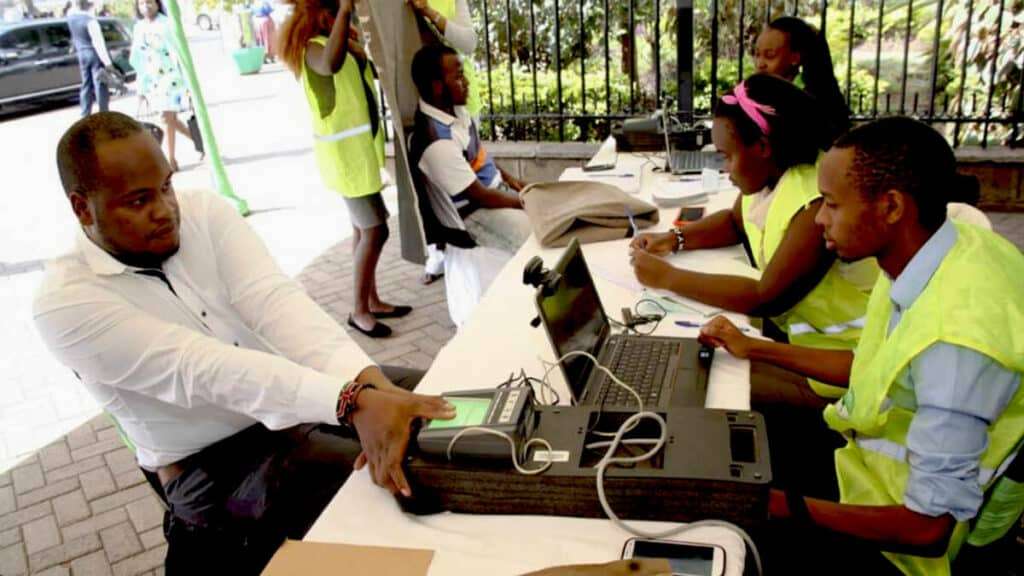
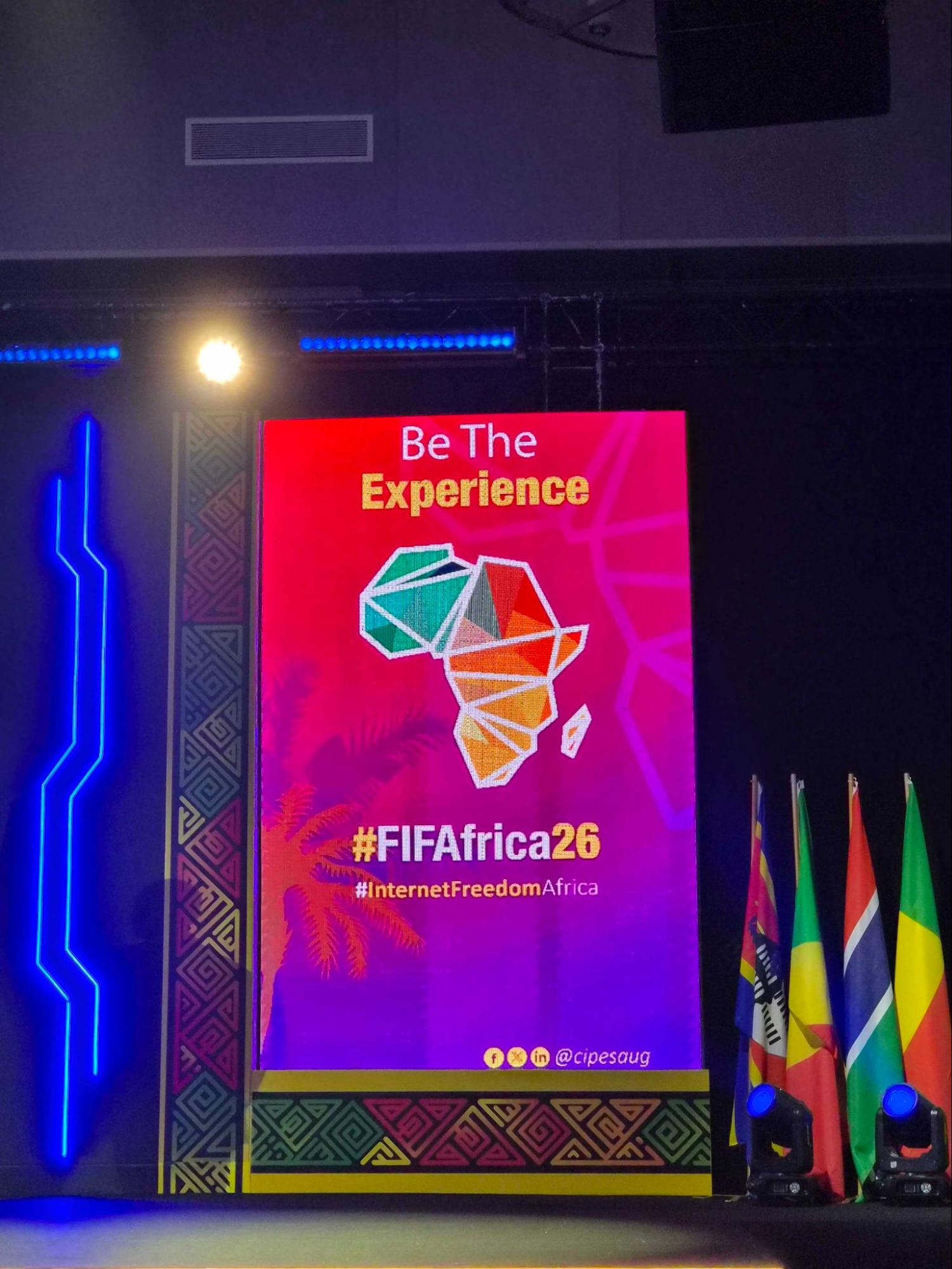
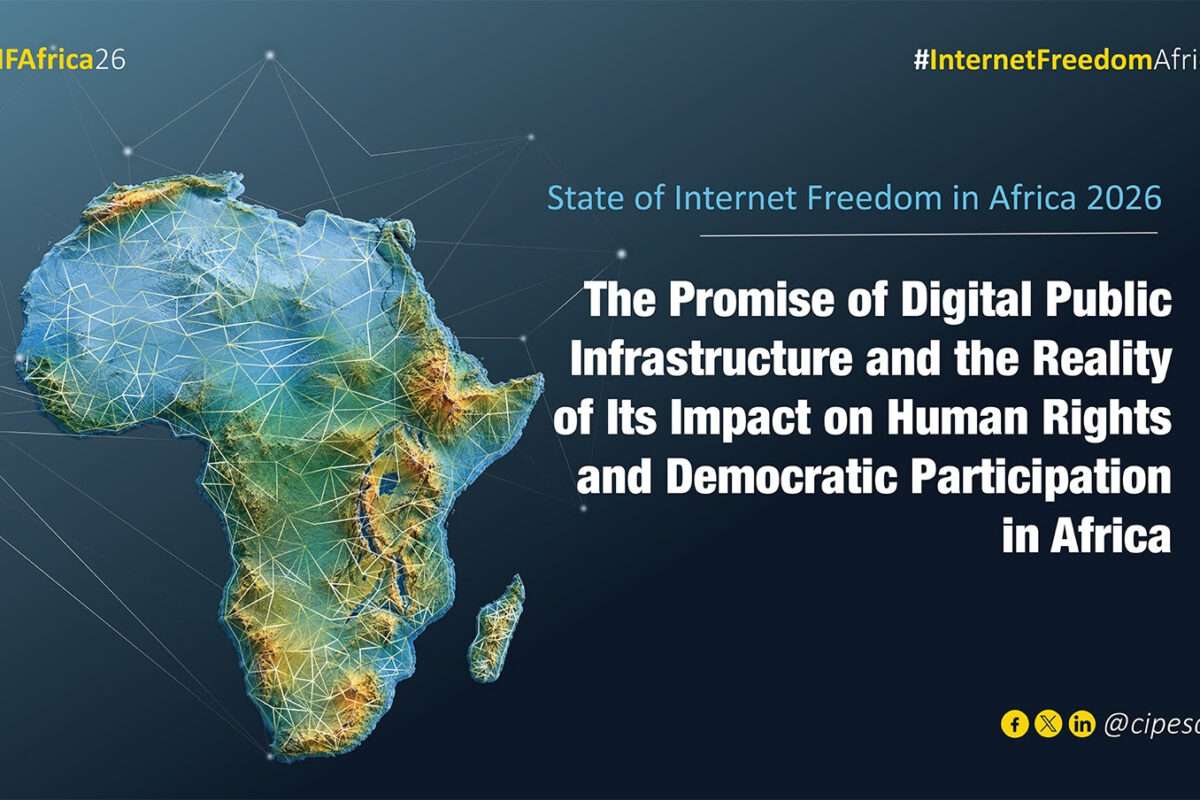
Study warns that expanding digital ID and public service systems could deepen exclusion without stronger governance and human rights safeguards.
A new report from CIPESA (Collaboration on International ICT Policy for East and Southern Africa) finds that the expansion of digital public infrastructure (DPI) systems across 11 African countries could have significant implications for human rights, democratic governance and civic participation.
The State of Internet Freedom in Africa 2026 report examines DPI developments in Egypt, Ethiopia, Ghana, Kenya, Nigeria, Senegal, South Africa, Tunisia, Uganda, Zambia and Zimbabwe. Governments across the continent are investing heavily in digital identity, payment and data-sharing systems to modernize public services and drive digital transformation.
But the report argues that insufficient attention has been paid to the governance and human rights implications of these systems. It calls for stronger rights-respecting frameworks before DPI becomes further entrenched in public administration and everyday life.
“Foundational credentials such as mandatory gateways and access to essential public and private services are increasingly facing flaws in architectural design and utility, technical failures, and inaccurate records,” the report claims in its conclusion.
The result is often widespread exclusion of vulnerable groups, according to the report, particularly affecting people with limited digital skills, poor connectivity or difficulties accessing civil registration systems which include rural communities, women, children and the elderly.
The report lists an extensive number of recommendations that can offset such problems. The recommendations include establishing robust governance such as rights-respecting national policies and laws, along with investment in complementary infrastructure to foster connectivity and capacity enhancement.
It recommends replacing coverage-only targets with disaggregated meaningful-connectivity and service-completion indicators; stopping internet shutdowns and other blanket connectivity restrictions as tools of political or security management, among other suggestions. The full State of Internet Freedom in Africa 2026 report can be read here.
The report was launched at the closing ceremony of the Forum on Internet Freedom in Africa (FIFAfrica26) held in Mauritius. Mauritius’ Minister of Information and Communication Technology, Dr Avinash Ramtoh, described DPI as “a critical infrastructure in any forward-looking country” and stressed the need to ensure digital systems are inclusive, accessible and rights-respecting.
The report’s release marked the conclusion of FIFAfrica26, a four-day gathering that brought together policymakers, researchers, civil society organizations, journalists, technologists, activists and development partners from across Africa and beyond. Discussions focused on issues including AI, data governance, platform accountability, digital inclusion and security, and civic participation. A recurring message was that technology is inseparable from society and that decisions about the design, governance and use of digital systems have profound consequences for rights, participation and power.
As Africa’s digital transformation accelerates, the report argues that these questions will become increasingly important in shaping how citizens access services, engage with governments and exercise their rights in the years ahead.
The Centre for Human Rights, Faculty of Law, University of Pretoria participated in the 13th Forum on Internet Freedom in Africa (FIFAfrica26), held in Mauritius from 28 September to 1 October 2026. Hosted by the Collaboration on International ICT Policy for East and Southern Africa (CIPESA) in partnership with the Mauritius-based Halley Movement Coalition, the Forum brought together policymakers, regulators, civil society organisations, academics, journalists, technology practitioners, private sector actors and digital rights advocates from across Africa and beyond to engage on the continent’s evolving digital landscape. CIPESA highlighted Mauritius’ growing role in technology-driven governance and digital transformation, including its work on AI regulation and digital public services, noting it as one of the reasons for hosting FIFA.
Dr Avinash Ramtohul, Mauritius’ Minister of Information Technology, Communication and Innovation delivered the Forum’s keynote address. His Keynote centred on the emerging debate on responsible AI governance through his book, Safeguarding Democracy in the Age of Artificial Intelligence – AIRA: Who Serves Whom? The publication examines the expanding role of AI in public administration and democratic decision-making and considers regulatory approaches aimed at ensuring that AI systems are developed and deployed responsibly, with appropriate safeguards for rights, transparency and accountability.
FIFAfrica26 provided a platform for discussions on some of the most pressing questions facing Africa’s digital future, including digital democracy and civic participation, data governance and sovereignty, artificial intelligence and emerging technologies, platform accountability, digital inclusion, the digital economy and trade, movement building, and digital security and safety. The Forum also sought to strengthen African participation in global digital governance processes and shape the continent’s contribution to emerging debates on technology and rights.
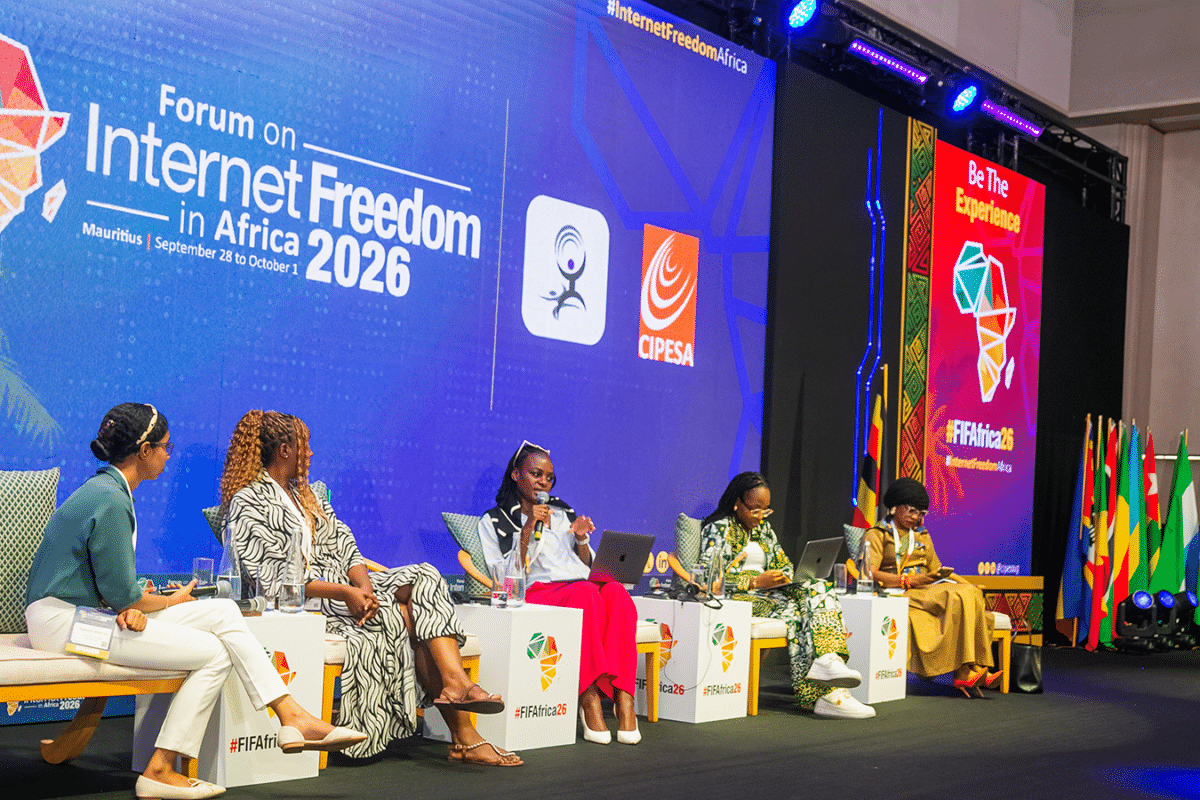
Our Belinda Matore participated as a panellist in a discussion on “Children, AI and the Age Debate in Africa,” alongside Adeboro Odunlami, Lillian Kariuki and Afia Asantewaa Asare-Kyei. The session examined the growing debate over restricting social media access for children under 16 and questioned whether blanket age restrictions are appropriate for African contexts. The discussion focused on the need to balance child protection with children’s rights to participation, expression, information, education and digital access. Panellists considered whether African countries should adopt emerging international approaches or develop regulatory responses that reflect local realities. The panel also explored the growing use of AI and conversational technologies by children, highlighting emerging concerns around privacy, safety, autonomy, discrimination and harmful content. This raised the need for regulatory frameworks that anticipate technological developments and address risks at the design and deployment stages, rather than responding only after harm occurs. A further focus was age assurance, including the tension between protecting children and safeguarding their privacy and personal data. The discussion emphasised that age-verification mechanisms should incorporate data minimisation and should not create additional risks through unnecessary collection of sensitive information. The session advocated for a rights-based and context-sensitive approach to child online safety. Rather than relying solely on restricting access, African regulatory approaches should promote safer digital environments, platform accountability and age-appropriate protections while recognising differences across the continent in connectivity, affordability, language, disability, digital literacy, identification and patterns of technology use.
Michael Aboneka, also from the Centre for Human Rights, attended and participated as a panellist in two sessions starting with day zero’s panel discussion on AI governance in Africa where his major discussion revolved around meaningful participation of all communities of Africa in the framing of these governance frameworks. He further discussed the role of Civil Society, emphasizing advocacy and holding governments and tech platforms accountable to ensure that AI benefits all persons without exclusion and that its harms are checked and mitigated at every stage. The second panel, organised by the Digital Rights Alliance Africa, focused on the role of bar associations in protecting and promoting internet Freedom through challenging internet shutdowns. Michael emphasised that the greatest of all, is ensuring the promotion of rule of law which will ensure enjoyment of freedom of expression online without arbitrarily being gagged. Internet shutdowns should not happen at all and any state must demonstrate any internet throttling or shutdown through the law. He called upon bar associations in Africa to rise to the occasion and enhance research advocacy and strategic litigation to protect the freedoms both online and offline. He further called upon the judiciary to exercise their judicial power in accordance with the will of the people and the constitutions of Africa in protecting these freedoms.
For the Centre for Human Rights, participation in FIFAfrica26 provided an important opportunity to contribute to continental discussions at the intersection of children’s rights, digital rights, artificial intelligence and technology governance. It also reinforced the importance of ensuring that African voices remain central to debates about how emerging technologies should be regulated and how rights can be protected in increasingly digital societies.
As AI and digital platforms become increasingly embedded in children’s everyday lives, questions of age, access and protection will require continued engagement between human rights practitioners, policymakers, regulators, technology companies, researchers and, importantly, children themselves. The Centre for Human Rights was pleased to contribute its expertise to these important regional conversations at FIFAfrica26, working alongside CIPESA and ICNL, and to the Day Zero Forum on Regional AI Governance convened by the Global Centre on AI Governance. These spaces are critical to advancing rights-respecting approaches to AI and digital governance that are grounded in African realities and perspectives.
This article was first published by the Center for Human Rights on October 13, 2026, on its website.
Last week, we had the opportunity to participate in the Forum on Internet Freedom in Africa (FIFAfrica) 2026, one of Africa’s largest and most important digital rights conferences. We are grateful to have had the opportunity to share OONI tools at the conference and learn from participants.
This year, the 13th edition of FIFAfrica took place in Mauritius between September 28, 2026 to October 1, 2026. The first two days included pre-conference events, while the last two days included the program of the main conference. The FIFAfrica 2026 agenda covered a wide range of important digital rights topics, including tech-facilitated gender-based violence, internet shutdowns, and AI governance, among many others.
This year, the 13th edition of FIFAfrica took place in Mauritius between September 28, 2026 to October 1, 2026. The first two days included pre-conference events, while the last two days included the program of the main conference. The FIFAfrica 2026 agenda covered a wide range of important digital rights topics, including tech-facilitated gender-based violence, internet shutdowns, and AI governance, among many others.
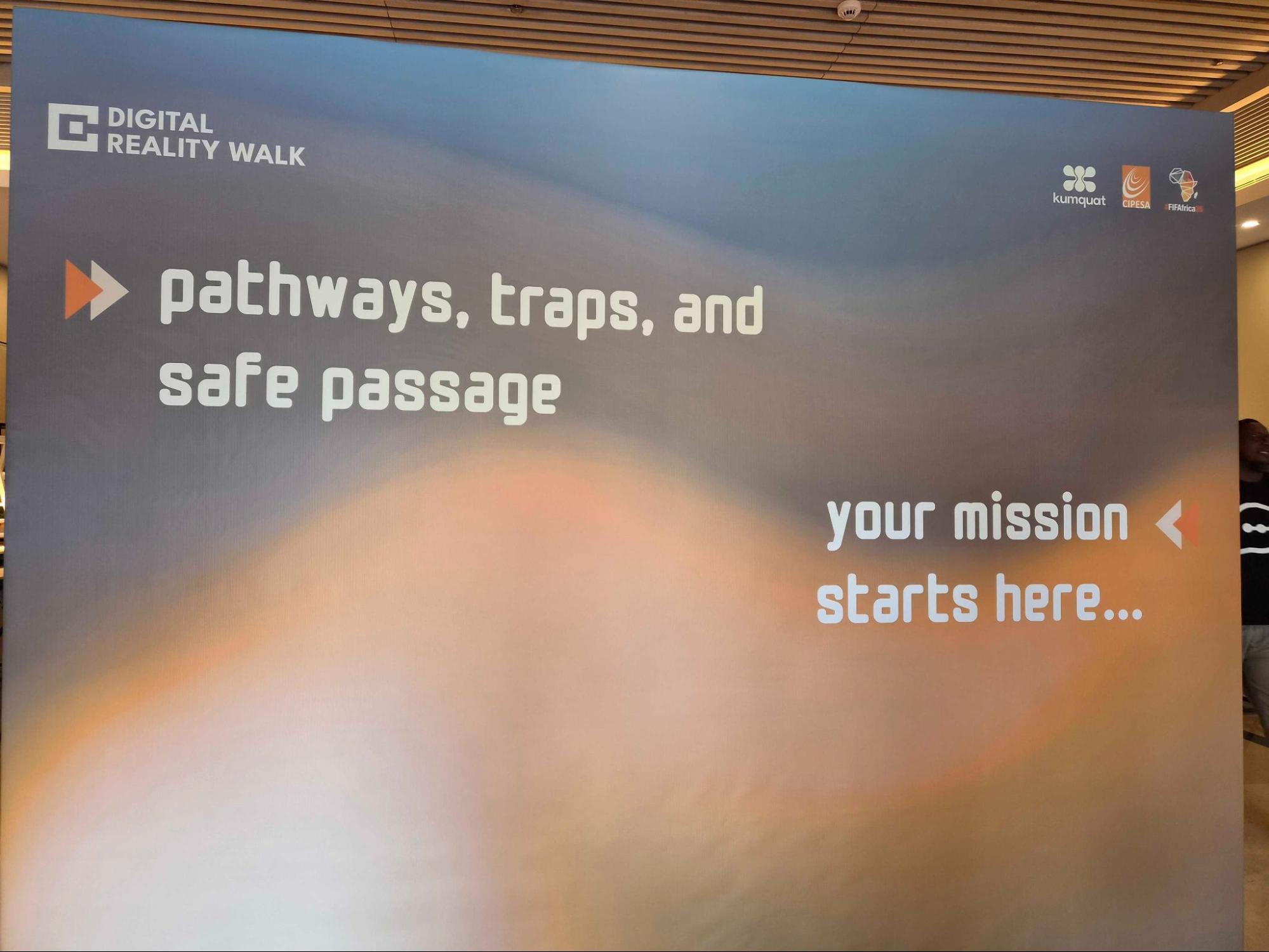
Notably, during the main conference days (September 30th and October 1st, 2026), OONI was one of the tools featured in the Digital Reality Walk, which provided participants an immersive experience to learn about digital security and internet shutdown related tools.
Digital Reality Walk
Image: Digital Reality Walk at the Forum on Internet Freedom in Africa (FIFAfrica) 2026.
This year, FIFAfrica 2026 launched the Digital Reality Walk: a fun and interactive way to learn about a variety of digital security and internet shutdown related tools.
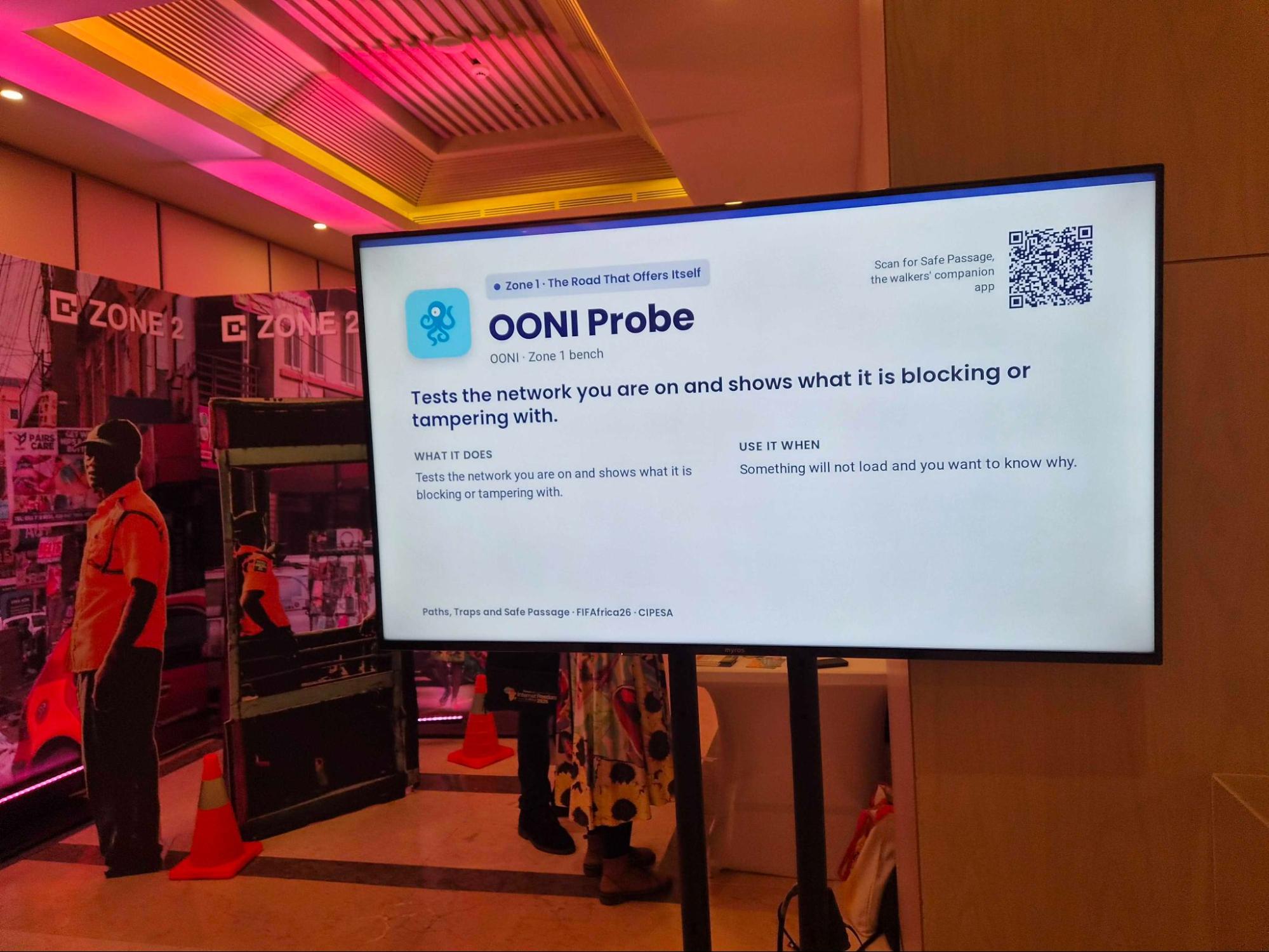
Hosted on both days of the main conference (September 30th and October 1st, 2026), participants used the Safe Passage app, developed specifically for the Digital Reality Walk. The Safe Passage app illustrated the route of the Digital Reality Walk, comprising four zones, each featuring different tools and their developers. The tools featured as part of FIFAfrica’s Digital Reality Walk were ButterBox, Orbot, Tor Browser, OONI Probe, Tella, Shira, Dash Chat, and Shout Messages.
To navigate the Digital Reality Walk, participants used a mission log which provided a storyline, guiding them towards several zones where different tools (and their developers) were stationed. OONI was stationed in zone 1, where we engaged with FIFAfrica 2026 participants of the Digital Reality Walk. The storyline that brought participants to zone 1 involved difficulty with internet access and concerns of an upcoming internet shutdown. As participants approached us, we engaged them with the use of our OONI Probe app to measure network interference.
Image: OONI Probe featured in the Digital Reality Walk at the Forum on Internet Freedom in Africa (FIFAfrica) 2026.
As Mauritius does not currently implement major blocks, we collaborated with the conference organizers on setting up an exhibition network that blocked access to major social media platforms (e.g., Facebook, WhatsApp, Instagram, TikTok, YouTube, Linkedin, etc.), providing a simulated environment of internet censorship. This enabled participants (who connected to the exhibition network) to gain a practical, hands-on experience of measuring social media blocks with OONI Probe. To avoid sending false measurements for publication, we ensured that participants had the publication of results disabled in their OONI Probe apps when running tests on the exhibition network.
Through our two-day engagement with participants at the Digital Reality Walk, some key things we learned are:
OONI Probe users need a faster and easier way to test major social media platforms;
While many participants were already familiar with OONI Probe (and many already promote the use of OONI Probe in their communities), fewer were familiar with OONI Explorer: our web platform that hosts all OONI measurements published from around the world.
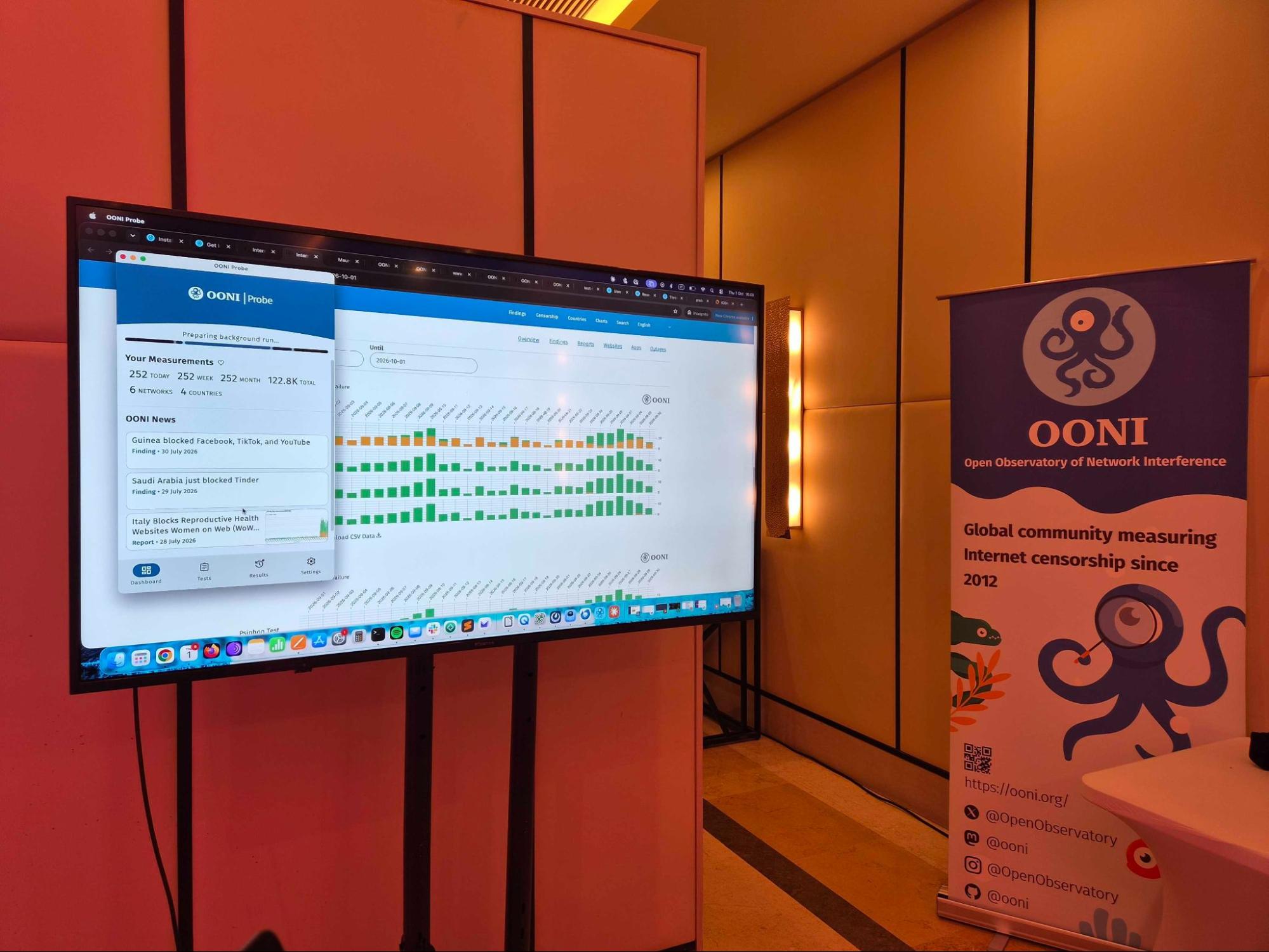
We therefore provided live demos for both OONI Probe and OONI Explorer in our zone of the Digital Reality Walk. As part of our OONI Probe live demos, we walked participants through the latest features and settings, illustrating how they can customize their use of the tool to measure specific forms of censorship (such as the blocking of specific social media websites). Even though OONI Probe automatically prioritizes the testing of major social media websites, we learned that there is still a need to enable users to more dynamically measure such websites when social media blocks emerge during protests or elections (which frequently occurs across Africa). This is valuable feedback that will inform our OONI Probe app development efforts.
Image: Live demo of OONI Probe and OONI Explorer at the Digital Reality Walk of the Forum on Internet Freedom in Africa (FIFAfrica) 2026.
Through the OONI Explorer live demos, we showed how participants can generate charts based on aggregate views of OONI data, interpret measurements, and compare measurements across networks and countries over time. This not only helped participants gain practical skills and knowledge on how to access and interpret OONI data from around the world, but it also helped illustrate the value of running OONI Probe and the need to increase measurement coverage across Africa. As an outcome, we hope that more digital rights defenders in Africa will use OONI data as part of their research and advocacy efforts over the next few years.
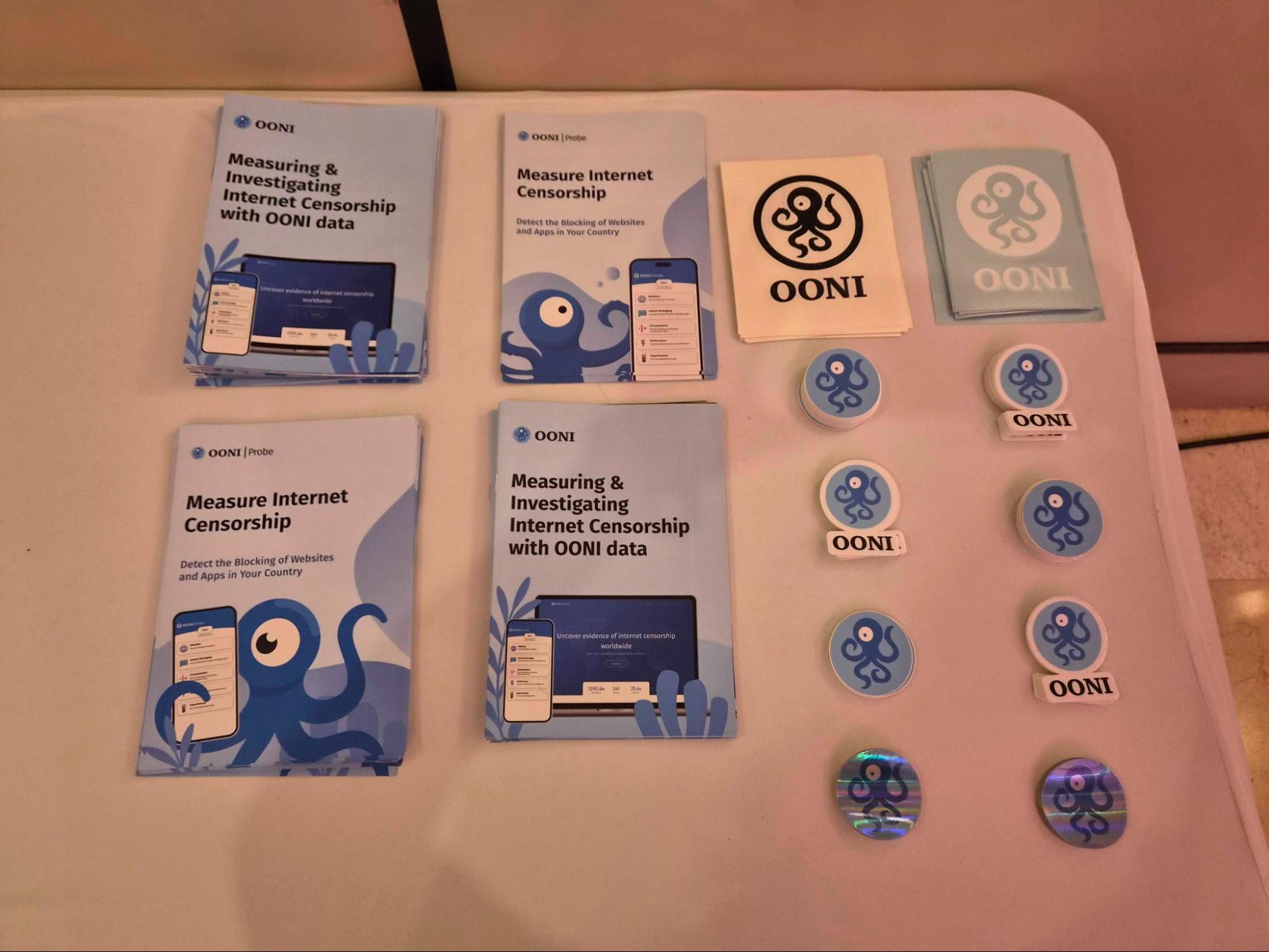
Beyond live demos and simulated censorship testing, we also had the opportunity to share OONI flyers and stickers with participants of the Digital Reality Walk. We thank all participants for their feedback and questions, and for engaging with the use of OONI tools and data!
Image: OONI stickers and flyers at the Digital Reality Walk of the Forum on Internet Freedom in Africa (FIFAfrica) 2026.
Overall, participating at FIFAfrica 2026 provided us a valuable opportunity to learn about current and emerging digital rights threats and needs in Africa, engage with many of our African partners, meet many other organizations doing important digital rights work, and learn about new initiatives in the region. We expect that this will help with strengthening our existing collaborations, and fostering the development of new collaborations. We are also grateful to have had the opportunity to share OONI tools and data, and to collect feedback which will help inform the improvement of our tools and methods.
Our deepest thanks to CIPESA for organizing and hosting FIFAfrica 2026, and for having us in the Digital Reality Walk! Warm thanks to all participants, and to everyone else who helped make this important event possible.
Image: Forum on Internet Freedom in Africa (FIFAfrica) 2026.
OONI posted this article on 6 October 2026. Read more on its website here.
For four days, the Forum on Internet Freedom in Africa (FIFAfrica26) brought together voices from across Africa and beyond to engage in discussions and debates on the state and future of internet freedom in Africa. The Forum concluded with the launch of the 2026 edition of the State of Internet Freedom in Africa report.
This year’s report examines how Digital Public Infrastructure (DPI) systems are reshaping the relationship between states and citizens, particularly in relation to digital rights, democratic governance and civic participation. Much of the existing work on DPI has focused on technical design, economic efficiency and service delivery outcomes, with far less attention given to the human rights implications of DPI governance and implementation.
The report was officially launched during the FIFAfrica26 closing ceremony by Dr the Hon. Avinash Ramtoh, Minister of Information and Communication Technology of Mauritius. “DPI is a critical infrastructure in any forward-looking country,” he said. “We must make our internet more inclusive, accessible and rights-respecting.”
The report documents how DPI deployment is affecting human rights, governance and democratic participation across 11 African countries: Egypt, Ethiopia, Ghana, Kenya, Nigeria, Senegal, South Africa, Tunisia, Uganda, Zambia and Zimbabwe. It provides evidence that can support civil society organisations, policymakers, development partners, regional institutions and technology providers in strengthening rights-respecting DPI governance frameworks before these systems become further entrenched in public administration and everyday life.
DPI is increasingly positioned as a foundation for digital transformation, offering systems that can support services such as digital identification, payments and data exchange. Across Africa, governments and development actors are investing in these systems as part of broader efforts to modernise public services and expand digital economies.
Hosted in Mauritius, FIFAfrica26 created space for policymakers, researchers, civil society organisations, journalists, technologists, activists, development partners and others to exchange experiences, challenge assumptions and interrogate some of the most pressing questions facing Africa’s digital society.
Since its inception in 2014, FIFAfrica has become an important convening space for shaping debates on digital rights, internet governance and civic freedoms across the continent. Its continued relevance lies in its ability to remain closely attuned to the changing realities of Africa’s digital landscape.
Across conversations on artificial intelligence, digital public infrastructure, data governance, platform accountability, digital inclusion, civic participation and digital security, the theme that remained constant was that technology is not separate from society. The systems we build, the rules that govern them and the choices made about their use have consequences for rights, participation and power.
As Africa’s digital transformation accelerates, these questions are becoming increasingly important. The systems being built today will shape how people access services, engage with governments, participate in public life and exercise their rights for years to come.
The Forum on Internet Freedom in Africa (FIFAfrica) has evolved in tandem with the prevailing concerns related to the internet in Africa. At its inception in 2014, discourse centred around who is connected and how to access information. While this remains pertinent today, Africa’s digital ecosystem has become far more complex.
This year, the Forum is hosted by the Collaboration on International ICT Policy in East and Southern Africa (CIPESA) in partnership with Mauritius-based Halley Movement Coalition. The keynote speech will be delivered by the Minister of Information Technology, Communication and Innovation of Mauritius.
FIFAfrica has become one of the continent’s most important convening spaces for shaping debate on digital rights, internet governance, and civic freedoms. Its continued relevance lies in its ability to remain closely attuned to the changing realities of Africa’s digital landscape, since its inception in 2014.
Within Africa’s digital rights ecosystem, the Forum serves the strategic function of connecting research, advocacy, policymaking, movement building, and public interest engagement in one forum. FIFAfrica is particularly significant because it places African digital rights interests within wider global conversations on technology governance, including for the Internet Government Forum (IGF), the World Summit on the Information Society (WSIS), and numerous others. At a time when decisions on Artificial Intelligence (AI), digital public infrastructure, content moderation, cross-border data governance, and online freedoms are increasingly shaped through international processes, FIFAfrica positions African stakeholders to contribute evidence and shape narratives in ways that are rooted in the continent’s own political, economic, and social contexts.
The four-day Forum kicks off with two days of 18 pre-events, followed by two days of the main programme which features 41 stand-out sessions, with participants from across Africa and beyond. The Forum has eight thematic areas covering digital democracy and civic participation, data governance and sovereignty, AI and emerging technologies, platform accountability, digital inclusion, digital economy and trade, movement building, and digital security and safety.
The agenda is built out of a selection of submissions received from more than 450 proposals received via a public call for sessions and travel support. The diversity of sessions submitted and selected is a reflection of the multiplicity of issues that the African tech ecosystem needs to address, many of which cannot be addressed in isolation. Questions about human rights and democracy increasingly intersect with technology and information. Meanwhile, data governance is tied to economic interests, while AI raises questions about exploitation, information integrity, access to information, and discrimination.
There will be strategic engagement between regulators, parliamentarians and the judiciary from across Africa on the Malabo Convention in a session hosted by Mzalendo Trust in partnership with CIPESA and the African Parliamentary Network on Internet Governance (APNIG). Further sessions engaging National Human Rights Institutions (NHRIs) on human rights and technology will be hosted by the Danish Human Rights Institute in partnership with CIPESA and the International Commission of Jurists (ICJ). The Forum will also serve as the host of the pre-launch of the Copenhagen Principles for the Protection of Human Rights in the Digital Age.
Meanwhile, AI remains a focus area of discussion due to its intersection with data protection, worker rights, access to information, information integrity, and democracy. Entities including Digital Action, the Global Center on AI Governance, the Electronic Frontier Foundation (EFF), the African Internet Rights Alliance (AIRA), the Digital Rights Alliance of Africa (DRAA), BBC Media Action, UNESCO, Article 19, Lighthouse Reports, Africa Uncensored, the Office of the United Nations High Commissioner for Refugees, and the Oversight Board will explore these concerns, including through the lens of child online safety, migration, media regulation, digital markets, and digital democracy.
Further sessions entail discussions on the state of data governance, civic space, strategic litigation, technology and human rights, digital identity, DPI, gender and civic participation as part of broader debates on data, power and emerging technologies. Speakers will be drawn from entities such as Oxfam, Pan African Lawyers Union (PALU), and the Digital Impact Alliance (DIAL).
Platform accountability is also a key area of interest, including how it can be humanised, while sessions on corporate power and the push-back against internet shutdowns will involve speakers from Nguvu Collective, Lumate, and the Oversight Lab. Long-term FIFAfrica partner, Access Now, will host a session marking a decade of the #KeepItOn campaign. Internet shutdowns remain key violations of freedom of expression and access to information on the continent and also have significant economic and infrastructural consequences.
For years, platform regulation has often been framed around content moderation and how platforms should respond to harmful content. However, various FIFAfrica26 sessions are extending the debate into how platforms collect and use data, how they design recommendation and advertising systems, how they assess risk, how they respond to government demands, how they conduct due diligence, and what remedies they provide to people harmed by their systems. This is particularly important in Africa, where the global scale of technology companies is vastly greater than the capacity of national regulators and courts to scrutinise them. Entities such as CIPESA, GIZ, the Oversight Board, and EFF will host sessions challenging these narratives.
Sessions at the Forum will also reflect on shrinking civic space online and offline across the continent, including learnings from the cancellation of Rightscon and the rise in authoritarian practices across the continent. These will be candidly addressed by Access Now, RightsCon, and Amnesty International.
Practical sessions also form part of the agenda, with Masakhane, International Research & Exchanges Board (IREX) and the Human Rights Foundation (HRF) each hosting skills workshops on Safety By Design for African tech ecosystems, AI and languages, as well as Bitcoin as a tool for human rights activism and civil society respectively.
FIFAfrica26 continues in its path of inclusion and will entail language interpretation and adherence to a code of conduct that encourages active participation and contribution online and offline.