
By CIPESA Writer |
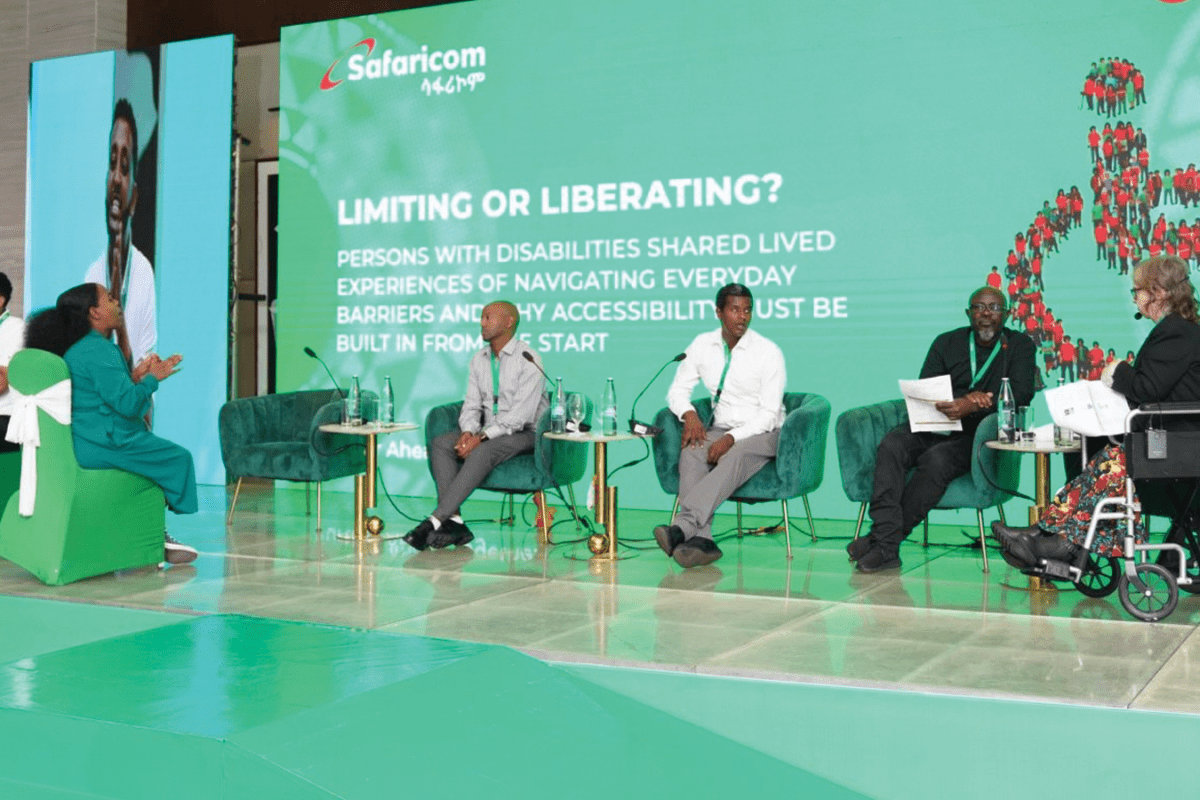
On April 24, 2026, Safaricom Ethiopia Telecommunications convened a Disability Inclusion Conference in Addis Ababa. While opening the conference, Safaricom Ethiopia CEO, Wim Vanhelleputte emphasised the importance of involving persons with disabilities in the design of digital products and services by invoking the principle of “Nothing About Us Without Us.”
The conference, which brought together stakeholders from government, academia, tech companies, Disabled Persons Organisations (DPOs), and civil society, nevertheless highlighted a more persistent reality. For the approximately 15-17 million Ethiopians living with a disability, roughly one in six people, the disconnect between policy commitments and lived reality remains significant in access to services and devices.
As Abayneh Gujo, Executive Director of the Federation of Ethiopian Associations of Persons with Disabilities (FEAPD), noted during the conference, the disconnect continues to affect access not only to digital services, but also to education, healthcare, and economic opportunity. Many other African countries face a similar gap.
A Sector That Continues to Treat Accessibility as Optional
Findings from a CIPESA report, Access Denied: How Telecom Operators in Africa Are Failing Persons with Disabilities, show that major telecom companies across markets in Africa continue to treat accessibility as a secondary consideration. The study assessed 10 telecom companies in Botswana, Kenya, Nigeria, South Africa and Uganda. For example, staff were untrained and often unaware of what accessible products existed. Procurement policies did not require accessibility features, while physical access to sales outlets was poor. Discounted rates for persons with disabilities were virtually non-existent, with only Vodacom South Africa offering them in the form of a modest SMS bundle for customers with hearing impairments.
These shortcomings reflect a sector that has long treated accessibility as optional, often framing it as corporate social responsibility rather than a legal obligation. There has been progress since the report, but it has been driven by individual company initiatives rather than coordinated, sector-wide change anchored in regulatory standards and enforceable requirements.
Even where accessibility features exist, accessible smartphones, assistive technologies and mobile data remain out of reach for many persons with disabilities, especially in rural and low-income settings. This is because access depends not only on whether technologies are available, but whether people can afford to use them consistently over time. Studies, including by the International Telecommunications Union (ITU), identify affordability as a major barrier to digital inclusion, yet telecom pricing and product design still rarely reflect the realities faced by persons with disabilities.
What Ethiopia Must Do
Ethiopia has ratified the UN Convention on the Rights of Persons with Disabilities (CRPD) and has disability-related provisions in existing laws. However, the country still lacks a comprehensive and enforceable disability rights law. Such a law should set clear obligations on telecom operators, broadcasters and digital service providers, including standards for accessible customer care, websites, mobile applications and emergency communications. In the absence of such a framework, accountability rests largely on goodwill.
Beyond legislation, Ethiopia has an opportunity to use its newly established Universal Access Fund, administered by the Ethiopian Communications Authority, to finance accessible digital centres, assistive devices, software, and skills-building programmes for persons with disabilities. As the country expands its digital public infrastructure, such as mobile money, e-government services, and digital identity systems, accessibility cannot remain an afterthought that is addressed only after systems are deployed.
What Telecom Operators Must Do
Based on CIPESA’s research, telecom operators need to prioritise accessibility by establishing an accessibility function at the senior management level, and embedding universal design into products and services from the earliest stages of development. As Karen Smit, Accessibility Lead at Vodacom Group, noted, many of the barriers experienced by persons with disabilities are created not by disability itself, but by how technologies, systems and environments are designed.
Operators also need procurement policies that require accessible handsets to be stocked across outlets, including in rural areas, alongside practical training for customer-facing staff on accessibility and assistive technologies. Regular user experience research with Disabled Persons Organisations (DPOs) should become standard practice rather than a one-off consultation exercise. As Vanhelleputte argued in his opening remarks, inclusion is not about designing for persons with disabilities, but designing with them.
One finding from CIPESA’s research still stands out. Several operators do not have reliable data on the number of customers with disabilities. Disaggregating customer data by disability status is a necessary foundation for any serious inclusion strategy.
Operators should also recognise that accessible design is good business. Captions, voice navigation and simplified interfaces benefit older users, people with low digital literacy and anyone navigating a screen in difficult conditions. Features initially developed for persons with disabilities, such as audiobooks and voice-based tools, have often become popular and proved beneficial to broader groups of users.
Safaricom Ethiopia can build on Vodacom’s accessibility initiatives in South Africa and Safaricom Kenya’s disability employment targets and digital skills programmes to move from commitments to measurable implementation. This includes conducting accessibility audits across retail outlets and digital platforms, improving accessibility across customer service channels, embedding accessibility into services such as M-PESA, and establishing sustained partnerships with DPOs to support ongoing user testing and co-design.
At the Addis conference, Vanhelleputte noted that accessible e-learning, telemedicine and mobile money can help bypass barriers that have historically excluded persons with disabilities from economic and social life.
According to Dr Wairagala Wakabi, the Executive Director of Collaboration on International ICT Policy for East and Southern Africa (CIPESA), the next step for telecom operators is ensuring that these commitments are reflected in everyday customer experience, backed by clear targets, public reporting, and sustained engagement between telecom operators, regulators, government, civil society and organisations of persons with disabilities.
From Commitment to Action
Some civil society actors are doing their part through research, advocacy and sustained engagement. However, this is not a substitute for what regulators, governments and telecom operators are obliged to do through enforceable commitments, clear standards, and measurable implementation.
For Africa’s estimated 260 million persons with disabilities, digital inclusion must stop being a conference theme and start being a measurable reality. As governments digitise banking, identity systems, healthcare and public services, inaccessible digital infrastructure increasingly means exclusion from economic and civic life itself.
CIPESA will continue documenting these gaps, engaging stakeholders, and holding the sector to account until meaningful inclusion is achieved.