State of Internet Freedom In Africa Report

2025 State of Internet Freedom In Africa Report Documents the Implications of AI on Digital Democracy in Africa

By Juliet Nanfuka | 

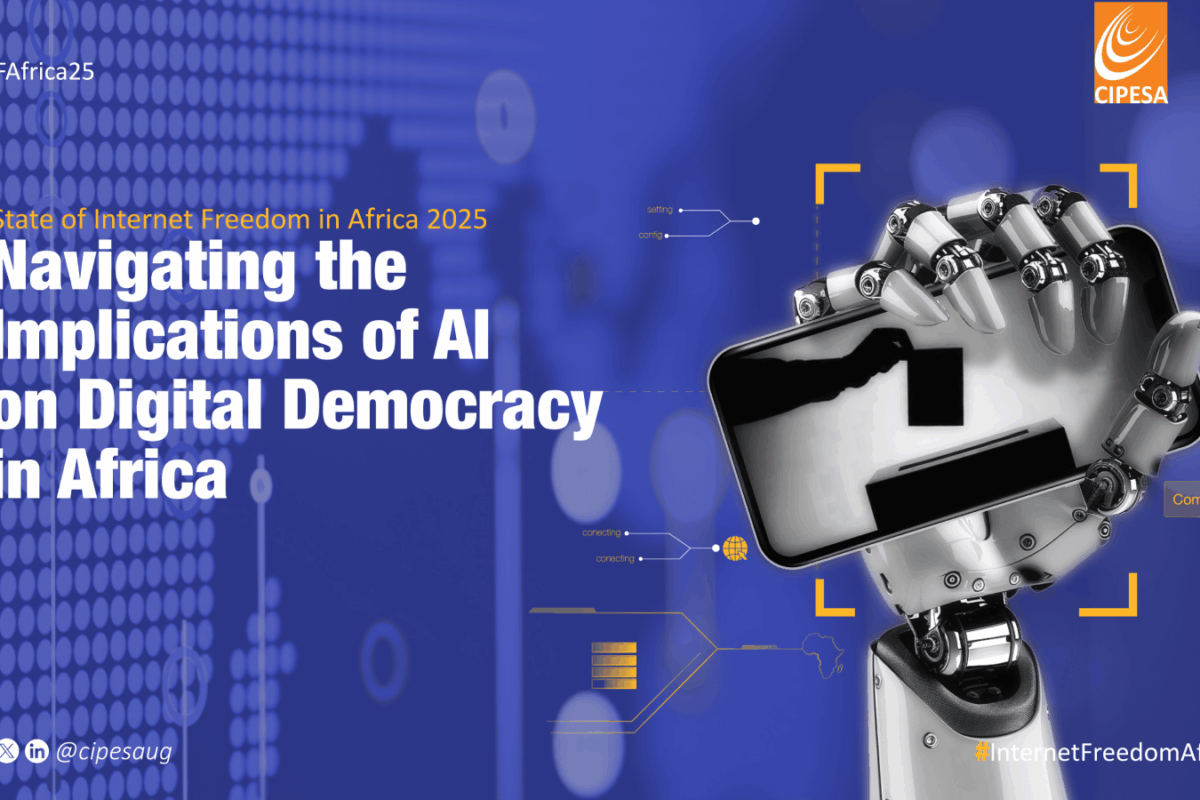
The 2025 edition of the Forum on Internet Freedom in Africa (FIFAfrica25) concluded on a high note with the unveiling of the latest State of Internet Freedom in Africa (SIFA) report. Titled Navigating the Implications of AI on Digital Democracy in Africa, this landmark study unpacks how artificial intelligence is shaping, disrupting, and reimagining civic space and digital rights across the continent.

Drawing on research from 14 countries (Cameroon, Egypt, Ethiopia, Ghana, Kenya, Mozambique, Namibia, Nigeria, Rwanda, Senegal, South Africa, Tunisia, Uganda, and Zimbabwe), the report documents both the immense promise and the urgent perils of AI in Africa. It highlights AI’s potential to strengthen democratic participation, improve public services, and drive innovation, while also warning of its role in amplifying surveillance, disinformation, and exclusion. 

Using a qualitative approach, including literature review and key informant interviews, the report shows that AI is rapidly transforming how Africans interact with technology, yet AI also amplifies existing vulnerabilities, introduces new challenges that undermine fundamental freedoms, and deepens existing inequalities.

The report notes that the political environment is a crucial determinant of AI’s trajectory, with strong democracies generally enabling a positive outcome. Top performers in freedom and governance indices such as South Africa, Ghana, Namibia, and Senegal are more likely to set the standard to AI rollout in Africa. Conversely, countries with lower democratic credentials such as Cameroon, Egypt, Ethiopia, and Rwanda risk constraining AI’s potential or deploying it to amplify digital authoritarianism and political repression.  

Countries such as South Africa, Tunisia and Egypt that have a higher internet access and technological development, Gross Domestic Product (GDP) per capita, and score highly on the Human Development Index (HDI), are more likely to lead in AI. Meanwhile, countries with lower or weaker levels of digital infrastructure face greater challenges and higher risks of AI replicating and worsening existing divides. Such countries include Cameroon, Mozambique and Uganda.

The political environment is a crucial determinant of AI’s trajectory, with strong democracies generally enabling a positive outcome. Economic and developmental status also dictates the capacity for AI development and adoption. 

Despite these challenges, the report documents that AI offers substantial value to the public sector by improving service delivery and enhancing transparency. Governments are leveraging AI tools for efficiency, such as the South African Revenue Services (SARS) AI Assistant for tax assessments and Nigeria’s Service-Wise GPT for streamlined governance document access. In Kenya, the Sauti ya Bajeti (Voice of the Budget) platform fosters fiscal transparency by allowing citizens to query and track government expenditures. Furthermore, countries like Tunisia and Uganda are using AI models within tax bodies to detect fraud, while Rwanda is deploying AI for judicial system improvements and identity management at borders.

The private sector and academic institutions are driving AI-inspired innovation, particularly in the areas of FinTech, AgriTech, and Natural Language Processing (NLP). For the latter, notable efforts to localise AI include Tunisia’s TUNBERT model for Tunisian Arabic, and Ghana’s Khaya, an open-source AI-powered translator tailored for local languages. In Ghana, the DeafCanTalk, is an AI-powered app that enables bidirectional translation between sign language and spoken language, and has enhanced accessibility for deaf users. Rwanda has integrated AI into healthcare using drone delivery systems for medical supplies, while Cameroon and Uganda use AI to assist farmers with pest identification. 

However, despite increasing investment, such as the ongoing USD 720 million investment in compute power by Cassava Technologies across hubs in South Africa, Egypt, Kenya, Morocco, and Nigeria, Africa receives  significantly lower AI funding than global counterparts.

Moreover, while AI is gaining traction across many sectors, the proliferation of AI-generated misinformation and disinformation is a pervasive and growing challenge that poses a critical threat to electoral integrity. During South Africa’s 2024 elections, deepfake videos were circulated to manipulate perceptions and endorse political entities. Similarly, during elections and protests in Kenya and Namibia, deepfake technology and automated campaigns were used to discredit opponents. 

The report also documents that governments are deploying AI-powered surveillance technologies, which has led to widespread privacy violations and a chilling effect on freedoms. For example, pro-government propagandists in Rwanda utilised Large Language Models (LLMs) to mass-produce synthetic messages on social media, simulating authentic support and suppressing dissenting voices. Meanwhile, algorithmic bias and exclusion are producing discriminatory outcomes, particularly against low-resource African languages. Also, AI-based content moderation is often ineffective because it lacks contextual understanding and fails to capture local nuance.

A key finding in the report is that across the continent, the pace of AI development far outstrips regulatory readiness. None of the 14 study countries has AI-specific legislation. Instead, fragmented laws on data protection, cybercrime, and copyright are stretched to cover AI, but remain inadequate. Data protection authorities are under-resourced, under-staffed, and often lack the technical expertise required to audit or govern complex AI systems.

Although many national AI strategies are emerging, they prioritise economic growth while neglecting human rights and accountability. This is also fuelled by policy processes that are often opaque and dominated by state actors, with limited multistakeholder participation.

The report  stresses that without deliberate, inclusive, and rights-centred governance, AI risks entrenching authoritarianism and exacerbating inequalities. 

To avoid the current trajectory that AI is taking in Africa, in which AI risks entrenching authoritarianism and exacerbating inequalities, the report calls for a human-centred AI governance framework built on inclusivity, transparency, and context. 

It also makes recommendations, including enacting comprehensive AI-specific legislation, instituting mandatory human rights impact assessments, establishing empowered AI and data governance institutions, and promoting rights-based advocacy. Others are building technical capacity across governments, civil society and media, and developing policies that prioritise equity and human dignity alongside innovation.

AI offers Africa the opportunity to foster innovation, strengthen democracy, and drive sustainable development. This edition of the State of Internet Freedom in Africa report provides an evidence-based roadmap to ensure that Africa’s digital future remains open, inclusive, and rights-respecting.Find the report here.
Lesotho Charts a Progressive Path on Data Governance

Patricia Ainembabazi |

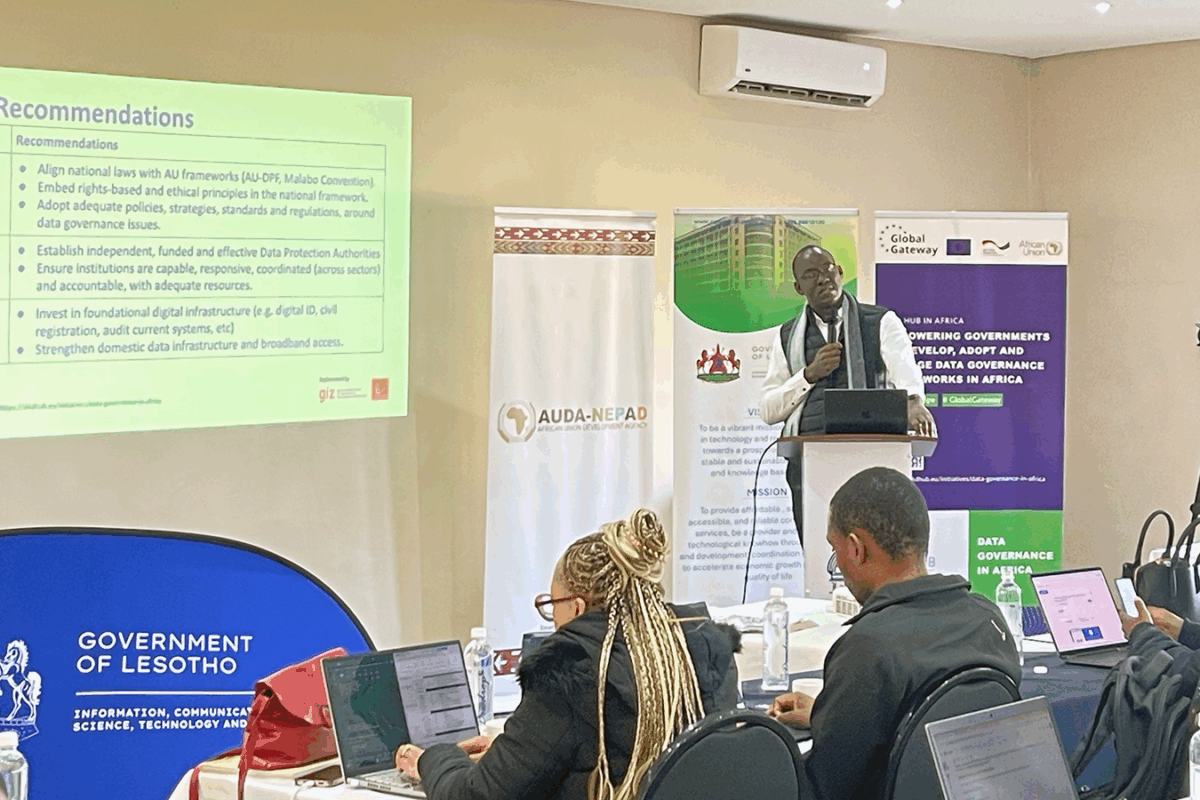
From July 28-31, Lesotho’s highland capital of Maseru buzzed with the energy of a data governance sprint. Government officials, academics, civil society, and the private sector assembled for an intensive workshop convened by the African Union Development Agency-NEPAD and AU-GIZ with support from the Lesotho Ministry of Information, Communications, Science, Technology and Innovation (MICSTI), the Collaboration on International ICT Policy for East and Southern Africa (CIPESA) and the Kenya ICT Action Network (KICTANet). 

The gathering drew over 60 participants with a shared proposition: get everyone on the same page about what good data governance should look like in Lesotho and how to achieve it. The workshop charted a pathway for Lesotho to domesticate the African Union Data Policy Framework (AUDPF), which was adopted by the African Union in 2022. The framework provides guidance to Member States on building harmonised, rights-respecting data governance policies that support digital transformation, innovation, and secure cross-border data flows. 

Lesotho’s efforts to domesticate this framework come at a crucial time, as the country seeks to modernise its digital policy environment and position itself within the continent’s increasingly data-driven economy. These efforts, including the workshop, demonstrate Lesotho’s political will to align with continental digitalisation and data governance blueprints such as the AUDPF and to build an inclusive digital future.

Lesotho’s Minister for Information, Communications, Science, Technology and Innovation,  Nthati Moorosi, stated that the various workshop sessions aimed to “instill more understanding on data governance for clear domestication of the [AUDPF] policy framework.” Sessions saw participants introduced to key concepts such as data as a public good, the importance of ethics and accountability, and the need for harmonised cross-border data policies. Case studies from across Africa helped illustrate how sound data governance could unlock value in sectors such as agriculture, health, and education.  

CIPESA led practical sessions during which participants examined Lesotho’s Data Protection Act and the draft Data Management Policy (2025) in relation to key African instruments, including the AUDPF, the Malabo Convention, the African Continental Free Trade Area (AfCFTA), and the Digital Transformation Strategy for Africa. Participants noted areas of alignment between the national and continental frameworks but also identified gaps in the national data governance framework

As such, effort went into mapping out where Lesotho is already aligned with the AUDPF and which specific areas need to be prioritised in revising the country’s legal and policy framework. Recommendations from this mapping exercise included establishing an independent Data Protection Commission, clarifying categories of personal and sensitive data, improving inter-agency coordination, and investing in digital literacy and data privacy skills across the public and private sectors. 

The workshop was complemented by a strategic stakeholder survey to assess perceptions on Lesotho’s data governance framework. The survey revealed a minimal understanding of the country’s data governance frameworks. Over half of the respondents stated that existing policies were outdated and unable to address current challenges such as cross-border data flows, cloud computing, and evolving digital privacy threats. Respondents identified digital trade, innovation, health research, and public trust as key benefits of robust data governance. Responses further emphasised the importance of inclusive policymaking, public awareness on data governance campaigns in both English and Sesotho, alongside targeted support for rural and marginalised communities. 

By the conclusion of the meeting, participants had agreed on a national data governance strengthening roadmap. With contributions coming from the broad spectrum of participants, who included Princess Senate Mohato Seeiso, through to Principal Secretary Kanono Leronti Ramashamole of the MICSTI, who noted that “data is no longer a by-product of administration but a strategic national asset”, the meeting reinforced the value multistakeholderism holds in digital governance. 

Undeniably, no single institution can carry the policymaking load by itself. The real story from Maseru is the multistakeholder collaboration, with the MICSTI anchoring at home, the AUDA-NEPAD and AU-GIZ bringing continental scaffolding, civic and technical communities translating frameworks into practice, and a steady emphasis that data governance has to work for everyone. Ultimately, this process could enable Lesotho to not just catch up with the AUDPF, but to help show what a people-centred, innovation-friendly data ecosystem looks like in the region. 

As regional leaders in digital rights and digital governance, CIPESA is committed to providing continued support to Lesotho as it works to reform its policies and institutionalise stronger data governance mechanisms. Our involvement helps to ensure that national efforts are grounded in best practices and aligned with continental and global standards, such as those set by the African Union.

Digital Public Infrastructure in Africa: A Looming Crisis of Equitable Access, Digital Rights, and Sovereign Control

Digital Public Infrastructure in Africa: A Looming Crisis of Equitable Access, Digital Rights, and Sovereign Control
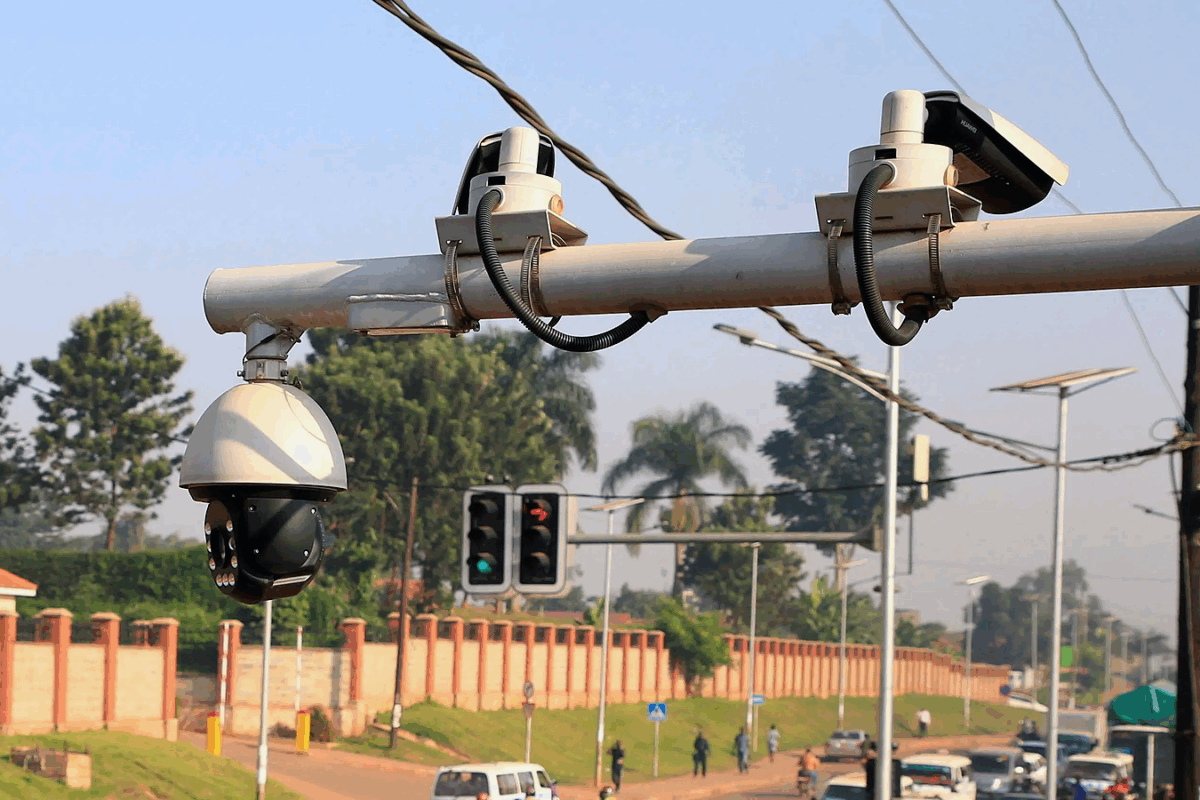
CCTV system in Kampala, Uganda. REUTERS/James Akrena (2019)

By Brian Byaruhanga

In June 2025, Uganda suspended its Express Penalty Scheme (EPS) for traffic offences, less than a week after its launch, citing a “lack of clarity” among government agencies. While this seemed like a routine administrative misstep, it exposed a more significant issue: the brittle foundation upon which many digital public infrastructures (DPI) in Africa are being built. DPI refers to the foundational digital systems and platforms, such as digital identity, payments, and data exchange frameworks, which form the backbone of digital societies, similar to how roads or electricity function in the physical world

This EPS saga highlighted implementation gaps and illuminated a systemic failure to promote equitable access, public accountability, and safeguard fundamental rights in the rollout of DPI.

When the State Forgets the People

The Uganda EPS, established under section 166 of the Traffic and Road Safety Act, Cap 347, serves as a tech-driven improvement to road safety. Its  goal is to reduce road accidents and fatalities by encouraging better driver behaviour and compliance with traffic laws. By allowing offenders to pay fines directly without prosecution, the system aims to resolve minor offences quickly and to ease the burden on the judicial system. Challenges faced by the manual EPS system, which the move to the automated system aimed to eliminate, include corruption (reports of deleted fines, selective enforcement, and theft of collected penalties). 

At the heart of the EPS was an automated surveillance and enforcement system, which used Closed Circuit Television (CCTV) cameras and license plate recognition to issue real-time traffic fines. This system operated with almost complete opacity. A Russian company, Joint Stock Company Global Security, was reportedly entitled to 80% of fine revenues, despite making minimal investment, among other significant legal and procurement irregularities. There was a notable absence of clear contracts, publicly accessible oversight mechanisms, or effective avenues for appeal. Equally concerning, the collection and storage of extensive amounts of sensitive data lacked transparency regarding who had access to it.

Such an arrangement represented a profound breach of public trust and an infringement upon digital rights, including data privacy and access to information. It illustrated the minimal accountability under which foreign-controlled infrastructure can operate within a nation. This was a data-driven governance mechanism that lacked the corresponding data rights safeguards, subjecting Ugandans to a system they could neither comprehend nor contest.

This is Not an Isolated Incident

The situation in Uganda reflects a widespread trend across the continent. In Kenya, the 2024 Microsoft–G42 data centre agreement – announced as a partnership with the government to build a state-of-the-art green facility aimed at advancing infrastructure, research and development, innovation, and skilling in Artificial Intelligence (AI) –  has raised serious concerns about data sovereignty and long-term control over critical digital infrastructure. 

In Uganda, the National Digital ID system (Ndaga Muntu) became a case study in how poorly-governed DPI deepens structural exclusion and undermines equitable  access to public services. A 2021 report by the Centre for Human Rights and Global Justice found that rigid registration requirements, technical failures, and a lack of recourse mechanisms denied millions of citizens access to healthcare, education, and social protection. Those most affected were the elderly, women, and rural communities. However, a 2025 High Court ruling ignored evidence and expert opinions about the ID system’s exclusion and implications for human rights. 

Studies estimate that most e-government projects in Africa end in partial or total failure, often due to poor project design, lack of infrastructure, weak accountability frameworks, and insufficient citizen engagement. Many of these projects are built on imported technologies and imposed models that do not reflect the realities or governance contexts of African societies.

The clear pattern is emerging across the continent: countries  are integrating complex, often foreign-managed or poorly localised digital systems into public governance without establishing strong, rights-respecting frameworks for transparency, accountability, and oversight. Instead of empowering citizens, this version of digital transformation risks deepening inequality, centralising control, and undermining public trust in government digital systems.

The State is Struggling to Keep Up

National Action Plans (NAPs) on Business and Human Rights, intended to guide ethical public–private collaboration, have failed to address the unique challenges posed by DPI. Uganda’s NAP barely touches on data governance, algorithmic harms, or surveillance technologies. While Kenya’s NAP mentions the digital economy, it lacks enforceable guardrails for foreign firms managing critical infrastructure. In their current form, these frameworks are insufficiently equipped to respond to the complexity and ethical risks embedded in modern DPI deployments.

Had the Ugandan EPS system been subject to stronger scrutiny under a digitally upgraded NAP, key questions would likely have been raised before implementation:

  • What redress exists for erroneous or abusive fines?
  • Who owns the data and where is it stored?
  • Are the financial terms fair, equitable, and sovereign?

But these questions came too late.

What these failures point to is not just a lack of policy, but a lack of operational mechanisms to design, test and interrogate DPI before roll out. What is needed is a practical bridge that responds to public needs and enforces human rights standards.

Regulatory Sandboxes: A Proactive Approach to DPI

DPI systems, such as Uganda’s EPS, should undergo rigorous testing before full-scale deployment. In such a space, a system’s logic, data flows, human rights implications, and resilience under stress are collectively scrutinised before any harm occurs. This is the purpose of regulatory sandboxes – platforms that offer a structured, participatory, and transparent testbed for innovations. 

Thus, a regulatory sandbox could have revealed and resolved core failures of Uganda’s EPS before rollout, including the controversial revenue-sharing arrangement with a foreign contractor.

How Regulatory Sandboxes Work: Regulatory sandboxes are useful for testing DPI systems and governance frameworks such as revenue models in a transparent manner, enabling stakeholders to examine the model’s fairness and legality. This entails publicly revealing financial terms to regulators, civil society, and the general public. Secondly, before implementation, simulated impact analyses can also highlight possible public backlash or a decline in trust. Sandboxes can be used for facilitating pre-implementation audits, making vendor selection and contract terms publicly available, and conducting mock procurements to detect errors.  By defining data ownership and access guidelines, creating redress channels for data abuse, and supporting inclusive policy reviews with civil society, regulatory sandboxes make data governance and accountability more clear.

This shift from reactive damage control to proactive governance is what regulatory sandboxes offer. If Uganda had employed a sandbox approach, the EPS system might have served as a model for ethical innovation rather than a cautionary tale of rushed deployment, weak oversight, and lost public trust.

Beyond specific systems like EPS or digital ID, the future of Africa’s digital transformation hinges on how digital public infrastructure is conceived, implemented, and governed. Foundational services, such as digital identity, health information platforms, financial services, surveillance mechanisms, and mobility solutions, are increasingly reliant on data and algorithmic decision-making. However, if these systems are designed and deployed without sufficient citizen participation, independent oversight, legal safeguards, and alignment with the public interest, they risk becoming tools of exclusion, exploitation, and foreign dependency. 

Realising the full potential of DPIs as a tool for inclusion, digital sovereignty, and rights-based development demands urgent and deliberate efforts to embed accountability, transparency, and digital rights at every stage of their lifecycle.

Photo Credit – CCTV system in Kampala, Uganda. REUTERS/James Akena (2019)

Elevating Children’s Voices and Rights in AI Design and Online Spaces in Africa

By Patricia Ainembabazi

As Artificial Intelligence (AI) reshapes digital ecosystems across the globe, one group remains consistently overlooked in discussions around AI design and governance: Children. This gap was keenly highlighted at the Internet Governance Forum (IGF) held in June 2025 in Oslo, Norway, where experts, policymakers, and child-focused organisations called for more inclusive AI systems that protect and empower young users.

Children today are not just passive users of digital technologies; they are among the most active and most vulnerable user groups. In Africa, internet use among youths aged 15 to 24 was partly fuelled by the Covid-19 pandemic, hence their growing reliance on digital platforms for learning, play, and social interaction. New research by the Digital Rights Alliance Africa (DRAA), a consortium hosted by the Collaboration on International ICT Policy for East and Southern Africa (CIPESA), shows that this rapid connectivity has amplified exposure to risks such as harmful content, data misuse, and algorithmic manipulation that are especially pronounced for children.

The research notes that AI systems have become deeply embedded in the platforms that children engage with daily, including educational software, entertainment platforms, health tools, and social media. Nonetheless, Africa’s emerging AI strategies remain overwhelmingly adult-centric, often ignoring the distinct risks these technologies pose to minors. At the 2025 IGF, the urgency of integrating children’s voices into AI policy frameworks was made clear through a session supported by the LEGO Group, the Walt Disney Company, the Alan Turing Institute, and the Family Online Safety Institute. Their message was simple but powerful: “If AI is to support children’s creativity, learning, and safety, then children must be included in the conversation from the very beginning”.

The forum drew insights from recent global engagements such as the Children’s AI Summit of February 2025 held in the UK and the Paris AI Action Summit 2025. These events demonstrated that while children are excited about AI’s potential to enhance learning and play, they are equally concerned about losing creative autonomy, being manipulated online, and having their privacy compromised. A key outcome of these discussions was the need to develop AI systems that children can trust; systems that are safe by design, transparent, and governed with accountability.

This global momentum offers important lessons for Africa as countries across the continent begin to draft national AI strategies. While many such strategies aim to spur innovation and digital transformation, they often lack specific protections for children. According to DRAA’s 2025 study on child privacy in online spaces, only a handful of African countries have enacted child-specific privacy laws in the digital realm. Although instruments like the African Charter on the Rights and Welfare of the Child recognise the right to privacy, regional frameworks such as the Malabo Convention, and even national data protection laws, rarely offer enforceable safeguards against AI systems that profile or influence children.

Failure to address these gaps will leave African children vulnerable to a host of AI-driven harms ranging from exploitative data collection and algorithmic profiling to exposure to biased or inappropriate content. These harms can deprive children of autonomy and increase their risk of online abuse, particularly when AI-powered systems are deployed in schools, healthcare, or entertainment without adequate oversight.

To counter these risks and ensure AI becomes a tool of empowerment rather than exploitation, African governments, policymakers, and developers must adopt child-centric approaches to AI governance. This could start with mainstreaming children’s rights such as privacy, protection, education, and participation, into AI policies. International instruments like the UN Convention on the Rights of the Child and General Comment No. 25 provide a solid foundation upon which African governments can build desirable policies.

Furthermore, African countries should draw inspiration from emerging practices such as the “Age-Appropriate AI” frameworks discussed at IGF 2025. These practices propose clear standards for limiting AI profiling, nudging, and data collection among minors. Given that only 36 out 55 African countries currently have data protection laws, with few of them containing child-specific provisions, policymakers must take efforts to strengthen these frameworks. Such reforms should require AI tools targeting children to adhere to strict data minimisation, transparency, and parental consent requirements.

Importantly, digital literacy initiatives must evolve beyond basic internet safety to include AI awareness. Equipping children and caregivers with the knowledge to critically engage with AI systems will help them navigate and question the technology they encounter. At the same time, platforms similar to the Children’s AI Summit 2025 should be replicated at national and regional levels to ensure that African children’s lived experiences, hopes, and concerns shape the design and deployment of AI technologies.

Transparency and accountability must remain central to this vision. AI tools that affect children, whether through recommendation systems, automated decision-making, or learning algorithms, should be independently audited and publicly scrutinised. Upholding the values of openness, fairness, and inclusivity within AI systems is essential not only for protecting children’s rights but for cultivating a healthy, rights-respecting digital environment.

As the African continent’s digital infrastructure expands and AI becomes more pervasive, the choices made today will define the digital futures of generations to come. The IGF 2025 stressed that children must be central to these choices, not as an afterthought, but as active contributors to a safer and more equitable AI ecosystem. By elevating children’s voices in AI design and governance, African countries can lay the groundwork for an inclusive digital future that truly serves the best interests of all.

The opportunity for Africa to take a leadership role in the WSIS+20 review process

By Elonnai Hickok (GNI), Anriette Esterhuysen (APC), and Lillian Nalwoga (CIPESA)

Alongside the Africa School for Internet Governance (AfriSIG) and the regional Africa Internet Governance Forum (AfricaIGF) that took place in late May in Dar-es-Salaam, Tanzania, the Global Network Initiative (GNI), the Association for Progressive Communications (APC), and the Collaboration on International ICT Policy for East and Southern Africa (CIPESA) held several meetings that brought together civil society, governments, parliamentarians, and the private sector from across the continent to reflect on Africa’s role in the World Summit on the Information Society +20 (WSIS+20) Review Process . This included a session at the AfriSIG, the regional workshop “The Road to WSIS+20”, and the session “Forging connections between Internet Governance, human rights, and development through the WSIS+20 process” at the AfricaIGF. The meetings highlighted key policy priorities across countries that stakeholders would like reflected in the WSIS+20 review process, surfaced challenges in past implementation of the WSIS framework and action lines with forward-looking recommendations, and emphasized the opportunity for Africa to play a leadership role in the WSIS+20 review process going forward. 

In 2025, the world faces an important moment for digital governance. The WSIS+20 review — marking two decades since the World Summit on the Information Society — will not only evaluate past progress but also shape the future of Internet governance, rights, and development as it considers how to align the Global Digital Compact (GDC) into the WSIS process and evaluates the renewal of the Internet Governance Forum (IGF). For Africa, this is a pivotal opportunity to lead, to center the continent’s priorities in global digital discourse, and to champion a people-centered, equitable information society.

Since its founding documents — the Geneva Declaration, the Plan of Action, and the Tunis Agenda — the WSIS has put forward a vision rooted in multistakeholderism, human rights, and inclusive digital development. But nearly 20 years on, that vision is under question amid accelerating technological shifts, geopolitical tensions, billions of people without meaningful connectivity, and the marginalization of voices from the Global Majority. Africa’s leadership in the WSIS+20 review process will be an essential counterbalance to these challenges.

Africa has always participated strongly in WSIS, with robust contributions from the technical community, civil society, many governments, and the WSIS prize winners who have taken high-level action lines and worked to implement them at the local community level. Recent months have seen growing momentum across the continent for the WSIS+20 review process. From Dar-es-Salaam to Cotonou, the United Nations Economic Commission for Africa (UNECA) has convened civil society, governments, parliamentarians, and the private sector to reflect on Africa’s role in the WSIS. This has been complemented by national-level dialogues driven by civil society with participation from the technical community, including in ZambiaGhana, and South Africa. These dialogues reveal national-level priorities and the potential for Africa to shape the future of the WSIS.

Two major declarations — the Dar es Salaam Declaration and the Cotonou Declaration — highlight Africa’s vision for the WSIS. They underscore issues central to the region: bridging the digital divide, fostering AI innovation, building resilient digital public infrastructure, ensuring data governance, and using the WSIS as a catalyst for Agenda 2063 and the Sustainable Development Goals (SDGs). Crucially, both declarations reaffirm the importance of the IGF and call for its strengthening.

The global WSIS+20 Preparatory and Stocktaking Meeting held on May 30 gave us some insight into the positions that African countries will take. Statements by Uganda, South Africa, and Morocco aligned with the G77’s call for digital sovereignty and technology transfer, recognized the importance of leveraging the WSIS to achieve the 2030 Agenda, called for aligning the GDC with the WSIS, and highlighted new challenges such as AI, but stopped short of unanimously advocating for the renewal, strengthening, and making the mandate of the IGF permanent.  

The geopolitical landscape only heightens the urgency of strong participation from African countries. The United States’ controversial stance during the 28th session of the Commission on Science and Technology for Development (CSTD) — particularly its resistance to language on climate, the SDGs, and diversity, equity, and inclusion — has raised alarms. While this may signal a shift in the U.S. government’s approach, it also can be seen as opening space for Africa and other actors to step into leadership roles and push for a rights-based digital future that reflects national priorities.

To do so, Africa must bring vision and coordinated diplomacy. The continent has several key regional frameworks and strategies: the African Digital Compact, the Digital Transformation Strategy for Africa, the African Union Convention on Cyber Security, and the Continental Artificial Intelligence Strategy offer policy blueprints for the continent’s digital development. The African Commission on Human and People’s Rights has also passed several important resolutions including the Resolution on Access to Data 2024 and the Declaration of Principles on Freedom of Expression 2019.  There is an opportunity to actively inject these priorities and values into global processes like the WSIS+20 and the GDC.

Nationally, progress is tangible. Countries are expanding digital public infrastructure, reforming cybersecurity laws, and working to reduce connectivity gaps. At the same time, challenges persist — from Internet shutdowns and online surveillance to shrinking civic space and rising digital authoritarianism, as highlighted in Paradigm Initiative’s 2024 Londa report. These challenges underscore why a rights-respecting, multistakeholder framework is essential for Africa’s digital future.

As the WSIS+20 review process continues, it will be critical that African countries actively engage in the process, emphasizing inclusive multistakeholder participation from all stakeholders as articulated by a cross-stakeholder group in the Five-Point Plan for an Inclusive WSIS+20 Review and a further set of eight recommendations. Going forward, the UNECA and the African Union will play an essential role in not only coordinating regional positions but in ensuring this participation. 

The WSIS+20 presents a timely chance for Africa to take forward the original spirit of the WSIS: a digital world built by and for the people, across sectors and borders. To seize this moment, it will be important for African governments and regional bodies to:

  1. Participate robustly and cohesively in the WSIS+20 review process, ensuring Africa’s priorities are reflected.
  2. Promote inclusive multistakeholder engagement, proactively engaging with and empowering civil society, academia, and the technical community to robustly participate in the WSIS+20 process and inform the position of African governments.
  3. Advance a shared agenda rooted in human rights, sustainable development, the renewal of the IGF,  the alignment of the GDC into the WSIS, and Africa-centric innovation and development.

The discussions at AfricaIGF indicated an important opportunity for Africa to shape the future of the WSIS process and ensure country-level and regional priorities are reflected in the review and implementation, that the review process is truly multistakeholder, and results in implementation that is meaningful and effective.