State of Internet Freedom in Africa 2022: The Rise of Biometric Surveillance

FIFAfrica22 |

Digital biometric data collection programmes are becoming increasingly popular across the African continent. Governments are investing in diverse digital programmes to enable the capture of biometric information of their citizens for various purposes.

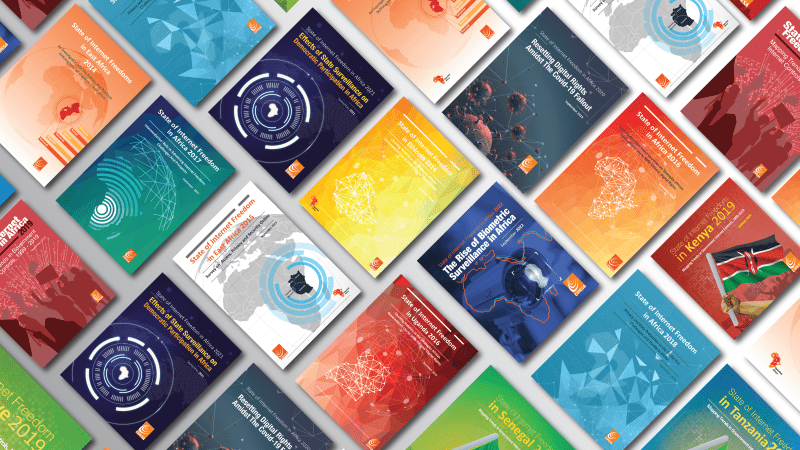
A new report by the Collaboration on International ICT Policy for East and Southern Africa (CIPESA) documents the emerging and current trends in biometric data collection and processing in Africa. It focuses on the deployment of national biometric technology-based programmes in 16 African countries, namely Angola, Cameroon, Central African Republic, Democratic Republic of Congo, Kenya, Lesotho, Liberia, Mozambique, Nigeria, Senegal, Sierra Leone, Tanzania, Togo, Tunisia, Uganda, and Zambia.

The report published today is the ninth consecutive one issued by CIPESA since 2014 under the State of Internet Freedom in Africa series. It was released at the Forum on Internet Freedom in Africa (FIFAfrica), which is taking place in Lusaka, Zambia.

The biometric data collection programmes reviewed by the report include those related to civil registrations, such as the issuance of National Identity cards, biometric voter registration and identification programmes, government-led CCTV programmes with facial recognition capabilities, national ePassport initiatives, refugees’ registration, and mandatory biometric SIM card registration.

The report highlights the key trends, potential risks, challenges and gaps relating to biometric data collection projects in the continent. These include limited public engagement and awareness campaigns; inadequate legal frameworks that heighten risks to privacy; exclusion from accessing essential services; enhanced surveillance, profiling and targeting; conflicting interests and the wide powers of third parties; and limited capacity and training. 

Consequently, the study notes that these biometric programmes are being implemented in countries with poor digital rights records, declining democracy and rising digital authoritarianism, which casts doubt on the integrity of biometric data collection programmes and the resultant databases. Thus, viewed collectively, the developments, trends and risks outlined in the report heighten concern over the growing threats to the right to privacy of personal data and potential violations of digital rights on the continent. 

Finally, the report presents recommendations to various stakeholders including the government, civil society, the media, the private sector and academia, which, if implemented, will go a long way in addressing data protection and privacy gaps, risks and challenges in the study countries. 

The key recommendations include a call to:

  • Governments to implement the laws and policy frameworks on identity systems and data protection and privacy while paying keen attention to compliance with regionally and internationally recognised principles and minimum standards on data protection and privacy for biometric data collection and require the adoption of human rights-based approaches. 
  • Countries without data protection and privacy laws such as Liberia, Mozambique, Sierra Leone and Tanzania should expedite the process of enacting appropriate data protection laws so as to guarantee the data protection and privacy rights of their citizens. 
  • Governments to ratify the AU Convention on Cyber Security and Personal Data Protection (Malabo Convention) to ensure government commitment to regional data protection and privacy as a means to hold them accountable.
  • Governments to establish independent and robust oversight data protection bodies to regulate data and privacy protection including biometric data.
  • Civil society to engage in advocacy and lobby governments to develop, implement and enforce privacy and data protection policies, laws and institutional frameworks that are in compliance with regional and international minimum human rights standards.
  • Civil society to monitor, document and report on the risks, threats, abuses and violations of privacy and human rights associated with biometric data collection programmes, and propose effective solutions to safeguard rights in line with international human rights standards.
  • The media to progressively document and report on initiatives such as advocacy by civil society and other stakeholders to keep track of developments. 
  • The media to conduct investigative journalism to identify and expose privacy violations arising from the implementation of biometric data collection programmes.
  • The private sector to take deliberate efforts to ensure that all their respective biometric data collection programmes and systems are developed implemented and managed in compliance with best practices prescribed by the national, regional and international human rights standards and practices on privacy and data protection, including the UN Guiding Principles on Business and Human Rights.
  • The private sector to ensure that they progressively adopt and develop comprehensive internal privacy policies to guide the collection, storing and processing of personal data. 
  • The private sector to take deliberate efforts aimed at involving data subjects in the control and management of their personal data by providing timely information on external requests for information. 
  • Academia to conduct evidence-based research on data protection and privacy including biometrics, highlighting the challenges, risks, benefits and trends in biometric data collection programmes. 

The full State of Internet Freedom in Africa 2022 Report can be accessed here.

Lawyers Trained to Defend Digital Freedoms 

By Edrine Wanyama |

On July 28, 2022, 82 practicing advocates in Uganda were trained on defending digital rights and freedoms. The training was organised by the International Senior Lawyers Project, the Collaboration on International ICT Policy for East and Southern Africa (CIPESA), Uganda Law Society, and the Centre for Law and Democracy.

The sessions included an assessment of Uganda’s digital rights landscape, human rights issues affecting women journalists in Uganda, international freedom of expression norms, using international law to defend freedom of expression, and practices for shaping the legal framework for cybersecurity to effectively defend human rights.

In her opening remarks, the Uganda Law Society (ULS) vice president Diana Angwech stressed that it was crucial for the society to promote digital rights as they continued to face challenges.  She added that rights abuses tend to grow during certain seasons such as elections. The ULS Rule of Law Report of 2021 documented abuses such as the state revoking of broadcasting licenses without due process, attacks on journalists, including the assault of over 20 journalists and the shooting of journalists by state security agents while covering opposition campaigns and proceedings in 2021.

In setting the pace for the capacity building training, CIPESA unpacked Uganda’s legal regime for digital rights. The session covered the meaning, scope and importance of digital rights and emerging issues for lawyers’ attention. The rights covered include freedom of expression, access to information, data protection and privacy, rights of children and their protection, intellectual property, assembly and association, the right to be forgotten, anonymity, and equal access to digital technologies.

Uganda’s constitution provides for the rights to privacy, freedom of expression, and the right of access to information. However, the country’s legislation including the Press and Journalist Act, Penal Code Act, Data Protection and Privacy Act, 2019, Anti-Terrorism Act 2002 as amended 2015 and 2016, the Access to Information Act, 2005, the Official Secrets Act, Uganda Communications Act, 2013, Regulation of Interception of Communications Act, 2010, the Computer Misuse Act, 2011, the Anti-Pornography Act, 2014 and the Public Health (Control of COVID-19l) Rules 2021 limit the enjoyment of digital rights. These laws are largely marred by vague provisions and wide limitations which enable communications monitoring and interception, and undermine free expression.

Catherine Anite of the Small Media Foundation spoke about how Uganda was experiencing a deterioration in respect for press freedom. In 2022 Uganda fell seven places on the World Press Freedom Index ranking at 132 out of 180 countries analysed.

According to Anite, while gender equality is a prerequisite for human rights, democracy and social justice, gender disparities remain evident in the media. Female journalists across the globe face similar challenges, in addition to increased and appalling levels of violence both online and offline when compared to their male counterparts. She noted:

“Female journalists have reported suffering physical and online violence perpetrated by colleagues, public figures, strangers, anonymous perpetrators. We might be speaking about journalists but as lawyers some of these things apply to our contexts as well but we don’t speak about them. These trends have negatively impacted on diversity in media because of the exodus of female journalists, which has affected their equal participation in reporting, civil and political participation due to fears of violence.”

Toby Mendel and Raphael Vagliano, from the Centre for Law and Democracy, discussed international and regional laws  on freedom of expression which are applicable to Uganda. They highlighted provisions of such as  the Universal Declaration of Human Rights (Article 19), the International Covenant on Civil and Political Rights (Article 19), the African Charter on Human and Peoples’ Rights (Article 9), and the Declaration of Principles of Freedom of Expression and Access to Information in Africa which, among others, require member states to facilitate the rights to freedom of expression and access to information online. Under these instruments Uganda is obligated to respect, protect, promote and fulfill rights.

Richard Wingfield, the Head of the Media Law Working Group at the International Senior Lawyers Project (ISLP), explored case studies on using international law to defend freedom of expression, including approaches to arguments, support and intervention as well as the filing of amicus briefs to support litigation. He explained that lawyers in Uganda could support litigation, even in cases where they are not directly involved such as by offering professional support towards impactful and successful litigation, so as to contribute to the realisation of justice for freedom of expression rights.

Practices for shaping the legal framework for cybersecurity to effectively defend human rights were discussed. Cybersecurity is critical for ensuring confidentiality of personal data at all levels.

Advanced digital surveillance and forensic tools are needed to deal with modern cyber  threats; but governments can abuse those tools if government authority is not adequately checked by confidence-inducing institutions.

Tools for cyber security such as BitDefender, malware-bytes, full disk encryption with bitlocker or file vault and strong password are critical tools for cyber security. Individuals must always be aware of potential data breaches by state authorities which often compromise individual privacy through surveillance and forensics. Common state excuses for cyber security violations were often justified by a need to protect national security, crime prevention and public order. Similarly, while laws create obligations for collectors and processors of personal data, those actors often violate the laws and, this necessitates legal intervention.

The lawyers were called upon to pay particular attention to problematic laws and policies, bills and practices so as to challenge them with the aim of establishing an enabling environment for the protection and enjoyment of digital rights.

The specific key emerging recommendations for lawyers from the capacity building training included to:

  • Collaborate with other stakeholders like civil society and academia to engage in litigation to promote freedom of expression, data and privacy rights.
  • Analyse bills and laws to establish gaps and push for repeal of regressive laws and amendment of regressive provisions.
  • Constantly write on topical issues on freedom of expression, data protection and privacy so as to raise awareness among individuals of their rights and expose any cases of violation for enhanced accountability and transparency.
  • Push telecommunication companies and internet service providers to comply with human rights when doing business, in compliance with the UN Guiding Principles on Business and Human Rights.
  • Respect individual data protection and privacy rights in their dealings to minimise conflict with the Data Protection and Privacy Act, 2019 and regional and international human rights instruments on freedom of expressions, data protections and other human rights.
  • Make use of human rights reporting mechanisms such as the Universal Periodic Review and Special Rapporteur engagements to hold the government accountable for decisions undertaken in respect to digital rights.
  • Push and demand that the government complies with regional and international human rights standards, and signs and ratifies key instruments such as the African Union Convention on Cyber Security and Personal Data Protection so as to enhance digital rights protection.

Take deliberate efforts aimed at skilling themselves in the digital rights field. This will ensure that they are equipped with knowledge and skills on dealing with issues that affect digital rights.

How the ADRF is Building Capacity and Traction for Digital Rights Advocacy in Africa

By Apolo Kakaire |

Three years since it was launched and with USD 649,000 disbursed to 52 beneficiaries across 39 African countries, the Africa Digital Rights Fund (ADRF) is powering digital rights policy advocacy and engagement across the continent. According to several beneficiaries, the ADRF is a unique funding initiative that has broken ranks with traditional funders’ structures, and to considerable effect.

The Fund is lauded for adopting a simple application process, allowing for flexibility in implementation, breaking barriers for little-known actors, enabling grantees to build on previous initiatives to ensure greater reach and impact, and supporting local context-specific and responsive projects. This, according to grantees and collaborators who were part of a June 2022 virtual convening on ADRF advocacy experiences which was aimed at promoting learning and best practice.

The ADRF was launched in April 2019 in recognition of the growing role of technology in fostering democracy and promoting equity on the African continent amidst rising arrests of activists, network disruptions in several countries, and restrictive legislation that stifled innovation and human rights online. Moreover, assessments at the time had found that many digital rights interventions were limited in scope, thinly spread across the continent, faced resource limitations, and were often inconsistent in their engagement with digital rights work. 

“The situation called for partnerships to bring together different competences to advance digital rights on the continent through seed funding,” said Ashnah Kalemera, the Programme Manager at the Collaboration on International ICT Policy for East and Southern Africa (CIPESA), the administrators of the ADRF.  Those partnerships required provision of flexible and rapid response funding to a range of entities that did not have the ability to attract funding from traditional funders, who have stringent application requirements and lengthy grant application processing times. 

With grants ranging between USD 1,000 and USD 20,000,  ADRF beneficiaries have undertaken various initiatives focused on technology in society, the public and private sectors. Besides the funding, grantees have also received capacity building in data-driven advocacy and impact communication and media relations. Across the continent, the Fund has helped to strengthen capacity in evidence-based research, collaborative advocacy and impactful policy engagements responsive to regulatory and practice developments that affect the internet freedom landscape.

At the June convening, select initiatives in Kenya, Namibia and Somalia supported by the Fund shared their advocacy experiences. In Somalia, the ADRF-supported work of Digital Shelter has seen a major breakthrough in stakeholder dialogue and engagement on hitherto undiscussed digital rights subjects such as digital inclusion, online civic space, gender-based violence online, digital entrepreneurship, civic participation and data protection and privacy

“Prior to ADRF’s support, people in the country had no appreciation for digital rights and the consequences of internet shutdowns. The Fund helped us to engage the government to talk about policies and legislation and when the conversation started, the Minister [of Communications and Technology] was very open and he was surprised that there was a local group addressing these issues,” said Ayaan Khalif, Co-founder of Digital Shelter. “The ADRF was an eye opener and helped us partner and link with other organisations and to understand what works in other countries.” 

Aayan added that applying for the ADRF funding was an easy process. She said: “We were almost giving up on donor funding after so many rejections. The ADRF process was simple. Some donors complicate things. The [application templates] are in English but sometimes it is as if it is in another language.”

The inroads made by Digital Shelter underscore the importance of collaboration and partnership in advancing digital rights in the region. Zakarie Ismael, the eGovernment Implementation Advisor in Somali’s Ministry of Communications and Technology, stated that the government of Somalia, through the ministry has responded to the appeals of Digital Shelter and other actors by prioritising the technology sector, including through the ICT Policy and Strategy 2019-2024. That government responsiveness has been crucial to the work of digital rights activists. As Ayaan noted, “It makes it easy to make inroads when you have people backing you up in policy advocacy. Our partnership with the government has been very practical in this regard.”.

As legislative and oversight bodies, national parliaments have a key role in advancing  digital inclusion and rights-respecting digital policies and practices. Indeed, some grantees, including Mzalendo Trust in Kenya, have dedicated efforts to promoting citizen-parliamentary engagement on digital rights. With the suspension of parliamentary proceedings in Kenya at the height of the Covid-19 pandemic, the ADRF supported functionality upgrades to the Dokeza and Bonga Na Mzalendo platforms. The upgrades enabled citizen participation through remote annotation and submission of memoranda on bills including on the controversial Huduma Initiative

Mzalendo Trust has also worked to promote an inclusive digital economy in Kenya. Like Ayaan, Slyvia Katua, a Programme Officer at Mzalendo Trust, lauded the ADRF for using a simple and straightforward application process. “The application requires you to outline what issues you are targeting, what solutions you offer and what impact you foresee,” she said. 

Meanwhile, Josephat Vijanda Tjiho, from the Internet Society (ISOC) Namibia Chapter, appreciated the ADRF grant process for allowing them to build from one project to another. “We organised forums on digital media and elections, then stepped up to privacy and data protection especially around the Covid-19 pandemic and thereafter a campaign against online violence against women and children. Our ideas [which the ADRF supported] were building from one to the other and this made our application process quite smooth,” Tjiho said. 

ISOC Namibia conducted research and convened engagements with different stakeholders on data protection, gender-based violence online and access to information. “Based on our engagements, the Namibia Access to Information (ATI) Act was passed in June 2022 and this was partly made possible through support from the ADRF,” stated Tijho. For its campaign against gender-based violence, ISOC Namibia successfully collaborated with prominent personalities including a technologist, musician and pageant as part of the 16 Days of Activism Against Gender-Based Violence. The campaign fed directly into work on research and workshops on gender-based violence in the Southern African Development Community (SADC) region for which ISOC Namibia partnered with CIPESA, Meta, Pollicy, Genderlinks and University of Pretoria Centre for Human Rights.

According to Neema Lugangira, a Member of Parliament (MP) in Tanzania, undertaking digital rights advocacy without involving parliament has created huge gaps in ensuring that policy and legislation around digital rights are rights-respecting and are effectively implemented. She faulted civil society organisations seeking policy reforms for concentrating on other arms of the government and ignoring parliaments yet they play a key role in policy formulation and oversight. She urged ADRF grantees and other digital rights actors to actively engage MPs as part of their programming. “We should prioritise capacity building for MPs because they are ignorant about digital rights,” said Lugangira.

The experiences of ADRF grantees indicate the potential of rapid response and flexible funding in positively shaping the digital rights landscape in Africa through targeted research, advocacy and movement building.

Skilling Justice Actors in Digital Rights Advocacy in Africa

CIPESA Staff |

In June, 2022, the Collaboration on International ICT Policy for East and Southern Africa (CIPESA) conducted a regional capacity building workshop aimed at equipping participants with thematic understanding of key digital rights trends in the region, including disinformation, alongside practical skills development in impactful digital rights advocacy and communication.

Hosted in Lusaka, Zambia, the two-days workshop (June 28 and 29), attracted 20 participants from 10 African countries – Eswatini, Ethiopia, Kenya, Malawi, Mozambique, Rwanda, South Africa, Uganda, Zambia, and Zimbabwe.

According to Ashnah Kalemera, CIPESA’s Programme Manager, the training was part of various interventions through which, CIPESA is developing the capacity of different social justice organisations with the requisite skills to effectively engage in digital rights advocacy  including research methodology and communications, designing evidence-based advocacy strategies, as well as digital resilience.

“There is limited understanding of digital rights among traditional human rights defenders,  with many yet to make the direct link between technology, social justice and human rights as part of their advocacy efforts. Meanwhile, many are working in hostile environments, with shrinking civic space both online and offline,” said Kalemera. 

Although there has been a growing number of civil society and justice actors responding to and challenging government excesses over the years, there are still knowledge and skills gaps among actors that hinder their  engagement in meaningful policy advocacy. Findings from a 2017 joint research study conducted by CIPESA, Small Media, DefendDefenders, and the Centre for Intellectual Property and Information Technology Law (CIPIT) showed that in all of the countries surveyed (Burundi, Rwanda, Tanzania, and Uganda), civil society organisations (CSOs) failed to demonstrate a baseline of digital security knowledge, and/or failed to implement practices effectively.

The report notes that although the internet and related technologies have empowered CSOs to engage with the public, share information, and advocate for citizens’ rights in sometimes challenging and closed political environments, it has also offered means and tools that are used by state and non-state actors to interfere with their work, surveil them, and censor their voices.

In addition, digital security and safety skills are lacking among some of the most at-risk groups, yet trainers and support networks are in short supply. Without adequate digital security capacity, activists and human rights defenders are not able to meaningfully undertake advocacy and engagements around human rights, transparent and accountable governance.

CIPESA’s capacity building interventions are therefore designed and structured to provide both skills and knowledge modules and serve as a platform for developing collaborative advocacy strategies for advancing digital rights in the region. The training in Lusaka covered topics such as the interplay between technology, democracy and human rights; trends in digital rights violations such as arrests and intimidation of online users, internet blockages, surveillance and interception of communications. 

Other topics covered during the workshop were disinformation and human rights, which explored the implications of false and misleading information on online mobilisation and participation. Elsewhere, the workshop explored digital inclusion, with Zambia-based activist, Matha Chilongoshi of Revolt Media emphasising the need for increased engagement on the digital divide, online violence against women and girls and digital accessibility for persons with disabilities. In this regard, Kamufisa Manchishi, a Lecturer at the Mulungushi University – Zambia noted that the existing  digital disparities are a result of access and affordability barriers including failure by governments to design and implement universal service fund policies that prioritise equity. This calls for proactive efforts in policy influence for an inclusive digital society.

Indeed, as highlighted by Apolo Kakaire, the Advocacy and Communication Manager at the African Centre for Media Excellence (ACME), “in order for civil society’s work in Africa to impact government policy, help change attitudes and behaviour in society, and ultimately result in greater protections for internet freedom, there is a need to develop and implement robust advocacy and impactful communication strategies.

Post-evaluation of the training workshop indicated increased understanding of the key terms and concepts covered including the link between disinformation and freedom of expression, disinformation and internet shutdowns, and commitment by participants to apply the acquired knowledge and skills, including acting as infomediaries within their communities and organisations through awareness raising among colleagues, and conducting information verification prior to sharing.

“As a communication officer, I will cross-check and make sure that all the information I am sharing is not deceitful while encouraging others to do the same,” noted one participant. Another participant indicated that they would work to get more involved in advocacy regarding disinformation laws that are detrimental to human rights. “We are planning to have a workshop with the grassroots women human rights defenders on disinformation and human rights and develop a digital rights advocacy and communication strategy.” The planned workshop will take place in Kenya’s largest urban informal settlement, Kibera, led by Tunapanda.

Call for Proposals: Round Six of the Africa Digital Rights Fund (ADRF)

Call for Proposals |

The Collaboration on International ICT Policy for East and Southern Africa (CIPESA) is pleased to issue the sixth call for proposals to the Africa Digital Rights Fund (ADRF), which supports digital rights work across the continent through flexible and rapid response grants.

Grant amounts for this round will range between USD 1,000 and USD 10,000, depending on the need and scope of the proposed intervention. The ADRF strongly encourages cost-sharing. The grant period will not exceed six months.

Launched in April 2019, the ADRF supports organisations and networks to implement activities that promote digital rights, including advocacy, litigation, research, policy analysis, skills development and movement building. As at August 2021, the ADRF had supported 45 initiatives with a total sum of USD 564,000. 

Grantees have advanced learning on the intersection of technology, society and the economy across the continent. Notable efforts include studying the role of technology in human trafficking, promoting data protection in digital financial services, digital rights coalition building, confronting online abuse against women, capacity development in digital literacy and security for refugees and pushing back against barriers to digital accessibility for persons with disabilities

Furthermore, the Fund has provided technical and institutional support in impact communications and data-driven advocacy to further enhance grantees’ capacity and ensure sustainability of their work.

Application Guidelines

Geographical Coverage

The ADRF is open to organisations/networks based and/or operational in Africa and with interventions covering any country on the continent.

Size of Grants

Grant size shall range from US$1,000 to US$10,000. Cost sharing is strongly encouraged.

Eligible Activities

The activities that are eligible for funding are those that protect and advance digital rights. These may include but are not limited to research, advocacy, engagement in policy processes, litigation, digital literacy and digital security skills building. The current call is particularly interested in proposals for work related to:

  • Data governance including aspects of data localisation, biometric databases and digital ID
  • Digital resilience
  • Digital economy
  • Digital inclusion
  • Misinformation/disinformation

Duration

The grant funding shall be for a period not exceeding six months.

Eligibility Requirements

  • The Fund is open to organisations and coalitions working to advance digital rights in Africa. This includes but is not limited to human rights defenders, media, activists, think tanks, legal aid groups, and tech hubs. Entities working on women’s rights, or with youth, sexual minorities, refugees, and persons with disabilities are strongly encouraged to apply.
  • The initiatives to be funded will preferably have formal registration in an African country, but in some circumstances organisations and coalitions that do not have formal registration may be considered. Such organisations need to show evidence that they are operational in a particular African country or countries.
  • The activities to be funded must be in/on an African country or countries.

Ineligible Activities

  • The Fund shall not fund any activity that does not directly advance digital rights.
  • The Fund will not support travel to attend conferences or workshops, except in exceptional circumstances where such travel is directly linked to an activity that is eligible.
  • Costs that have already been incurred are ineligible.
  • The Fund shall not provide scholarships.

Administration

The Fund is administered by CIPESA. An internal and external panel of experts will make decisions on beneficiaries based on the following criteria:

  • If the proposed intervention fits within the Fund’s digital rights priorities.
  • The relevance to the given context/country.
  • Commitment and experience of the applicant in advancing digital rights.
  • Potential impact of the intervention on digital rights policies or practices.

The deadline for submissions is Friday April 15, 2022. The application form can be accessed here.