Applications are Open for a New Round of Africa Digital Rights Funding!

Announcement |

The Collaboration on International ICT Policy for East and Southern Africa (CIPESA) is calling for proposals to support digital rights work across Africa.

This call for proposals is the 10th under the CIPESA-run Africa Digital Rights Fund (ADRF) initiative that provides rapid response and flexible grants to organisations and networks to implement activities that promote digital rights and digital democracy, including advocacy, litigation, research, policy analysis, skills development, and movement building.

 The current call is particularly interested in proposals for work related to:

  • Data governance including aspects of data localisation, cross-border data flows, biometric databases, and digital ID.
  • Digital resilience for human rights defenders, other activists and journalists.
  • Censorship and network disruptions.
  • Digital economy.
  • Digital inclusion, including aspects of accessibility for persons with disabilities.
  • Disinformation and related digital harms.
  • Technology-Facilitated Gender-Based Violence (TFGBV).
  • Platform accountability and content moderation.
  • Implications of Artificial Intelligence (AI).
  • Digital Public Infrastructure (DPI).

Grant amounts available range between USD 5,000 and USD 25,000 per applicant, depending on the need and scope of the proposed intervention. Cost-sharing is strongly encouraged, and the grant period should not exceed eight months. Applications will be accepted until November 17, 2025. 

Since its launch in April 2019, the ADRF has provided initiatives across Africa with more than one million US Dollars and contributed to building capacity and traction for digital rights advocacy on the continent.  

Application Guidelines

Geographical Coverage

The ADRF is open to organisations/networks based or operational in Africa and with interventions covering any country on the continent.

Size of Grants

Grant size shall range from USD 5,000 to USD 25,000. Cost sharing is strongly encouraged.

Eligible Activities

The activities that are eligible for funding are those that protect and advance digital rights and digital democracy. These may include but are not limited to research, advocacy, engagement in policy processes, litigation, digital literacy and digital security skills building. 

Duration

The grant funding shall be for a period not exceeding eight months.

Eligibility Requirements

  • The Fund is open to organisations and coalitions working to advance digital rights and digital democracy in Africa. This includes but is not limited to human rights defenders, media, activists, think tanks, legal aid groups, and tech hubs. Entities working on women’s rights, or with youth, refugees, persons with disabilities, and other marginalised groups are strongly encouraged to apply.
  • The initiatives to be funded will preferably have formal registration in an African country, but in some circumstances, organisations and coalitions that do not have formal registration may be considered. Such organisations need to show evidence that they are operational in a particular African country or countries.
  • The activities to be funded must be in/on an African country or countries.

Ineligible Activities

  • The Fund shall not fund any activity that does not directly advance digital rights or digital democracy.
  • The Fund will not support travel to attend conferences or workshops, except in exceptional circumstances where such travel is directly linked to an activity that is eligible.
  • Costs that have already been incurred are ineligible.
  • The Fund shall not provide scholarships.
  • The Fund shall not support equipment or asset acquisition.

Administration

The Fund is administered by CIPESA. An internal and external panel of experts will make decisions on beneficiaries based on the following criteria:

  • If the proposed intervention fits within the Fund’s digital rights priorities.
  • The relevance to the given context/country.
  • Commitment and experience of the applicant in advancing digital rights and digital democracy.
  • Potential impact of the intervention on digital rights and digital democracy policies or practices.

The deadline for submissions is Monday, November 17, 2025. The application form can be accessed here.

State of Internet Freedom In Africa Report

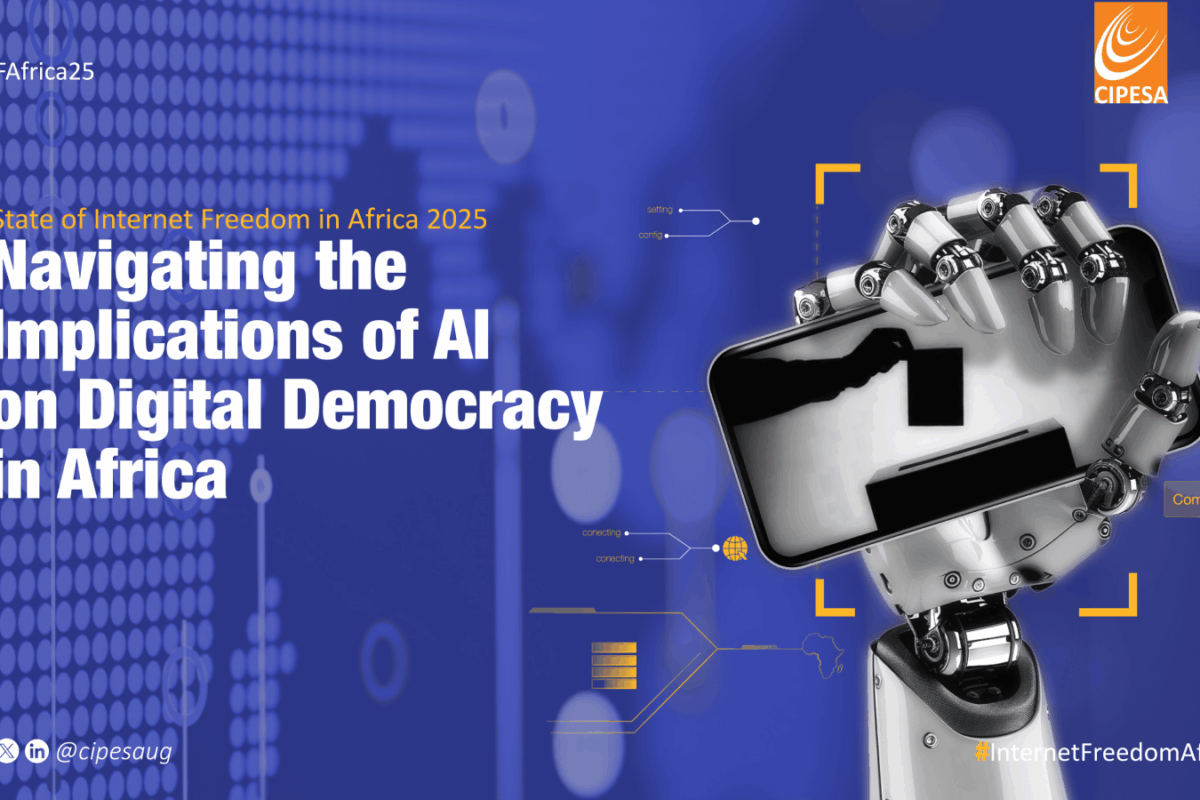
2025 State of Internet Freedom In Africa Report Documents the Implications of AI on Digital Democracy in Africa

By Juliet Nanfuka | 

The 2025 edition of the Forum on Internet Freedom in Africa (FIFAfrica25) concluded on a high note with the unveiling of the latest State of Internet Freedom in Africa (SIFA) report. Titled Navigating the Implications of AI on Digital Democracy in Africa, this landmark study unpacks how artificial intelligence is shaping, disrupting, and reimagining civic space and digital rights across the continent.

Drawing on research from 14 countries (Cameroon, Egypt, Ethiopia, Ghana, Kenya, Mozambique, Namibia, Nigeria, Rwanda, Senegal, South Africa, Tunisia, Uganda, and Zimbabwe), the report documents both the immense promise and the urgent perils of AI in Africa. It highlights AI’s potential to strengthen democratic participation, improve public services, and drive innovation, while also warning of its role in amplifying surveillance, disinformation, and exclusion. 

Using a qualitative approach, including literature review and key informant interviews, the report shows that AI is rapidly transforming how Africans interact with technology, yet AI also amplifies existing vulnerabilities, introduces new challenges that undermine fundamental freedoms, and deepens existing inequalities.

The report notes that the political environment is a crucial determinant of AI’s trajectory, with strong democracies generally enabling a positive outcome. Top performers in freedom and governance indices such as South Africa, Ghana, Namibia, and Senegal are more likely to set the standard to AI rollout in Africa. Conversely, countries with lower democratic credentials such as Cameroon, Egypt, Ethiopia, and Rwanda risk constraining AI’s potential or deploying it to amplify digital authoritarianism and political repression.  

Countries such as South Africa, Tunisia and Egypt that have a higher internet access and technological development, Gross Domestic Product (GDP) per capita, and score highly on the Human Development Index (HDI), are more likely to lead in AI. Meanwhile, countries with lower or weaker levels of digital infrastructure face greater challenges and higher risks of AI replicating and worsening existing divides. Such countries include Cameroon, Mozambique and Uganda.

The political environment is a crucial determinant of AI’s trajectory, with strong democracies generally enabling a positive outcome. Economic and developmental status also dictates the capacity for AI development and adoption. 

Despite these challenges, the report documents that AI offers substantial value to the public sector by improving service delivery and enhancing transparency. Governments are leveraging AI tools for efficiency, such as the South African Revenue Services (SARS) AI Assistant for tax assessments and Nigeria’s Service-Wise GPT for streamlined governance document access. In Kenya, the Sauti ya Bajeti (Voice of the Budget) platform fosters fiscal transparency by allowing citizens to query and track government expenditures. Furthermore, countries like Tunisia and Uganda are using AI models within tax bodies to detect fraud, while Rwanda is deploying AI for judicial system improvements and identity management at borders.

The private sector and academic institutions are driving AI-inspired innovation, particularly in the areas of FinTech, AgriTech, and Natural Language Processing (NLP). For the latter, notable efforts to localise AI include Tunisia’s TUNBERT model for Tunisian Arabic, and Ghana’s Khaya, an open-source AI-powered translator tailored for local languages. In Ghana, the DeafCanTalk, is an AI-powered app that enables bidirectional translation between sign language and spoken language, and has enhanced accessibility for deaf users. Rwanda has integrated AI into healthcare using drone delivery systems for medical supplies, while Cameroon and Uganda use AI to assist farmers with pest identification. 

However, despite increasing investment, such as the ongoing USD 720 million investment in compute power by Cassava Technologies across hubs in South Africa, Egypt, Kenya, Morocco, and Nigeria, Africa receives  significantly lower AI funding than global counterparts.

Moreover, while AI is gaining traction across many sectors, the proliferation of AI-generated misinformation and disinformation is a pervasive and growing challenge that poses a critical threat to electoral integrity. During South Africa’s 2024 elections, deepfake videos were circulated to manipulate perceptions and endorse political entities. Similarly, during elections and protests in Kenya and Namibia, deepfake technology and automated campaigns were used to discredit opponents. 

The report also documents that governments are deploying AI-powered surveillance technologies, which has led to widespread privacy violations and a chilling effect on freedoms. For example, pro-government propagandists in Rwanda utilised Large Language Models (LLMs) to mass-produce synthetic messages on social media, simulating authentic support and suppressing dissenting voices. Meanwhile, algorithmic bias and exclusion are producing discriminatory outcomes, particularly against low-resource African languages. Also, AI-based content moderation is often ineffective because it lacks contextual understanding and fails to capture local nuance.

A key finding in the report is that across the continent, the pace of AI development far outstrips regulatory readiness. None of the 14 study countries has AI-specific legislation. Instead, fragmented laws on data protection, cybercrime, and copyright are stretched to cover AI, but remain inadequate. Data protection authorities are under-resourced, under-staffed, and often lack the technical expertise required to audit or govern complex AI systems.

Although many national AI strategies are emerging, they prioritise economic growth while neglecting human rights and accountability. This is also fuelled by policy processes that are often opaque and dominated by state actors, with limited multistakeholder participation.

The report  stresses that without deliberate, inclusive, and rights-centred governance, AI risks entrenching authoritarianism and exacerbating inequalities. 

To avoid the current trajectory that AI is taking in Africa, in which AI risks entrenching authoritarianism and exacerbating inequalities, the report calls for a human-centred AI governance framework built on inclusivity, transparency, and context. 

It also makes recommendations, including enacting comprehensive AI-specific legislation, instituting mandatory human rights impact assessments, establishing empowered AI and data governance institutions, and promoting rights-based advocacy. Others are building technical capacity across governments, civil society and media, and developing policies that prioritise equity and human dignity alongside innovation.

AI offers Africa the opportunity to foster innovation, strengthen democracy, and drive sustainable development. This edition of the State of Internet Freedom in Africa report provides an evidence-based roadmap to ensure that Africa’s digital future remains open, inclusive, and rights-respecting.Find the report here.

Digital Public Infrastructure in Africa: A Looming Crisis of Equitable Access, Digital Rights, and Sovereign Control

Digital Public Infrastructure in Africa: A Looming Crisis of Equitable Access, Digital Rights, and Sovereign Control
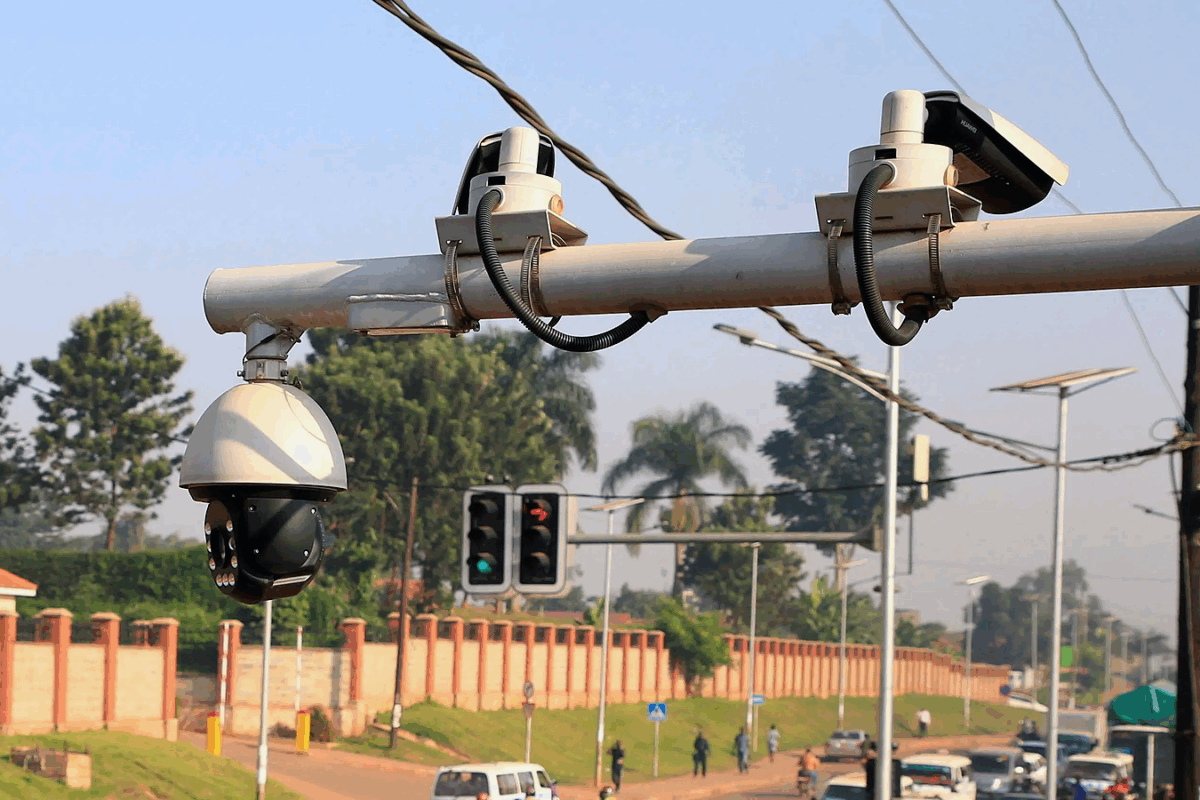
CCTV system in Kampala, Uganda. REUTERS/James Akrena (2019)

By Brian Byaruhanga

In June 2025, Uganda suspended its Express Penalty Scheme (EPS) for traffic offences, less than a week after its launch, citing a “lack of clarity” among government agencies. While this seemed like a routine administrative misstep, it exposed a more significant issue: the brittle foundation upon which many digital public infrastructures (DPI) in Africa are being built. DPI refers to the foundational digital systems and platforms, such as digital identity, payments, and data exchange frameworks, which form the backbone of digital societies, similar to how roads or electricity function in the physical world

This EPS saga highlighted implementation gaps and illuminated a systemic failure to promote equitable access, public accountability, and safeguard fundamental rights in the rollout of DPI.

When the State Forgets the People

The Uganda EPS, established under section 166 of the Traffic and Road Safety Act, Cap 347, serves as a tech-driven improvement to road safety. Its  goal is to reduce road accidents and fatalities by encouraging better driver behaviour and compliance with traffic laws. By allowing offenders to pay fines directly without prosecution, the system aims to resolve minor offences quickly and to ease the burden on the judicial system. Challenges faced by the manual EPS system, which the move to the automated system aimed to eliminate, include corruption (reports of deleted fines, selective enforcement, and theft of collected penalties). 

At the heart of the EPS was an automated surveillance and enforcement system, which used Closed Circuit Television (CCTV) cameras and license plate recognition to issue real-time traffic fines. This system operated with almost complete opacity. A Russian company, Joint Stock Company Global Security, was reportedly entitled to 80% of fine revenues, despite making minimal investment, among other significant legal and procurement irregularities. There was a notable absence of clear contracts, publicly accessible oversight mechanisms, or effective avenues for appeal. Equally concerning, the collection and storage of extensive amounts of sensitive data lacked transparency regarding who had access to it.

Such an arrangement represented a profound breach of public trust and an infringement upon digital rights, including data privacy and access to information. It illustrated the minimal accountability under which foreign-controlled infrastructure can operate within a nation. This was a data-driven governance mechanism that lacked the corresponding data rights safeguards, subjecting Ugandans to a system they could neither comprehend nor contest.

This is Not an Isolated Incident

The situation in Uganda reflects a widespread trend across the continent. In Kenya, the 2024 Microsoft–G42 data centre agreement – announced as a partnership with the government to build a state-of-the-art green facility aimed at advancing infrastructure, research and development, innovation, and skilling in Artificial Intelligence (AI) –  has raised serious concerns about data sovereignty and long-term control over critical digital infrastructure. 

In Uganda, the National Digital ID system (Ndaga Muntu) became a case study in how poorly-governed DPI deepens structural exclusion and undermines equitable  access to public services. A 2021 report by the Centre for Human Rights and Global Justice found that rigid registration requirements, technical failures, and a lack of recourse mechanisms denied millions of citizens access to healthcare, education, and social protection. Those most affected were the elderly, women, and rural communities. However, a 2025 High Court ruling ignored evidence and expert opinions about the ID system’s exclusion and implications for human rights. 

Studies estimate that most e-government projects in Africa end in partial or total failure, often due to poor project design, lack of infrastructure, weak accountability frameworks, and insufficient citizen engagement. Many of these projects are built on imported technologies and imposed models that do not reflect the realities or governance contexts of African societies.

The clear pattern is emerging across the continent: countries  are integrating complex, often foreign-managed or poorly localised digital systems into public governance without establishing strong, rights-respecting frameworks for transparency, accountability, and oversight. Instead of empowering citizens, this version of digital transformation risks deepening inequality, centralising control, and undermining public trust in government digital systems.

The State is Struggling to Keep Up

National Action Plans (NAPs) on Business and Human Rights, intended to guide ethical public–private collaboration, have failed to address the unique challenges posed by DPI. Uganda’s NAP barely touches on data governance, algorithmic harms, or surveillance technologies. While Kenya’s NAP mentions the digital economy, it lacks enforceable guardrails for foreign firms managing critical infrastructure. In their current form, these frameworks are insufficiently equipped to respond to the complexity and ethical risks embedded in modern DPI deployments.

Had the Ugandan EPS system been subject to stronger scrutiny under a digitally upgraded NAP, key questions would likely have been raised before implementation:

  • What redress exists for erroneous or abusive fines?
  • Who owns the data and where is it stored?
  • Are the financial terms fair, equitable, and sovereign?

But these questions came too late.

What these failures point to is not just a lack of policy, but a lack of operational mechanisms to design, test and interrogate DPI before roll out. What is needed is a practical bridge that responds to public needs and enforces human rights standards.

Regulatory Sandboxes: A Proactive Approach to DPI

DPI systems, such as Uganda’s EPS, should undergo rigorous testing before full-scale deployment. In such a space, a system’s logic, data flows, human rights implications, and resilience under stress are collectively scrutinised before any harm occurs. This is the purpose of regulatory sandboxes – platforms that offer a structured, participatory, and transparent testbed for innovations. 

Thus, a regulatory sandbox could have revealed and resolved core failures of Uganda’s EPS before rollout, including the controversial revenue-sharing arrangement with a foreign contractor.

How Regulatory Sandboxes Work: Regulatory sandboxes are useful for testing DPI systems and governance frameworks such as revenue models in a transparent manner, enabling stakeholders to examine the model’s fairness and legality. This entails publicly revealing financial terms to regulators, civil society, and the general public. Secondly, before implementation, simulated impact analyses can also highlight possible public backlash or a decline in trust. Sandboxes can be used for facilitating pre-implementation audits, making vendor selection and contract terms publicly available, and conducting mock procurements to detect errors.  By defining data ownership and access guidelines, creating redress channels for data abuse, and supporting inclusive policy reviews with civil society, regulatory sandboxes make data governance and accountability more clear.

This shift from reactive damage control to proactive governance is what regulatory sandboxes offer. If Uganda had employed a sandbox approach, the EPS system might have served as a model for ethical innovation rather than a cautionary tale of rushed deployment, weak oversight, and lost public trust.

Beyond specific systems like EPS or digital ID, the future of Africa’s digital transformation hinges on how digital public infrastructure is conceived, implemented, and governed. Foundational services, such as digital identity, health information platforms, financial services, surveillance mechanisms, and mobility solutions, are increasingly reliant on data and algorithmic decision-making. However, if these systems are designed and deployed without sufficient citizen participation, independent oversight, legal safeguards, and alignment with the public interest, they risk becoming tools of exclusion, exploitation, and foreign dependency. 

Realising the full potential of DPIs as a tool for inclusion, digital sovereignty, and rights-based development demands urgent and deliberate efforts to embed accountability, transparency, and digital rights at every stage of their lifecycle.

Photo Credit – CCTV system in Kampala, Uganda. REUTERS/James Akena (2019)

Amplifying African Voices in Global Digital Governance

By CIPESA Writer |

The Collaboration on International ICT Policy for East and Southern Africa (CIPESA) will be participating at the 2025 Internet Governance Forum (IGF) in Norway. The IGF serves as key  global multistakeholder platform that facilitates the discussion of public policy issues pertaining to the Internet. This year, the Forum takes place from June 23-27, 2025 in Lillestrom, Norway under the overarching theme of Building Our Multistakeholder Digital Future.

CIPESA will contribute expertise across multiple sessions that examine digital rights in the Global South. These include discussions on repressive cyber laws and their impact on civic space, inclusive and harmonised data governance frameworks for Africa, and the barriers to participation in global technical standards development. CIPESA will also join sessions highlighting cross-regional cooperation on data governance, digital inclusion of marginalised groups, and the need for multilingual accessibility in global digital processes. CIPESA will also support a booth (number #57) hosted by the Civil Society Alliances for Digital Empowerment (CADE)  of which it is a member. The booth will showcase activities and resources, including the winners of the AI Artivism for Digital Rights Competition, the Youth Voices for Digital Rights programme, and much more. Through these engagements, CIPESA enhance and amplify African perspectives on platform accountability, digital justice, and rights-based approaches to internet governance.The insights gathered and shared at the IGF will also inform the upcoming 2025 edition of the Forum on Internet Freedom in Africa (FIFAfrica25) – an event convened annually by CIPESA. The Forum, now in its 12th year ranks as Africa’s leading platform for shaping digital rights, inclusion, and governance conversations. This year, the Forum will be hosted in  Windhoek, Namibia and will take place on September 24–26, 2025.

Here is where to find CIPESA @ IGF2025 ..

Monday, June 23 | 16:00-17:00 (CEST) – Workshop Room 3

Day 0 Event #257:  Enhancing Data Governance in the Public Sector  

This session will examine the state of data governance in the public sector of developing countries, emphasizing the importance of inclusive, multi-stakeholder engagement. It highlights how current frameworks often centre government institutions while neglecting interoperability, collaboration, and broader policy cohesion. Using global case studies—particularly from Papua New Guinea—it will spotlight challenges and propose innovations like centralized oversight bodies, interoperable platforms, and adaptive governance. Best practices such as real-time analytics, data partnerships, and capacity building will be explored to support scalable and context-specific governance solutions.

Tuesday, June 24 |  14:45–15:45 (CEST) – Workshop Room 4

Open Forum #56: Shaping Africa’s Digital Future: Multi-Stakeholder Panel on Data Governance

As Africa advances its digital transformation, harmonized data governance is critical to unlocking the continent’s potential for inclusive growth and digital trade. Fragmented national policies and inconsistent cross-border data frameworks create barriers to innovation, privacy, and cybersecurity. This session will convene stakeholders from government, industry, and civil society to explore strategies for regulatory alignment, trusted data flows, and climate-resilient governance models. Aligned with the AU Data Policy Framework, it will highlight best practices to build a unified, rights-respecting digital economy in Africa.

Tuesday, June 24 | 13:30-15:30 (CEST) –  Room  Studio N

Parliamentary session 4: From dialogue to action: Advancing digital cooperation across regions and stakeholder groups

Host: UN, Stortinget (Norwegian Parliament) and Inter Parliamentary UnionInternet (IPU)

Building on the outputs of the 2024 IGF Parliamentary Track and the discussions held so far in 2025, this multi-stakeholder consultation will bring together MPs and key digital players to reflect on how to operationalize concrete, inclusive and collaborative policymaking efforts. All groups will be invited to propose cooperative approaches to building digital governance and identify practical steps for sustaining cooperation beyond the IGF.

Wednesday, June 25 | 17:30 -19:00(CEST) – Workshop room 4, NOVA Spektrum 

Side event: Aspirations for the India AI Impact Summit

Hosts: CIPESA, Centre for Communication Governance at National Law University Delhi (CCG), United Nations Office for Digital and Emerging Technologies (UN ODET).

This closed-door dialogue aims to spark early conversations toward an inclusive and representative Global AI Impact Summit, focusing on the participation of Global Majority experts. It will explore meaningful engagement in Summit working groups, side events, and knowledge sharing, especially building on insights from the Paris Summit. The session is part of a broader effort to host multiple convenings that strengthen diverse stakeholder participation in global AI governance. By addressing foundational questions now, the dialogue seeks to shape intentional, impactful, and inclusive discussions at the upcoming Summit.

Wednesday June 25 | 09:00-09:45 (CEST) – Workshop Room 4

Networking Session #93: Cyber Laws and Civic Space – Global South–North Advocacy Strategies

Host: CADE

Many governments are enacting cyber laws to address online crime, but these often contain vague provisions that enable repression of journalists, activists, and ordinary citizens. In practice, such laws have facilitated mass surveillance, curtailed privacy, and been weaponised to stifle dissent, particularly under authoritarian regimes. This session brings together Global North and Global South civil society actors to exchange experiences, resources, and strategies for resisting repressive cyber legislation. It will focus on how collaborative advocacy can support legal reform and safeguard digital rights through shared tools, solidarity, and policy influence.

Wednesday, June 25 | 14:15–15:30 (CEST) – Workshop Room 4

Open Forum #7: Advancing Data Governance Together – Across Regions

Hosts: CIPESA, Deutsche Gesellschaft für Internationale Zusammenarbeit (GIZ) GmbH, The Republic of The Gambia

As cross-border data flows grow rapidly, effective data governance is essential for fostering trust, security, and inclusive digital development. However, fragmented national regulations and inconsistent privacy and cybersecurity standards pose challenges to regional and global cooperation. This session brings together stakeholders from Africa, the Eastern Partnership, and the Western Balkans to explore harmonized, interoperable governance models that support responsible data sharing and economic growth. Through collaborative dialogue, the session will identify strategies for aligning data governance with digital rights, innovation, and sustainable development across diverse regional contexts.

Thursday, June 26 | 12:30–13:00 (CEST) – Open Stage

Lightning Talk #90: Tower of Babel Chaos – Tackling the Challenges of Multilingualism for Inclusive Communication

Host: CADE

This interactive session, led by members of the Civil Alliances for Digital Empowerment (CADE), highlights the communication challenges faced in global digital forums due to linguistic, gender, and geographic diversity. Using a flash-mob-style simulation, participants will experience firsthand the difficulties of multistakeholder dialogue when multiple native languages intersect without common understanding. The session underscores that language is often the most significant barrier to meaningful inclusion in global digital governance. It aims to provoke thought on the urgent need for more multilingual and accessible participation in international digital policy spaces.

Thursday, June 26 | 16:00-17:00 (CEST) – Workshop Room 6

WS #214: AI Readiness in Africa in a Shifting Geopolitical Landscape

Host: German Federal Ministry for Economic Cooperation and Development (BMZ), supported by GIZ

AI has vast potential, but without proper governance, it risks deepening inequality and reinforcing Africa’s dependency on global tech powers. Despite growing local engagement, Africa remains underrepresented in global AI development due to limited investment, regulatory gaps, and the dominance of multinational firms, raising concerns about digital exploitation. This session will bring together diverse voices to explore how Africa can build inclusive, locally rooted AI ecosystems that protect rights and serve regional needs.

Friday, June 27 | 09:00–10:00 (CEST) – Workshop Room 2

Open Forum #34: How Technical Standards Shape Connectivity and Inclusion

Host: Freedom Online Coalition

Technical standards are essential to enabling global connectivity, interoperability, and inclusive digital access, but their development often excludes voices from the Global Majority and marginalized communities. This session will examine how open and interoperable standards can bridge the digital divide, focusing on infrastructure such as undersea cables, network protocols, and security frameworks. It will explore barriers to inclusive participation in standard-setting bodies like the ITU, IETF, IEEE, and W3C, and identify strategies for transparency and multistakeholder engagement. By promoting equitable, rights-respecting technical governance, the session aims to support digital inclusion and advance sustainable development goals.

Friday, June 27 | 11:45–12:30 (CEST) – Workshop Room 6

Networking Session #74: Mapping Digital Rights Capacities and Threats

Host: Oxfam

This session will present findings from multi-country research on digital rights capacities and threats, with a focus on historically marginalised groups in the Global South. It will showcase innovative strategies and tools used to build digital literacy and awareness, using poster presentations from Bolivia, Cambodia, Palestine, Somalia, and Vietnam. Participants will engage in a moderated discussion to share practical approaches and collaborate on building a more inclusive, rights-based digital ecosystem. The session will also contribute to a shared online repository of tools, fostering international cooperation and capacity-building through the ReCIPE program led by Oxfam.

Friday, June 27 | 11:45–12:30 (CEST) – Workshop Room 5

Networking Session #200 – Cross-Regional Connections for Information Resilience 

Host: Proboxve

This networking session brings together participants from diverse regions to connect, share experiences, and develop collaborative strategies for safeguarding information integrity in electoral processes while upholding internet freedoms. The session will address critical challenges such as disinformation, censorship, foreign interference, platform manipulation, and civic education, emphasizing the importance of protecting digital rights, especially during elections.

Towards an Accessible and Affordable Internet in Africa: Key Challenges Ahead

By Paul Kimumwe |

Over the last few years, Africa has experienced exponential growth in internet access spurred by mobile internet, which stood at 28% penetration  in 2020. However, internet access and affordability are still a major challenge for the majority of Africans, especially the rural poor, women, and persons with disabilities.

According to the State of Mobile Internet Connectivity 2021, Sub-Saharan Africa has the largest coverage gap (those living in areas without mobile broadband coverage) at 19%, which is more than three times the global average. While internet access has become more affordable, particularly through mobile phones, costs are still high and unaffordable to many in the region, who remain offline.

A new brief by CIPESA explores some of the retrogressive measures that undermine citizens’ rights to access a reliable and affordable internet in Lesotho, Mozambique, Tanzania, Uganda, Zimbabwe, and Zambia. Some of these measures include digital taxation that has led to increases in internet costs, registration and licensing of online users that imposes high licensing fees and tough penalties, network disruptions including internet shutdowns that lead to inaccessibility of the internet, and the failure to provide enabling infrastructure that exacerbates the digital divide.

Many governments have been eager to increase their tax base, particularly from the telecommunications sector and over-the-top (OTT) services, which they claim are eating into the revenues of licensed operators. Several other governments have slapped taxes on mobile phone handsets and other devices. These costs are passed on to consumers, thereby raising the cost of owning and using a mobile phone and accessing the internet.

In addition, the lack of an enabling infrastructure, including lack of access to reliable electricity, has been a major hurdle to broadband adoption in many African countries. It is  estimated that 45% of Africans live farther than 10 kilometres from the network infrastructure essential for online education, finance and healthcare services.

Network disruptions including internet shutdowns, internet throttling and social media blockages have recently become endemic in several African countries, and present yet another hurdle. Governments have sometimes shut down or restricted access to the internet or to social media platforms in an attempt to limit or control conversations online and prevent mobilisation for potential pro-democracy protests. The disruptions have mostly been initiated around election times, public protests, and during national exams.

Various countries have also adopted the registration and licensing of online users on whom they impose high licensing fees and tough penalties. This has forced many online users to abandon their platforms due to the high costs and threats of prosecution. Many of those who are online routinely practice self-censorship for fear of attracting reprisals.

The lack of internet access requires immediate counter action by several countries especially given the overbearing effects of digital exclusion caused by the Covid-19 pandemic. Countries with better access to online platforms for business and education are reaping faster economic rebounds compared to unconnected economies. The internet plays a vital role in the realisation of human development and facilitates the enjoyment of several human rights and freedoms, including the right to freedom of expression and information, the right to education, the right to assembly and association.

According to the brief, African governments need to recognise and nurture the true potential of the internet in driving inclusive economic growth and development, as well as digital transformation, especially in the post-Covid pandemic era. This calls for robust investments in internet infrastructure, digital literacy and refraining from taking actions that undermine the transformative potential of digital technologies.

See the full brief here.