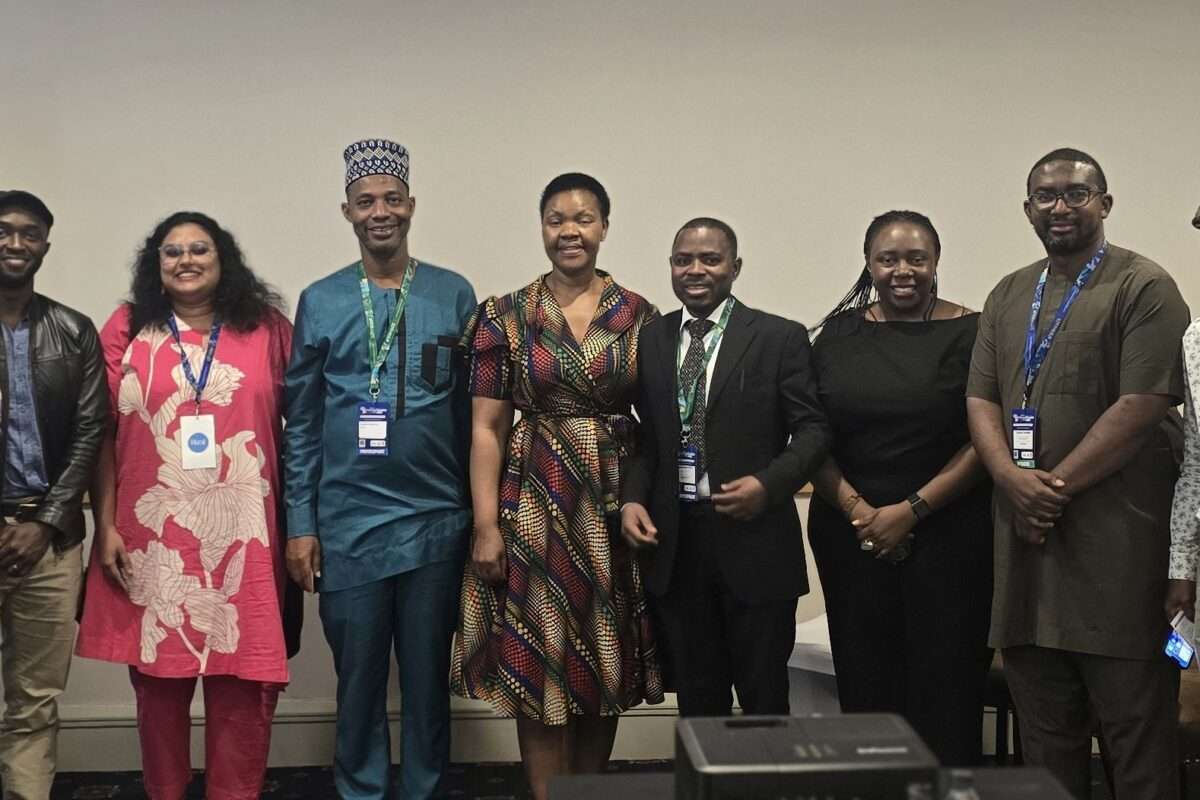
Amplifying African Voices in Global Digital Governance

By CIPESA Writer |

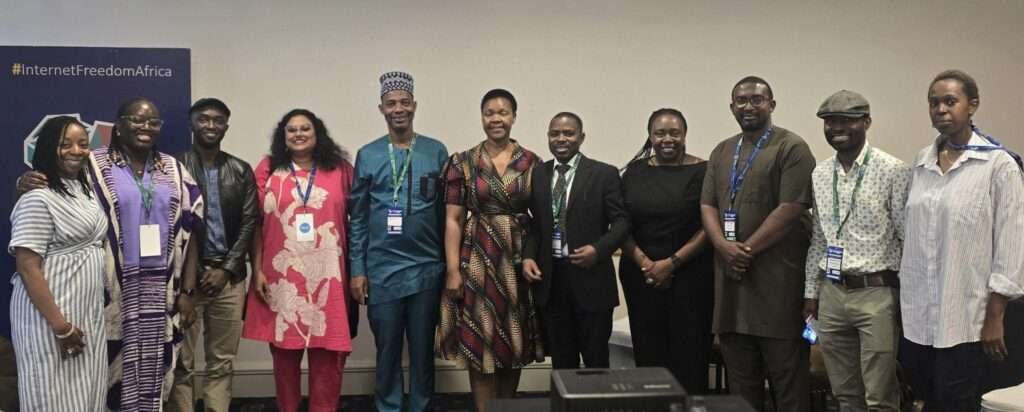
The Collaboration on International ICT Policy for East and Southern Africa (CIPESA) will be participating at the 2025 Internet Governance Forum (IGF) in Norway. The IGF serves as key  global multistakeholder platform that facilitates the discussion of public policy issues pertaining to the Internet. This year, the Forum takes place from June 23-27, 2025 in Lillestrom, Norway under the overarching theme of Building Our Multistakeholder Digital Future.

CIPESA will contribute expertise across multiple sessions that examine digital rights in the Global South. These include discussions on repressive cyber laws and their impact on civic space, inclusive and harmonised data governance frameworks for Africa, and the barriers to participation in global technical standards development. CIPESA will also join sessions highlighting cross-regional cooperation on data governance, digital inclusion of marginalised groups, and the need for multilingual accessibility in global digital processes. CIPESA will also support a booth (number #57) hosted by the Civil Society Alliances for Digital Empowerment (CADE)  of which it is a member. The booth will showcase activities and resources, including the winners of the AI Artivism for Digital Rights Competition, the Youth Voices for Digital Rights programme, and much more. Through these engagements, CIPESA enhance and amplify African perspectives on platform accountability, digital justice, and rights-based approaches to internet governance.The insights gathered and shared at the IGF will also inform the upcoming 2025 edition of the Forum on Internet Freedom in Africa (FIFAfrica25) – an event convened annually by CIPESA. The Forum, now in its 12th year ranks as Africa’s leading platform for shaping digital rights, inclusion, and governance conversations. This year, the Forum will be hosted in  Windhoek, Namibia and will take place on September 24–26, 2025.

Here is where to find CIPESA @ IGF2025 ..

Monday, June 23 | 16:00-17:00 (CEST) – Workshop Room 3

Day 0 Event #257:  Enhancing Data Governance in the Public Sector  

This session will examine the state of data governance in the public sector of developing countries, emphasizing the importance of inclusive, multi-stakeholder engagement. It highlights how current frameworks often centre government institutions while neglecting interoperability, collaboration, and broader policy cohesion. Using global case studies—particularly from Papua New Guinea—it will spotlight challenges and propose innovations like centralized oversight bodies, interoperable platforms, and adaptive governance. Best practices such as real-time analytics, data partnerships, and capacity building will be explored to support scalable and context-specific governance solutions.

Tuesday, June 24 |  14:45–15:45 (CEST) – Workshop Room 4

Open Forum #56: Shaping Africa’s Digital Future: Multi-Stakeholder Panel on Data Governance

As Africa advances its digital transformation, harmonized data governance is critical to unlocking the continent’s potential for inclusive growth and digital trade. Fragmented national policies and inconsistent cross-border data frameworks create barriers to innovation, privacy, and cybersecurity. This session will convene stakeholders from government, industry, and civil society to explore strategies for regulatory alignment, trusted data flows, and climate-resilient governance models. Aligned with the AU Data Policy Framework, it will highlight best practices to build a unified, rights-respecting digital economy in Africa.

Tuesday, June 24 | 13:30-15:30 (CEST) –  Room  Studio N

Parliamentary session 4: From dialogue to action: Advancing digital cooperation across regions and stakeholder groups

Host: UN, Stortinget (Norwegian Parliament) and Inter Parliamentary UnionInternet (IPU)

Building on the outputs of the 2024 IGF Parliamentary Track and the discussions held so far in 2025, this multi-stakeholder consultation will bring together MPs and key digital players to reflect on how to operationalize concrete, inclusive and collaborative policymaking efforts. All groups will be invited to propose cooperative approaches to building digital governance and identify practical steps for sustaining cooperation beyond the IGF.

Wednesday, June 25 | 17:30 -19:00(CEST) – Workshop room 4, NOVA Spektrum 

Side event: Aspirations for the India AI Impact Summit

Hosts: CIPESA, Centre for Communication Governance at National Law University Delhi (CCG), United Nations Office for Digital and Emerging Technologies (UN ODET).

This closed-door dialogue aims to spark early conversations toward an inclusive and representative Global AI Impact Summit, focusing on the participation of Global Majority experts. It will explore meaningful engagement in Summit working groups, side events, and knowledge sharing, especially building on insights from the Paris Summit. The session is part of a broader effort to host multiple convenings that strengthen diverse stakeholder participation in global AI governance. By addressing foundational questions now, the dialogue seeks to shape intentional, impactful, and inclusive discussions at the upcoming Summit.

Wednesday June 25 | 09:00-09:45 (CEST) – Workshop Room 4

Networking Session #93: Cyber Laws and Civic Space – Global South–North Advocacy Strategies

Host: CADE

Many governments are enacting cyber laws to address online crime, but these often contain vague provisions that enable repression of journalists, activists, and ordinary citizens. In practice, such laws have facilitated mass surveillance, curtailed privacy, and been weaponised to stifle dissent, particularly under authoritarian regimes. This session brings together Global North and Global South civil society actors to exchange experiences, resources, and strategies for resisting repressive cyber legislation. It will focus on how collaborative advocacy can support legal reform and safeguard digital rights through shared tools, solidarity, and policy influence.

Wednesday, June 25 | 14:15–15:30 (CEST) – Workshop Room 4

Open Forum #7: Advancing Data Governance Together – Across Regions

Hosts: CIPESA, Deutsche Gesellschaft für Internationale Zusammenarbeit (GIZ) GmbH, The Republic of The Gambia

As cross-border data flows grow rapidly, effective data governance is essential for fostering trust, security, and inclusive digital development. However, fragmented national regulations and inconsistent privacy and cybersecurity standards pose challenges to regional and global cooperation. This session brings together stakeholders from Africa, the Eastern Partnership, and the Western Balkans to explore harmonized, interoperable governance models that support responsible data sharing and economic growth. Through collaborative dialogue, the session will identify strategies for aligning data governance with digital rights, innovation, and sustainable development across diverse regional contexts.

Thursday, June 26 | 12:30–13:00 (CEST) – Open Stage

Lightning Talk #90: Tower of Babel Chaos – Tackling the Challenges of Multilingualism for Inclusive Communication

Host: CADE

This interactive session, led by members of the Civil Alliances for Digital Empowerment (CADE), highlights the communication challenges faced in global digital forums due to linguistic, gender, and geographic diversity. Using a flash-mob-style simulation, participants will experience firsthand the difficulties of multistakeholder dialogue when multiple native languages intersect without common understanding. The session underscores that language is often the most significant barrier to meaningful inclusion in global digital governance. It aims to provoke thought on the urgent need for more multilingual and accessible participation in international digital policy spaces.

Thursday, June 26 | 16:00-17:00 (CEST) – Workshop Room 6

WS #214: AI Readiness in Africa in a Shifting Geopolitical Landscape

Host: German Federal Ministry for Economic Cooperation and Development (BMZ), supported by GIZ

AI has vast potential, but without proper governance, it risks deepening inequality and reinforcing Africa’s dependency on global tech powers. Despite growing local engagement, Africa remains underrepresented in global AI development due to limited investment, regulatory gaps, and the dominance of multinational firms, raising concerns about digital exploitation. This session will bring together diverse voices to explore how Africa can build inclusive, locally rooted AI ecosystems that protect rights and serve regional needs.

Friday, June 27 | 09:00–10:00 (CEST) – Workshop Room 2

Open Forum #34: How Technical Standards Shape Connectivity and Inclusion

Host: Freedom Online Coalition

Technical standards are essential to enabling global connectivity, interoperability, and inclusive digital access, but their development often excludes voices from the Global Majority and marginalized communities. This session will examine how open and interoperable standards can bridge the digital divide, focusing on infrastructure such as undersea cables, network protocols, and security frameworks. It will explore barriers to inclusive participation in standard-setting bodies like the ITU, IETF, IEEE, and W3C, and identify strategies for transparency and multistakeholder engagement. By promoting equitable, rights-respecting technical governance, the session aims to support digital inclusion and advance sustainable development goals.

Friday, June 27 | 11:45–12:30 (CEST) – Workshop Room 6

Networking Session #74: Mapping Digital Rights Capacities and Threats

Host: Oxfam

This session will present findings from multi-country research on digital rights capacities and threats, with a focus on historically marginalised groups in the Global South. It will showcase innovative strategies and tools used to build digital literacy and awareness, using poster presentations from Bolivia, Cambodia, Palestine, Somalia, and Vietnam. Participants will engage in a moderated discussion to share practical approaches and collaborate on building a more inclusive, rights-based digital ecosystem. The session will also contribute to a shared online repository of tools, fostering international cooperation and capacity-building through the ReCIPE program led by Oxfam.

Friday, June 27 | 11:45–12:30 (CEST) – Workshop Room 5

Networking Session #200 – Cross-Regional Connections for Information Resilience 

Host: Proboxve

This networking session brings together participants from diverse regions to connect, share experiences, and develop collaborative strategies for safeguarding information integrity in electoral processes while upholding internet freedoms. The session will address critical challenges such as disinformation, censorship, foreign interference, platform manipulation, and civic education, emphasizing the importance of protecting digital rights, especially during elections.

Key Takeaways From the 2022 African Union Data Policy Framework

By CIPESA Writer |

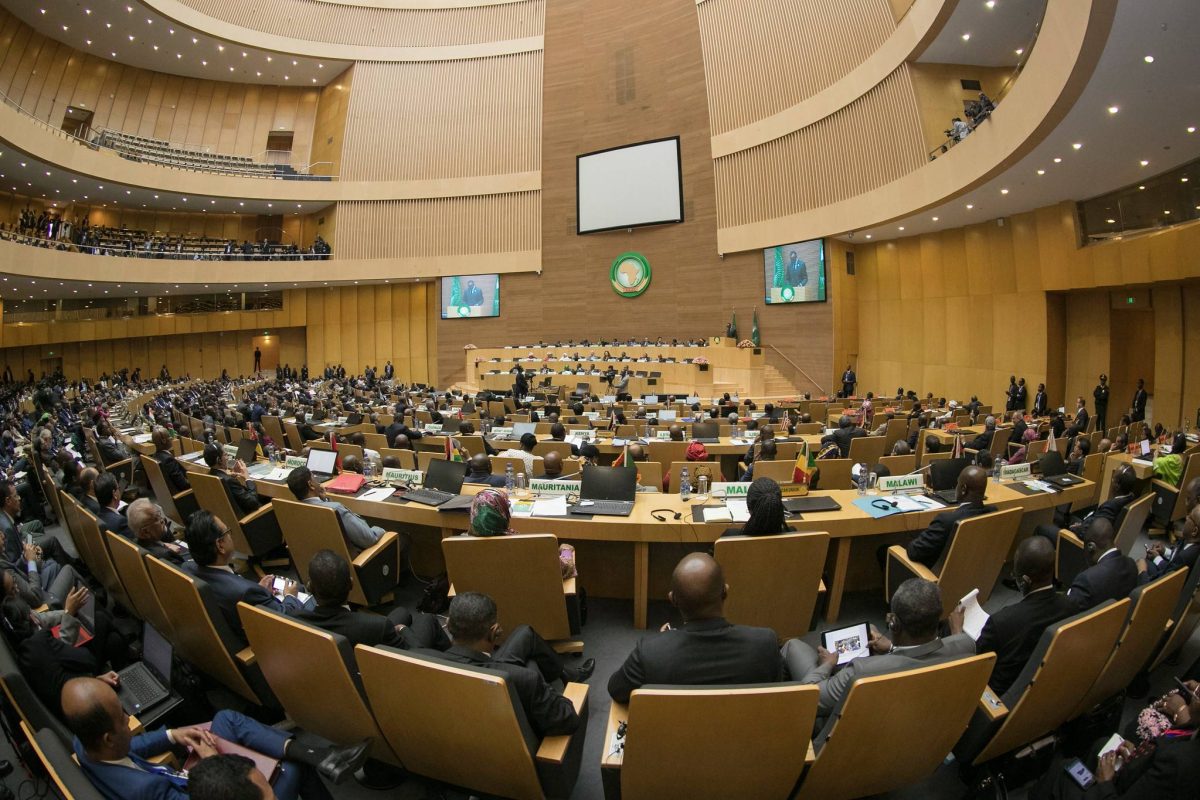
The Africa Union Data Policy Framework published in July 2022 is one of the most significant documents on data governance on the continent. The Policy Framework is an extensive blueprint to guide African countries’ efforts to establish effective data governance regimes to leverage the data and digital revolution the continent is currently experiencing.

The Policy Framework draws from 30 years worth of experience in attempts to harmonise official statistics in Africa. Compared to the previous initiatives by the African Union (AU), the Policy Framework interrogates the key contextual and capacity challenges inherent in most African countries. It also demonstrates that, in spite of some hiccups, countries can still come up with reasonable and enforceable digital data governance policies and legislative frameworks.

Indeed, as a brief by the Collaboration on International ICT Policy for East and Southern Africa (CIPESA) shows, the Policy Framework is beneficial  to data governance, data rights and privacy in Africa. However, its implementation is likely to come up against notable challenges.

The Policy Framework seeks to become a major reference point and blueprint for governments in Africa on data protection legislation, cross-border sharing of critical data and information to facilitate trade and development. Further, it seeks to calibrate the normally complicated balancing act between enforcing data protection and promoting privacy on one hand, while not curtailing data rights, access to information, open data and open government, and promoting cross-border sharing of data without limitations of sovereignty and protectionism by Member States.

It also emphasises the importance of data interoperability and recommends harmonised national data systems that aggregate different and disparate data systems into singular ones accessible to all parties.

However, the brief notes that the implementation plan of the Policy Framework will need actionable and practical guidelines that countries can follow in ensuring that interests in national security, public order and national economic sovereignty do not unnecessarily stand in the way of the immense benefits of data privacy, open data sharing, intercountry digital collaboration on trade and commerce, and the power of harmonisation of data systems.

Benefits the Data Policy Framework Can Deliver to Data Governance and Data Rights in Africa

    • The Policy Framework provides a key reference resource for governments that are currently designing or reviewing their data governance policy and legal instruments. It is well researched and was collaboratively developed by key institutions of the AU and associate organisations.
    • Countries that will draw from the Policy Framework into their data policy making will receive enormous goodwill from Member States on collaboration and cross-border data sharing efforts, goodwill that emanates from the authority and goodwill that the African Union enjoys among Member States.
    • The Policy Framework acknowledges the unique and complex contexts of each country. It is not prescriptive, as it gives countries wiggle room to preserve their national and sovereign interests while designing policies that are in tune with continental best practice that the Policy Framework offers.
    • Private institutions, civil society and development partners will also find the Policy Framework to be an important resource to guide efforts to collaborate and harmonise their strategies on supporting data and digital ecosystems in Africa, without unnecessary duplication.  
    • The Policy Framework has potential to provide the all-important middle between data rights and privacy while not compromising easy access to key development data and information. Advocates in these arenas will find the Policy Framework an important guiding tool for their data advocacy strategies.

According to the CIPESA brief, the challenges which implementation of the Policy Framework is likely to face include limited financing both at country and at AU levels. Others are the inherent integration problems within the continent, such as the culture of secrecy among African nations, inward-looking and sovereignty concerns that have already delayed AU initiatives like the continental passport and visa-free travel, and the challenges Regional Economic Communities (RECs) still face in realising free movement of goods and people, common markets and political federation.

Further, the brief notes that many AU Member States have challenges with political democracy, with some routinely shutting down the internet during elections and others weaponising technology use, with cybercrime and surveillance laws being used to crack down on critics and political opponents. “Such nations might find some of the progressive pronouncements and recommendations of the Policy Framework a bit too much of an ask,” notes the brief, arguing that this complex political economy of individual African states could be the biggest challenge for implementing the Policy Framework at country level.

In this brief, CIPESA highlights five key takeaways from the 2022 African Union Data Policy Framework.