By Nadhifah Muhamad |
The fourth edition of the African Business and Human Rights (ABHR) Forum was held from October 7-9, 2025, in Lusaka, Zambia, under the theme “From Commitment to Action: Advancing Remedy, Reparations and Responsible Business Conduct in Africa.”
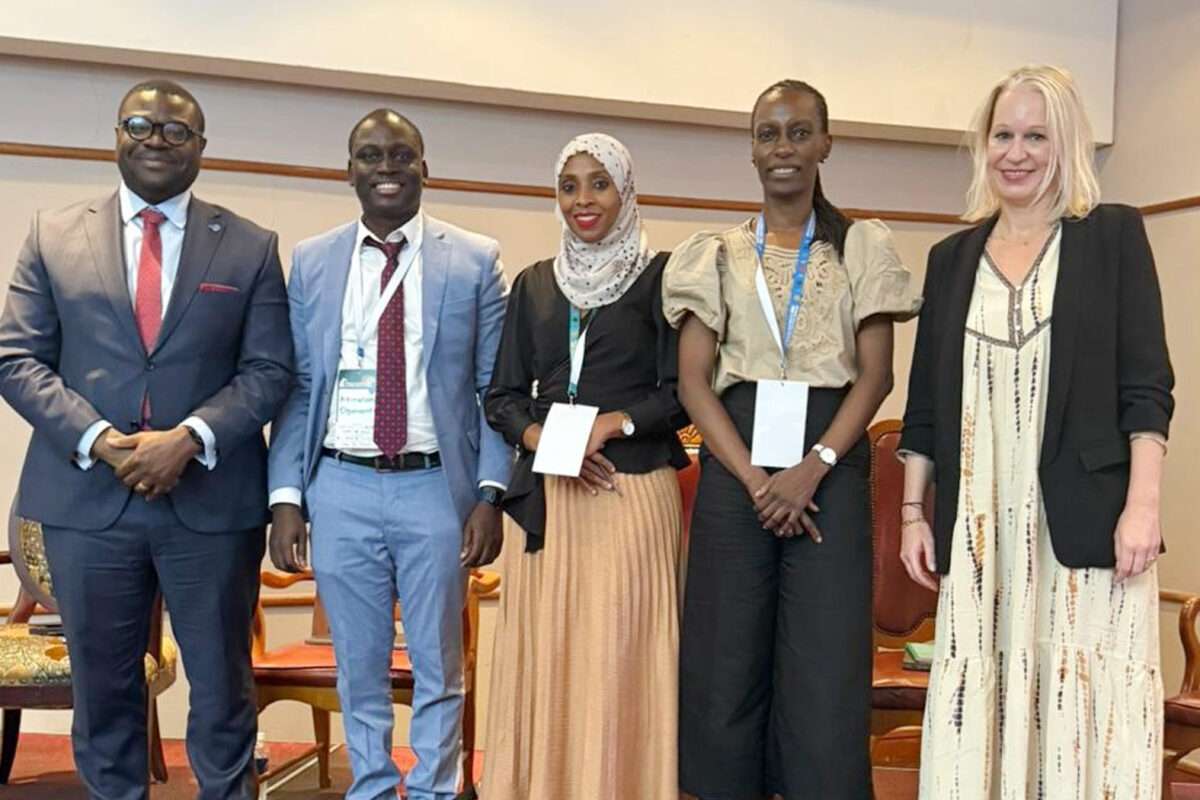
The Collaboration on International ICT Policy for East and Southern Africa (CIPESA) participated in a session titled “Leveraging National Action Plans and Voluntary Disclosure to Foster a Responsible Tech Ecosystem,” convened by the B-Tech Africa Project under the United Nations Human Rights Office and the Thomson Reuters Foundation (TRF). The session discussed the integration of digital governance and voluntary initiatives like the Artificial Intelligence (AI) Company Disclosure Initiative (AICDI) into National Action Plans (NAPs) on business and human rights. That integration would encourage companies to uphold their responsibility to respect human rights through ensuring transparency and internal accountability mechanisms.
According to Nadhifah Muhammad, Programme Officer at CIPESA, Africa’s participation in global AI research and development is estimated only at 1%. This is deepening inequalities and resulting in a proliferation of AI systems that barely suit the African context. In law enforcement, AI-powered facial recognition for crime prevention was leading to arbitrary arrests and unchecked surveillance during periods of unrest. Meanwhile, employment conditions for platform workers on the continent, such as OpenAI ChatGPT workers in Kenya, were characterised by low pay and absence of social welfare protections.
To address these emerging human rights risks, Prof. Damilola Olawuyi, Member of the UN Working Group on Business and Human Rights, encouraged African states to integrate ethical AI governance frameworks in NAPs. He cited Chile, Costa Rica and South Korea’s frameworks as examples in striking a balance between rapid innovation and robust guardrails that prioritise human dignity, oversight, transparency and equity in the regulation of high-risk AI systems.
For instance, Chile’s AI policy principles call for AI centred on people’s well-being, respect for human rights, and security, anchored on inclusivity of perspectives for minority and marginalised groups including women, youth, children, indigenous communities and persons with disabilities. Furthermore, it states that the policy “aims for its own path, constantly reviewed and adapted to Chile’s unique characteristics, rather than simply following the Northern Hemisphere.”
Relatedly, Dr. Akinwumi Ogunranti from the University of Manitoba commended the Ghana NAP for being alive to emerging digital technology trends. The plan identifies several human rights abuses and growing concerns related to the Information and Communication Technology (ICT) sector and online security, although it has no dedicated section on AI.
NAPs establish measures to promote respect for human rights by businesses, including conducting due diligence and being transparent in their operations. In this regard, the AI Company Disclosure Initiative (AICDI) supported by TRF and UNESCO aims to build a dataset on corporate AI adoption so as to drive transparency and promote responsible business practices. According to Elizabeth Onyango from TRF, AICDI helps businesses to map their AI use, harness opportunities and mitigate operational risk. These efforts would complement states’ efforts by encouraging companies to uphold their responsibility to respect human rights through voluntary disclosure. The Initiative has attracted about 1,000 companies, with 80% of them publicly disclosing information about their work. Despite the progress, Onyango added that the initiative still grapples with convincing some companies to embrace support in mitigating the risks of AI.
To ensure NAPs contribute to responsible technology use by businesses, states and civil society organisations were advised to consider developing an African Working Group on AI, collaboration and sharing of resources to support local digital startups for sustainable solutions, investment in digital infrastructure, and undertaking robust literacy and capacity building campaigns of both duty holders and right bearers. Other recommendations were the development of evidence-based research to shape the deployment of new technologies and supporting underfunded state agencies that are responsible for regulating data protection.
The Forum was organised by the Office of the United Nations High Commissioner for Human Rights (OHCHR), the United Nations (UN) Working Group on Business and Human Rights and the United Nations Development Programme (UNDP). Other organisers included the African Union, the African Commission on Human and Peoples’ Rights, United Nations Children’s Fund (UNICEF) and UN Global Compact. It brought together more than 500 individuals from over 75 countries – 32 of them African. The event was a buildup on the achievements of the previous Africa ABHR Forums in Ghana (2022), Ethiopia (2023) and Kenya (2024).