Civil Society and the Fight for Big Tech Accountability in Africa

By CIPESA Writer |

As digital platforms become central to how Africans communicate, access information, conduct business, and participate in public life, the question of who holds these companies accountable has become increasingly urgent.

Technology companies exercise considerable influence over personal data, online visibility, advertising markets, content moderation, and, increasingly, artificial intelligence systems. Yet CIPESA’s work on platform governance shows that having laws and regulations does not always translate into effective oversight of multinational technology companies.

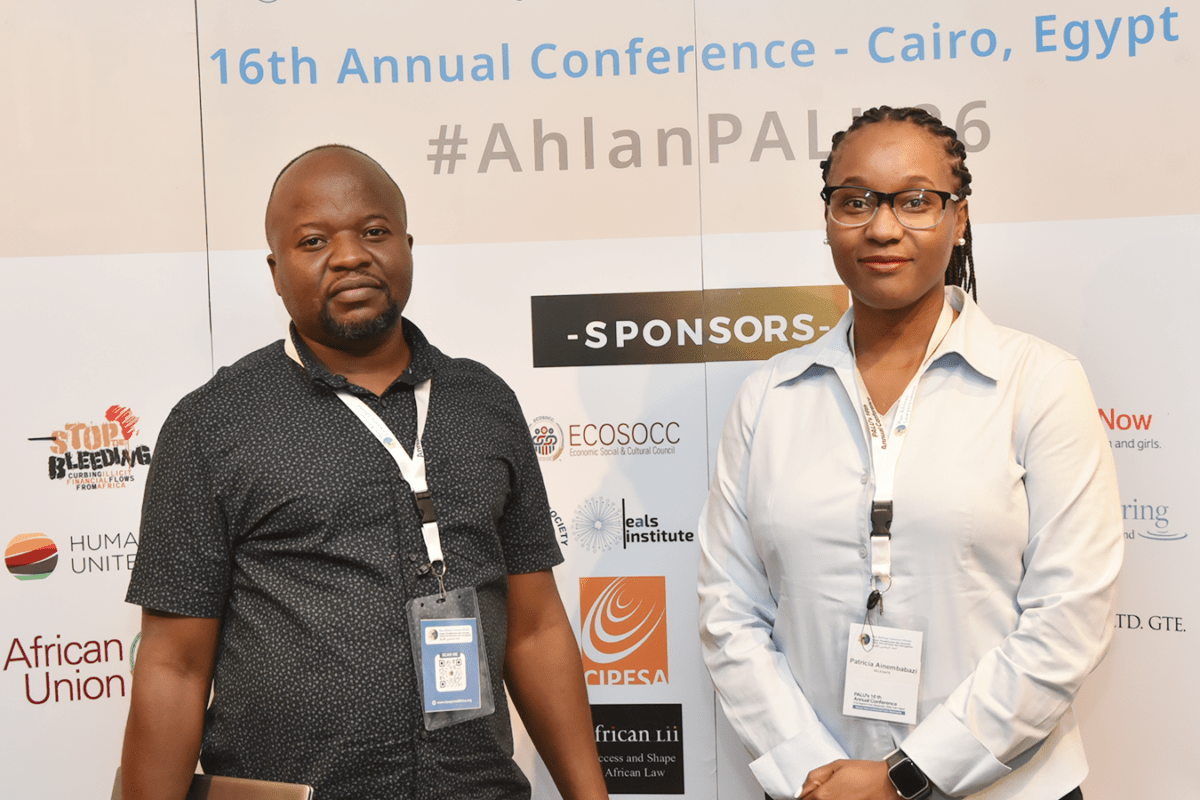
These concerns were at the centre of the Big Tech Accountability Summit on July 30, 2026, where CIPESA’s Policy and Advocacy Officer, Patricia Ainembabazi, spoke on the panel “How Civil Society and Public Interest Litigation Drive Big Tech Data Protection Accountability in Africa.”

The discussions focused on the role civil society can play in triggering enforcement, the barriers to holding multinational companies accountable across borders, and the institutional reforms and policies needed to strengthen accountability. A key point from the discussion was that adopting data protection laws and establishing regulators does not automatically guarantee enforcement.

Across Africa, many regulators operate with limited financial resources, insufficient specialised personnel, fragmented mandates, and varying levels of institutional independence. They are nevertheless expected to oversee companies with substantial financial, technical, and legal capacity. Much of the evidence required to establish violations, including information about algorithms, data flows, and internal risk assessments, also remains under the control of the companies themselves.

This imbalance means that civil society can play an important role. As Patricia Ainembabazi noted, civil society organisations document harms, aggregate the experiences of affected users, undertake legal and technical research, file regulatory complaints, support strategic litigation, and sustain public scrutiny.

Similar concerns regarding tech accountability had been raised earlier on July 7, 2026, during the Humanising Big Tech Accountability webinar, where panelists argued that holding platforms accountable requires concerted efforts and a multistakeholder approach, including through storytelling and narrative building.

Uganda’s data protection case against Google LLC illustrates the importance of citizen-led accountability. The complaint was brought by four Ugandan data subjects, while CIPESA subsequently documented and amplified its wider significance. CIPESA highlighted how the case transformed an abstract privacy right into a concrete enforcement action against one of the world’s largest technology companies. The case also demonstrated the importance of testing the application of national data protection obligations to multinational companies operating across borders.

From western Africa, Nigeria offers another important example. A joint investigation by the Federal Competition and Consumer Protection Commission and the Nigeria Data Protection Commission resulted in a USD 220 million penalty against Meta and WhatsApp, which was subsequently upheld by the Competition and Consumer Protection Tribunal. The case demonstrates that African regulators can build credible enforcement actions against multinational platforms. It also raises the broader question of whether such penalties ultimately lead to lasting compliance and changes in corporate behaviour.

CIPESA’s recent analysis, Who Holds Digital Power Accountable? Lessons from Platform Governance in Africa further show that countries are experimenting with different approaches to regulating platform power. South Africa’s Media and Digital Platforms Market Inquiry examined the influence of dominant platforms on local journalism and secured commitments from several major companies. Uganda’s prolonged restriction on Facebook presents a contrasting experience, where the social and economic costs were borne by users and businesses without clearly producing greater accountability from the platform.

These examples show that the ability of individual African countries to influence global technology companies depends not only on having laws but also on regulatory capacity, market size, and political leverage.

The challenge extends beyond data protection. CIPESA has documented how weaknesses in platform governance affect freedom of expression, access to information, civic participation, and gender equality. Inadequate local language content moderation, technology-facilitated gender-based violence (TFGBV), and rapidly spreading disinformation demonstrate how failures in platform accountability translate directly into harms for African users. Effective platform governance, therefore, needs to address not only content moderation but also pay attention to data governance, competition, algorithmic transparency, market concentration, and access to effective remedies.

For civil society and regulators, one of the major challenges is regulatory fragmentation. A technology company may collect data in one country, process or store it in another, and make key decisions elsewhere. Different national laws, procedures, and institutional capacities can allow companies to challenge jurisdiction or respond selectively across markets. Regulators and civil society organisations may also lack the resources to undertake sophisticated technical audits or sustain lengthy litigation.

As such, CIPESA has called for a shift beyond isolated national enforcement towards the domestication of the African Union-backed cross-border enforcement mechanism, bringing together data protection, competition, consumer protection, and communications regulators.

While regional approaches begin to emerge, the COMESA Competition Commission’s investigation into Meta across its member states illustrates the potential for collective oversight of platform power. CIPESA’s research similarly argues that no African country can effectively address systemic platform power in isolation and calls for stronger institutions, deeper regulatory cooperation, rights-respecting regulation, and greater transparency from technology companies.

Ultimately, civil society must be integral to this accountability architecture, not merely consulted after decisions have been taken, but as a source of complaints, research, community evidence, and independent oversight. Stronger Big Tech accountability in Africa will also depend on regulators that have the resources and independence to act, accessible remedies for affected users, coordinated regional enforcement, and sustained public interest advocacy.

During the Humanising Tech Accountability webinar, CIPESA emphasised the need for civil society actors to proactively engage in research and advocacy that centers and amplifies the impact of unchecked big tech companies’ practices on people’s lives. It is only when people understand the impact of practices and manifestations such as TFGBV or the spread of disinformation on their fundamental human rights, such as freedom of expression, access to information, civic participation, and gender equality, that they will aggressively demand platform reforms and accountability.

Through our research, policy engagement, and advocacy on data governance, privacy, platform governance, and digital rights, CIPESA continues to contribute to building an African digital ecosystem in which technological power is matched by meaningful accountability.

Rethinking Africa’s Approach to the Politics of AI Governance and Regulation

By Paul Kimumwe |

The past few years have witnessed a growing urgency for frameworks that regulate and harness the development and implementation of new and emerging technologies, especially Generative Artificial Intelligence (Gen AI).

At the international and regional level, the United Nations (UN) and the African Union (AU) have established norms through resolutions, strategies and guidelines to affirm the relationship between technology and human rights, and provide benchmarks for Member States developing rights-respecting AI governance and regulatory frameworks.

In March 2024, the UN adopted a landmark resolution on the promotion of “safe, secure and trustworthy” artificial intelligence (AI) systems that also benefit sustainable development. The resolution also calls upon Member States and other stakeholders “to refrain from or cease the use of artificial intelligence systems that are impossible to operate in compliance with international human rights law or that pose undue risks to the enjoyment of human rights.”

The 2024 resolution reaffirmed that “the same rights that people have offline must also be protected online, including throughout the life cycle of artificial intelligence systems.” It called upon member states to ensure that national AI governance and regulatory frameworks “promote safe, secure and trustworthy artificial intelligence systems” that are inclusive and benefit everyone in an equal manner.

In August 2025, the UN adopted resolution 79/325, establishing the Independent International Scientific Panel on AI and Global Dialogue on AI Governance. It aims to provide a platform to discuss international cooperation, share best practices and lessons learned, and to facilitate open, transparent and inclusive discussions on AI governance. However, a year earlier, in July 2024, the AU adopted the Continental AI Strategy, which emphasises the development of robust governance regimes for AI founded on ethical principles, democratic values, human rights, and the rule of law, in line with the AU  Agenda 2063.

Both the UN resolutions on AI and the AU continental strategy came on the backdrop of other AI-related policy guidelines such as Center for AI and Digital Policy’s 2018 Universal Guidelines for AI, the Organization for Economic Cooperation and Development (OECD) 2019 AI Principles / G20 AI Guidelines, the United Nations Education Scientific and Cultural Organization (UNESCO’s) 2021 Recommendation on the Ethics of AI, and the European Union Commission’s (EUC) 2024 European Union AI Act.

Many African countries have been actively developing AI-related laws, policies, and strategies. Rwanda was the first to adopt a national AI policy in 2019, followed by Ghana’s National Artificial Intelligence Strategy in October 2022, Egypt’s National Artificial Intelligence Strategy in January 2025, and Kenya’s own strategy in May 2025. Benin, Côte d’Ivoire, Ethiopia, Mauritius, Nigeria, Tunisia, Zambia, and Zimbabwe are among others that have developed AI policies or strategies. Others, such as Burkina Faso, Guinea, Lesotho, Mali, Namibia, and Uganda, are still at different stages in developing their AI policies or strategies.

A case of history repeating itself?

While all these have been welcome developments in the governance and regulation of AI, studies show that the adoption of international and regional human rights instruments and national laws, policies and strategies is often just the first step in a long process. If not well managed, it often results in provisions that are, although of a progressive nature, are hard to implement and fail to address local needs and realities.

This is because the process of drafting these laws and strategies in many developing contexts is often devoid of meaningful multistakeholder consultations and engagement. Moreover, there has also been a tendency to adopt and replicate models from the global North, whose texts, while progressive, have faced strong resistance from Member States as they sometimes do not align with local contexts and cultural norms.

For example, many African countries, including Algeria, Ethiopia, Cameroon, Kenya, Mauritius, Namibia, Rwanda, South Africa, and Uganda, expressed strong reservations about certain provisions contained in the Protocol to the African Charter on Human and People’s Rights on the Rights of Women in Africa (Maputo Protocol).

Additionally, most of these models are state-centric and grounded in frameworks that create a distinct binary between duty-bearers and rights-holders, but do not articulate how and what each party needs to do to ensure meaningful implementation of the initiatives.

While the state-centric and rights-based approaches may seem attractive, in practice, their relevance in advancing digital rights is often undermined, especially when the prescribed provisions and action points do not align with the country’s current social, economic and political realities. Indeed, cases abound in which initial promises have fizzled over time due to the political leadership’s inaction (and sometimes unwillingness) to fully adopt and implement the resolutions or strategies.

For example, it took almost nine years for the African Union Convention on Cyber Security and Personal Data Protection (Malabo Convention) to enter into force on June 8, 2023, after its adoption in 2014. Indeed, more countries (40) have enacted data protection laws as compared to those that have ratified (16), highlighting a disconnect between national legal reforms and their commitment to continental frameworks. Similarly, the AU Protocol to the African Charter on Human and Peoples’ Rights on the Rights of Persons with Disabilities in Africa, adopted on January 30, 2018, took six years to enter into force, after the 15th ratification was achieved.

More critically, however, the lack of political will often reflect in the absence of clearly defined funding mechanisms for the implementation of these policies and strategies. As a result, even well-designed and progressive frameworks face implementation challenges due to structural flaws and insufficient funding.

For example, while Africa has scored highly in enacting Data Protection laws, which have become central to ongoing AI governance frameworks, one issue affecting their effective implementation is the lack of clear funding mechanisms for the regulatory bodies responsible for oversight and implementation. Other challenges include weak governance structures that deny these oversight bodies financial, decisional and operational independence and place them under the supervision of political appointees rather than parliament.

Designing for Failure?

Apart from Kenya, most African countries that have developed or are in the process of developing an AI strategy or policy do not provide for budgetary allocations or estimates for the implementation of their AI strategies, laws or policies. Countries such as Rwanda provide for a project-level funding framework, while others, such as Egypt and Mauritius, rely on programmatic budgets to fund the implementation of their strategies.

Even then, while implementation of Kenya’s National Artificial Intelligence Strategy (2025–2030) was costed at KSh 152 billion over a period of five years, a review of Kenya’s 2026/27 national budget shows no dedicated funding allocation for the strategy. Instead, the Sh8.6 billion allocated to the ICT sector mainly targets the expansion of broadband access, the strengthening of digital skills, and the digitisation of government services.

Additionally, in countries such as Ethiopia and Rwanda, while the policies provide for the establishment of an implementation body, several functions have been split across different ministries, departments and agencies (MDAs), which, in practice, would pose a significant challenge to meaningful execution.

For example, Rwanda’s AI policy mandates the Responsible AI office under the Ministry of ICT and Innovation to be responsible for effective tech implementation. It also positions the Rwanda Utilities Regulatory Authority (RURA) as the technical regulator responsible for developing ethical AI guidelines and principles, and the National Cyber Security Authority (NCSA) to oversee data protection compliance relevant to AI systems.

In Ethiopia, the policy designates the Ethiopian Artificial Intelligence Institute (EAII) as the national coordinating body responsible for implementation, standards development, and capacity building, and the Ministry of Innovation and Technology is responsible for providing policy oversight. Other sectoral agencies, such as the Ethiopian Communications Authority (ECA), the Ministry of Health, and the National Bank, have mandates over telecommunications and data matters, health-sector-related AI, and financial AI, respectively.

While a multisectoral approach to policy and strategic implementation can improve cohesiveness and legitimacy, the approach is prone to risks such as divergent priorities, internal conflicts, power struggles, and regulatory fragmentation, which are likely to affect how the policies and strategies are executed.

Implications for the Future of AI Governance and Regulation

In many African countries, the development of AI governance and regulatory structures is still in its infancy and presents a unique opportunity for Africans to shape their own destiny on how AI should be developed and deployed in ways that respond to and respect local needs and contexts.

Enactment of AI-specific Laws

In many countries, governments are relying on existing laws, such as data protection, communications, and cyber-related legislation, alongside the AI policies and strategies being developed. Given the evolving nature of AI, countries need to work towards enacting AI-specific laws that clearly define and contextualise AI.

Empowering the Oversight Bodies

As currently structured, many of the existing and proposed oversight bodies are either not yet operational or lack a clear mandate and sufficient resources for effective oversight. Additionally, many of them are situated within fragmented regulatory environments with overlapping responsibilities, which results in uncoordinated implementation. It is important, therefore, that the mandate of the oversight bodies and resources are clearly defined and guaranteed to ensure independence and eliminate the possibility of political interference.

Meaningful Stakeholder Participation

Having empowered stakeholders who are meaningfully engaged and participate in the development processes for policies, laws and strategies is critical to ensuring that the resulting instruments address real needs, are people-centred and implementable, and have government buy-in, as reflected in the government’s funded priorities.

Adopting a Human Rights-Centred Approach

A 2025 study by CIPESA shows that in many countries, the adoption of a human rights-centred approach to AI governance remains aspirational due to gaps in implementation, technical capacity, and stakeholder engagement in policy development and implementation. It is important, therefore, that current efforts prioritise safeguarding fundamental human rights and freedoms, enhancing human capabilities over replacement, and ensuring meaningful human control, transparency, fairness, and inclusivity in AI systems.

Shaping the Agenda for the Forum on Internet Freedom in Africa 2026 (FIFAfrica26): Thank You for Your Proposals

FIFAfrica26 |

The organisers of the upcoming Forum on Internet Freedom in Africa 2026 (FIFAfrica26) extend sincere appreciation to everyone who submitted a session proposal or travel support application in response to the recent Call.

We received over 450 submissions, reflecting a rich diversity of interests spanning the current digital rights landscape in Africa and their intersections with global dynamics. The submissions collectively reflected the pressing issues shaping digital rights, online freedoms, and internet governance across the continent while also highlighting the vibrant community working to advance internet freedom in Africa.

Successful Applicants

Successful applicants have been notified directly. We are excited to confirm that their sessions and contributions will form the core of the Forum’s agenda. We look forward to working closely with them to shape the programme and to bringing their insightful proposals to life during the Forum.

For Those Not Selected

If you have not received a success notification, please know that this does not reflect a lack of value in your submission. The volume of high-quality proposals far exceeded the available session slots, and difficult decisions had to be made. We remain grateful for your engagement and encourage you to stay connected with the Forum as there will be future opportunities to contribute.

Next Steps in the Process

  • The FIFAfrica26 agenda will be shared publicly in the coming weeks.
  • All applicants will continue to receive Forum updates and are warmly invited to attend as participants online or in person.
  • Registration to attend the Forum remains open: secure your seat here.

Plan Your Travel to Mauritius

The Forum will be hosted at the InterContinental Resort, Fort Coastal Road, MU, Balaclava 21306, Mauritius. All participants, those receiving travel support from CIPESA and other partners as well as independent participants, should refer to the FIFAfrica26 travel note and plan accordingly.

Thank you once again for your time, expertise, and commitment to building a free, open, and inclusive internet in Africa. We look forward to engaging with you online or in person at FIFAfrica26.

Who Holds Digital Power Accountable? Lessons from Platform Governance in Africa

By CIPESA Writer |

Digital platforms have become central to how millions of Africans access news, organise politically, run businesses, and participate in public life. Yet the companies that operate these platforms make far-reaching decisions about what people see online, whose voices are amplified, and how public debate unfolds, often with limited accountability to the communities they affect.

As platforms increasingly rely on artificial intelligence and automated systems to recommend, rank, and moderate content, questions about transparency, oversight, and responsibility have become more urgent.

Governments across Africa are beginning to answer the question of who governs the platforms in different ways. CIPESA’s latest policy brief, Platform Governance in Africa: Emerging Models and Policy Priorities, examines how Nigeria, South Africa, and Uganda have confronted platform power, what their experiences reveal about the limits of national regulation, and why regional cooperation is becoming increasingly important.

Three Countries, Three Approaches

Nigeria has shown that African regulators can build credible cases and prevail in court. Following a joint investigation by the Federal Competition and Consumer Protection Commission and the Nigeria Data Protection Commission, Meta was found to have appropriated Nigerian users’ data without consent, abused its dominant market position, and treated Nigerian consumers less favourably than users elsewhere. In July 2024, regulators imposed a USD 220 million fine, which was later upheld on appeal.

Yet the case also illustrates the limits of enforcement. When the payment deadline expired in June 2025, neither Meta nor the regulator had publicly confirmed whether the fine had been paid. Nigeria demonstrated that regulators can win legal battles. Whether those victories translate into lasting changes in platform behaviour remains an open question.

South Africa has taken a different approach. Rather than relying primarily on financial penalties, the Competition Commission’s Media and Digital Platforms Market Inquiry sought to address how dominant platforms affect the sustainability of local journalism. The inquiry secured binding commitments from Google, Meta, TikTok, and Microsoft, including a ZAR 688 million (USD 41.6 million) media support package from Google. It represents one of Africa’s most ambitious efforts to address platform power through competition oversight, although its long-term impact will depend on sustained political commitment and regulatory capacity.

Uganda’s experience offers a different lesson. A government-ordered restriction on Facebook, imposed in January 2021 after Meta removed accounts linked to government-affiliated influence operations, has now lasted more than five years. The costs have largely been borne by Ugandan users and businesses, highlighting the wider social and economic consequences of unresolved disputes between governments and global platforms.

The Limits of Acting Alone

These cases highlight a central challenge of platform governance in Africa: legal authority does not always translate into practical leverage over global technology companies. Also, it is apparent that market size matters. Nigeria and South Africa, as two of Africa’s largest digital markets, secured stronger responses from platforms than Uganda did. Most African economies are considerably smaller than Meta’s annual profits, limiting the pressure individual governments can exert on multinational companies.

This reality is driving growing interest in regional approaches. The ongoing investigation by the Common Market for Eastern and Southern Africa (COMESA) Competition Commission into Meta’s practices across 21 member states reflects a shift towards collective oversight of platform power. By acting together, governments have greater potential to address competition, data governance, and digital market concerns than they do individually.

Why Platform Governance Matters

Platform governance is often discussed in terms of regulation and competition, yet users ultimately experience its consequences. During the conflict in Ethiopia’s Tigray region, platforms struggled to moderate harmful content in Tigrinya and Amharic. In one widely documented case, Facebook posts targeting university professor Meareg Amare remained online for days after being reported and were removed only after he had been killed.

Across Africa, women journalists, politicians, and activists continue to face technology-facilitated gender-based violence that platform governance systems have struggled to address effectively. These failures can discourage participation in public life and narrow the diversity of voices represented online.

Meanwhile, coordinated disinformation campaigns continue to spread faster than moderation and fact-checking systems can respond. A 2025 analysis in Kenya documented a coordinated campaign that generated more than 150,000 views in less than two weeks, illustrating how quickly harmful narratives can circulate before effective interventions are possible.

What Needs to Change

The policy brief argues that platform governance in Africa must extend beyond content moderation to broader questions of accountability, competition, data governance, and algorithmic transparency. Addressing these challenges will require governments to pursue rights-respecting regulation, regulators to strengthen oversight of platform systems, regional bodies to deepen cooperation, and platforms to provide greater transparency about how automated systems shape online experiences.

Platform governance in Africa is no longer only about removing harmful content. It is about who controls the infrastructure of public communication, on what terms, and with what accountability to the people who depend on it.

The experiences of Nigeria, South Africa, and Uganda show that African governments are increasingly willing to confront platform power. They also demonstrate that no African country can do so effectively in isolation. Building a more accountable digital future will require stronger institutions, deeper regional cooperation, and platforms that are genuinely responsive to the societies they serve.

To explore the evidence, country case studies, and policy recommendations in greater detail, read CIPESA’s full policy brief, Platform Governance in Africa: Emerging Models and Policy Priorities.

What Global South Civil Society Wants from AI Governance

By CIPESA Writer |

As global discussions on the future of Artificial Intelligence (AI) governance take place at the AI for Good Global Summit and the Global Dialogue on AI Governance, questions about who shapes AI systems, whose interests they serve, and how affected communities can participate in decision-making are becoming increasingly urgent.

The Collaboration on International ICT Policy for East & Southern Africa (CIPESA) is pleased to share this joint statement by the Global Digital Justice Forum and the Global South Alliance, of which it is a member. The statement reflects concerns that CIPESA has consistently raised through its research and policy engagement, namely, current approaches to AI development risk deepening existing inequalities, and meaningful AI governance requires stronger corporate accountability, equitable data governance, and investment in public-interest AI infrastructure.

Through submissions to national AI strategies in Africa, analysis of AI governance trends across 14 African countries, and engagement with global AI policy discussions, CIPESA has consistently advocated for inclusive, rights-based approaches that ensure communities most affected by AI developments have a meaningful role in shaping its future.

The statement below brings together civil society perspectives from across the Global South and calls for an AI governance approach grounded in human rights, equity, public interest, and meaningful participation.

Joint Statement issued by the Global Digital Justice Forum and the Global South Alliance in the lead-up to the Global Dialogue on AI Governance

July 2026

The current trajectory of Artificial Intelligence (AI) innovation has consolidated the neocolonial structures of development. Today, a handful of US and Chinese transnational corporations dominate global AI systems. Driven by massive capital, semiconductor manufacturing dominance, and hyperscale cloud infrastructure, these companies control over 90% of global AI data center capacity. Their market capitalization exceeds the combined national income of many countries in the Global South. The wealth and power amassed by these corporations come at a staggering cost, borne disproportionately by the South. From the devalued, dehumanizing labor that is essential for training AI models to the critical minerals, land, energy, and water, communities in the South continue to provide the scaffolding for the AI economy and society, without the voice and power to shape and benefit from this paradigm. These systemic injustices also perpetuate deep dependencies on current and future infrastructures — over which communities lack control and sovereign agency.

The Global Digital Justice Forum (GDJF) and the Global South Alliance (GSA) believe that the emerging AI order lacks legitimacy; it grants unbridled impunity to powerful corporations, while reducing humanity and nature to objects of limitless extraction. The many summits and conversations about AI governance have failed to tackle these core issues. 

Against this backdrop, we exhort the UN Global Dialogue on AI Governance to deliver on a South-led AI paradigm, anchored in a vision of rights-based development, respectful of planetary boundaries, and committed to intergenerational justice and human rights. We urge that the Global Dialogue on AI Governance commit to the following.

  • End AI extractivism 

A ‘move-fast-break-things’ approach to digital innovation aids profit, not people. In particular, the systemic and collective risks and harms associated with the violation of human rights, the erosion of democratic processes, the abuse of the environment, and the discrimination and invisibility of marginalized citizens in AI-driven decision-making in public services remain consistently ignored and underplayed in international consensus declarations. AI innovation must embrace the precautionary principle. It must be ethically and transparently developed, democratically accountable, and grounded in a globally agreed minimum floor for meaningful and dignified work, pluralistic knowledge, diversified economies, and planetary flourishing.

  • Apply the Common But Differentiated Responsibilities (CBDR) principle in international AI cooperation

The reckless path of data and AI technologies, designed and controlled by a few, has led to predatory value capture, strengthening the geo-economic and geo-political power of a handful of corporate actors and countries. The human and planetary costs arising from such opportunism are indeed a common concern. However, power diff erentials in international economic law have led to a status quo where trade, taxation, and Intellectual Property regimes clearly disadvantage developing countries, disproportionately enabling a massive transfer of wealth from the South to the North. This seriously undermines the development of digital infrastructure and human and institutional capabilities in developing countries. Such asymmetry must be remedied through global commitments to underwrite the development of regenerative, locally-led, AI infrastructures and models in the South.

  • Address corporate impunity in data and AI value chains

A global moratorium on the sale and use of AI systems that pose a high risk to human rights (such as remote biometric recognition, social scoring, spyware, and AI-driven autonomous weapons) is urgently needed. The proposed UN Binding Treaty on Transnational Corporations (TNCs) to hold global businesses accountable for human rights violations and environmental degradation in supply chains needs to be adopted without delay and appropriately future-proofed against the specific risks of harms and abuses in data and AI value chains.

  • Design a data governance framework that delivers on global equity

A ‘one-size-fits-all’ policy playbook for cross-border data flows governance will not deliver on equitable development. Development sovereignty must be recognized as a core principle in the global governance of cross-border data flows. Furthermore, the governance of the non-personal data commons requires a societal approach that includes safeguards for collective privacy and the rights of communities to steward the use and re-use of their data resources in innovation ecosystems, together with strong personal data protection rights.

  • Invest in the development of global public compute

The foundational infrastructure of compute is controlled by a few corporations. Even open-source AI models are often dependent on closed/proprietary infrastructure systems for their hosting and distribution. To ensure that data science and AI innovation deliver on public innovation, a global facility for public compute is needed. A ‘CERN for AI’ could support a distributed network of AI research centers coordinated by a central hub and provide access to innovators and researchers from developing countries.

The current trajectory of AI innovation is not working for the majority. The Global Dialogue on AI Governance must move the needle with conviction and courage towards people’s participation, planetary wellbeing, and public value. Anything less will not do justice to the people of the South.

Please find the links to prior submissions from GDJF and GSA to official consultations of the Global Dialogue below:
GDJF’s April 2026 submission
GSA’s April 2026 submission