
By Patricia Ainembabazi |
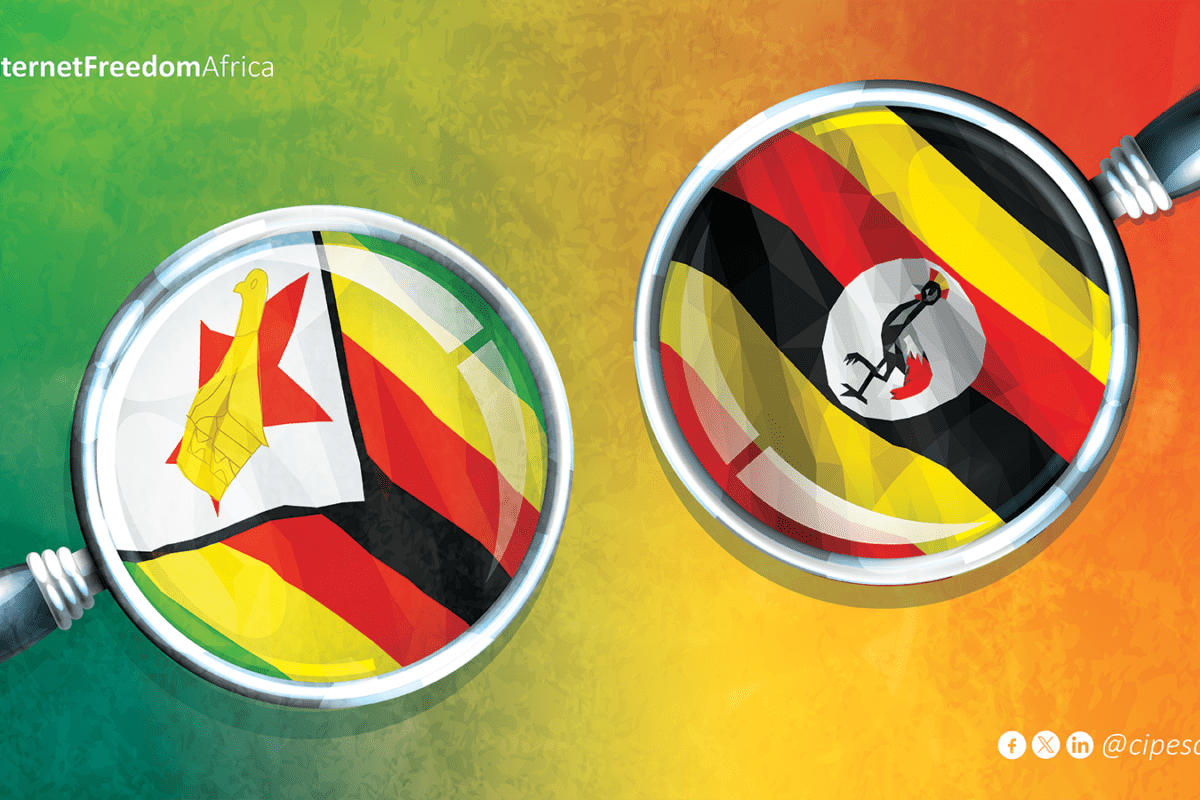
As Uganda and Zimbabwe prepare for their fourth-cycle Universal Periodic Reviews (UPRs) at the United Nations Human Rights Council, stakeholder submissions by the Collaboration on International ICT Policy for East and Southern Africa (CIPESA) and partners on the two countries reveal a common challenge: digital infrastructure and legislation are advancing, but the protection of human rights online is not keeping pace.
Both countries have made notable progress since their previous UPR reviews in January 2022, including advances in digital infrastructure, regulatory frameworks, and access to digital services. Uganda has expanded its communications infrastructure and digital public services, strengthened aspects of data protection enforcement, and registered important court decisions annulling provisions of the Computer Misuse (Amendment) Act, 2022, and criminal defamation offences.
Zimbabwe has expanded internet and broadband subscriptions, licensed satellite internet services, adopted regulations to support the Freedom of Information Act, 2020, and introduced a data protection framework through the Cyber and Data Protection Act, 2021.
However, these developments have not consistently translated into safe, affordable, and rights-respecting participation online. For instance, freedom of expression remains under pressure in both countries. Journalists, activists, opposition actors, artists, comedians, human rights defenders, and social media users continue to face arrest, prosecution, intimidation, and harassment over their expression.
While Uganda’s court decisions have provided important protections, broadly framed communication offences and online media licensing requirements continue to create uncertainty and encourage self-censorship. In Zimbabwe, offences relating to false information, cyberbullying, incitement, insulting the President, sovereignty, and national interest threaten journalism, political debate, satire, whistleblowing, and human rights advocacy.
The joint submission on Uganda by CIPESA, the Association for Progressive Communications (APC), and Women of Uganda Network (UWOGNET) underlines the growing relationship between internet access and democratic participation. A similar dynamic is seen in the joint submission on Zimbabwe by Zimbabwe Lawyers for Human Rights (ZLHR), the University of Birmingham, Pan African Lawyers Union (PALU), the Digital Rights Alliance Africa (DRAA), and CIPESA.
During Uganda’s January 2026 general elections, the government imposed an internet shutdown lasting almost five days, disrupting communication, access to information, economic activity, digital financial services, and participation in public affairs. It marked the third consecutive election cycle in which the country disrupted digital communications, following similar measures in 2016 and 2021.
Zimbabwe experienced network degradation during its 2023 elections. Although internet connectivity has expanded in both countries, these network disruptions demonstrate the need for safeguards against shutdowns, throttling, and other forms of communication interference during elections and periods of political contestation.
Affordability and inequality also remain obstacles in both countries. While Uganda recorded 47.1 million active mobile subscriptions and 18.5 million active internet subscriptions by December 2025, taxes on data, airtime, devices, and digital services continue to make connectivity unaffordable to a large number of Ugandans.
In Zimbabwe, high data and device costs, unreliable electricity, rural infrastructure gaps, limited digital literacy, and inaccessible services prevent many people from fully participating online. Across both countries, women, rural communities, students, older persons, low-income households, and persons with disabilities face disproportionate barriers to affording and using digital technologies.
Privacy and surveillance are equally pressing challenges. Uganda’s expanding use of biometric identification, iris scans, closed-circuit television systems, digital number plates, and electoral technologies requires stronger safeguards, transparency, and independent oversight. Proposed social media monitoring tools raise additional concerns regarding privacy, freedom of expression, and accountability. The Personal Data Protection Office also needs adequate institutional capacity to effectively enforce the law.
In Zimbabwe, the designation of the Postal and Telecommunications Regulatory Authority of Zimbabwe as the Data Protection Authority raises concerns about institutional independence. Broad national security exemptions and limited judicial oversight of surveillance powers also expose individuals to possible violations of privacy.
Another shared concern is technology-facilitated gender-based violence. Women journalists, politicians, activists, and human rights defenders face cyberstalking, doxing, impersonation, sexualised disinformation, threats, coordinated harassment, and the non-consensual sharing of intimate images. Artificial intelligence is increasing these risks by enabling sexual deepfakes and other manipulated content intended to discredit women and exclude them from public life.
The fourth-cycle reviews should result in clear and measurable commitments. Accordingly, Uganda and Zimbabwe should:
- Reform restrictive expression laws and repeal vague offences used against legitimate journalism, criticism, satire, and political participation.
- Prohibit internet shutdowns, throttling, and arbitrary platform blocking, particularly during elections, protests, and other periods of heightened public interest.
- Promote affordable and inclusive connectivity by reducing service costs, expanding rural infrastructure, improving accessibility, and supporting community-centred connectivity models.
- Strengthen access to information through proactive disclosure, accessible request procedures, and effective implementation of existing laws.
- Guarantee independent data protection and surveillance oversight, including judicial authorisation, transparency reporting, and remedies for unlawful surveillance or misuse of personal data.
- Adopt survivor-centered responses to technology-facilitated gender-based violence, supported by accessible reporting systems, legal assistance, and stronger platform accountability.
The UPR provides both governments with an opportunity to show that digital transformation and human rights protection are mutually reinforcing. Progress must be measured not only through infrastructure, subscription numbers, and legislation, but by whether people can communicate, organise, access information, and participate online freely, safely, and without discrimination.
For the full reports as submitted, click here for Uganda and here for Zimbabwe.