Children have one job: to make mistakes, try things out, and figure out who they are becoming. Generative AI tools, by handing children ready-made answers, risk taking that job away before children ever get the chance to do it themselves. Yet, a blanket ban is never really a comprehensive solution.
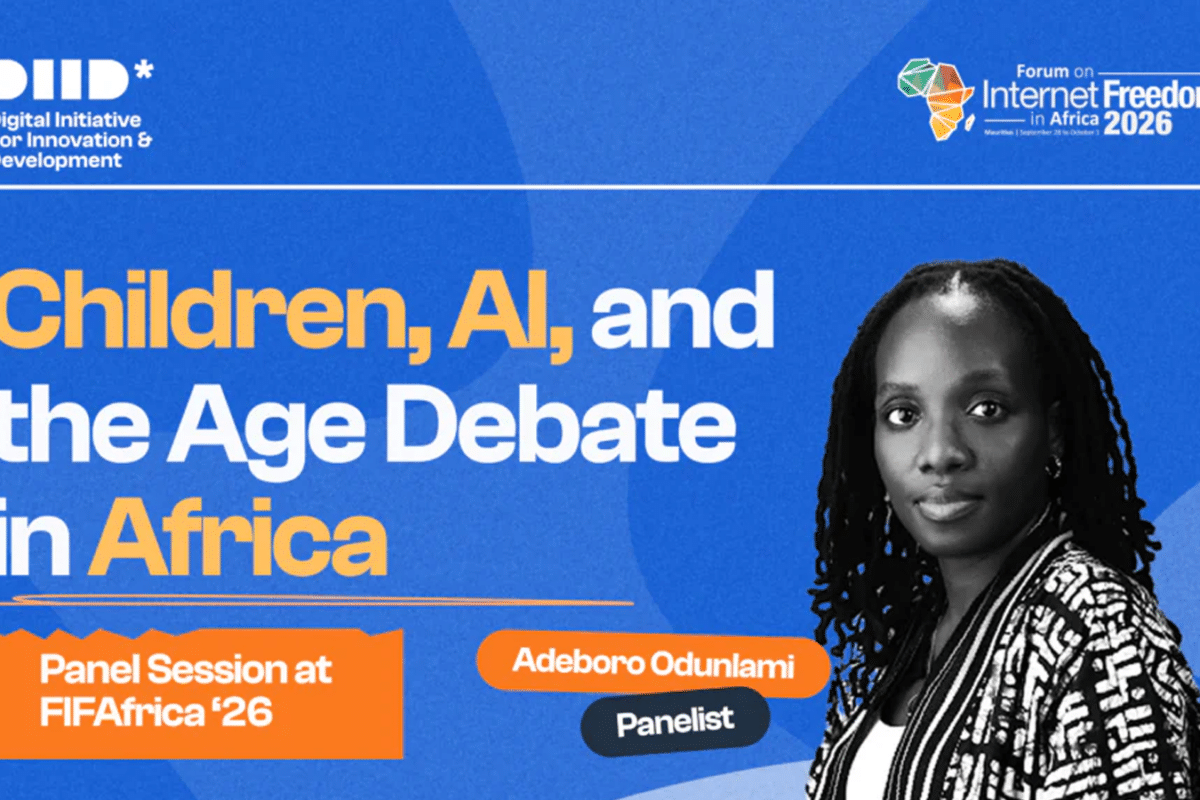
At this year’s forum on Internet Freedom in Africa (FIFAfrica ‘26), our Executive Director, Adeboro Odunlami, raised the above as a quiet but pointed concern.
The forum, organized by CIPESA, ran from 28 September to 1 October 2026 in Mauritius. Adeboro represented DIID on the panel “Children, AI, and the Age Debate in Africa”, speaking alongside Belinda Matore (University of Pretoria), Afia Asantewaa Asare-Kyei (Meta’s Oversight Board), Yasmin Ahmed (FemTech Law Initiative) and Lillian Kariuki (Africa Child Online Safety Alliance).
The panel’s focus was to discuss a question of AI, social media and age-based bans in Africa, as countries like Australia, Gabon, and the UK have moved to ban under-16s from social media.
A ban gives political salience, but it is not a holistic solution.
Adeboro opened with a wider picture of what is at stake. Africa is projected to be home to the youngest population in the world by 2030. She also noted a Research where only about 2 percent of adults passed a test on divergent thinking, while roughly 90 percent of children in nursery school passed the same test. This showed that children have a natural capacity for creative, outside-the-box thinking. Generative AI tools, used without guidance, risk handing them answers before they ever practice using that capacity. A generation raised this way enters the labour force well served by tools, but under-trained in thinking for themselves. A child’s pre-existing disadvantage may compound problems here too. That is, children who start behind stay behind, carried further apart by how differently they get to use these tools.
Against that backdrop, Adeboro’s case against a blanket ban has several layers.
A ban offers real political value to politicians. To the public, it comes off as a decisive action; much stronger than saying “we conducted a risk assessment”. This is why policymakers reach for it since many parents already clamour for it.
A blanket ban can also regulate the wrong place. Platforms flagged by UNICEF for risk include messaging apps that are outside Meta’s own oversight structures, and non-consensual images frequently move through platforms like Telegram that a social-media ban might not reach at all.
And the evidence has not caught up to the policy. Bans are spreading fast. Australia, the UK, Rwanda and Gabon have all moved on it, and more countries are following. But the early data from countries further along only tells part of the story. The number of accounts are dropping on major platforms, while usage rises on smaller, less regulated ones. However, a reduction in accounts is not the outcome anyone is actually after. Child online safety is.
Adeboro’s conclusion on this point was that children’s attention has become a commodity, and the fix starts with the design of the platforms built to capture it. Safety by design and platform accountability, using the least restrictive method available, address the actual mechanism at work. Whereas, a ban only addresses its visibility.
Where DIID stands
This is the version of child online safety DIID keeps advocating for. Rather than look for a single switch to flip, policy should be based on a set of deliberate, evidence-led choices. Regulation should target the actual harm and be built with an honest view of who it reaches, and the practical capacity to enforce it. Children should be treated as participants rather than subjects.
We were glad to bring this thinking to FIFAfrica26, in a room full of people working on the same questions from different corners of the continent.
This article was first published by the Digital Initiative for Innovation and Development (DIID). Click here to read more on its website.
Africa’s rapid adoption of digital public infrastructure is transforming how citizens access government and private services, but weak safeguards, digital exclusion and fragmented oversight are creating growing risks to human rights and democratic participation, a new continental report warns.
The 2026 State of Internet Freedom in Africa(SIFA) report, unveiled by Collaboration on International ICT Policy for East and Southern Africa (CIPESA) during Forum on Internet Freedom in Africa 2026 (FIFAfrica26) in Mauritius, examines the growing use of Digital Public Infrastructure (DPI) across 11 African countries and its implications for privacy, inclusion, civic participation and democratic governance.
The study covered Egypt, Ethiopia, Ghana, Kenya, Nigeria, Senegal, South Africa, Tunisia, Uganda, Zambia and Zimbabwe.
“DPI refers to foundational digital systems that allow governments, businesses and citizens to interact electronically. The report identifies three main components: digital identity, digital payments and data exchange platforms” the report explains.
According to the study, African governments are increasingly replacing fragmented government systems with interconnected digital platforms capable of sharing data, verifying identities, processing payments and delivering public services.
By the end of September 2026, 17 African countries were among 39 countries globally participating in the 50-in-5 campaign, an initiative aimed at helping countries design, launch and scale components of digital public infrastructure.
The report says early progress in countries including Ethiopia, Ghana, Kenya, Nigeria, Rwanda, Togo and Uganda, alongside continental digital transformation ambitions and support from development partners, has accelerated the adoption of DPI.
But the report cautions that technological progress is moving faster than the institutions and safeguards needed to protect citizens.
Digital Exclusion Remains A Major Concern
The study finds that people who are already digitally connected, formally documented and living in urban areas tend to benefit first from DPI systems.
Those facing barriers such as poor connectivity, limited digital literacy, disability, poverty or weak civil registration systems risk being left behind.
“Rural communities, low-income people, older people, persons with disabilities, migrants and communities facing contested citizenship are particularly vulnerable to exclusion” the report identifies.
It cites concerns raised over digital identity systems in Kenya and Uganda, where refugees, stateless people and some rural communities have faced exclusion.
The report warns that DPI can reproduce existing inequalities when a person’s ability to access services depends on documentation, biometric records, addresses or other foundational data that may be missing or inaccurate.
As more public and private services rely on the same foundational systems, a failure in one record can have consequences across multiple areas of a person’s life.
A citizen, for example, could face difficulties accessing a service because of an incorrect or missing identity, citizenship, address or birth record held by another government agency.
Connectivity Failures Could Have Wider Consequences
The report also highlights the growing dependence of essential services on connectivity and interconnected digital infrastructure.
“A cable cut, power failure, cloud outage or internet disruption could simultaneously affect identity systems, payments and public services” the report warns.
For landlocked countries, the report says resilience can also depend on neighbouring states, border crossings and regional infrastructure-restoration arrangements.
The study further finds that although governments are increasingly pursuing digital sovereignty, including local data centres, data localisation and domestic digital infrastructure where many national DPI systems remain dependent on foreign financing, technology companies and international standards.
AI generated image/CoPilot
The report identifies organisations and actors including the World Bank, development partners, Modular Open-Source Identification Platform (MOSIP), telecommunications operators, global payment networks and technology vendors as playing significant roles in financing, developing or operating various DPI systems.
Democracy And Civic Participation At Risk
The report says the consequences of DPI extend beyond service delivery to democratic participation.
It warns that the growing convergence of foundational identity systems with electoral processes and telecommunications infrastructure could expose citizens to democratic risks.
“Network disruptions, inaccurate administrative records and restrictions on digital platforms can affect people’s ability to participate in public life and exercise civic freedoms”, according to the study.
“Technology-facilitated gender-based violence, online harassment and misogynistic disinformation are also identified as factors that can discourage women from participating in political and civic life” the report shows.
The report argues that DPI does not necessarily create underlying inequalities, but can reproduce or intensify them when systems fail to account for differences in documentation, disability, gender, income, geography or language.
No Clear Continental Leaders or Laggards
The study cautions against ranking African countries simply according to their level of digital development.
It finds that countries can make significant progress in one aspect of DPI while continuing to face serious weaknesses in areas such as oversight, access or legal remedy.
According to the report, Nigeria, Ethiopia and Ghana perform strongly on aspects of scale and payments, while Kenya and South Africa are comparatively stronger on institutional contestability.
The broader finding, however, is that progress is uneven.
The report says technical development, institutional safeguards and rights protection can advance at different speeds within the same country.
Call For Stronger Safeguards
The report recommends that governments conduct human rights, data protection and equality impact assessments before major DPI systems are introduced or significantly expanded.
It also calls for transparent information about the agencies responsible for systems, suppliers and financiers, as well as accessible complaint and correction mechanisms.
Governments are urged to maintain non-digital alternatives so that citizens who cannot access digital systems are not excluded from essential services.
Oversight institutions, meanwhile, should conduct regular audits of national identity databases, interoperability platforms and government-to-person payment systems, according to the report.
The study also calls on technology companies, telecommunications operators, banks and payment firms to conduct human-rights due diligence on high-risk DPI projects, particularly those involving identity, biometrics, data exchange and surveillance.
Development partners and DPI financiers are urged to link funding and expansion to evidence of inclusion, rights protection, effective oversight and access to remedy rather than relying primarily on measures such as enrolment numbers, infrastructure coverage or transaction volumes.
For civil society and the media, the report recommends greater scrutiny of DPI before systems are deployed, including investigation of procurement, system design, vendor arrangements, identity and authentication failures and the use of digital systems in elections.
Building Trust Into Africa’s Digital Future
The report concludes that DPI is becoming an increasingly important part of the relationship between African states and their citizens.
While interconnected digital systems can improve administrative efficiency and financial inclusion, the study warns that they are not neutral simply because they are technological systems.
“Technical failures, inaccurate records and poorly designed access requirements can trigger cascading exclusion, particularly among people already facing barriers to connectivity, documentation and digital literacy” the report notes.
The report argues that the long-term legitimacy and public trust of DPI will depend on whether rights protections are built into the systems from the beginning rather than introduced later as compliance measures.
It recommends accessible non-digital channels, stronger data-protection enforcement, independent oversight, resilient connectivity and timely access to legal remedies as key elements of a rights-respecting digital future for Africa.
This article was first published by TalkAfrica on October 12, 2026. Click here to read more on their website
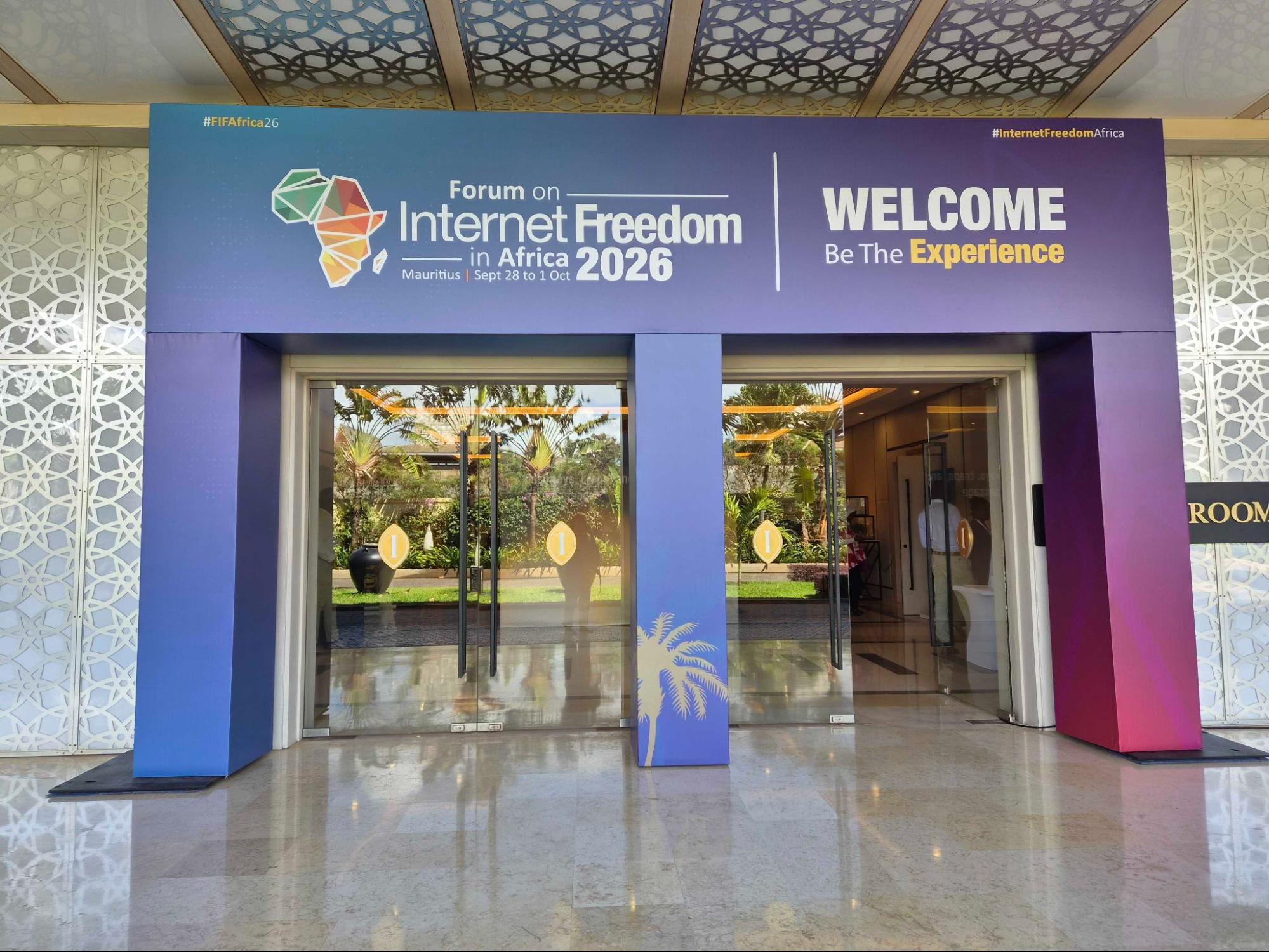
Last week, we had the opportunity to participate in the Forum on Internet Freedom in Africa (FIFAfrica) 2026, one of Africa’s largest and most important digital rights conferences. We are grateful to have had the opportunity to share OONI tools at the conference and learn from participants.
This year, the 13th edition of FIFAfrica took place in Mauritius between September 28, 2026 to October 1, 2026. The first two days included pre-conference events, while the last two days included the program of the main conference. The FIFAfrica 2026 agenda covered a wide range of important digital rights topics, including tech-facilitated gender-based violence, internet shutdowns, and AI governance, among many others.
This year, the 13th edition of FIFAfrica took place in Mauritius between September 28, 2026 to October 1, 2026. The first two days included pre-conference events, while the last two days included the program of the main conference. The FIFAfrica 2026 agenda covered a wide range of important digital rights topics, including tech-facilitated gender-based violence, internet shutdowns, and AI governance, among many others.
Notably, during the main conference days (September 30th and October 1st, 2026), OONI was one of the tools featured in the Digital Reality Walk, which provided participants an immersive experience to learn about digital security and internet shutdown related tools.
Digital Reality Walk
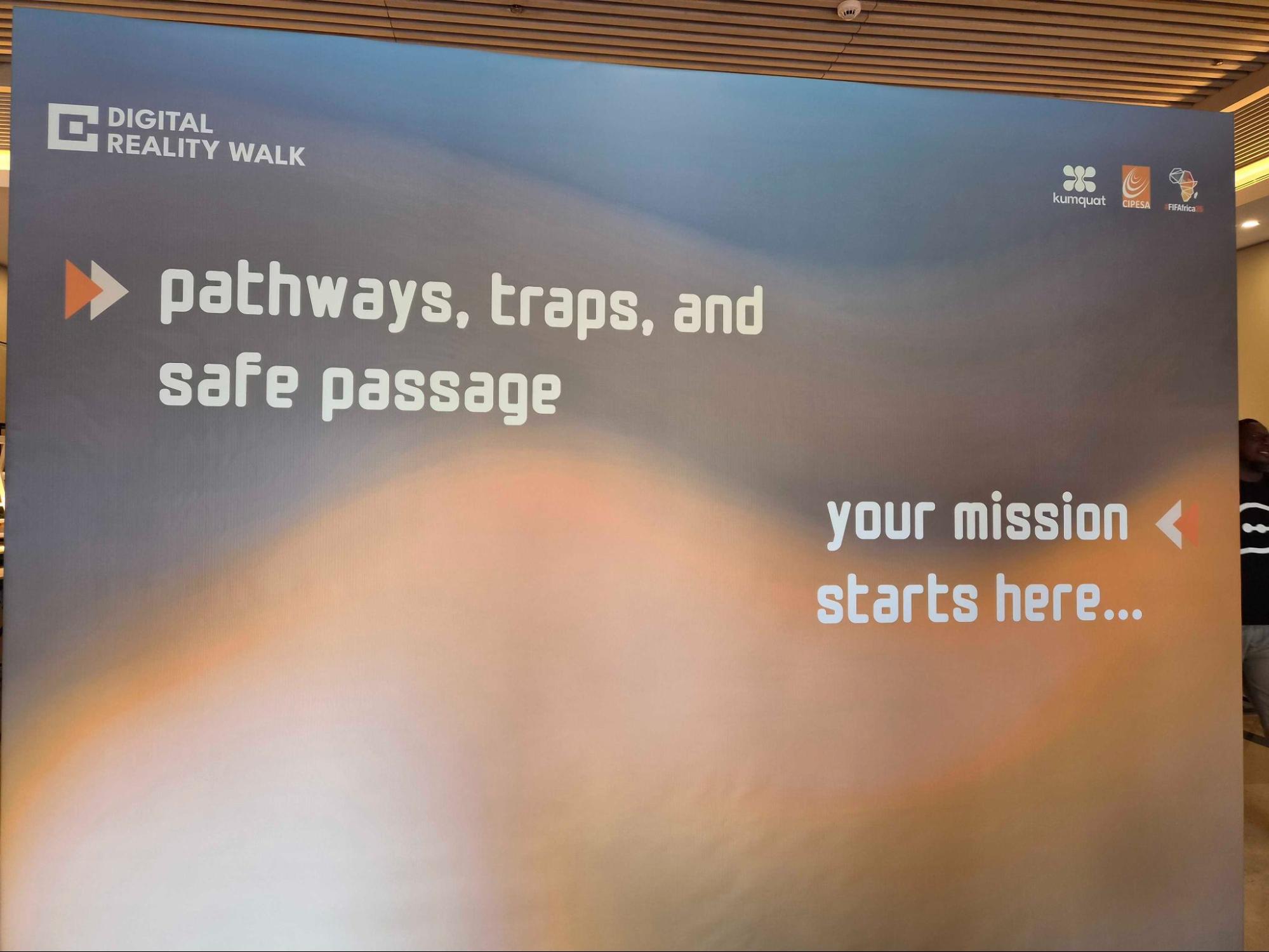
Image: Digital Reality Walk at the Forum on Internet Freedom in Africa (FIFAfrica) 2026.
This year, FIFAfrica 2026 launched the Digital Reality Walk: a fun and interactive way to learn about a variety of digital security and internet shutdown related tools.
Hosted on both days of the main conference (September 30th and October 1st, 2026), participants used the Safe Passage app, developed specifically for the Digital Reality Walk. The Safe Passage app illustrated the route of the Digital Reality Walk, comprising four zones, each featuring different tools and their developers. The tools featured as part of FIFAfrica’s Digital Reality Walk were ButterBox, Orbot, Tor Browser, OONI Probe, Tella, Shira, Dash Chat, and Shout Messages.
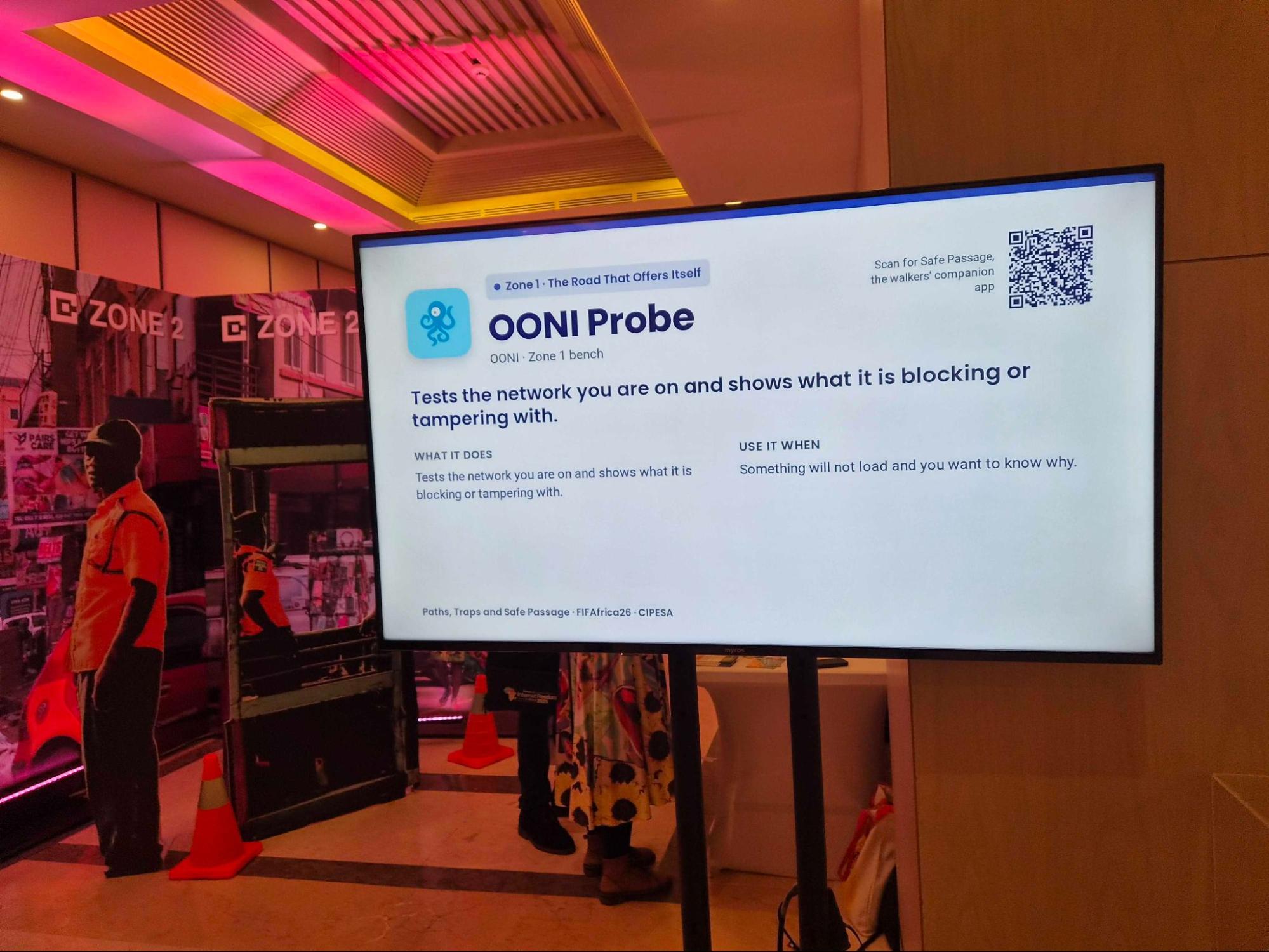
To navigate the Digital Reality Walk, participants used a mission log which provided a storyline, guiding them towards several zones where different tools (and their developers) were stationed. OONI was stationed in zone 1, where we engaged with FIFAfrica 2026 participants of the Digital Reality Walk. The storyline that brought participants to zone 1 involved difficulty with internet access and concerns of an upcoming internet shutdown. As participants approached us, we engaged them with the use of our OONI Probe app to measure network interference.
Image: OONI Probe featured in the Digital Reality Walk at the Forum on Internet Freedom in Africa (FIFAfrica) 2026.
As Mauritius does not currently implement major blocks, we collaborated with the conference organizers on setting up an exhibition network that blocked access to major social media platforms (e.g., Facebook, WhatsApp, Instagram, TikTok, YouTube, Linkedin, etc.), providing a simulated environment of internet censorship. This enabled participants (who connected to the exhibition network) to gain a practical, hands-on experience of measuring social media blocks with OONI Probe. To avoid sending false measurements for publication, we ensured that participants had the publication of results disabled in their OONI Probe apps when running tests on the exhibition network.
Through our two-day engagement with participants at the Digital Reality Walk, some key things we learned are:
OONI Probe users need a faster and easier way to test major social media platforms;
While many participants were already familiar with OONI Probe (and many already promote the use of OONI Probe in their communities), fewer were familiar with OONI Explorer: our web platform that hosts all OONI measurements published from around the world.
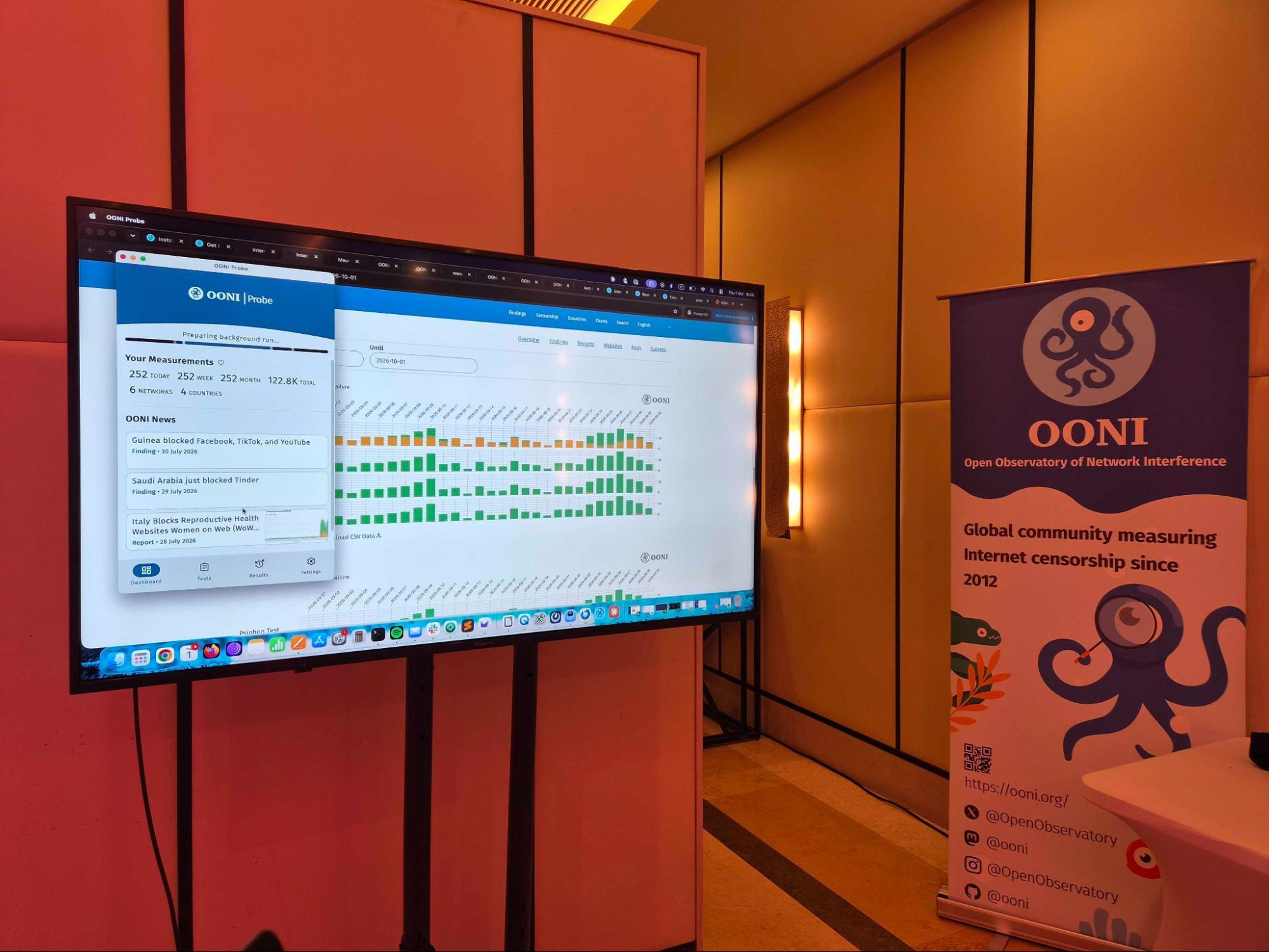
We therefore provided live demos for both OONI Probe and OONI Explorer in our zone of the Digital Reality Walk. As part of our OONI Probe live demos, we walked participants through the latest features and settings, illustrating how they can customize their use of the tool to measure specific forms of censorship (such as the blocking of specific social media websites). Even though OONI Probe automatically prioritizes the testing of major social media websites, we learned that there is still a need to enable users to more dynamically measure such websites when social media blocks emerge during protests or elections (which frequently occurs across Africa). This is valuable feedback that will inform our OONI Probe app development efforts.
Image: Live demo of OONI Probe and OONI Explorer at the Digital Reality Walk of the Forum on Internet Freedom in Africa (FIFAfrica) 2026.
Through the OONI Explorer live demos, we showed how participants can generate charts based on aggregate views of OONI data, interpret measurements, and compare measurements across networks and countries over time. This not only helped participants gain practical skills and knowledge on how to access and interpret OONI data from around the world, but it also helped illustrate the value of running OONI Probe and the need to increase measurement coverage across Africa. As an outcome, we hope that more digital rights defenders in Africa will use OONI data as part of their research and advocacy efforts over the next few years.
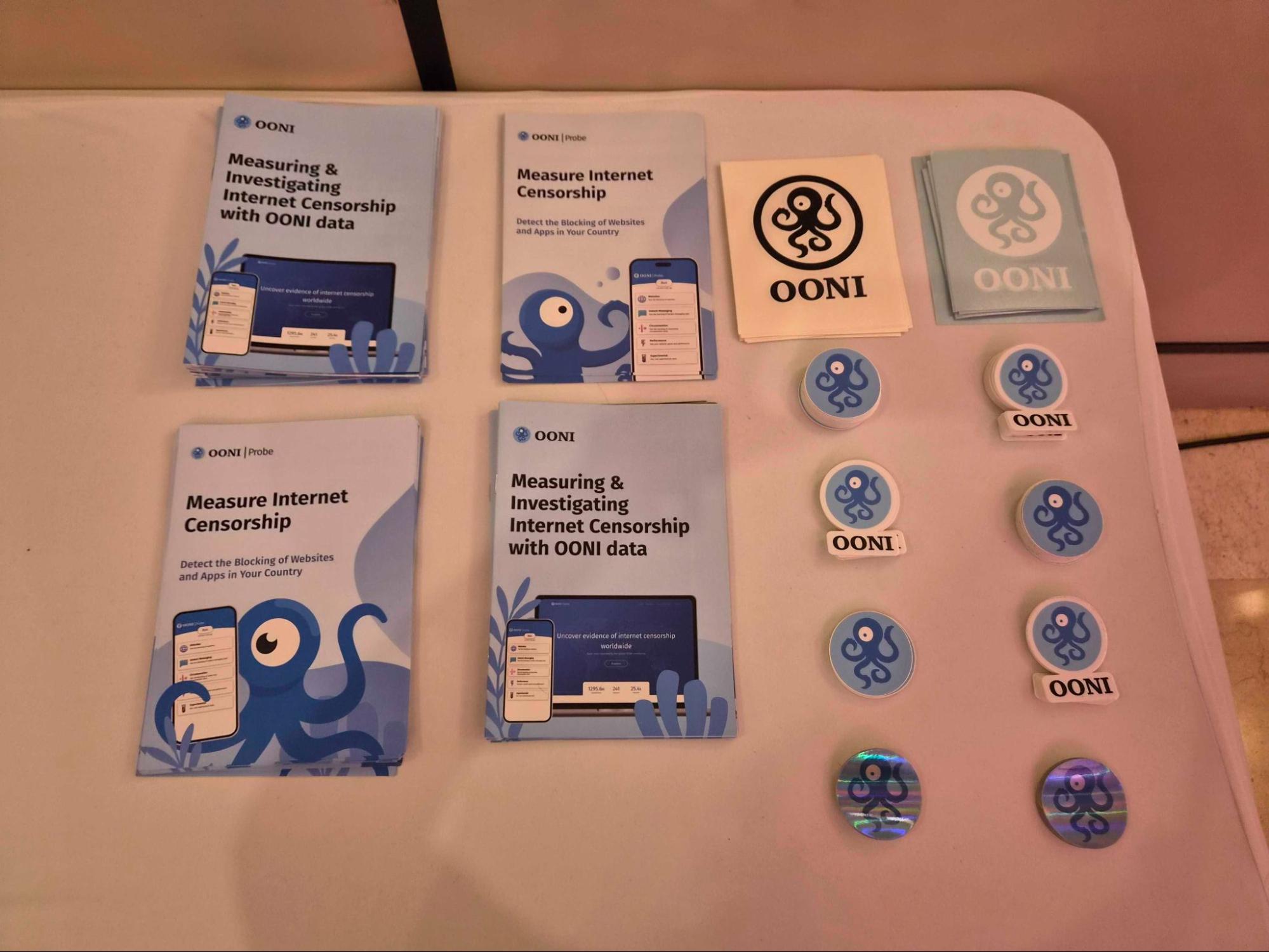
Beyond live demos and simulated censorship testing, we also had the opportunity to share OONI flyers and stickers with participants of the Digital Reality Walk. We thank all participants for their feedback and questions, and for engaging with the use of OONI tools and data!
Image: OONI stickers and flyers at the Digital Reality Walk of the Forum on Internet Freedom in Africa (FIFAfrica) 2026.
Overall, participating at FIFAfrica 2026 provided us a valuable opportunity to learn about current and emerging digital rights threats and needs in Africa, engage with many of our African partners, meet many other organizations doing important digital rights work, and learn about new initiatives in the region. We expect that this will help with strengthening our existing collaborations, and fostering the development of new collaborations. We are also grateful to have had the opportunity to share OONI tools and data, and to collect feedback which will help inform the improvement of our tools and methods.
Our deepest thanks to CIPESA for organizing and hosting FIFAfrica 2026, and for having us in the Digital Reality Walk! Warm thanks to all participants, and to everyone else who helped make this important event possible.
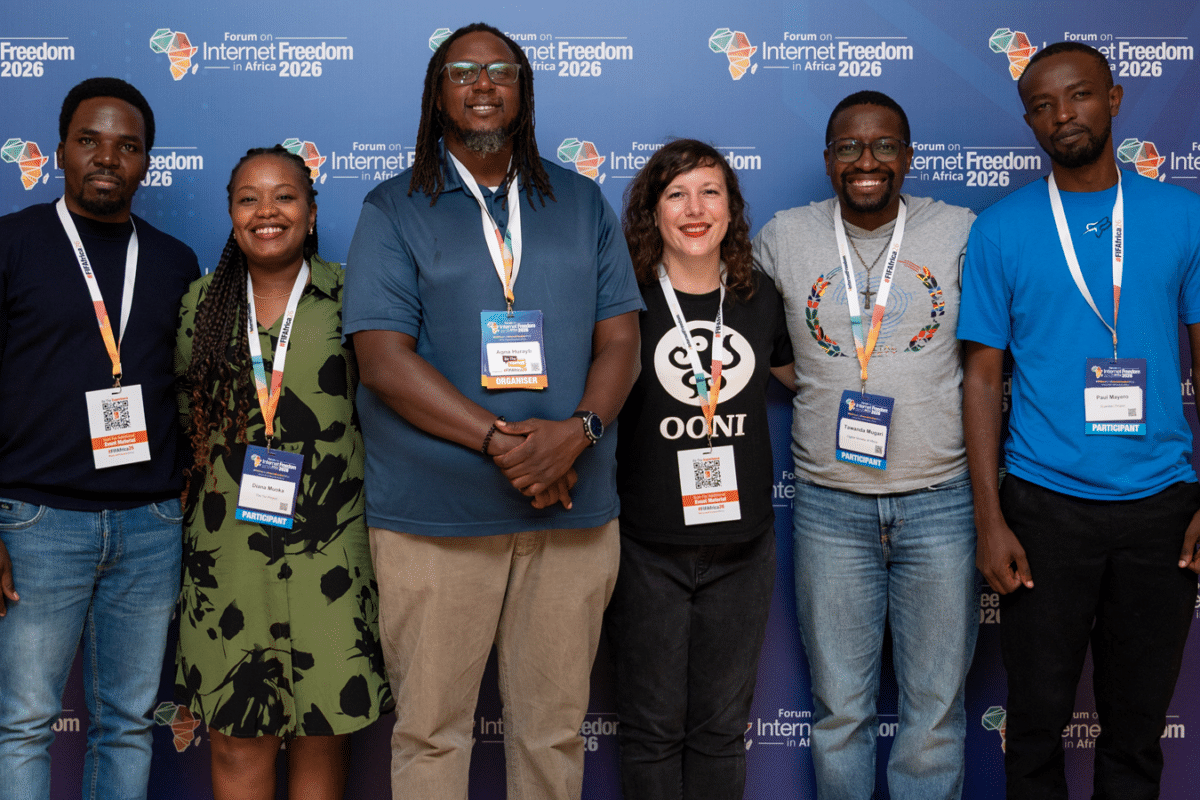
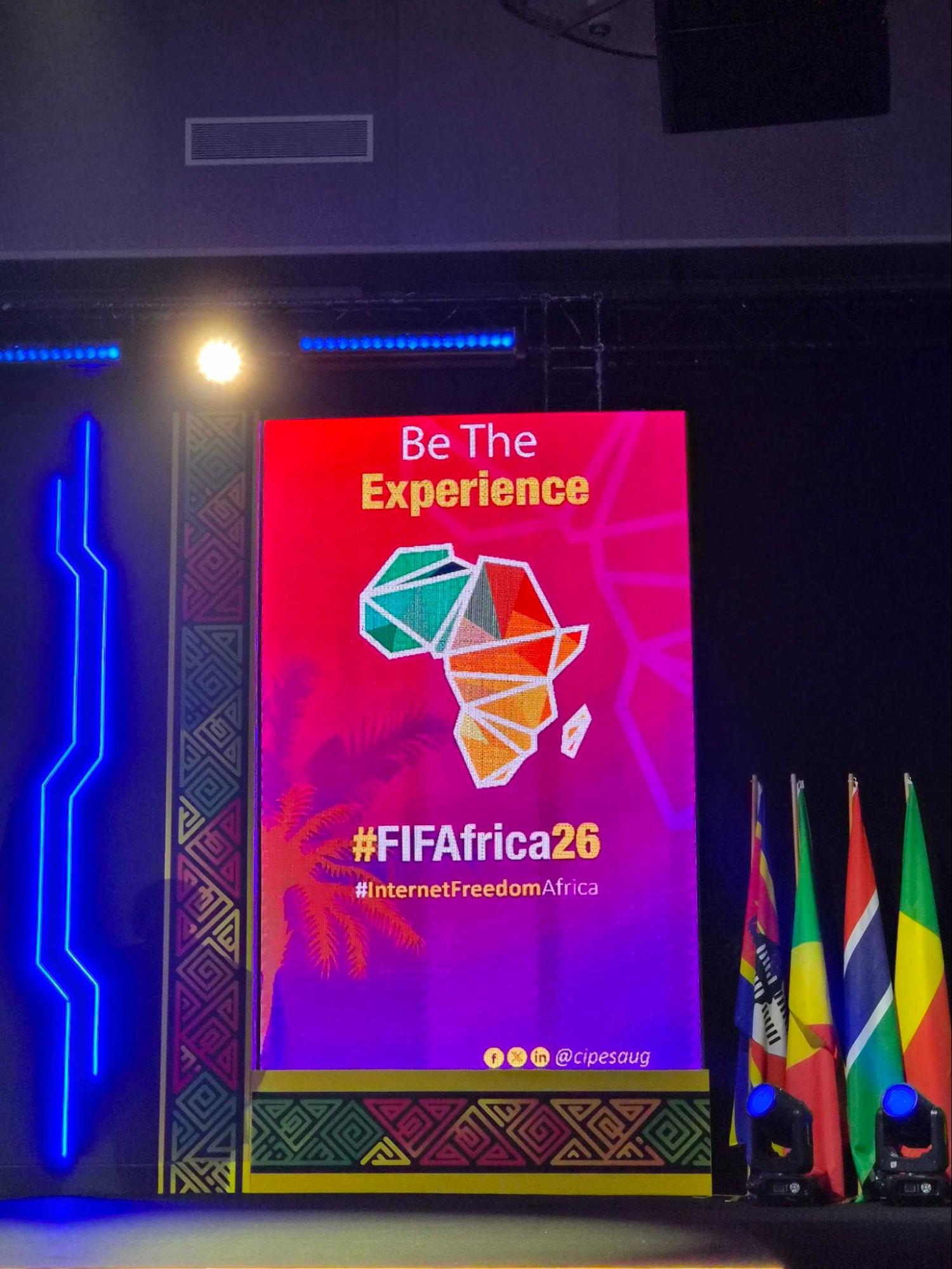
Image: Forum on Internet Freedom in Africa (FIFAfrica) 2026.
OONI posted this article on 6 October 2026. Read more on its website here.
The Forum on Internet Freedom in Africa (FIFAfrica) has evolved in tandem with the prevailing concerns related to the internet in Africa. At its inception in 2014, discourse centred around who is connected and how to access information. While this remains pertinent today, Africa’s digital ecosystem has become far more complex.
This year, the Forum is hosted by the Collaboration on International ICT Policy in East and Southern Africa (CIPESA) in partnership with Mauritius-based Halley Movement Coalition. The keynote speech will be delivered by the Minister of Information Technology, Communication and Innovation of Mauritius.
FIFAfrica has become one of the continent’s most important convening spaces for shaping debate on digital rights, internet governance, and civic freedoms. Its continued relevance lies in its ability to remain closely attuned to the changing realities of Africa’s digital landscape, since its inception in 2014.
Within Africa’s digital rights ecosystem, the Forum serves the strategic function of connecting research, advocacy, policymaking, movement building, and public interest engagement in one forum. FIFAfrica is particularly significant because it places African digital rights interests within wider global conversations on technology governance, including for the Internet Government Forum (IGF), the World Summit on the Information Society (WSIS), and numerous others. At a time when decisions on Artificial Intelligence (AI), digital public infrastructure, content moderation, cross-border data governance, and online freedoms are increasingly shaped through international processes, FIFAfrica positions African stakeholders to contribute evidence and shape narratives in ways that are rooted in the continent’s own political, economic, and social contexts.
The four-day Forum kicks off with two days of 18 pre-events, followed by two days of the main programme which features 41 stand-out sessions, with participants from across Africa and beyond. The Forum has eight thematic areas covering digital democracy and civic participation, data governance and sovereignty, AI and emerging technologies, platform accountability, digital inclusion, digital economy and trade, movement building, and digital security and safety.
The agenda is built out of a selection of submissions received from more than 450 proposals received via a public call for sessions and travel support. The diversity of sessions submitted and selected is a reflection of the multiplicity of issues that the African tech ecosystem needs to address, many of which cannot be addressed in isolation. Questions about human rights and democracy increasingly intersect with technology and information. Meanwhile, data governance is tied to economic interests, while AI raises questions about exploitation, information integrity, access to information, and discrimination.
There will be strategic engagement between regulators, parliamentarians and the judiciary from across Africa on the Malabo Convention in a session hosted by Mzalendo Trust in partnership with CIPESA and the African Parliamentary Network on Internet Governance (APNIG). Further sessions engaging National Human Rights Institutions (NHRIs) on human rights and technology will be hosted by the Danish Human Rights Institute in partnership with CIPESA and the International Commission of Jurists (ICJ). The Forum will also serve as the host of the pre-launch of the Copenhagen Principles for the Protection of Human Rights in the Digital Age.
Meanwhile, AI remains a focus area of discussion due to its intersection with data protection, worker rights, access to information, information integrity, and democracy. Entities including Digital Action, the Global Center on AI Governance, the Electronic Frontier Foundation (EFF), the African Internet Rights Alliance (AIRA), the Digital Rights Alliance of Africa (DRAA), BBC Media Action, UNESCO, Article 19, Lighthouse Reports, Africa Uncensored, the Office of the United Nations High Commissioner for Refugees, and the Oversight Board will explore these concerns, including through the lens of child online safety, migration, media regulation, digital markets, and digital democracy.
Further sessions entail discussions on the state of data governance, civic space, strategic litigation, technology and human rights, digital identity, DPI, gender and civic participation as part of broader debates on data, power and emerging technologies. Speakers will be drawn from entities such as Oxfam, Pan African Lawyers Union (PALU), and the Digital Impact Alliance (DIAL).
Platform accountability is also a key area of interest, including how it can be humanised, while sessions on corporate power and the push-back against internet shutdowns will involve speakers from Nguvu Collective, Lumate, and the Oversight Lab. Long-term FIFAfrica partner, Access Now, will host a session marking a decade of the #KeepItOn campaign. Internet shutdowns remain key violations of freedom of expression and access to information on the continent and also have significant economic and infrastructural consequences.
For years, platform regulation has often been framed around content moderation and how platforms should respond to harmful content. However, various FIFAfrica26 sessions are extending the debate into how platforms collect and use data, how they design recommendation and advertising systems, how they assess risk, how they respond to government demands, how they conduct due diligence, and what remedies they provide to people harmed by their systems. This is particularly important in Africa, where the global scale of technology companies is vastly greater than the capacity of national regulators and courts to scrutinise them. Entities such as CIPESA, GIZ, the Oversight Board, and EFF will host sessions challenging these narratives.
Sessions at the Forum will also reflect on shrinking civic space online and offline across the continent, including learnings from the cancellation of Rightscon and the rise in authoritarian practices across the continent. These will be candidly addressed by Access Now, RightsCon, and Amnesty International.
Practical sessions also form part of the agenda, with Masakhane, International Research & Exchanges Board (IREX) and the Human Rights Foundation (HRF) each hosting skills workshops on Safety By Design for African tech ecosystems, AI and languages, as well as Bitcoin as a tool for human rights activism and civil society respectively.
FIFAfrica26 continues in its path of inclusion and will entail language interpretation and adherence to a code of conduct that encourages active participation and contribution online and offline.
Mauritius is the meeting point for some of Africa’s most pressing conversations about technology, rights and digital governance as the annual Forum on Internet Freedom in Africa 2026 (FIFAfrica26) takes place from September 28 to October 1, 2026 at the InterContinental Resort in Balaclava.
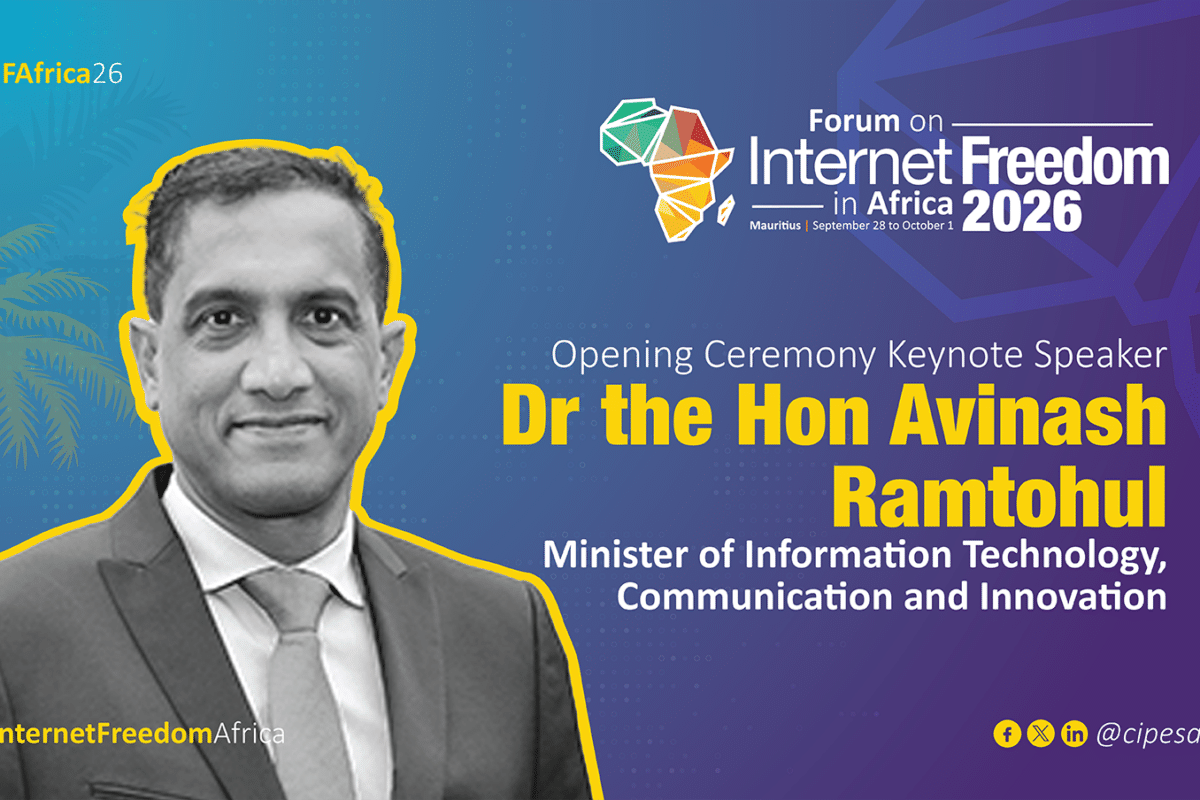
The Forum is set to be opened by Dr. Avinash Ramtohul, Minister of Information Technology, Communication and Innovation (Mauritius).
The 13th edition of FIFAfrica is hosted by the Collaboration on International Policy for East and Southern Africa (CIPESA) in partnership with Mauritius-based Halley Movement Coalition. Previous editions have been held in Ethiopia, Ghana, Namibia, Senegal, South Africa, Tanzania, Uganda, and Zambia.
More than 500 participants from across Africa and beyond, including policymakers, technology practitioners, researchers, journalists, civil society organisations, private sector actors and digital rights advocates are set to attend the event (in person and virtually). Attendees will address data governance and sovereignty; Artificial Intelligence (AI) and emerging technologies; platform accountability; digital inclusion; the digital economy and trade; digital democracy and civic participation; and digital security and safety.
Mauritius was selected as the host for the 2026 edition as it is Africa’s most stable democracy, with strong rule of law and robust protection for freedom of expression, both offline and online. The country is also a pioneer in technology-driven governance and digital transformation. The country offers a space for policy-oriented discussions on data governance, regulation of AI, platform accountability, and digital trade within a context that is progressively navigating these transitions.
Dr. Wairagala Wakabi, CIPESA’s Executive Director stated that, “The Forum creates an opportunity for Mauritian perspectives to enter a broader African conversation at a time when countries across the continent are making consequential decisions about the technologies and systems that will shape their societies. Mauritius brings its experiences and learning from policies to the continental table, while participants from across Africa bring questions about digital inclusion, regulation, innovation, civic participation ,and digital rights.”
The Forum comes at a significant moment for Mauritius as the country is implementing its Digital Transformation Blueprint 2025–2029, which identifies digital public infrastructure, digital skills, private sector innovation, cyber resilience, data governance and AIas key components of its digital transformation agenda. In April, Mauritius also launched its National AI Strategy and FAIR Guidelines, setting out principles around fairness, accountability, inclusiveness, integrity and responsibility in the development and use of AI. The FIFAfricaagenda reflects many of these developments and how they are being engaged with across Africa.
Mahendranath Busgopaul, the Halley Movement Secretary General, notes that, “Africa’s digital future is one that we have to put in effort to shape. The decisions that we make about digital transformation, inclusion, protection and access will determine what kind of digital societies we will have in the future. Hosting FIFAfrica26 in Mauritius gives us an opportunity to bring our experiences to the continental conversation, learn from others, and collectively shape a digital future that is responsive to the diversity of the continent.”
Across Africa, the expansion of digital access and services has resulted in concerns around privacy, cybersecurity, access, accountability and trust. It is within this evolving landscape that FIFAfrica26 will explore what responsible digital transformation should look like for the people who use, depend on and are affected by digital technologies every day.
FIFAfrica26 will begin with pre-event activities on 28 and 29 September 28 and 29, followed by the main Forum on September and October 1, 2026 at the InterContinental Resort, Balaclava, Mauritius.
About the co-hosts of FIFAfrica26
CIPESA: CIPESA works to defend and expand the digital civic space to enable the protection and promotion of human rights and to enhance innovation and sustainable development. CIPESA’s work responds to a shortage of information, research, resources and actors consistently working at the nexus of technology, human rights and society. Indeed, CIPESA’s establishment in 2004 was in response to the findings of the Louder Voices Report for DFiD, which cited the lack of easy, affordable and timely access to information about ICT-related issues and processes as key barriers to effective and inclusive ICT policy making in Africa.
Since 2014, CIPESA has convenedFIFAfrica in collaboration with government ministries, international agencies and local partners. It has built each edition through partnerships that reflect the priorities, realities and emerging challenges of Africa’s digital societies. Visit the website
Halley Movement Coalition: TheHalley Movement was founded in 1989 and is the lead organisation for theMauritius Internet Governance Forum & Africa-Indian Ocean Island States IGF. The Movement is a coalition of charitable organisations that works in partnership with the private sector, governmental institutions and other international and national organisations. Visit the website