
Turning Digital Transformation into Rights-Respecting Governance
How CIPESA promotes inclusive and effective use of ICT in Africa for improved governance and livelihoods.
Across Africa, the Collaboration on International ICT Policy for East and Southern Africa works with governments, regulators, civil society and the private sector to shape the policies, institutions and practices that govern and benefit from digital transformation.
Over two decades, CIPESA has grown into a pan-African institution working across policy development, strategic litigation, research, skills building and stakeholder engagement in AI and data governance, digital inclusion, the digital economy and internet freedom, from local communities and national governments to regional and global governance processes.
By the Numbers
What Makes CIPESA Different
What distinguishes CIPESA is its ability to work across the policy cycle, from evidence and agenda-setting through policy design, implementation, institutional strengthening and accountability. By combining research, convening, policy support, capacity building and strategic litigation, CIPESA can carry an issue from evidence and public debate into policy, institutional practice and accountability. CIPESA does so as a thought leader, convenor and capacity builder, complementing rather than duplicating organisations defending and expanding Africa’s digital civic space.
Building the Evidence for Better Governance
CIPESA’s policy influence is grounded in independent in-depth research, tools and benchmarks that help governments, regulators, the media and civil society understand the implications of digital transformation and act on them.
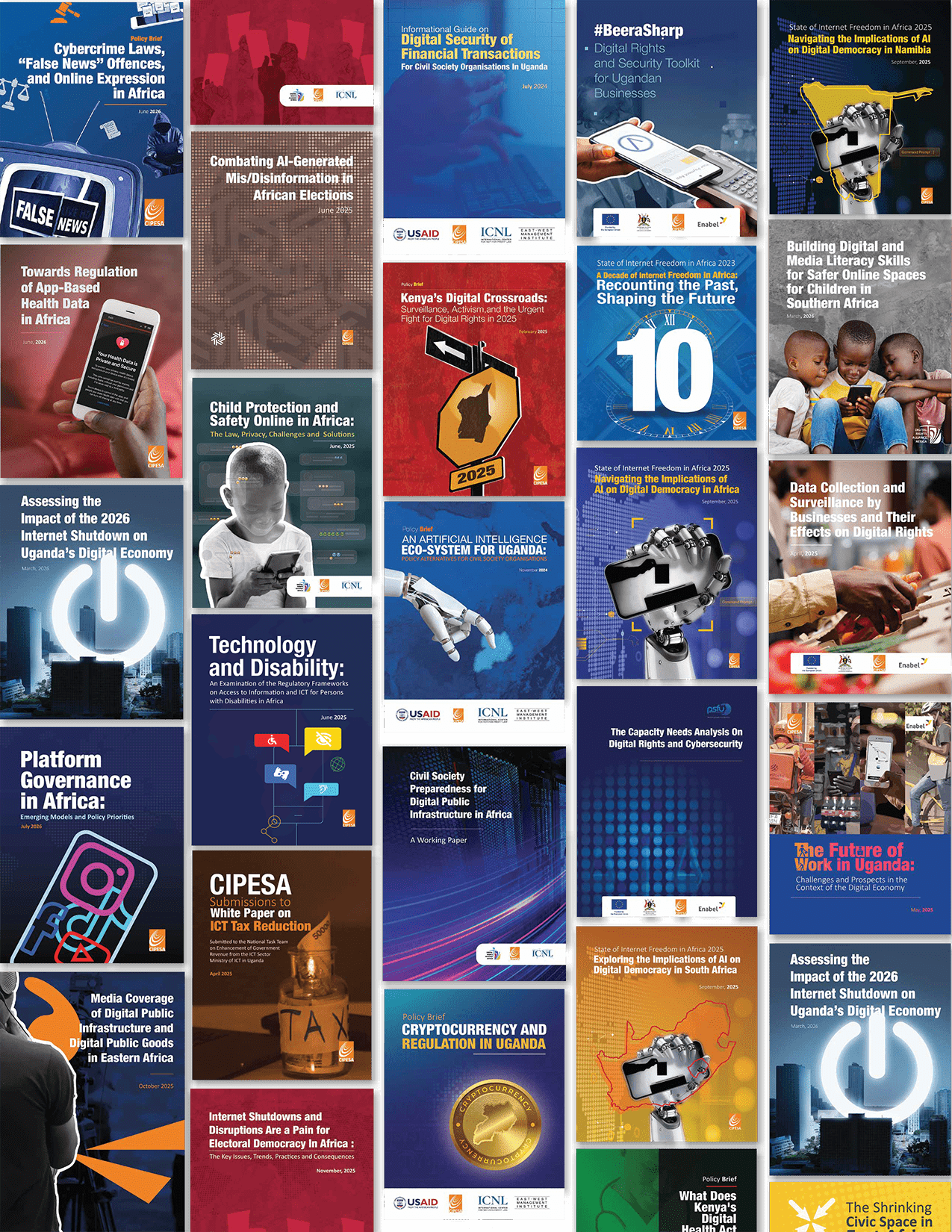
Since 2023, CIPESA has produced more than 100 research reports, including the flagship State of Internet Freedom in Africa report, published annually since 2014 and a key reference point on digital rights across the continent, alongside thematic research and policy briefs on digital civic space, data governance, digital inclusion, digital public infrastructure, cybersecurity, technology-facilitated gender-based violence and emerging technologies. In 2025 alone, more than 72 platforms and organisations cited or drew on this research.
CIPESA’s Digital Accessibility Indicators assess how telecom companies uphold disability rights in ICT services and are used by disability rights campaigners across the continent. In partnership with UNESCO, we developed the Africa Media Freedom and Journalists’ Safety Indicators, the framework behind the first State of Media Freedom and Safety of Journalists in Africa report.
In 2018, CIPESA developed the Framework for Calculating the Economic Impact of Internet Disruptions in Sub-Saharan Africa, which went on to inform the Cost of Internet Shutdown Tool, today one of the most widely used tools globally for calculating the economic cost of network disruptions.
Shaping Public Policy
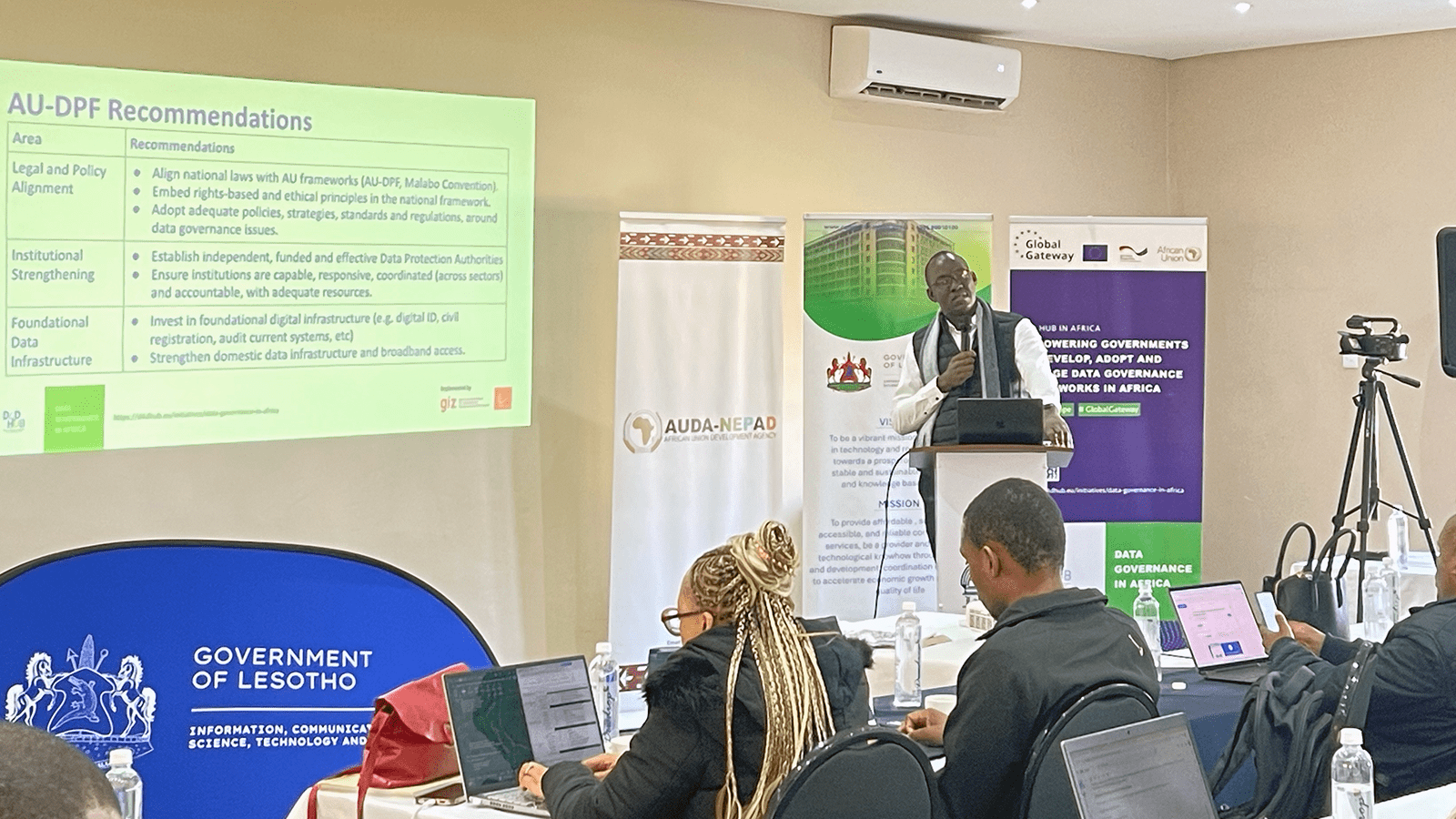
In 2025, Lesotho and Liberia validated National Data Governance Policies developed with CIPESA’s technical support, translating the African Union Data Policy Framework into practical national policy. CIPESA convened more than 300 stakeholders through consultative engagements across the two countries.
CIPESA trained more than 300 regulators, policymakers, judges and private sector actors from 18 African countries, including 191 on data governance through programmes in Lesotho, Liberia, Uganda, Rwanda and Madagascar, and regional training through SADC, the East African Legislative Assembly and the East African Court of Justice. Sixty-eight percent later reported applying data protection principles in their institutions.
Our research and advocacy have shaped submissions to draft national AI and emerging technologies strategies in Kenya and Uganda, the World Health Organization’s Digital Health Strategy, and UN Human Rights Council processes including Universal Periodic Reviews for seven countries and Resolution 58/23.
Leading on AI Governance
As African governments begin developing AI governance frameworks, CIPESA is helping shape the policy agenda at national, regional and global levels. Our research has informed AI policy debates in Uganda, Kenya and Zimbabwe, while our participation in the launch of UNESCO’s AI Readiness Assessment Methodology in Uganda contributes to benchmarking the country’s AI governance against the UNESCO Recommendation on the Ethics of AI.
CIPESA has also worked to strengthen African participation in AI governance discussions in India, Kenya, Côte d’Ivoire and Geneva, working with Global South partners to develop a shared civil society position and ensuring African perspectives shape rules that are too often written elsewhere.
Drawing on our experience translating continental data governance commitments into national policy in Lesotho and Liberia, CIPESA is applying the same model to artificial intelligence.

Strengthening Accountability
CIPESA has twice helped secure court findings that provisions of Uganda’s Computer Misuse Act were unconstitutional: first the law’s offensive communication clause, more recently provisions criminalising social media use and online speech. As co-petitioner in both cases, CIPESA continues to build multi-stakeholder support for similar litigation elsewhere.
In Kenya, CIPESA joined the Bloggers Association of Kenya and others in challenging internet shutdowns, with the High Court issuing interim orders on 14 May 2025 prohibiting further interference with internet access pending determination of the petition.
On platform accountability, CIPESA’s Digital Rights Toolkit for Businesses has reached more than 100 SMEs, and our work on technology-facilitated gender-based violence fed into the African Commission on Human and Peoples’ Rights Resolution 522.
Building Institutions
CIPESA works directly with governments, regulators, civil society organisations and journalists to strengthen the institutions that shape digital governance.
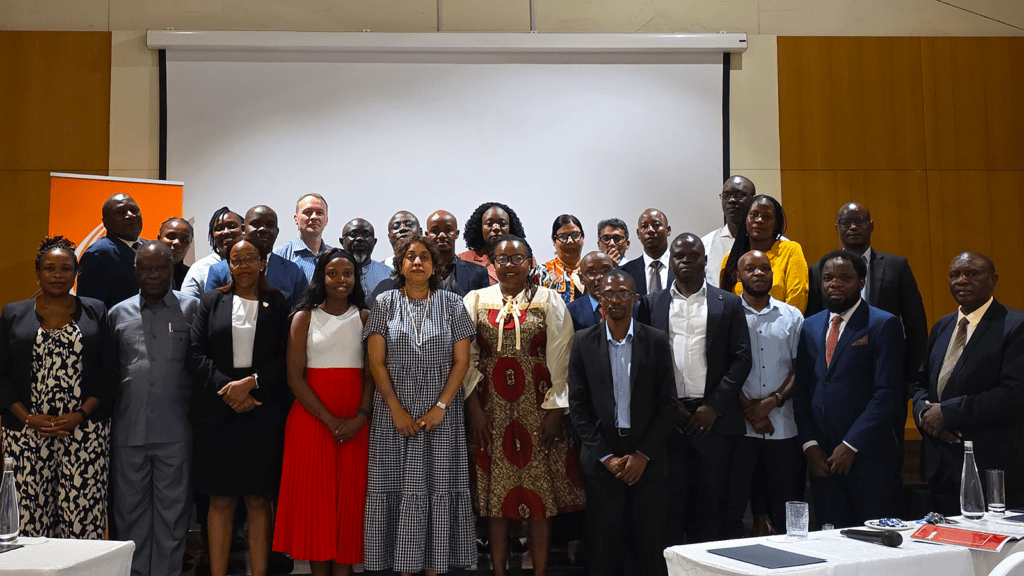
In 2025, CIPESA supported 1,320 individuals from more than 150 civil society organisations through capacity building and tools provision covering digital security, data governance, disinformation, digital inclusion, AI, risk mitigation and secure communications. Of the organisations that received digital security training and tools, which included 16 media houses, 72 percent reported improved capacity to manage digital risks.
National human rights institutions are not always equipped for the challenges technology presents. Since 2024, CIPESA has trained more than 100 NHRI staff in 10 countries on digital rights monitoring and advocacy, using a toolkit co-developed with the International Centre for Not-for-Profit Law.
Growing Africa's Digital Governance Ecosystem
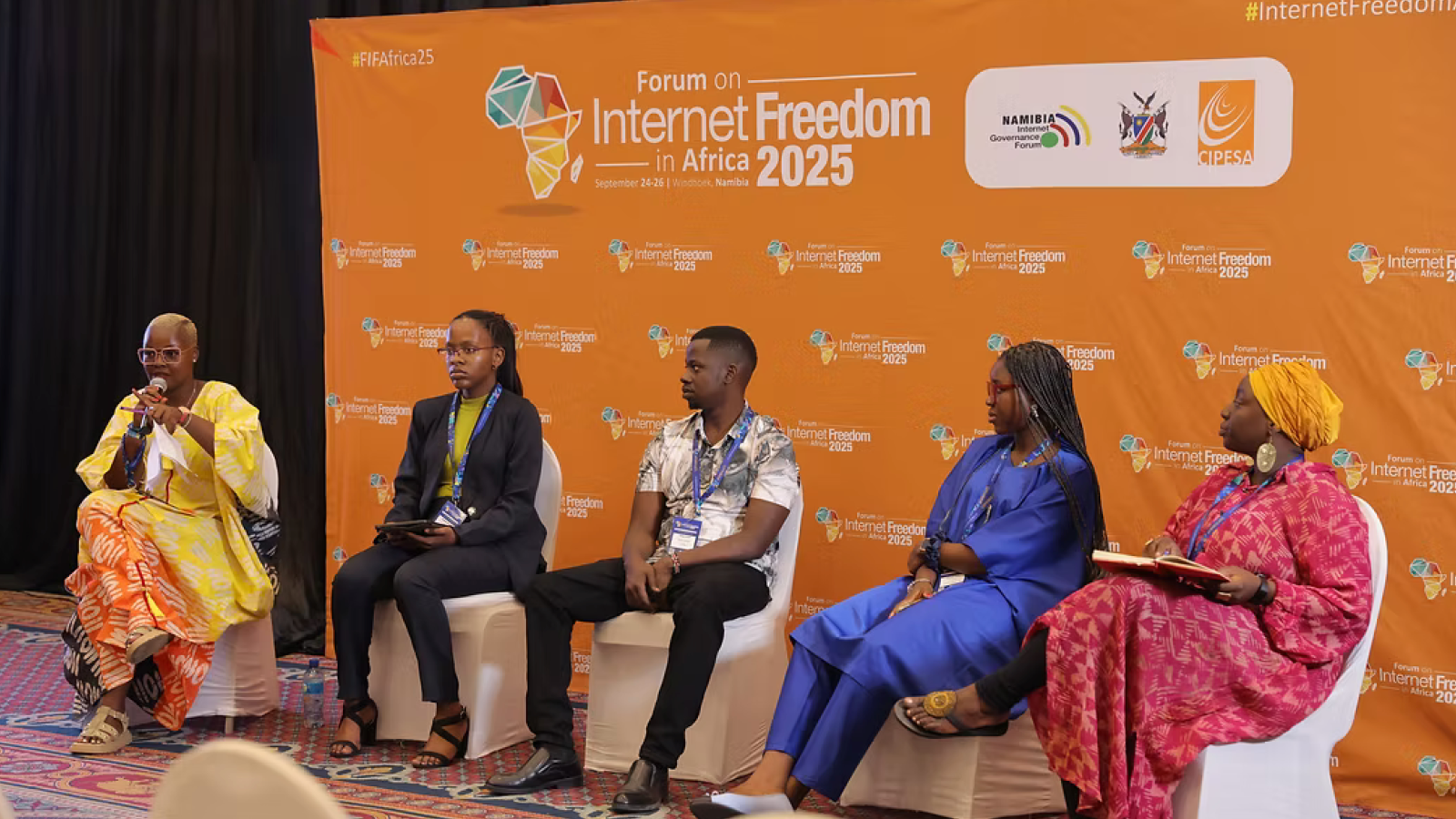
CIPESA works through partnerships, networks and platforms that connect the people and institutions shaping Africa’s digital future. The Forum on Internet Freedom in Africa, now in its 13th year, has convened more than 10,000 participants across 12 editions, generating concrete outcomes such as the African Declaration on Digital Freedom and Democracy.
CIPESA also extends this convening role into global policy forums, including the Internet Governance Forum and UN global AI summits, bringing African perspectives into international digital policy debates.
Through the Africa Digital Rights Fund, CIPESA has channelled USD 1.3 million since 2019 to 67 organisations across 24 African countries, combining flexible grants with capacity development in advocacy, public communication, research and data-for-advocacy skills.
Why CIPESA's Work Matters
Africa’s digital future is being shaped now, through laws and regulations, courts and public institutions, digital infrastructure, data systems, AI and the platforms that increasingly mediate everyday life. The decisions made in these spaces will determine not only how technology develops, but whose rights are protected, who participates and who benefits.
For more than two decades, CIPESA has helped shape digital governance across Africa, combining research, policy engagement, convening, capacity building and strategic litigation to influence laws, policies and institutional practice. We connect evidence with policy, bring African perspectives into regional and global debates, and strengthen the institutions and people responsible for making digital transformation more inclusive, accountable and rights-respecting.